Reading
The Riddle of Beauty in Nature
Why the poets tell us lovely falsehoods about nature.
January 4, 2026
Try 3 months of unlimited access. Start your FREE TRIAL today. Cancel anytime.
START FREE TRIAL NOW
[.article__paragraph--cap] [.small-caps] We do not want [.small-caps] merely to see beauty, though, God knows, even that is bounty enough. We want something else which can hardly be put into words – to be united with the beauty we see, to pass into it, to receive it into ourselves, to bathe in it, to become part of it. That is why we have peopled air and earth and water with gods and goddesses and nymphs and elves – that, though we cannot, yet these projections can, enjoy in themselves that beauty, grace, and power of which Nature is the image. That is why the poets tell us such lovely falsehoods. They talk as if the west wind could really sweep into a human soul; but it can’t. They tell us that “beauty born of murmuring sound” will pass into a human face; but it won’t. Or not yet.[.article__paragraph--cap]
For if we take the imagery of Scripture seriously, if we believe that God will one day give us the Morning Star and cause us to put on the splendor of the sun, then we may surmise that both the ancient myths and the modern poetry, so false as history, may be very near the truth as prophecy.
At present we are on the outside of the world, the wrong side of the door. We discern the freshness and purity of morning, but they do not make us fresh and pure. We cannot mingle with the splendors we see. But all the leaves of the New Testament are rustling with the rumor that it will not always be so. Someday, God willing, we shall get in .
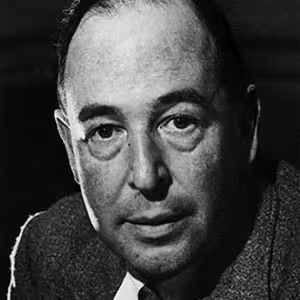
[.smalltext] C. S. Lewis, “The Weight of Glory,” in The Weight of Glory: And Other Addresses (HarperCollins, 2001), 42–3. [.smalltext]
[.article__paragraph--cap] [.small-caps] Hope always draws the soul [.small-caps] from the beauty which is seen to what is beyond, always kindles the desire for the hidden through what is constantly perceived. Therefore, the ardent lover of beauty, although receiving what is always visible as an image of what he desires, yet longs to be filled with the very stamp of the archetype. And the bold request which goes up the mountains of desire asks this: to enjoy the Beauty not in mirrors and reflections, but face to face.[.article__paragraph--cap]
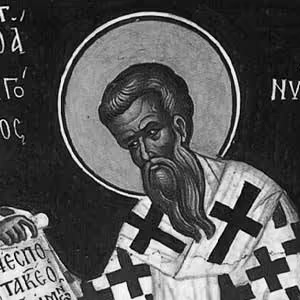
[.smalltext] Gregory of Nyssa, The Life of Moses, translated by Abraham J. Malherbe and Everett Ferguson, The Classics of Western Spirituality (Paulist Press, 1978), 114–155. [.smalltext]
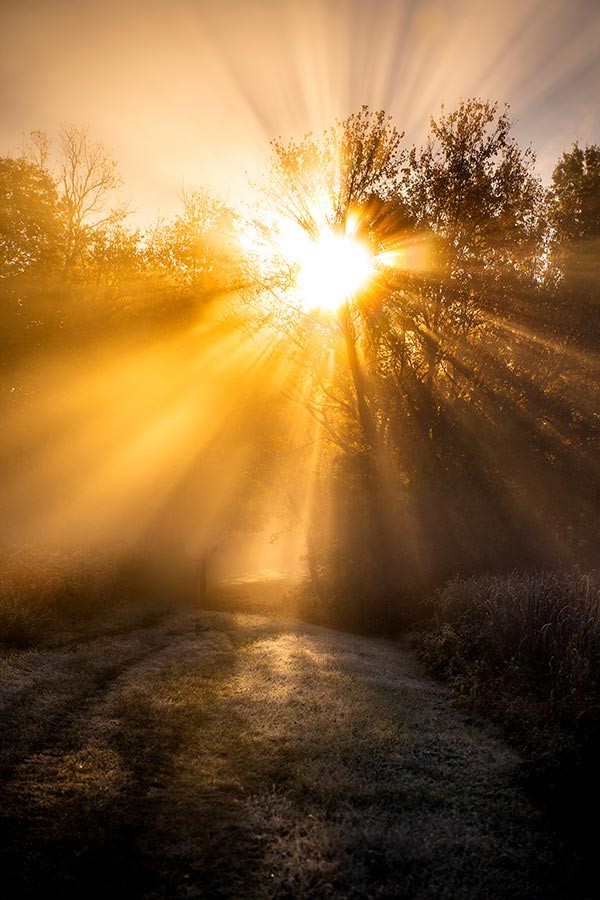
[.imgcaption] [.smalltext] Photograph by David Zumpe. [.smalltext] [.smalltext] Used by permission. [.smalltext] [.imgcaption]