Reading
The Wonder of the Human Person
Six thinkers consider the question of what sets humans apart.
December 15, 2026
Try 3 months of unlimited access. Start your FREE TRIAL today. Cancel anytime.
START FREE TRIAL NOWThe Wonder of the Human Person
Six thinkers consider the question of what sets humans apart.

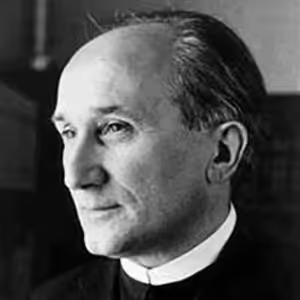
The person is that fact which again and again elicits existential wonder. It is the most self-evident of all facts – in a verbal sense: to understand that I am I is for me the self-evident purely and simply, and imparts its character to every other fact in a situation.
But, at the same time, it is enigmatic and inexhaustible that I am I, that I cannot be forced out of myself, not even by the most powerful enemy, but only by myself, and even that not entirely; that I cannot be replaced, even by the noblest person; that I am the center of existence, for I am that, and you also are that, and you yonder, and all the lights which this globe of mystery emits as it revolves in the spirit.
[.smalltext]Source: Romano Guardini. The World and the Person (Henry Regnery, 1965), 119.[.smalltext]
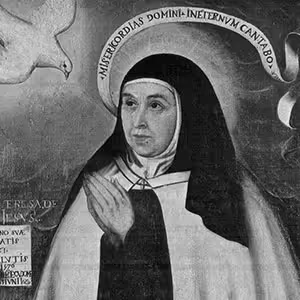
I thought of the soul as resembling a castle, formed of a single diamond or a very transparent crystal, and containing many rooms, just as in heaven there are many mansions. If we reflect, sisters, we shall see that the soul of the just man is but a paradise, in which, God tells us, he takes his delight. What, do you imagine, must that dwelling be in which a king so mighty, so wise, and so pure, containing in himself all good, can delight to rest? Nothing can be compared to the great beauty and capabilities of a soul; however keen our intellects may be, they are as unable to comprehend them as to comprehend God, for, as he has told us, he created us in his own image and likeness.
As this is so, we need not tire ourselves by trying to realize all the beauty of this castle, although, being his creature, there is all the difference between the soul and God that there is between the creature and the Creator; the fact that it is made in God’s image teaches us how great are its dignity and loveliness. It is no small misfortune and disgrace that, through our own fault, we neither understand our nature nor our origin.
Would it not be gross ignorance, my daughters, if, when a man was questioned about his name, or country, or parents, he could not answer? Stupid as this would be, it is unspeakably more foolish to care to learn nothing of our nature except that we possess bodies, and only to realize vaguely that we have souls, because people say so and it is a doctrine of faith. Rarely do we reflect upon what gifts our souls may possess, who dwells within them, or how extremely precious they are.
[.smalltext]Source: Teresa of Ávila. The Interior Castle trans. Benedictines of Stanbrook (Benziger Brothers, 1911) 4–6.[.smalltext]
The human person is not fully comprehensible save when viewed from above, in the light of his relation of likeness to God: and that is as much as to say that he is strictly mysterious, that he escapes all definition, or can only be defined as indefinable. What can be strictly defined in him is the relation to the body, the soul as form of the body; what is not strictly definable is the relation to God, the soul as spirit. Hence the formidable deepening of man in Christian doctrine: as soon as he is thought of as the express image of God, subsistent and indestructible, “man infinitely surpasses man.” He bears in himself a mystery he will never exhaust: an ontological mystery, since his own being can never become transparent to himself save only by another who is God. To see himself he must see himself in God, a psychological mystery which echoes the former, since the embodied spirit can never apprehend himself save only through his body, the I only through his me; and this interior tension, this ceaseless pursuit that never ends in a capture, expresses the mystery of a spirit too great for its matter – the mystery of the spiritual individual.
[.smalltext]Source: Jean Mouroux. The Meaning of Man (Sheed & Ward, 1948), 118.[.smalltext]

Man, to be sure, is made of dust and clay; or, as we should say nowadays, he is of animal origin – which comes to the same thing. The church is not unmindful of this, finding a warrant for it in the same passage of Genesis. Man, to be sure, is also a sinner. The church does not cease to remind him of that fact. The self-esteem which she endeavors to instill into him is not the outcome of a superficial and ingenuous view of the matter. Like Christ, she knows “what there is in man.” But she also knows that the lowliness of his origin in the flesh cannot detract from the sublimity of his vocation, and that, despite all the blemishes which sin may bring, that vocation is an abiding source of inalienable greatness. The church thinks that this greatness must reveal itself even in the conditions of present-day life, as a fount of liberty and a principle of progress, the necessary retaliation upon the forces of evil. And she recognizes in the mystery of God-made-man the guarantee of our vocation and the final consecration of our greatness.
[.smalltext]Source: Henri de Lubac, The Drama of Atheist Humanism (Ignatius Press, 1995). Used by permission.[.smalltext]
“So God created man in his own image, in the image of God he created him; male and female he created them” (Gen. 1:27). In the phrase “image of God” lies the greatness of being human, something which is almost unfathomable, a mystery we cannot grasp. We must find an inner vision, an inner reverence, for this fact that man is God’s image, seeing with what devotion he opens himself up to love and with what wonder he submerges himself in streams of holiness.
The most significant sign that we are made in God’s image is our heart. How deeply and wonderfully the human heart can grasp and understand! Many people have no idea what potential their heart has for great experiences. Whoever wants to go the way that leads to experiencing the wonder of the image of God should start at the stable in Bethlehem and end at the cross. At the cross we find more than the image of God. We find God in the form of a man. . . .
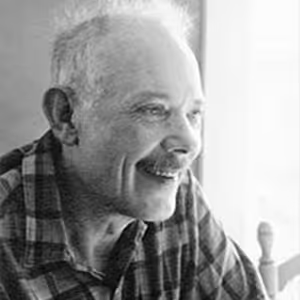
Here I return to my theme and repeat: “This lives in you.” In every person live almost undreamed-of possibilities of becoming a true person in the image of God. We are too easily satisfied with our daily work, with sleeping, eating, drinking, and with the fact that we can live together in brotherhood. I do not mean this as a reproach; I only want to draw our attention to the fact that God’s will is great and that he has great things in store for his children. You must know that something lives in you with the possibilities of endless depths, something of which you are as yet perhaps quite unaware.
[.smalltext]Source: J. Heinrich Arnold. In the Image of God (Plough, 1977) 26–27, 40.[.smalltext]
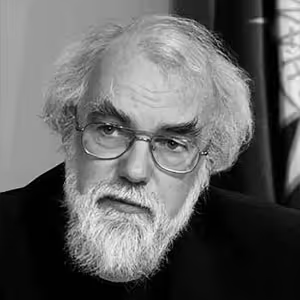
“We have an altar,” says the writer to the Hebrews: it is wherever Jesus is to be found. Our God has met us in the flesh, and we have learned God in the flesh of Christ: “In thy wounds hide me,” because there is our security. The rock is struck and shattered, the waters flow. “Flesh hath purged what flesh had stained / And God, the flesh of God, hath reigned.” God’s way is to be incarnate, fleshed out, in Jesus and in the friends of Jesus. Our way too is toward and into the flesh, not away from it: the love of bodies is the condition for learning, sharing, and growing – for becoming “spirit” in Saint Paul’s sense. For what Paul means by “flesh” is what Ezekiel meant by stone: the self turned on itself, unteachable and unloving, the body itself turned into a self-serving, self-defending machine, instead of being (in a fine phrase of Professor Peter Brown) “the means of our connection with the world.” So we ask our incarnate God to give us the gift of incarnation, the heart of flesh, to keep us so in touch with our mortality and our own special pains that we are free for welcome and for compassion, friends with our vulnerability and so friends with the vulnerable, bearing the reproach Jesus bore – the reproach of a world often much readier to understand stone than flesh. May God make of us what he would have us be through Jesus Christ, to whom be glory for ever and ever. Amen.
[.smalltext]Source: Rowan Williams. A Ray of Darkness (Cowley Publications, 1995), 36.[.smalltext]