Essay
Singing the Song Again
Why Dolly Parton’s death undid me.
November 20, 2026
Try 3 months of unlimited access. Start your FREE TRIAL today. Cancel anytime.
START FREE TRIAL NOWSinging the Song Again
Why Dolly Parton’s death undid me.
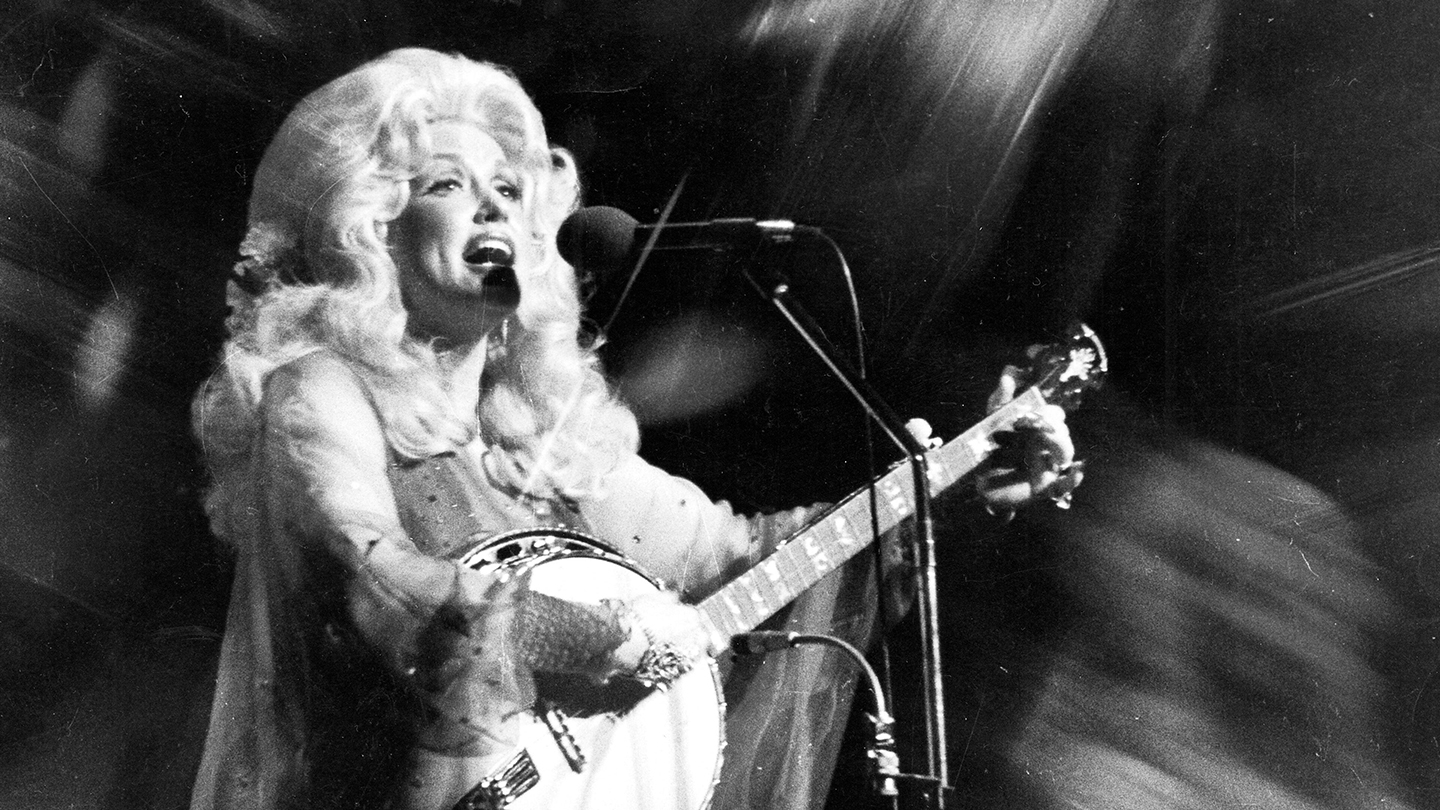
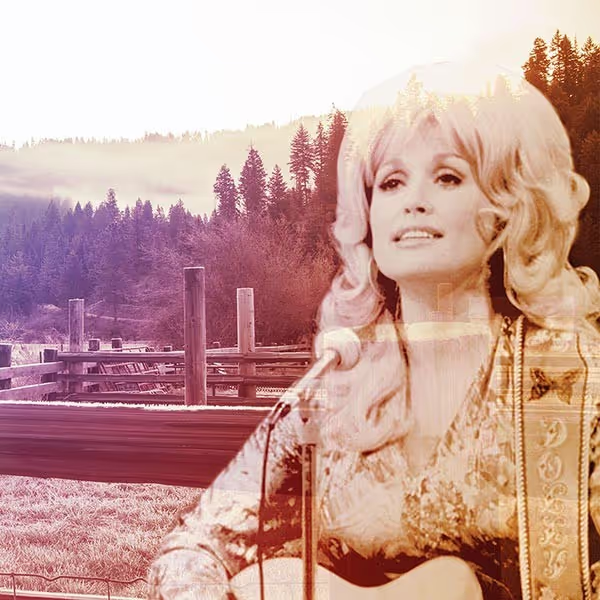
Dolly Parton in the 1970s. [.smalltext]Photograph by Nancy Barr / Alamy Stock.[.smalltext]
[.article__paragraph--cap][.small-caps]On August 26, 2026,[.small-caps] I awoke early, as I always do, with the writing tasks I gave myself for the day. But none of the day’s tasks seemed to matter, or to work. So, I changed tack and tried to deal with mundane and mind-numbing responses to emails. But I sat on the edge of tears all day. The world just seemed a little heavier.[.article__paragraph--cap]
I had not been thinking of her when I awoke that morning, but Dolly Parton had died the day before. I am not really a fan of country music, nor would I have said that I am a fan of Dolly. But many of her songs pepper the memory of my childhood in rural Texas: “Jolene”; “Here You Come Again”; “I Will Always Love You”; “The Coat of Many Colors.” Three chords and the truth, they say; it was especially true for Dolly.
[.article__paragraph--cap][.small-caps]But then, I have known[.small-caps] death intimately before, so why couldn’t I work? As a physician, I have pronounced many people dead. I have fought with death on many occasions. I have even won a few times; many of those were pyrrhic victories, of course. But then, aren’t all medical triumphs over death pyrrhic victories?[.article__paragraph--cap]
I have even written an entire book on death, on how the dead body shapes the epistemological, ontological, and moral life of medicine. In the latter part of the eighteenth and early part of the nineteenth centuries, the dead body became a kind of fetish for medical culture. It became the origin of knowledge. Medical students would break into cemeteries to retrieve the freshly dead to dissect. The dead body reveals the truth, they believed, the truth of the death of the person, but also the truth about the living body. It is an insight that Michel Foucault had in The Birth of the Clinic, and it is this insight that I explored historically. I found just how anatomical dissection itself shapes medicine, shapes the mind of doctors the world over, and shapes us all to think in the same way about the living body. The dead body becomes epistemically normative for the things we want to say about the living body. The dead body becomes the index for the living body, the static model to which the living body is compared.
Yet medicine is supposed to be about the living body. To view the living body as just the inverted image of the dead body puts us in situations where we prolong the dying of the body, or demean the dying body, or even de-mean the living body, extricating it from its cultural meanings and placing it on the dissecting table, where the heart is a pump and not the seat of passion, where the hand is a tool, and not a means of showing comfort with a reassuring touch to the shoulder, where the face – the head and neck – is just the most intricate and complicated anatomies of the body, and not the entry into the soul and life of the other.
I did not really know how to conclude the book, except to point to the ways that the body is the locus of life. The body is a primal site of cultural meaning, where all that is good and true and beautiful manifests itself. Through it – through this living body – we build culture; and our culture recursively turns back to construct the body’s meanings for us. For medicine to extricate the body from these storied meanings in order to keep it going is inevitable. And at the same time, for medicine to extricate the body – especially a dying body – from the meanings, to literally de-mean it, is a violent thing.
I would even argue that this view of the dead body drives us from medicine’s “anticipatory corpse” to create post-human Gods. Despite the fact that most futurists will say they do not intend to make us live forever, it is a very short jump to the work of biogerontologists like Aubrey de Grey, who thinks he can extend the lifespan by extending the health span. And this work of building the body better makes its way into popular culture. Bryan Johnson wants to live forever, or as close to forever as he can get. He hopes to master his own body’s information in order to live forever. He has pretty much pulled his body out of its cultures and placed it into his home laboratory. Don’t die is his core philosophy.
And yet, death has always been the source of culture-building. Monarchs and tyrants build monuments to themselves for the sake of their memory. We have Plato’s dialogues because his beloved teacher Socrates died. It was Boethius’s impending death that gives of his Consolation of Philosophy. We have in our great cathedrals the story of Christ’s death and resurrection. This knowledge is part of what motivates my writing and work. But I also know death a bit more personally, not just as an object of philosophical, cultural, and scientific study. I know how it can shape a life.
[.article__paragraph--cap][.small-caps]My grandfather was born[.small-caps] in 1919 to poor sharecroppers in rural Mississippi. He only had an eighth-grade education. His name was Tom Wes Green; when he enlisted in the Army in 1941, the officers couldn’t believe his name was Tom Wes, so they enlisted him under a proper name, Thomas Wesley Green, as if he had been born into some sort of status. He served honorably as a guard for prisoner of war camps in France and Germany. He taught me to hunt and to fish, two things I really only did with him. He taught me to garden; how to grow tomatoes and squash, how to pick fruit and vegetables. He taught me how to be an honorable man.[.article__paragraph--cap]
As often happens with young boys, my mind had been filled with just how evil Germans were. What could be better than fighting valiantly against injustice and evil? My friends and I would play war games, as if we were liberating Europe from the tyranny of Nazism.
I can remember sitting with my grandfather in a deer camp in the dark cold of an Autumn evening, preparing for the first hunt of deer season, which we would begin early the next morning. My grandfather held court. People loved him; his friends all respected him. He never had an enemy; everyone wanted to be his friend. That evening, my grandfather told the story of three German soldiers, mere boys in fact, sixteen and seventeen years old, all younger than him, freezing cold in the camp, thankful to be alive. Each just wanted the warmth of a cup of coffee, a bowl of soup, a cigarette; each hoped to return to their families. He looked at me: “They weren’t much older than you, Jeff.”
A pang of embarrassment came over me for all the childish war games I had been playing, for all the demonizing of the Germans and the glorification of war. It was a perfect moment of instruction. He said it in such a loving way that it convicted me of my boyish games; but his love drove the lesson home. I could hear it in a way to mature beyond it.
My fondest childhood memories are of my sister and I spending two nights every month over at Papaw and Mamaw’s house. We would arrive Friday night and stay until Sunday morning. Waking up in their house, I would hear my grandparents cooking breakfast. I remember smelling biscuits in the oven, the bacon perfectly cooked, the scent of coffee in the air. I would have my fill of biscuits dripping in honey, and salty bacon contrasting the biscuit’s sweetness. Then we would go out to the garden. We started doing this when I was about six and my sister was four. After tilling the garden or pulling weeds on Saturday we would have lunch and begin to wind down on Saturday afternoon with some TV. And I can remember watching The Porter Wagoner Show, with Dolly Parton, and I can remember with the truthfulness of a six or seven-year-old saying, “Why is Porter Wagoner on the show? They should just let Dolly sing!” My grandfather agreed wholeheartedly.
I could tell that he loved Dolly Parton. I think the twang in her voice, the timbre of it, reminded him of his own past growing up poor in the rural south. Her songs often told stories of the old, hard times. She never turned away from the sadness out of which they were born, yet they often reached for something good. Her songs always seemed to bring the little sadnesses – the little twinge of pain or melancholy – along for the ride, transforming it into joy.
“Coat of Many Colors” is just such a song. The lyrics place the storyteller at some distance from her poverty, but the poverty is transformed just in the singing of the song. In the lyrics themselves, the rags of poverty are transformed by the effort of her mother’s hands. And while the coat of many colors brought her joy, it also announced her poverty to the other children. She is rich because the poverty has been blessed by others. And now, in the telling of the story – in the singing of the song – that poverty is the very fabric of the richness of the storyteller’s life, and now part of the richness of the hearer’s life. In Dolly’s songs, there was something of nostalgia, the pain of a memory, but also the grace that made the difference. This time, the grace that made the difference comes with the singing of the song, in the sharing of the story once again.
On Sunday, August 4, 1985, my grandfather died. I was there. He had had heart trouble off and on since his first heart attack at age forty-eight. He suffered from congestive heart failure. A few days before my eighteenth birthday in June, he had come down with a bout of shingles. In fact, I caught chicken pox from his shingles. I spent my entire birthday week holed up in my house with chicken pox all over my body. It was miserable. I hadn’t seen him for a few weeks after my illness, as I was preparing to leave for college later in August. He was hospitalized on the Friday before, and my parents, my siblings, and I all went to the hospital after church on Sunday to see him. He looked miserable in the bed, but he smiled and greeted us. Within a minute or so of our arrival, his food tray was brought in, and the nurses asked us to leave the room so they could get him up into the chair to eat his lunch. They did their work and called us back into his room. Just as I walked into the room, he looked at me, and then his eyes rolled back into his head and he slumped over. The nurse began to yell at us to get out, as numerous other hospital personnel rushed into the room. He died. I was inconsolable for weeks. On August 4, 1985, I resolved to study medicine.
[.article__paragraph--cap][.small-caps]I have always been moved[.small-caps] by music, which is why I suppose I was moved by Dolly’s death. To be honest, I do not listen to music all that much. I think it is because it moves me in weird, emotional ways. My emotional states change with it very easily. I love music. I love to sing. I am a tenor in our church choir, even if not a very good one. I don’t even like going to church unless there is music, unless I am singing in the choir. Great works of art, buildings, and music are the occasion to remember, to repeat something again, to resurrect it.[.article__paragraph--cap]
A few years ago, I got to see Hadestown on Broadway. The great Andre de Sales was playing Hermes, who is the narrator of the musical. Hadestown is Anäis Mitchell’s retelling of the myth of Orpheus and Eurydice and the seasonal escape of Persephone from the prison of Hades, and her return. Hermes saunters out onto the stage, a New Orleans-style bar scene. The heels of his shoes clap with each step. Then he begins with the opening song, “The Road to Hell.” The chorus goes like this:
Hermes: It’s an old song…
Chorus: It’s an old song…
Hermes: It’s an old tale from way back when; It’s an old song.
Chorus: It’s an old song!
Hermes: And we’re gonna sing it again.
It is an old song, indeed. In fact, in Hadestown, Orpheus is writing a song that is nearly impossible to finish. It is the song of life; it is the song of the good, the true, and the beautiful. Orpheus falls in love with Eurydice, but he cannot seem to finish the song. Eurydice is seduced by Hades and is imprisoned in the underworld. Orpheus is beside himself in his grief and dares to sneak into hell to find Eurydice. Hades becomes angry that Orpheus has entered into his dominion by stealth, but Orpheus moves Hades with his song to at least hear his case. He asks Hades to release Eurydice and bargains to free the souls from Hades. Hades agrees, on the condition that Orpheus lead the souls out of their prison without looking back.
Well, as the Fates would have it, the human heart falters.
As the Fates sing “Doubt comes in” repeatedly, Orpheus sings:
Who am I? Where do I think I’m going? Why am I all alone? Who do I think I am? Who am I to think that she would follow me into the cold and dark again? Why would he let me win? Why would he let her go? Who am I to think that he wouldn’t deceive me just to make me leave alone? Is this a trap that bein’ laid for me? Is this a trick that’s bein’ played on me? I used to see the way the world could be, but now the way it is, is all I see.
Meanwhile, Eurydice and the dead are singing that they are right behind him, they are there. They assure him that they are right there, but Orpheus cannot seem to hear them. Then just as Eurydice sings, “I have been here all along, the darkest hour of the darkest night comes right before – ” Orpheus turns and sees her face to face. Dawn does not arrive.
Then in rapid sequence Eurydice and the dead all fall back into Hades, the lights go out; there is no music. Just the quiet darkness, as Hermes and the Fates look into the abyss.
In the theater, there was sheer quiet. You could hear gasps, sniffles, forlorn sighs as the reality of death settled across the room.
Then the sauntering steps of Hermes’s heels break the silence. He walks to the edge of the abyss and peers into Hades. De Shields let this moment linger uncomfortably long, staring into the abyss. In my memory of it, he looks back to us, the audience; then back to the abyss. The dead silence is uncomfortable. “Alright!” he says. He looks back into the abyss and back to the audience. He says again, “Alright!
Hermes continues pensively, slowly, haltingly in spoken sadness:
It’s an old song
It’s an old tale from way back when
It’s an old song
And we’re gonna sing it again and again…
It’s a sad song
It’s a sad tale, it’s a tragedy
It’s a sad song
But we sing it anyway…
There was a railroad line on a road to Hell
There was a young man down on bended knee
And that is the ending of the tale
Of Orpheus and Eurydice…
It’s a sad song
It’s a sad tale, it’s a tragedy
It’s a sad song
But we sing it anyway…
Cause, here’s the thing:
To know how it ends
And still begin to sing it again
As if it might turn out this time
I learned that from a friend of mine…”
And then the musicians start again with the introductory song, and the whole play begins again.
[.article__paragraph--cap][.small-caps]To our modern[.small-caps] scientific mind, the dead body has no meaning except as a source of knowledge, or something that might spur one on to help others, just as it inspired me to enter into medicine. To the modern, scientific mind, the dead body is stripped of all meaning. Its mechanical processes have stopped, and even its individuality is gone. It is like every other dead body, a cadaver among cadavers. There is no difference here at all, just the same old motion, over and over. There is no real meaning and purpose to that dead, mechanical body.[.article__paragraph--cap]
To the pagan mind, formed as it was by orality and musicality, to begin again is to bring transformative beauty into the world, as if this time it might turn out differently. And in Hadestown it does turn out differently. The second time around, the song hits differently; it feels more powerful. It repeats the hope of the first time, but when it starts again, the whole play seems different now. And as with all things, musicals, books, plays, when it is sung or read or seen a third or fourth time, it repeats the hope amplified by the first, second, and third time around. It is easier to remember something repeated in rhyme and meter, when the tonality of the music fits the tonality of the meaning of the song. And when rhyme, meter, tonality, and meaning align, something about the fact of death is caught up in the beauty; a different kind of truth and goodness are achieved.
To the Christian mind, there is a difference yet again. The repeated hope of the Resurrection is the transformative grace that blesses the tattered rags of a living, failing body. I have been touched by death; it hurts. All whom I love will succumb to it, as will I. Sometimes this knowledge – the knowledge that death will come again – makes it difficult to get up and sing the song of life again. Still, I get up in the morning to sing it again, to write, to affirm that something beautiful and good is possible, and that death itself will not play the final note. We will sing it again, transformed each time.
Emily Wilson says it very well in the preface to her translation of The Iliad:
You already know the story. You will die. Everyone you love will also die. You will lose them forever. You will be sad and angry. You will weep. You will bargain. You will make demands. You will beg. You will pray. It will make no difference. Nothing you can do will bring them back. You know this. Your knowing changes nothing. This poem will make you understand this unfathomable truth again and again, as if for the very first time.
To have the knowledge of death can paralyze us. It can force us to look back like Orpheus and to be unable to look forward. Singing the song of life again is an effort, but the grace of the kiss bestowed by a mother transforms the old, tattered rags into the coat of many colors. That is the unfathomable truth of singing it again. There is the unfathomable grace of a difference in each singing of it. Death becomes nothing because we sing this song anew. It is a new song every time it is sung again.