Editors’ Pick
A Picture of a Good Death
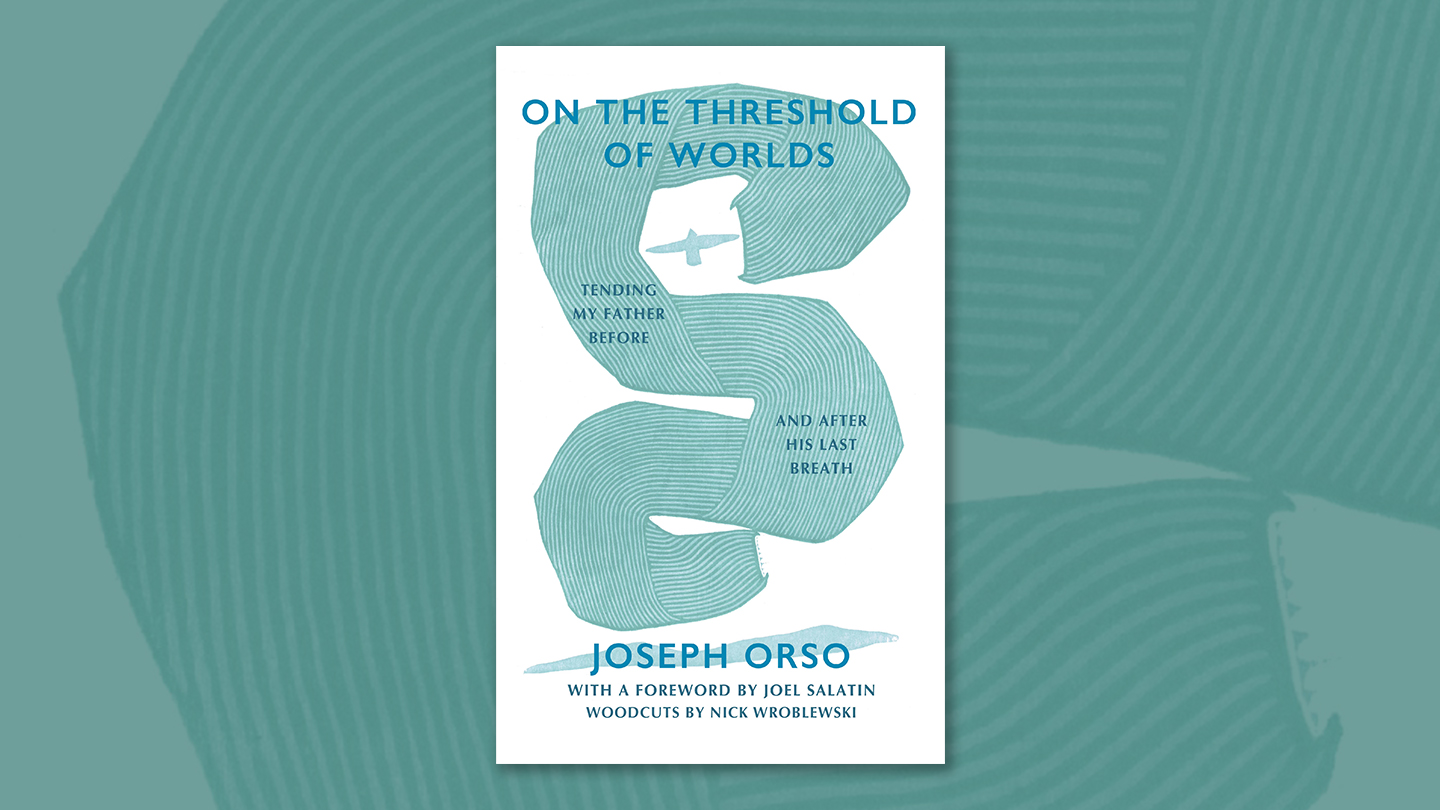
Shana Goodwin reviews On the Threshold of Worlds: Tending My Father Before and After His Last Breath by Joseph Orso.
October 9, 2026
Try 3 months of unlimited access. Start your FREE TRIAL today. Cancel anytime.
START FREE TRIAL NOWA Picture of a Good Death
Shana Goodwin reviews On the Threshold of Worlds: Tending My Father Before and After His Last Breath by Joseph Orso.
[.article__paragraph--cap][.small-caps]When my grandma died,[.small-caps] my dad asked me to write her obituary. Weirdly, this was something I knew how to do as a young college grad, and I remember the relief I felt beginning the task. Death makes people uncomfortable, says Joseph Orso in On the Threshold of Worlds, and in the days around a loved one’s passing, it’s a gift to have something to do. And there can be plenty to do, especially if, as in Orso’s experience described in the book, you decide to care for and bury the deceased yourself.[.article__paragraph--cap]
Orso’s father, Jim, was diagnosed with Alzheimer’s disease, and when his dementia began to affect his ability to function in daily life, he and his wife moved next door to Joseph’s family home in rural Wisconsin. The family pivoted to prioritize him, but they eventually realized they just weren’t set up to manage his medical needs, and moved him to a nearby memory care facility, where he remained till his death two years later.
At some point as their father’s decline steepened, this family committed to overseeing the entire process of saying goodbye and burying their dad, a decision spurred by love and a desire to remember the duties we have to each other. Before the Civil War, families assumed this responsibility as the norm; the need to transport soldiers’ bodies long distances to their hometowns led to the rise of professional embalming and the popularization of the funeral home in the 1860s. The Orsos were fortunate to have a local organization, the Threshold Care Circle, offer practical and spiritual advice for how to take on these tasks themselves.
The result of this decision, as described in the book, is a tender tribute to experiencing death as something not to fear, but to revere: “Dad is dying, and the thing to do has been obvious: sit around him as we’d sit around a fire, gazing at the flames, and telling stories and making music and eating cake until the flame burns out.” This metaphor resonates with experiences of death and burial at the Bruderhof community where I live. Whenever someone nears death, community members and children often fill the room with song and prayer to accompany the traveler over the threshold and bolster the family with whatever support is needed – hot meals, hospice nursing, housecleaning. Death is a communal process here, and I was moved to read in Orso’s account the possibility of an individual family echoing the same attitude with the support of neighbors and friends. The book highlights the practical services that made the home burial possible: plowing snow, making food and phone calls, sitting vigil.
Orso’s language is somewhat grandiose; looping phrases and nature metaphors make the book sound like a chant, which some readers may appreciate more than I. In scope, the author does not attempt to outline home burial after a sudden death (shorter timeline) or for families that don’t happen to live on a large piece of rural farmland. The book’s timeline is jumbled, and while the author suggests this is to be indicative of the experience of dementia from which his father suffered, it can feel more frustrating than enlightening.
Nonetheless, I was drawn into the story of how this family honored their father. Orso writes with reverent detail, answering questions one naturally wonders about along the way. And I appreciate the Threshold Care Circle’s wish to pass on their knowledge in an empowering way that will eventually lead to their extinction. If the book does not spark an uptick in family-directed funerals, it can at least provide a picture of a good death.