Editors’ Pick
Is the Happy, Hopeful Novel Dead?
Lore Wilbert reviews Whistler: A Novel by Ann Patchett.
October 12, 2026
Try 3 months of unlimited access. Start your FREE TRIAL today. Cancel anytime.
START FREE TRIAL NOWIs the Happy, Hopeful Novel Dead?
Lore Wilbert reviews Whistler: A Novel by Ann Patchett.
[.article__paragraph--cap][.small-caps]Once gone,[.small-caps] can the people we have loved and lost come back to us? Not always, Ann Patchett might say, but in her newest novel, Whistler, she lets us imagine that they might.[.article__paragraph--cap]
Whistler opens with a couple in their midlife, Daphne and Jonathan, wandering the Metropolitan Museum of Art. Daphne muses on “a monumental slab of granite into which two horses had been chiseled. Or maybe it wasn’t two horses so much as it was one horse and its ghost.” What follows is the story of Daphne’s reconnection with a lost stepfather she hasn’t seen since she was nine years old, following a terrible car crash the two of them shared. It is the story of horses and ghosts – though both are rarely mentioned – marriage and parenthood, and the ways we are inextricably tied to one another through loss, grief, pain, suffering, secrets, and hope.
Throughout the year that follows, Daphne and her former stepfather, Eddie, reconnect through art and words, their natural and chosen families, telling the truth and sharing long-held assumptions about one another. There is no moralizing, instead the story is wrung with the sort of unvoiced grief we all carry with us from childhood, being the ancillary participants in the stories adults are telling themselves about one another. It entertains the question of what kind of collateral damage we do to one another when we withhold the whole truth of ourselves from one another. And even more so, how we can be agents of healing long after the deeds are done.
Whistler is precise and spare, but not simple or trite. Patchett has said that it would be a mistake to call it simple, and here is an author at the height of her career, writing a book that feels effortless to read because of the great effort she’s put into her craft thus far.
It has been said that happy, hopeful novels are dead. The world wants grit and salacious stories, tales of murder or passion. Some may think Whistler ties itself up with a bow at the end, others may feel it lends some hope to those of us without pretty bows of our own. But none can deny it’s a story of coming home to one another and to ourselves, which is a kind of happiness and a kind of hope, both of which we all need.
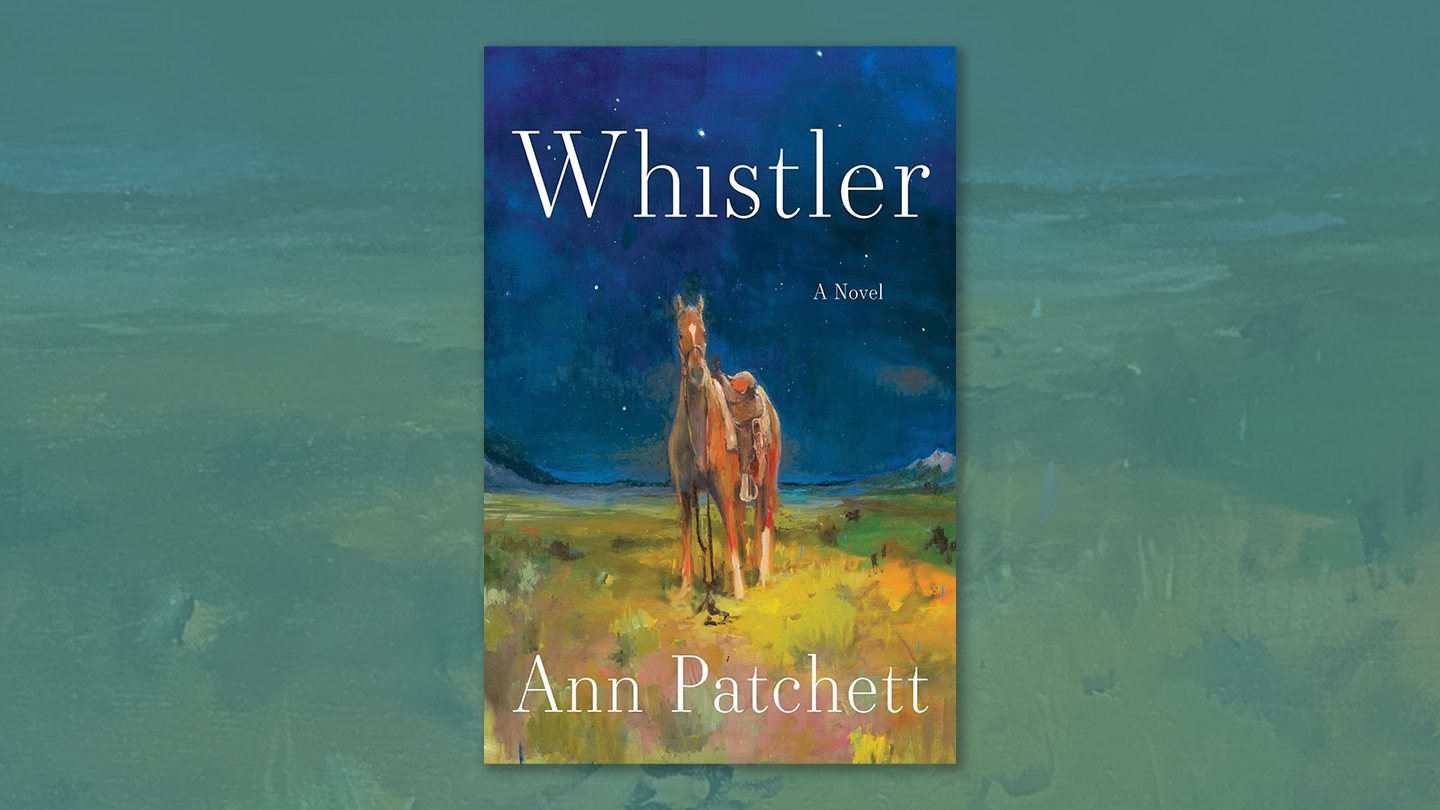
The illustration of the horse on the cover – and the musing on the granite horses – might lead one to believe this is a story about horses, but though the horse only shows up for six pages of the entire novel, the fact that he shows up at all lingers with you long after the book is finished.
The answer is yes: yes, we can always try to find our way back to one another.