Personal History
The Price of a Name
A genealogist visits a Tennessee plantation in search of her ancestors.
June 19, 2026
Try 3 months of unlimited access. Start your FREE TRIAL today. Cancel anytime.
START FREE TRIAL NOWThe Price of a Name
A genealogist visits a Tennessee plantation in search of her ancestors.
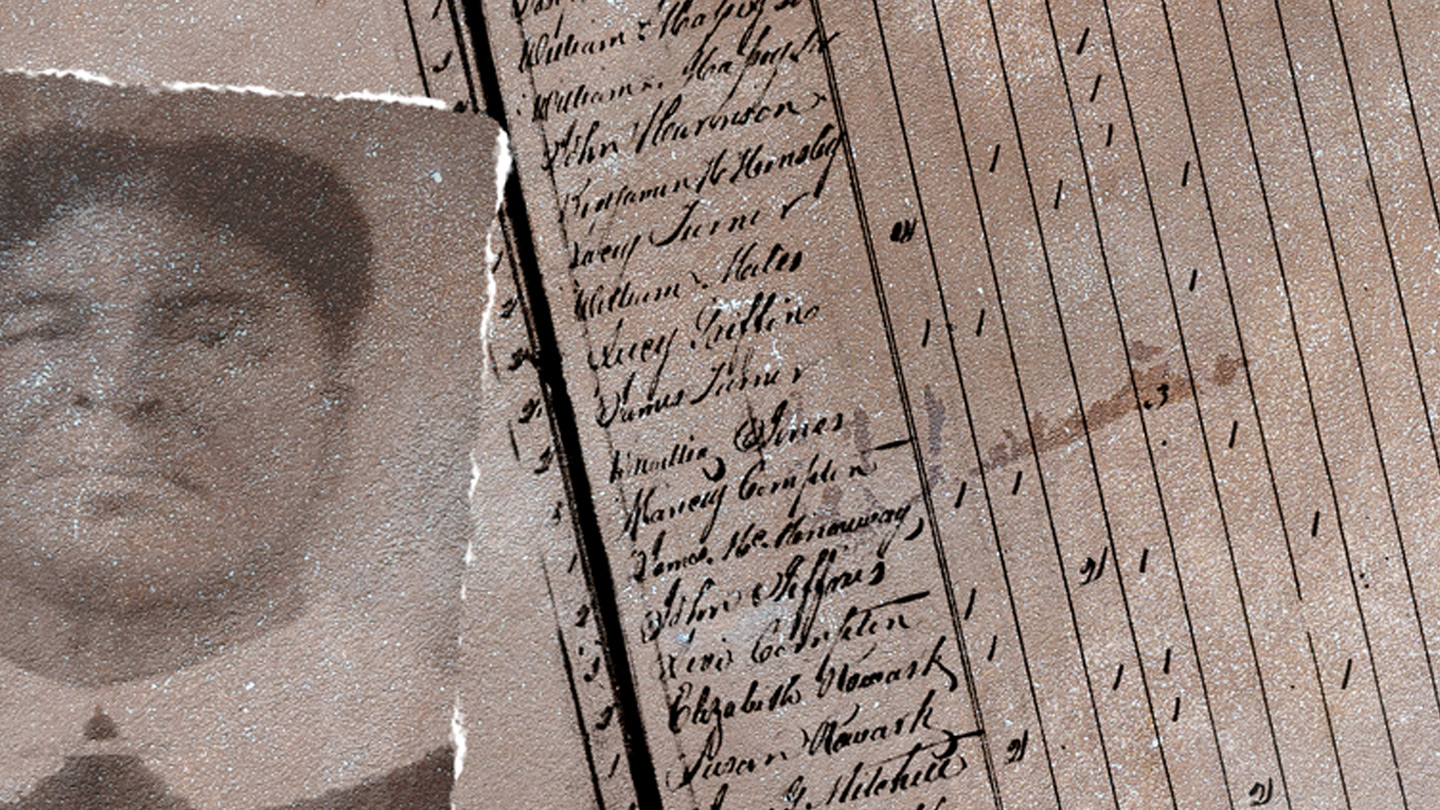
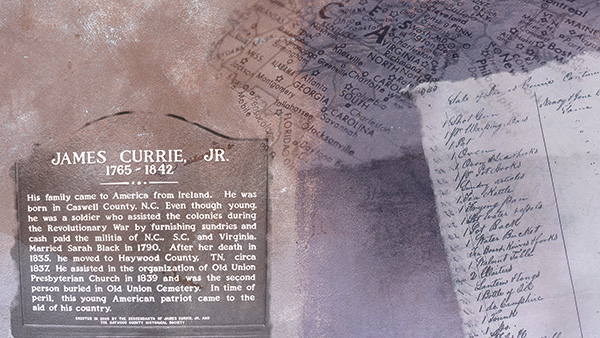
Collage with photograph of Edmonia Stansfield Oldham Currie and 1840 census mentioning James Currie. [.smalltext]All images courtesy of Carolyn Haliburton Carter.[.smalltext]
[.article__paragraph--cap][.small-caps]Some inherit land.[.small-caps]
Others inherit wealth.
I inherited a question.[.article__paragraph--cap]
Long before I ever stood on the plantation where my maternal ancestors were enslaved – long before records surfaced or invitations were extended – that question had already taken root. It lived in stories half-told, in names that disappeared, and in the quiet certainty that something essential had been lost, and that someone, someday, would be responsible for finding it.
I did not know then that I would one day walk that land alongside the descendants of those who enslaved my family. I did not know that a forgotten will, discovered by accident online, would finally give names to the silence I had inherited. What I knew – only dimly – was that history does not remain buried simply because we stop looking. It waits.
[.article__paragraph--cap][.small-caps]I did not learn[.small-caps] about my history in a classroom. I learned it in the kitchen.[.article__paragraph--cap]
For me the kitchen was not simply a place of meals, but a place of memory, love, and lessons. It was where stories lingered after the dishes were done, where voices met, where the past arrived unannounced and took its seat at the table. It was where I first learned that history does not always live in books, and that some of the most important historical knowledge was never written down at all.
I spent my summers at the home of the elders, now the ancestors – my great-grandparents, grandparents, aunts, and uncles in what was called Black Bottom Detroit, but to us it was known as “Over to the House.” My ancestors carried stories the way others carried groceries. Stories surfaced while peeling potatoes, popping popcorn, frying bacon, roasting coffee, and on occasion stomping grapes in the bathtub to make homemade wine. Stories were not always tidy or complete. Names appeared without dates. Places were remembered without maps. People entered the story briefly, then disappeared again into silence. There was always something going on Over to the House. The ancestors never announced that they were teaching us; sometimes as kids we were chased out. “Grown folks are talking,” my grandmother would say. Sometimes we’d sit on the floor, eavesdropping; sometimes hiding beneath the dining room table to keep listening. We knew who we belonged to – and that their lives mattered.
My aunt would take my sister and me to the attic and open a treasure trove of family heirlooms. Once we got to the top of the stairs, only one bulb in the ceiling lighting the room, we would jump onto the bed covered with a handmade quilt and watch as she opened the dusty trunk. We were careful with the delicate items she presented us: a comb that belonged to a great-aunt; a work badge from our great-grandfather who migrated from Tennessee to Detroit to work in the automobile plant, like many who sought economic opportunity and freedom from Southern racial violence; a flag from our great-uncle who served in World War II. These relics carried the souls of our ancestors.
At the center of this world was Cassie Bianther Currie Kirby, my great-grandmother – Granny, as we called her. Granny had a saying for every situation. If someone swept over your feet, she stopped everything and told you to spit on the broom. If you didn’t, bad luck would follow. She never explained why. The rule itself was sufficient.[#continue] [#continue]
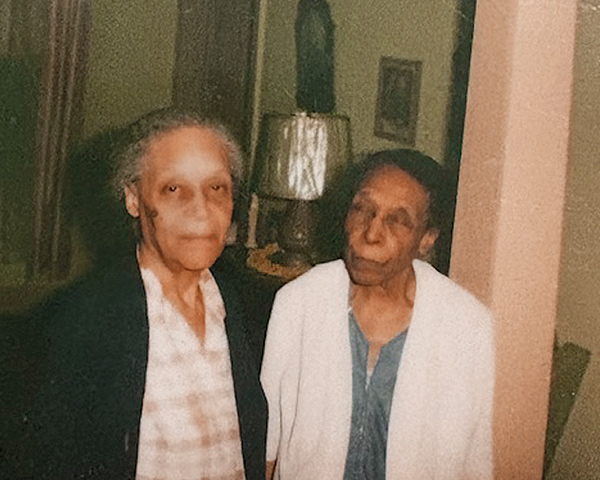
When storms rolled in, the television and radio were turned off. The house grew quiet. “God is doing his work,” she would say. Noise had no place then. We also had to remove all the bobby pins from our hair; I would think “maybe God don’t like our hairstyles.” We would comply and sit still for hours, unpinned.
If you gave someone a new purse, you never gave it empty; a penny had to go inside to bring good luck. You better not have your Christmas tree up after midnight on New Year’s Eve. When you dream of fish, someone is having a baby. The first rain in May is good to wash your hair in. Put a glass of water under the bed at night to keep the haints away. I did not know what a haint was until much later – a ghost. I only knew that Granny spoke of them with certainty, and that certain things were better not tested.
These “sayings and superstitions,” as she called them, were fragments of ancestral knowledge – African griot’s conversation braided with Southern folk belief and Christian faith. They taught respect, restraint, thoughtfulness. These words of wisdom were shaped by generations who learned survival by attending to what could not always be seen. They assumed a world where the spiritual and material were inseparable, where the dead were not gone but present, where actions carried consequence beyond what could be measured.
Our family is very intentional about honoring our dead faithfully. In 1957, Granny purchased seven cemetery plots for fifty dollars, where the ancestors could be laid to rest – and every year without exception since then, our family has gathered there for “Decoration Day.” When I was a child, we’d pack a picnic lunch and drive for what seemed like hours to get to the cemetery. The adults would clean all the ancestors’ graves, cut away the weeds, add a flag to our veteran ancestors’ place of rest, and lay flowers on headstones. We’d laugh and cry and share memories. As the elders in our family have died, my siblings and I now carry on this tradition.
I have come to see how fundamental that practice is in a nation that so often prefers forgetting – especially when memory unsettles power.
[.article__paragraph--cap][.small-caps]In 1985, I sat[.small-caps] at the kitchen table Over to the House with my grandmother, Thestira Kirby Taylor (“Polie”), and my great-grandmother, Cassie. I listened as they talked about growing up “down South” in Tennessee – about food, holidays, and family rituals. Cassie had such admiration for her father, a hard-working farmer named Horace Currie, who after the war was able to buy a piece of land and pass it on to her. And she described how the casket of her own mother, Edmonia Stansfield Currie, rested in the living room before burial, a vigil of love and remembrance that made room for grief. She said, “This is where our family would rest until they were buried.”[.article__paragraph--cap]
Mother and daughter corrected each other when details blurred. I was struck not only by what they remembered, but by how much they carried without written documentation. In that moment, listening to two Black women speak memory into the room, I made a promise. I told them I would keep their stories alive. That I would search for the missing connections.
Cassie was the youngest of twenty-one children. She knew only fifteen of them by name. The others, she said plainly, “had been sold to another slave master.” She had been born in 1883: I made that promise to her, in the kitchen, when she was 102 years old. She also knew the names of her grandparents, Nancy and Harry Currie. Their lives were a mere note on a page. No locations. No records. Just absence.
That absence was my first encounter with historical erasure of my ancestors. But even having those names – the grandparents and the fifteen siblings Cassie knew – would be invaluable to me as I set out to piece together our family’s genealogical past.
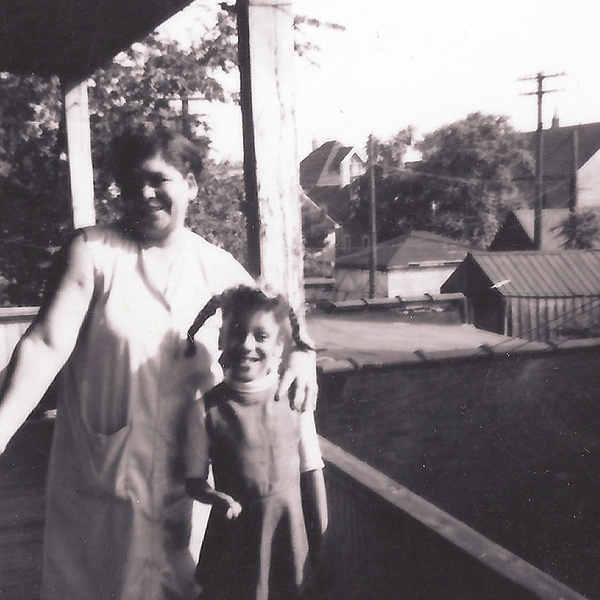
As a professional genealogist, historian, and researcher, I now work with archives, databases, and formal records. I am trained to read what is written – and to recognize what is missing. For Black families in America, the archive is both necessary and insufficient. Our ancestors lived in a nation that systematically denied their humanity. Because enslaved individuals were legally considered property, they were documented primarily during moments of transfer, valuation, or inheritance. Many lived entire lives without ever having their names written down in legal documents until after emancipation. Names could be assigned or changed at the will of the enslaver. Surnames were often derived from the plantation someone lived on or their enslaver’s name (whether or not that person was involved in their paternity), disguising family connections.
Laws dictated who could be named, who could testify, who could leave a paper trail. Laws across slaveholding states prohibited enslaved people – and often free Black people – from testifying against white individuals in court. This legal exclusion meant that their voices were systematically erased from judicial proceedings, even in cases involving violence or injustice against them. Anti-literacy laws were designed to prevent communication, organization, and self-expression. Enslaved people were required to carry written passes from their enslavers in order to travel beyond designated spaces. Many wore slave tags to identify them by their enslaver. These laws were enforced through patrol systems that monitored and controlled Black movement. Erasure was not incidental; it was enforced. That silence still shapes how the story of America is told.
Genealogy is not simply about filling in blanks. It is about confronting the moral weight of what those blanks represent. Every missing name asks a question: Who decided this life did not matter enough to record? Every incomplete record raises another: What does it mean to build a nation while refusing to fully acknowledge those who sustained it?
After emancipation, one of the most powerful and revealing responses to the violence of family separation was the use of newspaper advertisements by formerly enslaved people searching for lost relatives. These notices were often brief but deeply emotional, listing names, former enslavers, last known locations, and fragments of memory – anything that might help reconnect families torn apart by sale, migration, or escape. “I was sold from Virginia to Mississippi,” or “my mother was named Eliza and belonged to Mr. So-and-so.” Emancipation did not simply mark the end of slavery – it began an enduring struggle to rebuild families and recover identities that the institution of enslavement had deliberately obscured.
For those of us now tracing our family histories through fragments – wills, inventories, bills of sale, and oral memory – the question of freedom is not abstract; it is deeply personal. What does freedom mean when your ancestors were counted but not named? In a way, genealogy becomes not just a method of research, but an act of restoration.
[.article__paragraph--cap][.small-caps]Cassie went to be[.small-caps] with the ancestors in 1993 at the age of 110, followed by Thestira in 1997. As they were laid to rest, the promise I had made them deepened. To understand where the story broke, and why, I began my quest through an intensive writing campaign to archives in North Carolina and Tennessee. I found a reference to a cousin I had not met who wrote a book about the Curries. He told me, “You know the Currie farm is still in Brownsville, Tennessee. You need to contact them.” I folded that clue away and continued my research.[.article__paragraph--cap]
Years passed. Then came 2020. My mother, Louise Taylor Haliburton, died from Covid complications early in the pandemic. Later that year, deep in grief, I defended my dissertation, driven by my promise. Loss and purpose collided.
Still, I resisted contacting the Currie family – not out of anger, but fear. Fear of rejection. Fear of silence. Fear of what might surface. What would they say to me, and more importantly, what would I say to them?
[.article__paragraph--cap][.small-caps]The turning point came[.small-caps] unexpectedly. One evening, I found myself scrolling casually – clicking links, following digital threads. On a photo-sharing website, I stumbled upon something that stopped me cold.[.article__paragraph--cap]
There it was: the last will and inventory of James Currie (also spelled Curry on many documents), dated April 1844, the man who had enslaved my maternal ancestors.
Cassie’s siblings – only some named, and others he owned were listed only by age – appeared among household goods, livestock, tools, and debts: Eliza and her baby both worth $375, Harry $150, George $425, Henry $450, Lila and Monie $450, Reuben $175. One entry listed “a yellow girl named Frances.” This indication of mixed ancestry suggested that a white man in this circle fathered an enslaved child. Frances was bequeathed to James Currie’s daughter Nancy – but whose daughter was she? These were human beings with their lives reduced to monetary value. Their identity folded into property.
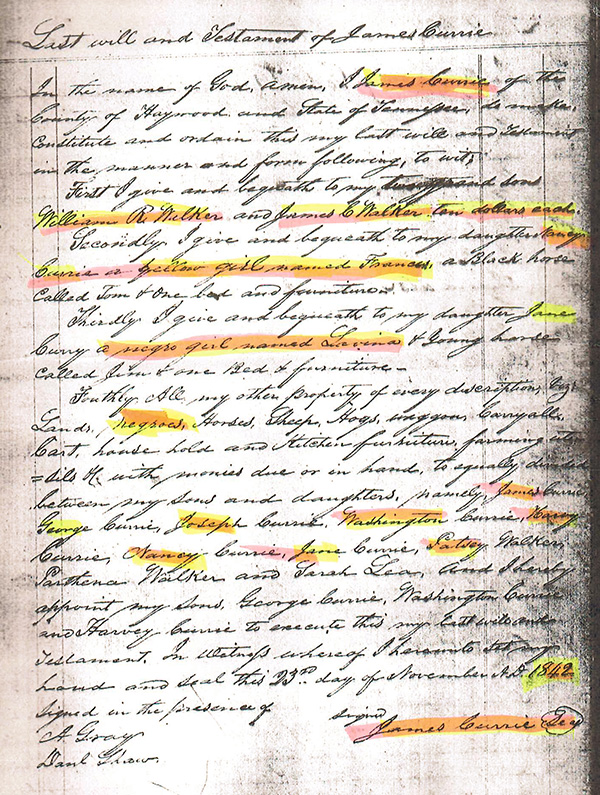
I leaned back in my chair, closed my eyes, and returned instantly to that kitchen with Cassie and Thestira. This was not simply documentation. It was confirmation – proof of what they had carried without evidence for decades, names that had been known by oral history alone. Eliza was Cassie’s sister. This was her family.
I finally reached out to the descendants of the Currie family. I picked up the phone, not knowing how I was going to be received. “Hello, my name is Carolyn Haliburton Carter, and I think your family owned mine,” I blurted.
To my surprise, the woman who answered responded warmly. I learned she was also conducting research into her family’s history, searching for clues about who they were. We laughed and talked about our ancestors. After several months of phone conversations, she and her family invited me to visit the plantation.
Nervously excited, my husband and I drove south.
Upon our arrival, the woman and her family welcomed us with grace and genuine hospitality. I shared my research on the connections between their ancestors and mine. We spoke cautiously at first, aware of the weight between us. They shared what they knew – what had been preserved, which stories had been passed down.
Enslavement hovered at the edges of our conversations – acknowledged, but rarely named outright. The plantation still bore its original name. It was still a working farm, with a (white) hired laborer now harvesting the cotton. The “Big House” constructed in the 1830s was still intact, was still their home.
I could feel the memory in the land: This is where my ancestors lived, labored, and died. We walked toward the backyard cemetery where the white ancestors are buried and the current family plans to be as well. “Where are the Black people buried?” I asked. My host pointed to an overgrown field where oral history suggests some burials could have been, although there were no markers for them, no proof. And yet I felt their spirits: present, insistent, unresolved. I imagined hands in soil, prayers whispered under breath, endurance carried across generations.
As we walked the land, I felt a quiet tension within myself – appreciation for our hosts’ openness, unease at the history beneath our feet, and an awareness of how differently the same ground can be inherited. When we went inside the house, I shared with them records detailing how many people their ancestors had enslaved, showing them United States Census Records, James Currie’s will inventory, death records, and more. It was the first time they had seen such evidence. The papers shifted the air between us.
On further discussion, we realized that their family carried not only the Currie lineage, but also a surname from my paternal line: Haliburton. Were we, in some complicated way, double cousins? Or was this simply another reminder of how slavery tangled bloodlines so thoroughly?
What was clear is that absence exists on both sides of enslavement. My family inherited silence where records should have been. Their family inherited stories shaped by omission. Neither lineage was whole.
Scripture tells us that truth sets people free – but it does not promise comfort in the telling. Witness, too, is costly. But it remains the only ground on which reconciliation can stand.
I wanted them to know that I had no animosity towards them. I was grateful for the opportunity, and felt compelled to say aloud what seemed necessary: “We cannot change the past, and neither you nor I were there, but we can tell the truth about it – for the future.”
[.article__paragraph--cap][.small-caps]After we returned home,[.small-caps] we kept in touch. Emails followed, documents were exchanged, and still questions lingered.[.article__paragraph--cap]
At one point, we turned to DNA testing – not as a final answer, but as another form of inquiry. The results showed no direct genetic connection between us, at least none detectable with the data available at this time.
Even when DNA could not confirm what history suggested, it reminded me that kinship is not only biological. It is historical, moral, and bound by responsibility as much as blood.
[.article__paragraph--cap][.small-caps]I returned to the will[.small-caps] and inventory and read it slowly – not as a researcher scanning for data, but as a descendant confronting the price assigned to my ancestors.[.article__paragraph--cap]
Eliza Currie (later Douglass), my great-grandmother’s sister, appears in the inventory as one of the few enslaved women identified with a child – an uncommon and significant detail in records that typically reduced people to age and value. That single entry became a genealogical anchor.
Later, I encountered echoes of this family history in the WPA Slave Narratives, published in 1936. In the Oklahoma volume appears the story of a J. H. Curry, born enslaved in 1862 in Haywood County, Tennessee, to Washington Curry and Eliza Douglass (evidently, a younger brother of the baby Eliza was listed with in the will). Her name changed not by marriage but by her sale to another enslaver. This points to the painful reality that J. H.’s father and mother, like many enslaved parents, were held on different plantations. They were able to reunite following emancipation; in the WPA narrative, J. H. describes his family moving away together and struggling to make ends meet in their new life. His father, who learned to read and write from his enslaver T. A. “Tom” Curry, was eventually able to find work as a teacher. J. H. grew up to preach the word of God.
[.pull-quote]Absence exists on both sides of enslavement. My family inherited silence where records should have been. Their family inherited stories shaped by omission. Neither lineage was whole.[.pull-quote]
T. A. was the son of Mitchell Currie, who enslaved my ancestors on the Tennessee plantation I visited. There is also a Thomas Currie who makes a notable appearance in my family archives, but it is unclear whether they are the same man. In 1878, this Thomas Currie sold a tract of land to Horace Currie – my great-grandmother Cassie’s father. What connection they had prior to this transaction is unknown, but it suggests some sort of continued entanglement between the enslaving Currie family and my own line after freedom.
Taken together, the evidence suggests not separate Currie/Curry families, but interconnected branches of a larger Currie/Curry network moving from North Carolina to Tennessee and into Arkansas. Within that network, white enslavers and Black descendants share a surname shaped by coercion, inheritance, and survival. The repetition of names across generations, combined with the fragmentation of enslaved families in wills, inventories, and sales, makes definitive conclusions difficult. But this is not a story of coincidence. It is a story of connections – one where the archive offers fragments, and the work of genealogy is to assemble them carefully, without claiming certainty where the record remains silent. Many questions remain; the names of Cassie’s lost siblings are still unknown. I will continue this journey and the promise I made. But it is by this work that I hope their stories, too, may one day be revealed.
What I do know is this: the land that Horace purchased would eventually make possible Cassie’s inheritance of land in 1912. Where people had once been listed as property, descendants now stood as property owners under law. Separated by nearly a century, the will and the narrative spoke to one another. One reduced lives to property. The other restored voice to those same lives.
Together, they formed a conversation across time.
[.article__paragraph--cap][.small-caps]My ancestors are not gone.[.small-caps] They are with me still – guiding, correcting, sustaining. I carry them not only in documents and files, but in memory, faith, and practice. I no longer need to climb into an attic to search for the past. I simply close my eyes. I return to the kitchen. I hear Granny’s voice. I know who I belong to.[.article__paragraph--cap]
As America marks 250 years, the soul of our nation cannot be found only in what it preserved, but in what it forgot – and in whether we are finally willing to remember. When whole populations are missing from the record, the nation’s story is incomplete. Digging into the past can be painful, but that is exactly why the truth of these stories must be uncovered. Repair does not begin with certainty or closure. It begins with honesty – with naming what was done and refusing the easy refuge of silence.
This work of remembering does not stop at national borders. Our ancestors carried languages, beliefs, skills, and identities across oceans, preserving fragments of home even in the harshest conditions.
At the center of this survival was not only movement and memory, but faith. Faith offered a language for hope when the material world denied it, and a belief in divine justice when human systems failed. The ancestors trusted in God that freedom was not only a physical destination but a spiritual promise.
In John 8:31, Jesus reminds us, “and you will know the truth, and the truth will make you free.” I believe wholeheartedly that our ancestors preserved enough of this truth to pass it on to us – across borders and generations, and through a faith that refused to be broken. The responsibility is now ours: not only to remember, but to reconnect, to restore, and to tell these stories in ways that honor their full humanity and the spiritual foundation that sustained them.
I am the hopes and dreams of my ancestors. And so are you.