Book Excerpt
I Wish I Had Known Howard Thurman
Thurman showed me I don’t have to choose between action and contemplation.
June 27, 2026
Try 3 months of unlimited access. Start your FREE TRIAL today. Cancel anytime.
START FREE TRIAL NOWI Wish I Had Known Howard Thurman
Thurman showed me I don’t have to choose between action and contemplation.
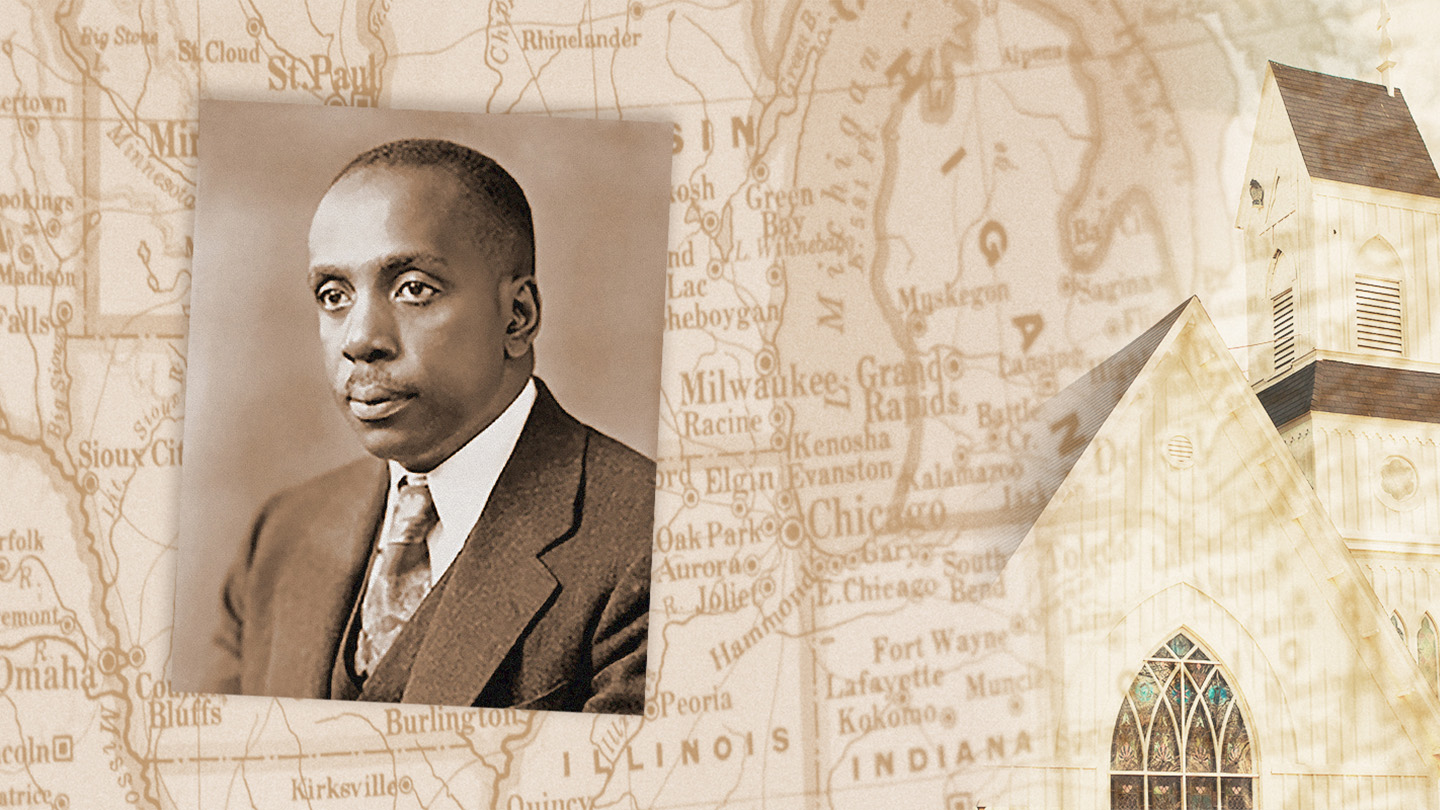
[.smalltext]All images public domain.[.smalltext]
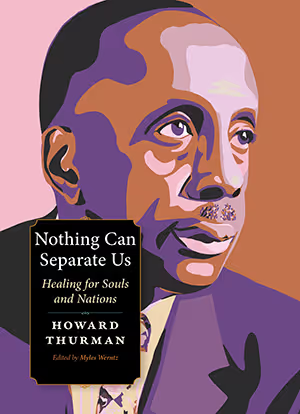
[.article__paragraph--leading]This article is the introduction for the forthcoming Nothing Can Separate Us: Healing for Souls and Nations (Plough, 2026). The book assembles readings by Howard Thurman (1899–1981), spiritual adviser to civil rights legends, and offers a fresh approach to Thurman’s spiritual vision of reconciliation, justice, and a hope grounded in the transformative work of love in the world.[.article__paragraph--leading]
[.article__paragraph--cap][.small-caps]There are three moments[.small-caps] in my life when I wish I had known Howard Thurman. If not the man, if not the chance to sit and talk in his living room, then at least I wish I had known his words.[.article__paragraph--cap]
When I was eleven years old, in 1993, I moved with my family from a small but relatively cosmopolitan, multicultural university town, Ann Arbor, to a small and deeply provincial town in Minnesota. I had been accustomed to teachers and classmates whose faces were black and white and many shades of brown, where we had Emilys aplenty but also Hakan and Jamal and Mrs. Chang. In Minnesota, it was not just snow that was dazzlingly, overwhelmingly white. In every school picture, my brown skin stood out like spilled ink.
It is always difficult to move on the cusp of adolescence, when you realize that who you are is not a settled question, defined by your family unit. My first reaction to my displacement was to buy a book about God. This was a curious reaction: my parents grew up as churchgoers but had drifted away, mealtime prayers the only trace of the faith that once was. But for some reason, browsing the bookstore, I settled on a guide to the varieties of Christianity. I devoured it. Soon, I convinced my mother to take me to a different church each week. We visited the Unitarians as they lectured on Spinoza, and experienced the serious piety of the Lutherans, the free-flowing, musical worship of African American Baptists, and the beautiful Eucharistic devotion of Episcopalians.
Each week I left unsatisfied. Perhaps I was confusing intellectual and spiritual appetites, or bringing an unhelpfully consumerist mentality to my visits, or Minnesota churches just are not that welcoming. Whatever the case may be, I withdrew – not just from church visits; my interest in school, Boy Scouts, and friends waned. My health suffered. Doctors were consulted, to no avail. Home during days when other children were at school and my parents were at work, I gradually began venturing out into the woods that surrounded our new house. I found a path to a meadow where the grass was pressed down every morning, where a neighbor told me the deer would sleep. I found an abandoned farm field, wild turkeys exploring its tall grass. I found the Zumbro River, moving vigorously in its main channel, at a near standstill in its slough – and I leaned my back against the tree that leaned over the point where channel joined slough.
I wish then, with my back on my favorite tree, I had known about Howard Thurman’s favorite tree. In a Florida childhood full of deprivation, discrimination, and precarity, Thurman’s oak grounded him, giving him energy to go on. Leaning against that oak tree, Thurman writes, “I could reach down in the quiet places of my spirit, take out my bruises and my joys, unfold them, and talk about them.
I could talk aloud to the oak tree and know that I was understood.” The first photograph Thurman includes in his autobiography, before images of his grandmother, mother, classmates, and students, is a picture of that oak tree.
For Thurman, leaning against his favorite oak tree was a spiritual experience, the sort that he, too, had looked for in churches – and that he would continue looking for in churches and in the religions of the world throughout his life. Searching intellectually and institutionally was important for him, but it could never be ultimately satisfying; spending time attending to the goodness of creation offered that satisfaction.
[.article__paragraph--cap][.small-caps]Ten years later,[.small-caps] in 2003, I took a train across the country to study religion. California, I thought, was the place to be, its braided traditions of radical politics, serious scholarship, and multicultural community would launch me into a satisfying career and start my adult life. Days and nights on the train promised a reset, with cities turning to endless plains, to striking mountains, and finally to the verdant fields of California, before the Pacific Ocean climax. I had found a community with whom to live in a former convent, just the place to begin a new life grounded in fellowship.[.article__paragraph--cap]
Like most California dreams, mine quickly turned sour. I found that radical politics were confined to museum displays and academic gestures. Intellectual life struck me as unserious; classmates and teachers preferred to talk about yoga and health fads. It turned out that most of the people living with me in the former convent were there not because they shared my values and my desire for fellowship but because the Bay Area was so expensive that communal living and cooking presented the most affordable living option. (There was a girl involved in this story of disappointment, too, but I will spare you the details.)
My first impulse was to try to fix things. I joined groups employing direct action tactics to address homelessness, breaking locks on shuttered buildings and giving away food in parks. I started reading groups with students, professors, and clergy to build intellectual community. And I joined a few of my housemates in starting a new intentional community, acquiring property and reimagining our common life – redescribing the old convent’s “work shifts” as “love shifts.” But again, I was still unsatisfied. Looking at the blue skies and smelling the ocean breezes while sorting the compost as part of my love shift made me feel nothing but disappointment at a dream gone to rot. After sixteen months in California, I returned to the Midwest.
[.pull-quote]Like most California dreams, mine quickly turned sour. I found that radical politics were confined to museum displays and academic gestures.[.pull-quote]
I wish I could have sat in Howard Thurman’s living room and heard about his California dreams. Thurman left a prestigious, stable university job to pursue interracial ministry in an experimental San Francisco church with his young family. For him, building community was as essential as communing with nature. As a minister in Ohio and as a professor and administrator in Georgia and Washington, DC, he sought to join the life of the mind and the life of the heart by means of hospitality. He would open his home (and his kitchen) to students, colleagues, friends, and visitors from near and far.
But this university-based community building, centered on training a new Black elite, left Thurman frustrated. When the opportunity came to reimagine ministry in California, he jumped at it, despite the uncertainty it entailed. For nine years, Thurman labored and achieved significant successes, modeling racial integration not as a political project but as a spiritual project, a spiritual imperative, always grounded in the heart and body. Thurman incorporated meditation and dance into the worship life of his church community, reminding congregants that community-building is as much about deepening the interior life as it is about envisioning and executing projects together. I wish Thurman had taught me this lesson.
[.article__paragraph--cap][.small-caps]The third moment[.small-caps] in my life when I wish I could have sat with Howard Thurman was when I became intrigued by the East. An international nonprofit I was connected to was organizing a visit of Westerners to their affiliates in India and Nepal, and I jumped at the chance to turn away from the world I was finding so disappointing. Landing in Delhi after crossing the Pacific, I was greeted at the airport by an Indian classmate. Well, not exactly. In college, this classmate had just been one of the boys, testing out the nightlife, going for long midnight walks, and teaching me squash. Here in Delhi, he was a rich man, surrounded by servants who collected my luggage and directed me to his waiting driver. Eventually, we reached his family’s compound, surrounded by a high, sharp gate, complete with guards in front, warming themselves by an open fire they had built next to the driveway. During the day I spent there, servants were everywhere, as were household shrines to the Hindu gods; I could not help but think that this would be the closest I ever came to experiencing life on a Southern plantation, and plantation-owner Christianity.[.article__paragraph--cap]
After a day of opulence, my friend’s driver took me to the Delhi railway station, depositing me (with a good deal of hesitation) among the throngs of people there. By train and bus, I traveled first north to Nepal, then south all the way to Hyderabad, witnessing a world that felt like a movie come to life. At rest stops, other passengers showed me how to order and share food. When the bus was twelve hours late, my hosts were still there waiting for me, unfazed. In one city, I stayed in the small apartment of a couple – the woman physically disabled – who were running a community organization to support Dalits, once known as untouchables. I looked around their group’s office and saw many posters, but none of Gandhi. Why? I asked. Indians who really care about justice do not care for Gandhi, the man explained, because Gandhi was too invested in the caste system through his Hinduism. The person whose image most frequently adorned the walls I saw was B. R. Ambedkar, the Indian independence leader who renounced his Hinduism and embraced Buddhism because of the egalitarian values he perceived in that tradition.
At informal gatherings, large group meetings, and media interviews, I was asked for my impressions of South Asia. I was flummoxed. I had come to escape a land of racial and economic inequities, and I found new sorts of racial and economic inequities. The people I met seemed either to use their religion to justify injustice or to flee their religion in light of injustice. Neither option provided for me what I was looking for but lacked the words to name.
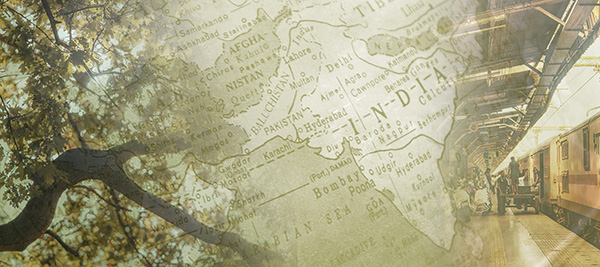
Howard Thurman, too, journeyed through India. Taking leave from his job running the chapel and teaching religion at Howard University, he traveled with his wife and another couple as part of an African American Christian delegation. They lectured, preached, performed, watched, and listened across the subcontinent, meeting missionaries, independence movement leaders, and artists, all under the watchful eye of the British colonial police. Thurman knew, as I did not, that the Hinduism (and Islam and Buddhism) that he found in India could deepen his personal spirituality and his vision for Christian community. He was able to move beyond the tendency to spot the taints in religion – any religion – and either repress them or throw away the whole thing. For Thurman, encountering the contradictions that necessarily accompany the intersection of religion and power is an opportunity for interior struggle, and that struggle can lead to an ever more expansive religious hospitality – the two linked by what is at the core of each: love. In my years of searching and wandering, I could only hear “love” as saccharine mythology, not the name for a grand, grounding adventure. I needed Howard Thurman to sit with me and teach me about what love could mean at its richest, not at its sweetest.
[.pull-quote]If Martin Luther King Jr. invites collective struggle to transform the political world, to end racism, Howard Thurman invites interior struggle to transform the self. There is no need for a choice between the two.[.pull-quote]
But in those years, I did not know Howard Thurman, the man or his words. I knew of him, but I dismissed him as dated and dusty, untheoretical and unsophisticated – the sort of author you read after yoga class, in a Unitarian service, or in the salons of the postcolonial elite. In part, my perception of Thurman’s reception may have been justified, but authors should not be reduced to their least interesting readers. Moreover, Thurman’s thought was about the heart and body, and an essential dimension is lost when it is reduced to the written word. He was a preacher and a performer, using his voice and his silence to invite listeners to struggle with themselves.
Nevertheless, we can still find in Thurman’s words a clear, powerful invitation to struggle. If Martin Luther King Jr. invites collective struggle to transform the political world, to end racism, Howard Thurman invites interior struggle to transform the self. There is no need for a choice between the two. That is the genius of Thurman that I only came to appreciate in recent years, as I sat with his words. Thurman demonstrates how we participate in God through struggle, how we struggle against false gods, against those individuals and systems and habits of mind that take themselves to be absolute authorities, and how the struggle within and the struggle without are intimately linked. Our souls look to worldly objects for satisfaction, to worthy projects and identities and ambitions, forgetting that satisfaction is only guaranteed by the One who is beyond the world, and who makes all worldly powers tremble.