Forerunner
Dorothy Day: Finding Freedom in Obedience
The tension between conscience and authority led the Catholic Worker founder to go deeper into her calling.
July 2, 2026
Try 3 months of unlimited access. Start your FREE TRIAL today. Cancel anytime.
START FREE TRIAL NOWDorothy Day: Finding Freedom in Obedience
The tension between conscience and authority led the Catholic Worker founder to go deeper into her calling.
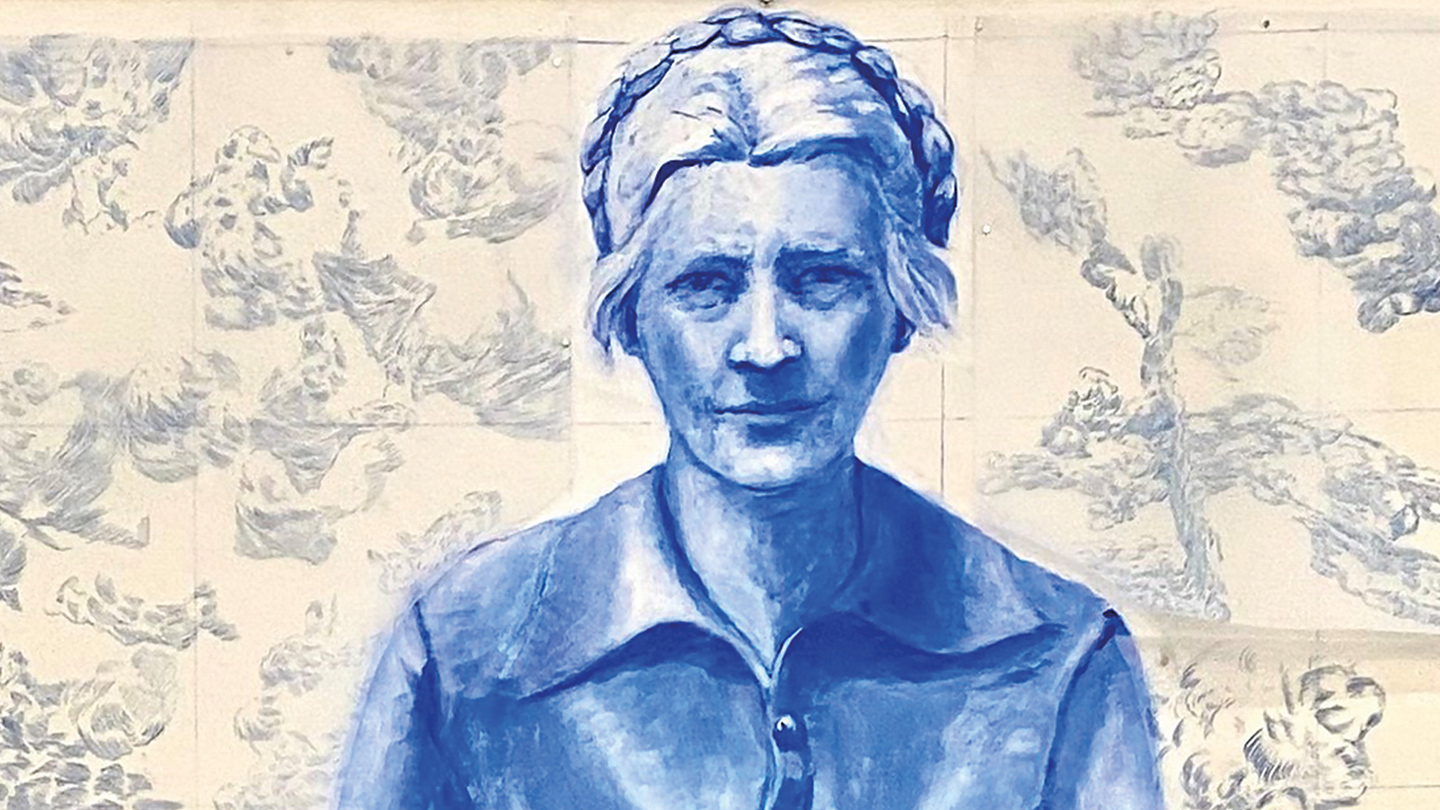
[.article__paragraph--cap][.small-caps]“The Holy Spirit is Moving[.small-caps] in Manhattan,” read the headline in the National Catholic Register in April. At St. Joseph’s Roman Catholic Church in New York’s Greenwich Village this past Easter, eighty-eight young people received the sacraments of baptism or confirmation, up from thirty-five the previous year. Even more are flocking to Sunday Mass. Week after week, it’s standing room only. But over one hundred years ago, a different conversion took place at St. Joseph’s.[.article__paragraph--cap]
In 1918, the year the War ended, writers, radicals, and bohemians flocked to a dive a block south of St. Joseph’s called the Golden Swan, known to locals as the Hell Hole. Patrons drank, danced, and discussed culture and politics into the wee hours of the morning. Among its regulars were novelist Michael Gold, painter John French Sloan, playwright Eugene O’Neill, and twenty-one-year-old Dorothy Day, who was already writing for various radical publications. Almost everyone was an artist. Almost everyone was a socialist. Almost everyone was young.
As much as Dorothy fit in with the crowd at the Hell Hole, there was something that set her apart. Why, she wondered, do we always talk about the poor, rather than talking with them? It was one of those early mornings, stumbling out of the bar, that she received the presentiment of an answer. She noticed a flock of people – by appearance, mostly poor, mostly immigrants – filing into St. Joseph’s. Raised a nominal Episcopalian, she had rarely, if ever, been inside a Catholic church. But she instinctively followed them, curious to understand what attracted them.
She remembered kneeling “in the back of the church, not knowing what was going on at the altar, but warmed and comforted by the lights and silence, the kneeling people and the atmosphere of worship.” Despite not fully understanding what was happening, she began to perceive what it was that attracted people to attend an early-morning Mass before a long day of work or begging on the streets: “Certainly I felt again and again the need to go to church to kneel, to bow my head in prayer. It was a blind instinct, one might say, and I was not conscious of praying. But I went.” Years later, she found herself better able to articulate precisely what she intuited in those moments at Mass: “People have so great a need to reverence, to worship, to adore; it is a psychological necessity of human nature that must be taken into account.”
“I wanted life and I wanted the abundant life,” she confessed. “I wanted it for others too.” Her dramatic conversion was spurred by this yearning to live on “more than bread alone.” She discovered that Christianity’s emphasis on spiritual poverty – shared by the economically rich and poor alike, and discounted by Marx’s strict materialism – empowered her to move beyond merely advocating for the poor and to enter into communion with them. Though she initially struggled to find other Catholics who shared her desire for such an “abundant life” of unity with the poor, she eventually found comrades in this desire, and a path forward, when she founded the Catholic Worker Movement with Peter Maurin in 1933.
Should the Roman Catholic Church decide to canonize Dorothy Day, she won’t be the first American saint. Yet her conversion story and road to sanctity are distinguished by her experience as a thoroughly modern American woman. She was a radical, an anarchist; as a budding journalist she slummed it in the tenements of lower Manhattan. She drank. She partied. She took lovers, some casual. She had an abortion, which she considered to be the “great tragedy of her life.”
Most of the Americans who have been canonized (or are being considered for canonization) by the Roman Catholic Church felt their national identity as an obstacle to their commitment to God and the Church. For years, anti-Catholic sentiment pervaded American culture: Protestants feared that Catholics’ loyalty to Rome would trump their loyalty to the nation. The hostility was mutual: in 1899, Pope Leo XIII condemned the heresy of “Americanism,” which he defined as an excessive trust in American exceptionality, individualism, and freedom.
Dorothy developed a reputation for her vociferous censures of the excesses of American wealth and power, often citing Pope Leo XIII’s writing to do so. Later in her life, she protested America’s involvement in nuclear warfare, condemned America’s “rotten, decadent, putrid industrial capitalist system,” and abstained from voting for president, as “no serious Catholic would want to be president of the United States.”
Yet a closer look at Dorothy’s legacy reveals a more complex relationship with her home country. Unlike Americans such as Mother Cabrini and Elizabeth Ann Seton, whose paths to sainthood were characterized by constantly having to swim upstream against American values, Dorothy’s path could be described as following the flow of her uniquely American experience into the stream of the Tiber. Just as her conversion involved less a turning away from and more a going deeper into her desire to respond to the suffering of the poor which had initially drawn her to radical leftism, making it more true, it likewise involved a recognition of and expansion of the seeds of truth present within “Americanist” values.
This is perhaps best seen in her attempt at reconciling the excesses of Americans’ aversion to authority and attraction to hedonistic consumerism. On one hand, Dorothy believed disobedience to the Church’s teaching authority to be utterly antithetical to her desire for communion with God and neighbor. “When I became a Catholic,” she wrote, “it never occurred to me to question how much freedom I had or how much authority the Church had to limit that freedom.… I had reached the point where I wanted to obey.” Yet Dorothy’s obedience to the Church was held in tension with her commitment to freedom of conscience. She never obeyed blindly. On the many occasions that her conscience put her in opposition with clerics, she viewed her duty to obey them as a call to remain in conversation with them.
“What a world problem, this authority and freedom, and the tension between the two!” she exclaimed. “And how we Americans have held on to the Christian ideas of freedom and the dignity of human personality while forgetting that freedom is based on complete submission, complete meekness to God.” The relationship between obedience and freedom of conscience was less a deadlock “either-or” between two opposing poles than it was a dance, a dynamic back-and-forth between two forces bound – with God’s grace – toward harmony.
Dorothy’s views on love and sexuality followed a similarly nuanced line of thought. Puritanical pessimism toward sex and the libertinism of the “free love” hippies that reacted against it are two sides of the same coin of America’s troubled relationship with the body and its desires. Dorothy’s paradoxical embrace of traditional sexual mores and love for bodily beauty both challenged and redeemed this uniquely American conundrum.
Because of her trust in the Church’s wisdom, and her fear that sex divorced from procreation would disproportionately harm the poor, Dorothy rebuked the moral laxity of the hippies who came to the Catholic Worker houses of hospitality in the 1960s. The “make love not war” attitude naively set itself “against the body and its needs, its natural functions of childbearing. It can only be a hatred of sex that leads them to talk as they do.” She went as far as calling out the hypocrisy of one Catholic Worker for leaving his wife to live with his lover, which “negated the good” of his commitment to serving the poor. “If you gave all you had to the poor and delivered your body to be burned, it is all nothing but sounding brass and a tinkling cymbal, if you have not charity, the love of God which you have turned from to have the love of women.”
As she was finding herself captured by whatever it was in the Mass that drew her those early mornings, she also found that she was pregnant, again. She was delighted. But the baby’s father, Forster Batterham, was less so. He had no interest in marriage and found her increasing interest in Catholicism baffling. When, after the baby was born, Dorothy had their daughter, Tamar, baptized, he refused to attend. And without marriage, Dorothy would no longer live as though they were married. After one last confrontation in late December 1927, Dorothy barred him from the house and from her bed. Three days after Christmas, she was conditionally baptized and received into the Catholic Church. Yet her decision to prioritize her relationship with God did not amount to the end of her “painfully ravishing” desire for Batterham, which she held on to until the end of her life. “I loved him in every way,” she would write later: “as a wife, as a mother even. I loved him for all he knew and pitied him for all he didn’t know. I loved him for the odds and ends I had to fish out of his sweater pockets and for the sand and shells he brought in with his fishing … and I loved his integrity and stubborn pride.”
The flame of Dorothy’s love for Forster transformed and matured as the years went by into a bright fire of charity, eventually leading her to nurse him on his deathbed. She also cared for his partner, Nanette, on hers. Forster never converted. But, inspired by Dorothy’s charity toward her, Nanette asked to be baptized before she died. Neither Forster nor Dorothy had other children, but there were many children, later: Tamar had nine, and Dorothy lived to see the birth of her first two great-grandchildren.
The first issue of The Catholic Worker newspaper came out on May 1, 1933 – Labor Day for everyone but Americans. By the end of her life she’d written eight books, more than 350 articles for external publications, and over one thousand articles for The Catholic Worker. She traveled extensively for speaking engagements, often by bus. Wherever she traveled, she carried a Bible, a missal, and a jar of instant coffee.
A few blocks down from St. Joseph’s and the former site of the Hell Hole, one can find the bedroom where Dorothy died. It is on the second floor of the Catholic Worker’s Maryhouse. The room remains preserved as it was on that day in 1980, complete with her annotated books, photos, and writing bureau. When you open it, you find Forster’s name and phone number taped there. There is a crucifix as well: Christ’s body made of bent wheat stalks, like a doll you’d make in an afternoon for a child. A rickety, overstuffed bookshelf: Dante, a lavishly illustrated Psalms from the Jerusalem Bible, a book on the Inklings, Butler’s Lives of the Saints, Walter Ciszek’s With God in Russia. Lots of Dostoyevsky. Three or four well-thumbed Bibles, their leather spines flaking. A copy of Chekhov’s Letters. Below, on the ground floor, the red tabernacle candle twinkles in the dark of the chapel where her body was laid out. The crew of people living at Maryhouse carry on Dorothy’s legacy of witnessing the presence of the Most Holy within the heart of the nation’s most bustling city.