Viewpoint
This Land Is My Land
The Indigenous know that the land has a soul older than 250 years.
July 18, 2026
Try 3 months of unlimited access. Start your FREE TRIAL today. Cancel anytime.
START FREE TRIAL NOWThis Land Is My Land
The Indigenous know that the land has a soul older than 250 years.
[.article__paragraph--cap][.small-caps]When I think about[.small-caps] the founding of America, I think about refugees seeking freedom to worship and establish a free society against seemingly impossible odds. I think of peasants weary of a class system that made it structurally impossible to build a home of one’s own, or to seek self-determination. I think of generations of women and men toiling in a foreign, seemingly hostile environment. The dream of the United States, I learned as a child, was a dream where poor people constrained by a brutal monarchy could seek freedom from tyranny – where anyone clever and hardworking, regardless of family position or social class, could have an opportunity to carve out a home and a living from an untamed wilderness.[.article__paragraph--cap]
In this version of the story, settlement began in Jamestown, in 1607, and then Plymouth, in 1620.
But that is not the only story of America’s founding, or the story relevant to the region I am from. My people, the Pueblo (Tewa) people, mark settlement of our lands at the occupation of Juan de Oñate in 1598, although Spanish explorers had had a presence on our homelands since the 1540s. All of our dwellings and farms, flocks and vineyards were seized by Spanish colonizers in the name of God, and our people were made slaves. The pope provided a special dispensation to Spain (the Inter Caetera papal bull in 1493) to conquer this continent for the Holy Roman Empire.

But wait – if the Spanish were ordained by divine mandate to seize and subdue this foreign land, as their monarch and pope claimed, where do religious liberty and a class-free society and freedom from monarchy come into it? The Puritans, who had no wish to claim either a monarch or an empire, likewise claimed to be ordained by God. This sensibility would eventually come to be expressed as “Manifest Destiny”: the unwavering claim that God has ordained the conquest of an entire continent by Europeans and their descendants. This sensibility is already spelled out in the Declaration of Independence, which claims “a firm reliance on the protection of divine providence.” Remnants of the entitlement justified by divine providence remain with us. The great seal of the United States, printed on our money, contains the words Annuit cœptis, which means God has favored our undertakings, the eye signifying that God watches over us.
It is hard for me to believe that a loving God favored the undertakings of these settlers against the people who were already here. An estimated one hundred million Indigenous people lived on this continent at the time when the first European colonizers arrived. By 1900 there were just five million remaining.
During this time, my people’s homeland was taken again and again: first colonized by Spain, it was then held according to the sovereignty of Mexico, until the United States annexed it in 1848 with the end of the Mexican-American War. Our lands and waters were now seized by yet another colonial force. The Treaty of Guadalupe Hidalgo made promises of protection and citizenship that were not delivered.
Even the lands that were affirmed by treaty were once again annexed in the 1940s, by executive order. The reason? For development of the atom bomb. Before nuclear weapons were detonated in Japan, they were detonated in the lands of my people. Toxic waste continues to be stored there. In a book review for the American Scientist, David Kaiser writes, “Laboratory protocol actually required that the tests be conducted only when prevailing winds would carry fallout over Indian lands, euphemistically referring to these regions as ‘uninhabited.’ Not surprisingly, since the mid-1990s many Indians in the region have vocally blamed the laboratory for elevated cancer rates among their populace.”
Some version of this story exists for every Indigenous people that was here before the colonizers claimed our lands. To this day, remaining Indigenous lands are being plundered or despoiled: for the Dakota Access Pipeline, copper extraction at the Oak Flat mine that plans to collapse an entire mountain, the lithium mine at Thacker Pass that risks leaching uranium and sulfuric acid into the water supply of numerous Indigenous communities nearby, and many other examples. Furthermore, for generations national policies rooted in colonial logic excluded us from institutions like universities, denied us access to housing, and excluded us from the job market. In fact, federal policy has even sought to cull our numbers: the Family Planning Services and Population Research Act of 1970 made it the policy of the Indian Health Service to involuntarily sterilize Indigenous women. According to the IHS’s own records, between 25 and 50 percent of Indigenous women were sterilized between 1970 and 1976. Indigenous people are incarcerated at higher rates than any other population. The prison industry benefits financially from our mass incarceration, and many of those who have been incarcerated lose their right to vote.
[.article__paragraph--cap][.small-caps]The wealth of America[.small-caps] has been purchased by the suffering of my people. It is impossible to talk about the founding of this nation without acknowledging this. The policy position of America toward Indigenous peoples was one of extermination, then removal, then assimilation on reservations, then child removal to parochial boarding schools, then termination of nationhood, then extraction, the era we now inhabit. In each era, the policy agenda has been to remove us from our lands by any means necessary. The logic of Manifest Destiny is that my people should cease to exist.[.article__paragraph--cap]
The dream of a nation that protects the life, liberty, and property of its people is a dream denied to my people. Where is the soul of America when the personal enrichment of the mighty feeds on the suffering of the vulnerable?
The American dream suggests that any talented, hardworking individual can succeed on merit. It can be a hard pill to swallow to hear repeatedly that this is viable for any American, that anyone can make it on her own in this country. The implication is that if I am not wealthy, it is because I am not smart enough, not inspired enough, not hard-working enough.
Actually, I have worked pretty hard. I had a full-time job as a domestic worker by the time I was fourteen. Like many “urban Indians,” I am a product of a government-sponsored diaspora that landed thousands of Indigenous people in cities far from our traditional homelands. Both of my parents were separated from their kin by child removal and grew up in Catholic institutions; neither had parents to pass on either cultural or material inheritance. They were deprived of their birthright in every way, and we children also paid the price.
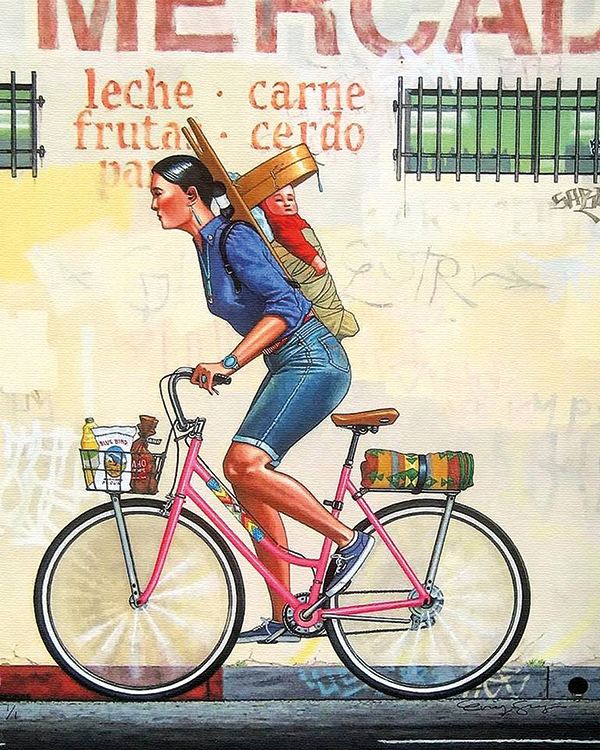
There was no time in my childhood to think, to dream, to create. I cleaned fleabag motel rooms and working-class homes, and took any other odd jobs I could scrape together. I did not have the legitimacy to clean hotels, office buildings, or affluent homes; I had to be paid under the table by those willing to exploit a child. My only opportunity to do my homework was late at night. Every room in the two-bedroom apartment where ten of us lived was filled with sleeping people. So, I did my homework in the bathroom, sitting on the floor. That is, when I was housed – my family and I lived on the street for more than one stint during my high-school years.
I wish I could say here that an adult identified promise in me and encouraged me to study, but that is not the case. I was expected to work to bring in support to a household at the constant peril of eviction, where the itinerant adults were in and out of incarceration. Anything I did in addition to working for money was viewed as an unwelcome distraction. This was my launch into a “merit-based system.”
In time, I found my way back to the wisdom of my people. There, I learned the fundamental reality of interdependence from my elders. I have learned what it means to be human – a sacred eternal being responsible not just for the wellbeing of my people, but for life itself. I have learned how Indigenous people revere the same “divine nature and eternal power” of the Creator self-evident in creation that Paul describes in the first chapter of Romans. We understand that interdependence and mutual thriving, not competition and extraction, are the base code of reality. I have found the “good news” of the gospel to be deeply resonant with Indigenous people. That good news means calling sinners to repentance. The soul of America would do well to listen.
In Luke, chapter 4, Jesus proclaims the fulfillment of a prophecy articulated in the book of Isaiah, chapter 61. The prophecy foretells one who is anointed to bring good news to the poor: release for the captive, sight for the blind, freedom for the oppressed, and the announcement of the year of our Lord’s favor. Jesus reads the prophecy and then states, “Today in your hearing, this prophecy is fulfilled.” He is the one foretold, he announces publicly.
What is the year of our Lord’s favor? In the book of Leviticus, God ordains the Year of Jubilee, one year out of every fifty where debts are canceled, slaves are freed, properties are returned to their original owners, and the land is allowed to rest, fallow. This year is a time of mercy, liberation, and restoration. Jesus announces that he is anointed to bring the good news of jubilee to the people. A jubilee is a just reordering of human systems, an opportunity to hit the “reset” button.
The jubilee that Jesus calls for and embodies, materially as well as spiritually, is also embedded in the cosmology of my people. In the teachings I have learned from my elders, I find an alternative to the extractive systems of an empire that justifies itself in God’s name. This is a vision of economic justice – collective well-being and liberation for all. This vision includes reconnecting Indigenous peoples with our sacred lands. I started a movement of Christians in North America to work toward this collective vision together. In relationship with Indigenous leaders who are working for liberation, Christians are finding liberation too. The land has a soul older than 250 years. Indigenous peoples know something about that. Together, we can shape what the next 250 years might look like. Following the mandate of Jesus, establishing the kingdom of God will be liberation for the oppressed.