Reading
The Mystery of the Incarnation
December 15, 2026
Try 3 months of unlimited access. Start your FREE TRIAL today. Cancel anytime.
START FREE TRIAL NOWThe Mystery of the Incarnation
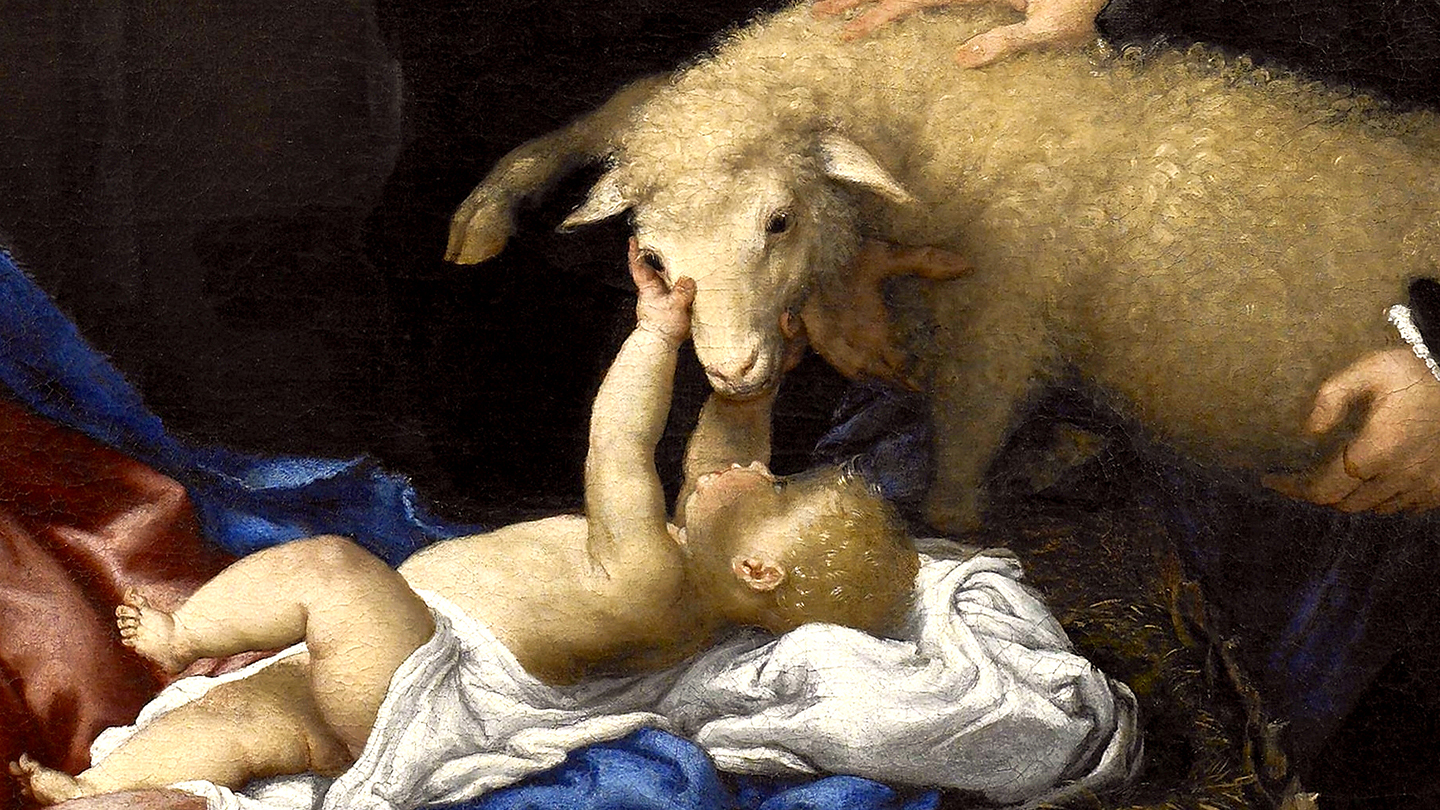
“The Incarnation shows man the greatness of his misery by the greatness of the remedy which he required.” —Blaise Pascal
John Chrysostom
Saint John Chrysostom (c. 347–407), Archbishop of Constantinople, was a Church Father known for his eloquence, writings, and asceticism.
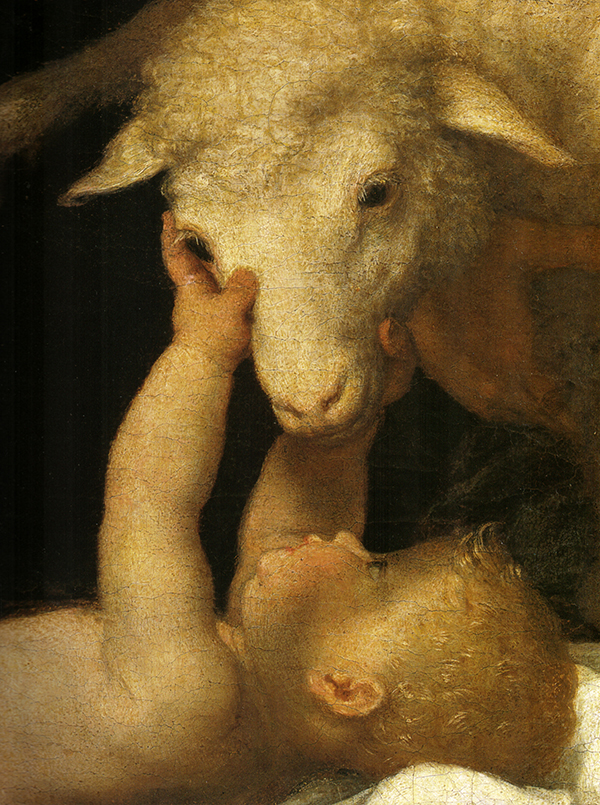
What shall I say! And how shall I describe this Birth to you? For this wonder fills me with astonishment. The Ancient of Days has become an infant. He Who sits upon the sublime and heavenly throne, now lies in a manger. And He Who cannot be touched, Who is simple, without complexity, and incorporeal, now lies subject to the hands of men. He Who has broken the bonds of sinners, is now bound by an infant’s bands. But He has decreed that ignominy shall become honor, infamy be clothed with glory, and total humiliation the measure of His goodness.
For this He assumed my body, that I may become capable of His Word; taking my flesh, He gives me His spirit; and so He bestowing and I receiving, He prepares for me the treasure of Life. He takes my flesh, to sanctify me; He gives me His Spirit that He may save me.
Come, then, let us observe the feast. Truly wondrous is the whole chronicle of the Nativity. For this day the ancient slavery is ended, the devil confounded, the demons take to flight, the power of death is broken, paradise is unlocked, the curse is taken away, sin is removed from us, error driven out, truth has been brought back, the speech of kindliness has been diffused and spreads on every side, a heavenly way of life has been planted on the earth, angels communicate with men without fear, and men now hold speech with angels.
Why is this? Because God is now on earth, and man in heaven; on every side all things commingle. He became flesh. He did not become God. He was God. Wherefore He became flesh, so that He Whom heaven did not contain, a manger would this day receive. He was placed in a manger, so that He, by whom all things are nourished, may receive an infant’s food from His Virgin Mother. So, the Father of all ages, as an infant at the breast, nestles in the virginal arms, that the magi may more easily see Him. Since this day the magi too have come, and made a beginning of withstanding tyranny; and the heavens give glory, as the Lord is revealed by a star.
Source: M. F. Toal D. D. The Sunday Sermons of the Great Fathers: Volume 1 (Henry Regnery, 1957). Used by permission.
Dorothy L. Sayers
Dorothy L. Sayers (1893–1957) was a British writer best known for her detective stories, as well as for her translation of Dante’s Divine Comedy.
What does the church think of Christ? The Church’s answer is categorical and uncompromising, and it is this: that Jesus Bar-Joseph, the carpenter of Nazareth, was in fact and in truth, and in the most exact and literal sense of the words, the God “by Whom all things were made.” His body and brain were those of a common man; His personality was the personality of God, so far as that personality could be expressed in human terms. He was not a kind of dæmon or fairy pretending to be human; He was in every respect a genuine living man. He was not merely a man so good as to be “like God” – He was God.
Now, this is not just a pious commonplace; it is not commonplace at all. For what it means is this, among other things: that for whatever reason God chose to make man as he is – limited and suffering and subject to sorrows and death – He had the honesty and the courage to take His own medicine. Whatever game He is playing with His creation, He has kept His own rules and played fair. He can exact nothing from man that He has not exacted from Himself. He has Himself gone through the whole of human experience, from the trivial irritations of family life and the cramping restrictions of hard work and lack of money to the worst horrors of pain and humiliation, defeat, despair and death. When He was a man, He played the man. He was born in poverty and died in disgrace and thought it well worth while.
Source: Dorothy L. Sayers, Letters to a Diminished Church.
Copyright © 2004 by Dorothy L. Sayers. Used by permission
of Thomas Nelson, harpercollinschristian.com.
Alfred Delp
Alfred Delp (1907–1945) was a German Jesuit priest who was arrested and condemned to death for speaking out against the Nazi regime.
Oh, the Child is really already judging the world now! How many types of people today honestly could appear at the manger? Most of them have absolutely no desire to do so. The small, scanty door does not let anyone riding a high horse get through. The simple, wholesome shepherds find the way. The royal wise men are called by the star. But the usurper of Jerusalem feared the Child. How much of what we are living through today cannot stand in the presence of the Child! How would our own lives, and life in general, be different if we remembered that life’s greatest hour was when God became man, a child? We would not approach one another, stand before one another so demandingly, and violently, and greedily. Children do not inflict such wounds. We want to be so great and mighty, so grown up and competent. We ourselves, and the heap of rubble that is left to us, are the outcome of this attitude.
Source: Alfred Delp, Advent of the Heart: Selected Sermons and Letters 1941–1944 (Ignatius Press, 2006). Used by permission.
François Mauriac
François Mauriac (1885–1970) was a French novelist, playwright, poet, and essayist.
The gentle child shivers with cold on the edge of a criminal world while angels promise peace to men of good will – a peace that can be discovered only after a full measure of suffering; but in the shadows of his birthplace Herod’s soldiers sharpen their knives for a slaughter of innocents that will apparently never end.
This is the Christian paradox; these are the parts of an undecipherable mystery to which the Child has the secret word. When He became a man, He did not tell us what that word is; still, we know that it exists. Christ implied as much when His disciples murmured: “Man can do nothing; but all things are possible to God.” This last secret word will not be given to us until our malice can no longer use it as an excuse for satisfaction of our vices. Until the end of time the little child will keep the secret, which man would use only to glut himself. A nature or a definition of God does not exist; but there is a Love Which Knows Itself and which is reflected in creatures mysteriously wounded from their birth.
Source: Francois Mauriac, The Son of Man (Collier Books, 1961), 25. Used by permission
of Cluny Media.