Family and Friends
The Gospel in Northern Cyprus
A church youth group visits the homeland of the apostle Barnabas.
December 15, 2026
Try 3 months of unlimited access. Start your FREE TRIAL today. Cancel anytime.
START FREE TRIAL NOWThe Gospel in Northern Cyprus
A church youth group visits the homeland of the apostle Barnabas.
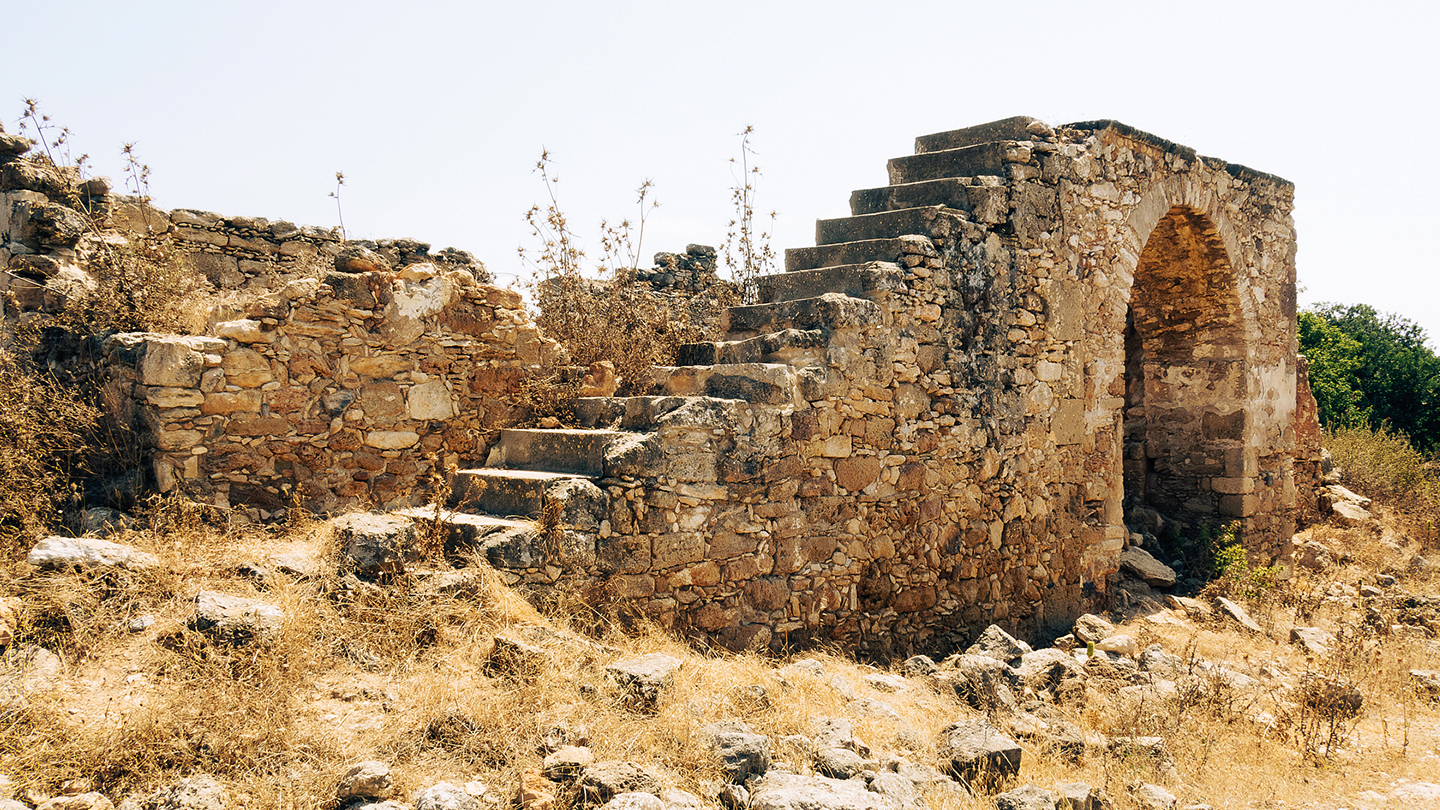
[.article__paragraph--cap][.small-caps]If you visit[.small-caps] Northern Cyprus, as I did this past summer, you will find that many of the churches and monasteries stand empty. Some no longer even stand: they are tumbled in, tumbled down, in dusty fields, by dustier villages, or on bluffs by the crashing Mediterranean surf. And perhaps worst of all: whether standing or tumbled down, they are ignored. Not gussied up for tourists or commemorated, nor fully demolished or otherwise made an example of, but simply forgotten.[.article__paragraph--cap]
Forgotten is an apt descriptor for much of Northern Cyprus, or “The Turkish Republic of Northern Cyprus.” A region (not really a country, as it is recognized only by Turkey) overlooked by most of us who don’t live there. Not particularly difficult to get to (a short flight from central Europe) nor difficult to get into (I’ve had more questions upon returning to the United States, even as a US citizen). A country pivotal in the New Testament story yet not high on the lists of many Bible tourists, who think of the scriptures taking place primarily in Israel, Asia Minor, and Greece.
But pivotal it is. Barnabas, Paul’s first companion, was a Cypriot (Acts 4:36), and an early protector of the post-conversion Saul (Acts 9:27) whose compatriots settled in Antioch and started the first church community known as Christians (Acts 11:20–26). There, Barnabas and Saul built up the church and when they were commissioned by the Holy Spirit, the pair naturally thought of Salamis (which Christian tradition holds as Barnabas’s hometown) as a missional destination (Acts 13:2–5). It was on Cyprus that Saul became Paul, Romans were converted, and false prophets were confronted (Acts 13:6–12). After years of mission work, Barnabas was buried in Salamis. (Extrabiblical side note: The second tomb of Lazarus is also on Cyprus, in nearby Larnaca. Yes, that Lazarus; he was not buried in Palestine – remember how Jesus raised him from the dead in John 11? – but is said to have lived thirty more years and died on Cyprus, a martyr for the faith.)
Cyprus is a small island, the prize in a tussle between two historical belligerents, Greece and Turkey (it’s not a new tussle; see The Odyssey), and it’s crucial to one of the world’s most powerful militaries. It’s known as the “unsinkable aircraft carrier” for its two major British military bases, one of which was struck by an Iranian drone at the start of the Iran war a few months ago.
And it was a prize for us too, a small group of young Christians from Austria and the United States on a mission trip in early July. It was the culmination of a year of discipleship training, which focused on strengthening habits of faith through four pillars: study (of scripture), simplicity (and solitude), service, and prayer.
A brief historical overview of the last century in Cyprus may be helpful here: In the collapse of the Ottoman empire, the British took over the island. And then, decades later, in the heady wave of postcolonial independence of the 1960s, they left, leaving a finely balanced détente between Greek and Turkish proxy parties, who had been squabbling over the island for centuries. That high-wire act lasted until 1974, when, feeling threatened by Greek maneuvering that led to a coup, Turkey invaded to “protect its interests” in a widely condemned move. While the decades before had been marked by plenty of violence, atrocities at scale – mass deportations, division of families, disappearances, and massacres – boiled over in the bloody summer of 1974, catching the world’s attention. The United Nations intervened, formalizing the British-drawn Green Line in an attempt to separate the feuding parties and bring a semblance of order. This established a new normal, today’s status quo, with only Turkey recognizing the country in the northern third of the island.
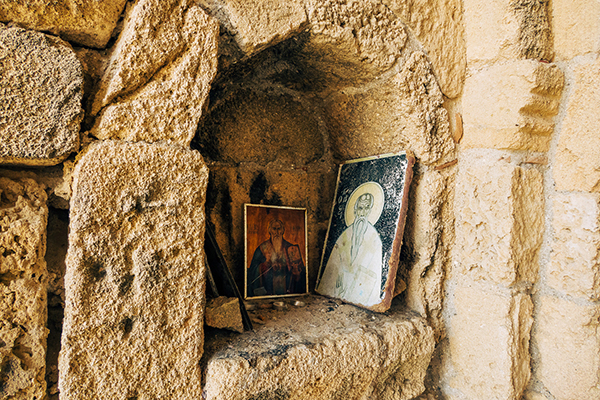
Visiting the locations of several horrific massacres, one involving schoolchildren, perpetrated by Greek irregulars in the summer of 1974 (they are “freedom fighters” to the Greeks and “terrorists” to the Turks), and then visiting several abandoned ecclesial sites, you feel the hurt of the land in your bones. Bitterness from sectarian violence has taken root, growing deeper and stronger over generations, brambling over any attempts at a lasting resolution with thorns of mistrust.
As we traveled through Northern Cyprus with several Western volunteers who now call it home, they described how the hurts and unforgivenesses of the past play out today: broken homes, broken lives, and a broken economic system. People who are hurting, especially men, often seek fulfillment in a widely accepted culture of human trafficking, which has as its focus nightclubs that are essentially brothels.
As concrete steps toward a better Northern Cyprus, these volunteers operate a community center that offers language classes and skills training, food and clothing for the underprivileged, and a place of respite and possible escape for those caught in the web of traffickers. They offer on-island placements for young people willing to come work with them for a few months at a time. And most of all, they pray: for healing, forgiveness, reconciliation, restitution, and the boldness that enabled God’s spirit to sweep across this island two thousand years ago. I am not at liberty to identify who hosted us, as their work demands anonymity, opposing as it does powerful underworld forces both secular (traffickers) and religious (anti-Christian sentiment). Truly, the “powers of this dark world” (Eph. 6:12).
One lasting effect of the takeover of the north by Muslim Turks was the emptying of monasteries and the abandonment of churches as Greek Christians fled south. These crumbling edifices caught my eye and caught my heart.
In the two weeks our group was in Cyprus, we tried to reinforce the churches of our hearts, our four pillars. Scripture readings were paired with visits to biblical sites, to experience the history of Paul, Barnabas, John Mark, the proconsul Sergius Paulus, and the magician Elymas. We prayed outside brothels, keeping watch for antagonists, moving several times to avoid confrontations. We were not quite as bold as Paul, never one to shy from a showdown, who told the magician, “You are a child of the devil and an enemy of everything that is right! … Will you never stop perverting the right ways of the Lord?” (Acts 13:10). We cooked meals for the hungry and provided childcare for several of the volunteer couples, so they could each get an afternoon off together. And we experienced times of solitude and fasting in the old churches and abandoned monasteries of the Karpas Peninsula (so remote our vehicles got hung up on rocky, rutted roads trying to get there), praying for the land, for reconciliation, for God’s healing and peace.
It will take more prayer for the land of Cyprus to heal. Current efforts at reconciliation are small, if strong; the groups we visited number their workers in the dozens. And it will take more prayer for the churches of Cyprus to be rebuilt. The weeds will continue to grow, walls will tumble, soaring arches will likely soar no more. But if Jesus could raise Lazarus and send him to Cyprus to work for another three decades, nothing should be impossible. And, even if the walls themselves remain collapsed, we can remember the words of the apostle Paul from his later journey to Athens: that “the God who made the world and everything in it … does not live in temples built by human hands.” Rather – and this is the part we can play – he simply desires that his people “inhabit the whole earth” and that “all people everywhere … repent” (Acts 17:24–30).