Personal History
Speak of Kings
In Venezuela, my friendships resisted tyranny and despair.
September 14, 2026
Try 3 months of unlimited access. Start your FREE TRIAL today. Cancel anytime.
START FREE TRIAL NOWSpeak of Kings
In Venezuela, my friendships resisted tyranny and despair.
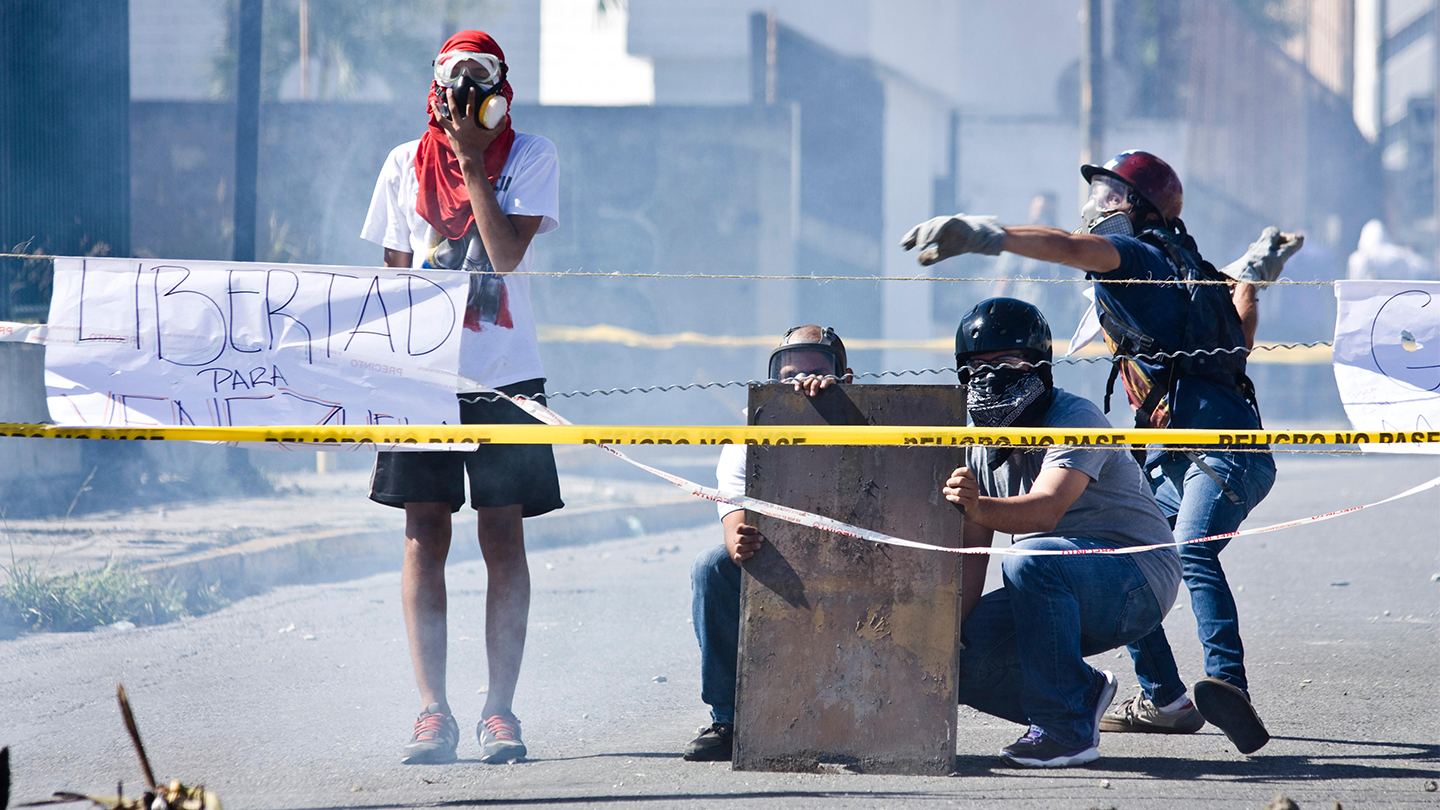
Demonstrators confront the Bolivarian National Guard during protests against the government of Nicolás Maduro in Caracas, Venezuela, July 2017. [.smalltext]Photograph by Agustín García / Alamy. Used by permission.[.smalltext]
[.article__paragraph--leading]Bro! Tell me we still know how to speak of kings!
—Beowulf (translated by Maria Dahvana Headley, 2020).[.article__paragraph--leading]
[.article__paragraph--cap][.small-caps]“Bro! Wake up,[.small-caps] you’re passed out,” Andrés Caldera begged Juan Pablo Pernalete, who was crumpling in his arms. Hours earlier, cardboard shields in hand, respirator masks covering their faces, demonstrators had gathered on Caracas’s main highway to protest Nicolás Maduro’s encroaching authoritarianism and the pathetic living conditions Venezuelans had been plunged into for as long as they could remember. The protesters were – like most of the people who left their homes daily in 2017 to swallow plumes of tear gas – college students whose futures had been stolen by those in power. They were also inhabitants of a forlorn nation, of a land where pleas for help to citizens of other nations and to international organizations seemed to have gone unheard – a land where those you met one day could vanish the next, either arrested or killed. Police and military forces didn’t take long to show up and shower the protestors with pepper spray and rubber bullets, to chase some of them with their cars or motorcycles, to detain them, and later torture them into submission. Tensions had flared that day, and some protesters, Juan Pablo among them, were helping people flee to the established meeting point, a neighborhood away from the section of highway where the protest had been taking place. As they reached the meeting point, they realized that some of their group were missing, and Juan Pablo decided to return to the protest to look for them in the smoke. It would be the last time his calm demeanor would soothe his peers’ anxieties. It would be the last time he would utter a word.[.article__paragraph--cap]
Some minutes passed before Andrés noticed some people carrying a limp body to a nearby street. As he got closer to try to help them, he realized that the pale face of the person who didn’t seem to be breathing belonged to the man he had befriended over these months of massive protests; the talented basketball player who had been a casual friend during pickup games – it belonged to Juan Pablo. After failing to get him to open his eyes, Andrés and his friends picked Juan Pablo up – “It was like carrying four large water jugs,” he would later tell me – and found a biker who took him to a community clinic. Feeling some sort of relief, none of the students who had marched together that day wanted to admit the truth of what was clearly evident: Juan Pablo was dead.
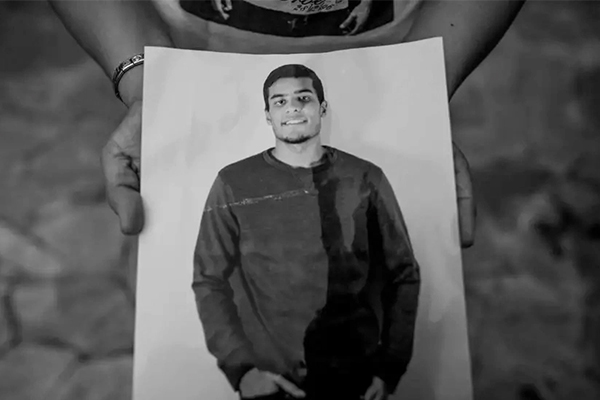
The news would be made public a few hours later. By that time, Andrés had reached his home. A young basketball promise had been killed by a tear-gas canister impact to his chest. Andrés got into his car and raced back to the clinic. His friend Erick Izaguirre was already there, eyes swollen by the tear-gas. They held each other and wept. Even today, at a distance, when they see each other’s faces in WhatsApp video calls, they still shed tears. And even though they had barely known Juan Pablo before the nation erupted that year, the undying bond brought about by flames and dreams of decency had made their time together an indispensable memory.
[.article__paragraph--cap][.small-caps]I was blasting[.small-caps] the song “Momentz” by Gorillaz in my car when Juan Pablo Pernalete was killed. I did not join my classmates that day at the protest, as I had been invited to a premiere at the French Film Festival in Venezuela, which was set to go forward – as if the noise and malaise that had overtaken the country in recent months were all imaginary. Despite the traffic, I arrived on time at Trasnocho, the cultural center (inside a mall) where events like these typically take place. There, surrounded by diplomats and other VIPs, I thought I’d feel relevant and jolly. Yet holding a conversation with these men and women, decades older than me, over tasteless appetizers seemed oddly treasonous, especially since many of these same people had genuflected before the Maduro regime despite also meeting here and there with opposition leaders, insisting they understood their concerns. Once the film was over – Elle by Paul Verhoeven, a lurid masterpiece – I forewent all goodbyes, rushed to my car, and drove home in silence. There, I caught up on what had unfurled a mere half-hour drive away from where I had been wasting my time at games of cultural appreciation. And guilt invaded my femurs. I paced around all night.[.article__paragraph--cap]
At the time, I was already grieving someone else. A few months earlier, I had lost a friend to the sea. Or, let’s say, a friend fleeing from a futureless life and from the ennui of boat parties had looked for solace in the sea. Or, more accurately, a friend of mine, who took a position as a photographer on a cruise ship after moving to Chile, had flung himself to the waves below. His name was Emmanuel Ferreira, and the joke I made when he got the job still haunts me: “I hope you don’t have an experience like David Foster Wallace’s in ‘A Supposedly Fun Thing I’ll Never Do Again.’”
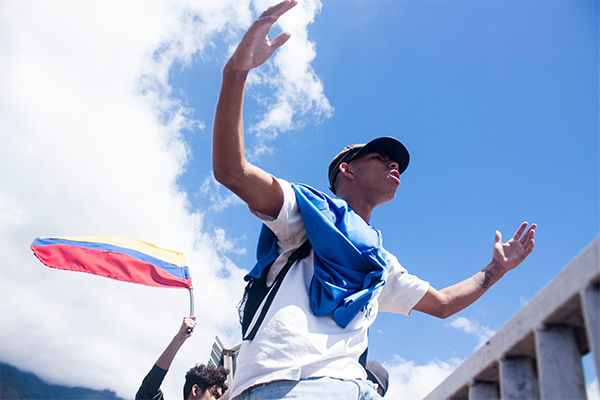
We met on the first day of school as first-year literature students. It was, nonetheless, my second year at Universidad Católica Andrés Bello in Caracas: I had been a law major previously, but as I realized I was spending more time writing poems than taking notes on legal concepts, reading more novels and critical theory than poring over the constitution and civil code, chanting for justice in the streets rather than actually going to class, it became clear to me that I was in the wrong place. After a quite basic English class, as I was strolling down one of the building’s halls, he walked up to me, asked for my name, and candidly proposed that we become friends. From then until he left for Santiago de Chile a few years later, there was rarely a moment when that tall, bushy-browed, black-rimmed-glasses-wearing dude was not by my side.
It did not take us long to realize that we shared a taste in cinema; Jean-Luc Godard was our hero, and quite pretentiously, we would mimic his characters. We declared ourselves followers of the poet Miyó Vestrini – roughly, the Venezuelan Sylvia Plath – though we disdained most of contemporary Venezuelan literature together: our artistic commentary did not know the word “generosity.” As critics of everyday life, we were, for sure, somewhat pessimistic. Although this never kept us from messing with the status quo and hoping for a better, more beautiful world.
Verónica Delgado soon joined us. At first, she was another student in our cohort in the literature major – another student who could not find herself among the masses obsessed with Harry Potter and anime, or who couldn’t get into mass communications and thought they could get decent enough grades to switch majors by the end of the school year. None of us realized, of course, how classic – that is, how demanding – the literature professors were. Emmanuel had spent a year studying cinema at an art institute, and Verónica had taken a gap year to work and save money. She became Emmanuel’s girlfriend, and so our triad was complete: we became a Caraqueño version of Bernardo Bertolucci’s The Dreamers – certainly more wannabe-intellectual than sensual, at least for me. None of us felt at home in the classroom, just as Bertolucci’s characters couldn’t feel at home in 1960s Paris. But despite our arrogance – or perhaps because of it – we forged among ourselves, in each other, a place of comfort, a kind of home.
[.article__paragraph--cap][.small-caps]I will always regret[.small-caps] not saying goodbye to Emmanuel properly. The dates did not line up: I was in Rome for a conference when our friends gathered to see him off in Caracas, surely amid alcohol and myriad tears. I had foreseen that my trip to Rome would keep me from attending his goodbye party, so in the time leading up to Emmanuel’s departure, I found a thousand reasons to be in Chacao – the district of Caracas where he lived, quite close to where Juan Pablo was later murdered. I never gave him a last hug, and my reluctance to accept his departure caused me to say my goodbyes with little more than a WhatsApp message.[.article__paragraph--cap]
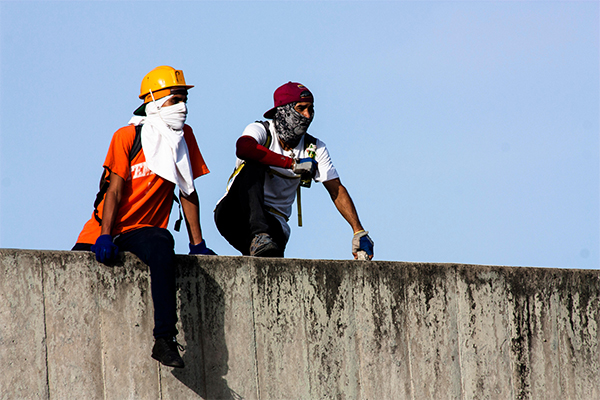
Despite his initial excitement, in Santiago, Emmanuel didn’t enjoy the same privileges or, shall we say, the same Caracas chaos that had always driven him forward. “They sold this place to me far too well,” he wrote. “Had I known what it was really like, I would never have come.” Emmanuel had left Venezuela because the economic crisis had impoverished his family, as had happened to many other fragmented families, now spread across the world, looking for a better life. The bookstores and bars of Caracas were closing left and right, and Emmanuel had lost the motivation to dive into the subtleties of literature. He was reading less and less, and the spiritual substrate that books provided for him waned. His escape to Chile, which at first seemed to promise fulfillment, was not, however, answering his frustrations.
Eventually, he found the job on a cruise ship. The gaps between our conversations grew longer. Emmanuel had no internet aboard the ship, except when he reached port. I went through some awful experiences at the end of 2016, and I looked for him, but he was not there. The last photograph he sent me came with a joking “Look, I dressed up as you,” and is dated August 2 of that year. We exchanged a couple of “I miss you’s” around Christmas, and then the last thing he asked of me, in a group chat we shared with Verónica, was that, when she left the country to live with him, I would have to visit them both at some point. I swore I would. Who would have imagined that he would not let me keep the promise?
[.pull-quote]Emmanuel had such promise, and as I paced around at dawn I would yell at his lingering memory for not being there for me anymore.[.pull-quote]
I wanted to be angry at him, but I couldn’t. Of the three of us, he was always the most reserved about his problems and his confusions. Not like me, who babbled and yelled and talked far too much. Perhaps I should have asked more about his journeys through the Caribbean instead of limiting myself to “Send me pictures,” “What’s Barbados like?” and “When will you set foot on land again?” Perhaps I should have gifted him the Dylan Thomas book I had lent him so many times. While I had always prided myself on my ability to hold back tears, after his death I would weep late into the night after bouts of irresponsible drinking and driving. Nights in which I felt that my other mates were fortunate mannequins, uninterested in the hole in my heart – an unfair assessment, I realize now, for loss is a common experience for all the men and women I grew up with. Emmanuel had such promise, and as I paced around at dawn I would yell at his lingering memory for not being there for me anymore. But he decided to go gentle into that good night. And even though his death wasn’t dealt by a man wearing armor, I still can’t help but blame the corrupt caste that obliterated my country for his disappearance. I guess the equality they promised did materialize, in a way: not in a society where sharing became an honorable duty, but in one where all, especially the youth, had the same hopes and lives crushed.
I dedicated my first poetry collection to Emmanuel – it couldn’t have been anyone else. Just as Montaigne wrote about his dear friend Étienne de La Boétie, “There is no action or imagination of mine wherein I do not miss him; as I know that he would have missed me: for as he surpassed me by infinite degrees in virtue and all other accomplishments, so he also did in the duties of friendship.” I hope, wherever he is – if he is, indeed, somewhere – that he finds the path I have pursued to be one that dignifies his memory, and the convalescing country that we both loved, which never seemed to love us back.
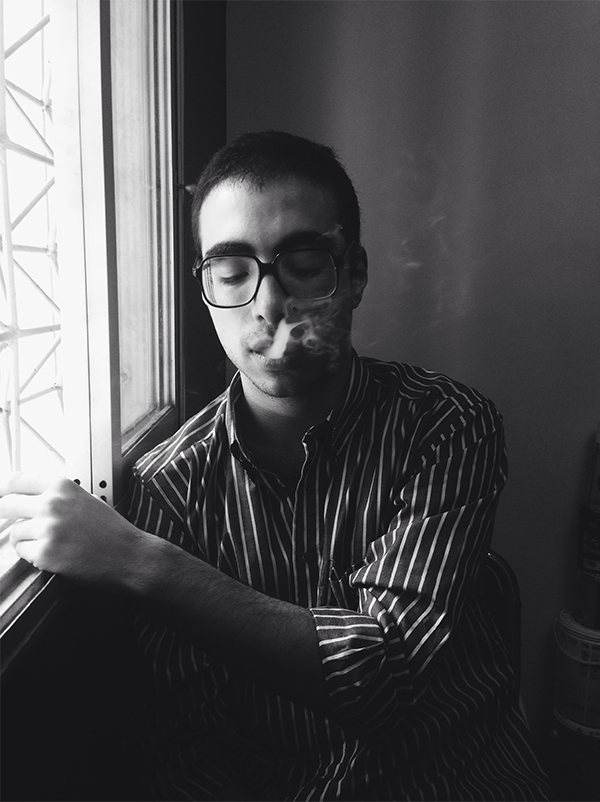
It was in 2019, amid Venezuela’s presidential crisis, that Andrés Caldera and I first became friends. By then, we had become leaders of our colleges’ student bodies, faces people could point out as admirable or ridiculous depending on their thoughts about the possibility of achieving change in the country. We failed, of course. Nonetheless, the passing of our dear friends – who lost their lives directly or indirectly due to Hugo Chávez’s and Maduro’s iron grip on every Venezuelan’s destiny, due to their thrill at making each of our existences precarious – still motivates our struggle. I certainly see that in Andrés, who has dedicated much of this summer of 2026 to assisting those who have been affected by the earthquakes that ravaged Caracas, La Guaira, and other cities.
I’ve had this odd dream these last nights where, drilling and digging through the rubble, Andrés finds his face – Emmanuel’s face. Instead of filling me with fear, it soothes me: no body was ever recovered from the sea, after all. But the time for relief, for total relief, still isn’t here: many others like Emmanuel and Juan Pablo have been expelled from their homes and from the living. After Maduro, things began to improve, though not enough. Not enough at all. Hence, waking up, wincing before those that still defend Chavismo, and demanding a better future is a duty Andrés and I still share. It is a duty that will take us, with pride, to the grave.