Forerunner
Martin Buber’s Relationship Advice
For the German Jewish philosopher, all real living is meeting.
December 15, 2026
Try 3 months of unlimited access. Start your FREE TRIAL today. Cancel anytime.
START FREE TRIAL NOWMartin Buber’s Relationship Advice
For the German Jewish philosopher, all real living is meeting.
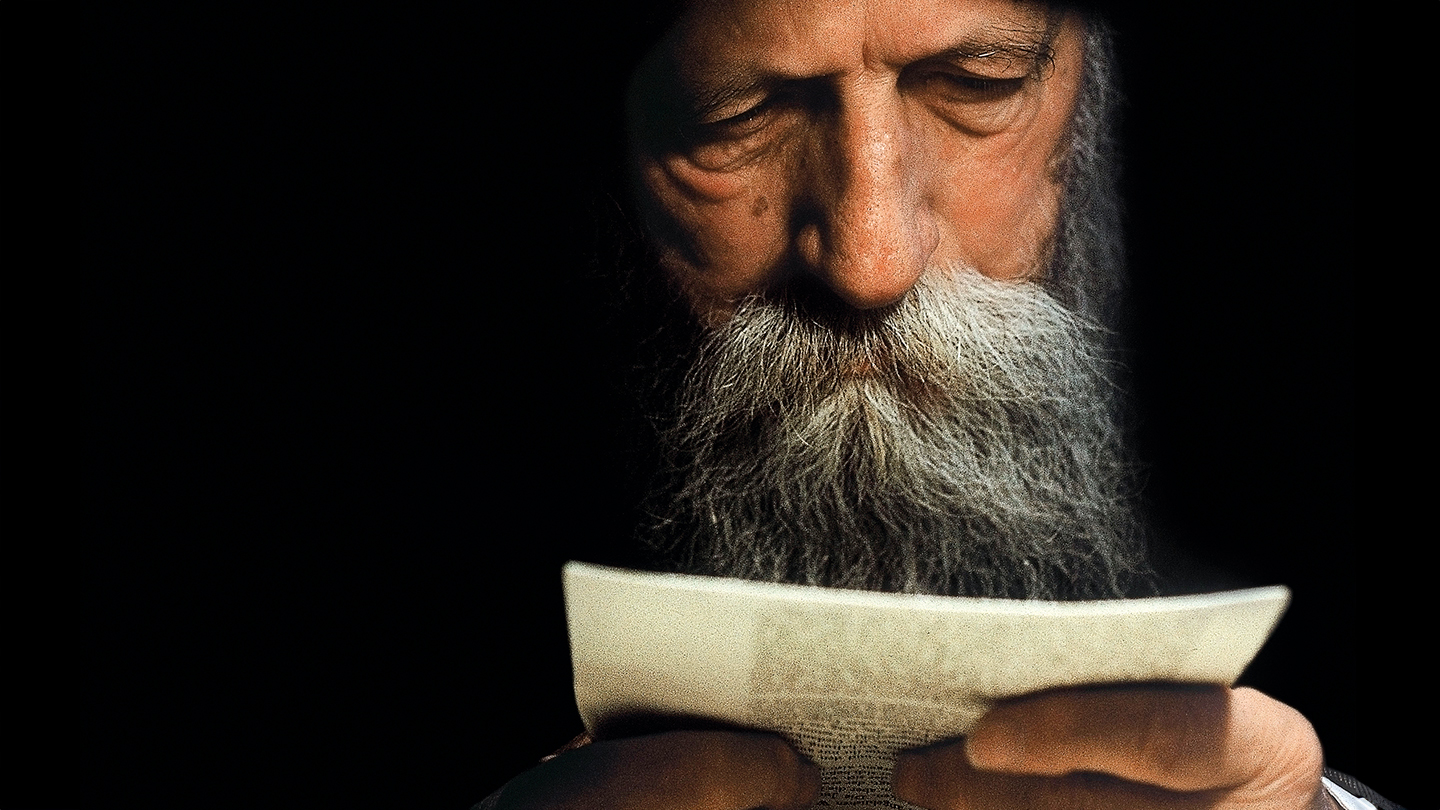
[.article__paragraph--cap][.small-caps]In 1933, Martin Buber,[.small-caps] philosopher, theologian, and man of letters, was three years into an honorary professorship at the University of Frankfurt. At fifty-five, Buber was comfortably embedded in what seemed a solid life of academic recognition, intellectual adventure, and literary and philosophical acclaim. He was married to Paula Winkler, a writer of Catholic background who had converted to Judaism in order to marry him. They had two children. They lived in Heppenheim, a beautiful town in southern Hesse, around forty-five minutes by train from Frankfurt. Even in autumn of that year, even after the passage of the Law for the Restoration of the Professional Civil Service the previous spring, which excluded Jews from civil service, Buber could not bring himself to contemplate leaving – the culture of Goethe, his love of the country, and his deep family roots as a German Jew kept him in Germany.[.article__paragraph--cap]
And then, that autumn, a group of Brownshirts marched on his house, arraying themselves around it. Buber was on notice. On September 22, Hitler’s government passed the Reich Chamber of Culture Law; its implementation required every person working in national cultural institutions – literature, theater, fine arts, film, music – to register. Jews were generally denied membership.
In protest, Buber resigned his professorship. But he didn’t leave Germany. Instead, he founded a new nonprofit: the Central Office for Jewish Adult Education, in which he pursued his philosophical and literary work with a new intensity, dedicated to strengthening Jewish identity in Germany through education and public engagement. The family remained, through 1935, when the Gestapo issued an order forbidding him to deliver public lectures. It was only in May 1938 that, receiving an offer for a teaching position at Hebrew University, the Bubers moved to Jerusalem. They left just before Kristallnacht inaugurated a new and bloodier phase of the Nazis’ persecution and genocide. Though he managed to escape, he never forgot those who weren’t so lucky. During the remainder of the war and in the postwar period, he remained active in attempts to aid Holocaust victims and survivors.
Buber was also farsighted about the conflict in Palestine. He had been a fairly orthodox Zionist in his youth, joining the movement in 1898, participating in conferences and organizing. But not long thereafter, he had become troubled by the potential for great injustice toward the Palestinian population in what would become the State of Israel. In 1925, he had joined Brit Shalom, an organization aiming to found a binational Jewish and Palestinian state rather than one focused on Jewish Israeli identity. In 1942, on the ground, he cofounded the Ihud party, which opposed the partition of Palestine and the foundation of Israel as a separate Jewish state.
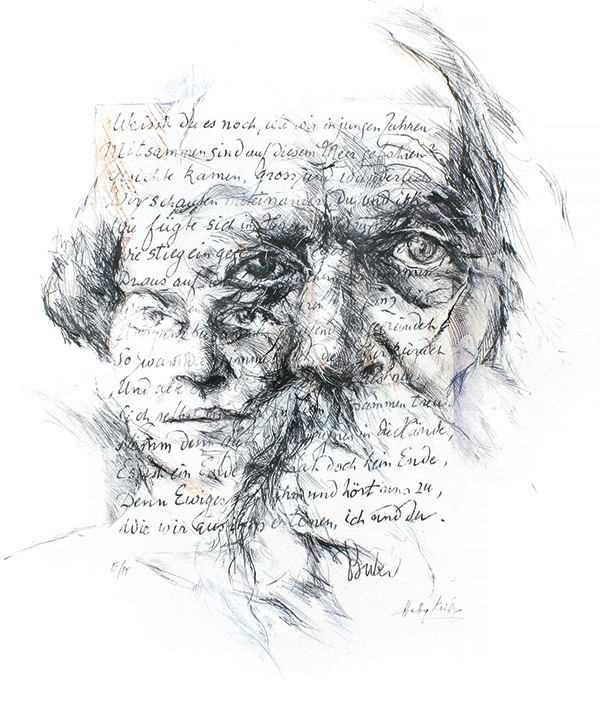
After the creation of the State of Israel in 1948, Buber by default became the most eminent Israeli philosopher, but continued to promote what he called a “Hebrew humanism” in opposition to more mainstream forms of Zionism. Contra the “political Zionism” of Theodor Herzl, Buber sought a “cultural Zionism,” a “return” that was not necessarily geographic, or at least not political, but a matter of the whole self. In his 1941 essay “Hebräischer Humanismus” (Hebrew Humanism), Buber quotes Dante’s Convivio: “The greatest desire Nature has implanted in every thing from its beginning is the desire to return to its origin.”
[.article__paragraph--cap][.small-caps]What was the heart[.small-caps] of this man’s passionate intellectual project, which led him into such fierce loyalty and love to both Germany and Israel? He’d been raised in an observant family, and had wrestled his way through secularism to something beyond it. Influenced by Kierkegaard and the early Existentialists, he came to see the question of God as being central to the question of man. Who are you? How are you to conduct yourself, understand yourself, understand others? For Buber, to be a who as opposed to a what – to truly be a person – one must relate to others, and relate to them under what he called the “I-Thou” paradigm; his book Ich und Du, (I and Thou), was first published in 1923. The ideas and insights in this classic of Jewish existential theology fed his literary work, his political efforts, and his path of commitment throughout the rest of his life.[.article__paragraph--cap]
Who are you? The person you’re contemplating is not an It, not a thing, and inasmuch as you are relating to him as a Thou, not an It, you too are living out what it means to be a person.
“If I face a human being as my Thou,” Buber writes, “and say the primary word I-Thou to him, he is not a thing among things, and does not consist of things.”
“Thou” is the informal German: it’s “du” rather than “Sie.” And it is how God is addressed in German translations of the Hebrew scriptures:
Ewiger, Du hast mich erforscht und erkannt.
Du weißt von meinem Sitzen und meinem
Aufstehen, achtest auf mein Sinnen von fern.
O Lord, You have searched me and known me.
You know my sitting down and my rising up;
You understand my thought afar off. (Ps. 139: 1f)
It is this beholding, this face-to-face mutual knowing, that Buber places at the heart both of human personhood and of the human’s relationship to God. We know God not as an object, but in a relationship; Buber says, too, that whenever we know another person as a Thou, we are also in some sense knowing God.
Our lives oscillate: very often, we spend long periods of time without this intimate beholding of another. But those moments when we behold and are beheld: those are the moments that teach us most deeply about what it is to be a person.
“Feelings dwell in man,” Buber writes, “but man dwells in his love. That is no metaphor, but the actual truth. Love does not cling to the I in such a way as to have the Thou only for its ‘content’ … but love is between I and Thou.”
This love, according to Buber, is the origin of everything. And to behold the other truly and simply is to love him. “Hatred remains blind by its very nature,” he explains: “one can hate only part of a being.” This I-Thou relationship one may even have with creation itself. It’s a basic stance: if your stance towards other people is “I-It,” you will not be able to have an “I-Thou” relationship with God. “One cannot divide one’s life,” he wrote, “between an actual relationship to God and an inactual I-It relationship to the world – praying to God in truth and utilizing the world. Whoever knows the world as something to be utilized knows God the same way. His prayers are a way of unburdening himself – and fall into the ears of the void.”
“The greatest desire Nature has implanted in every thing from its beginning is the desire to return to its origin.” That quote in his 1941 “Hebrew Humanism” essay could be ambiguous. Political Zionism, too, was a return to origins. But, though Buber does not in his essay continue the quote, he intended Dante’s own meaning by it. Dante continues: “Now since God is the origin of our souls and has created them like himself (as it is written, ‘Let us make man in our own image and likeness’), the soul desires above all else to return to him.” This is the Thou that every I longs for.
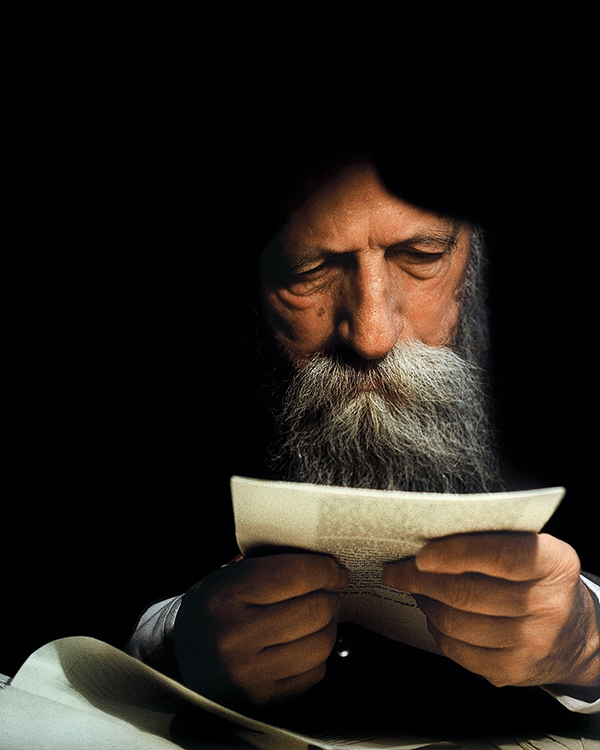
Buber was nominated for the Nobel Prize in Literature ten times, and the Nobel Peace Prize seven times. A prolific lecturer, academic writer, and journalist, he also published several books of retellings of Hasidic and Chinese folktales.
In his old age, he was honored as both a founding father of Zionism and the leading thorn in its side; as the most profound living investigator of what it means to be a person, and what that has to do with God. On Buber’s eighty-fifth birthday, David Ben-Gurion sent him a telegram: “I honor and oppose you.” Martin Buber died on June 13, 1965.