Personal History
Loving Kate
How does a mother come to terms with her baby’s death sentence?
December 15, 2026
Try 3 months of unlimited access. Start your FREE TRIAL today. Cancel anytime.
START FREE TRIAL NOWLoving Kate
How does a mother come to terms with her baby’s death sentence?
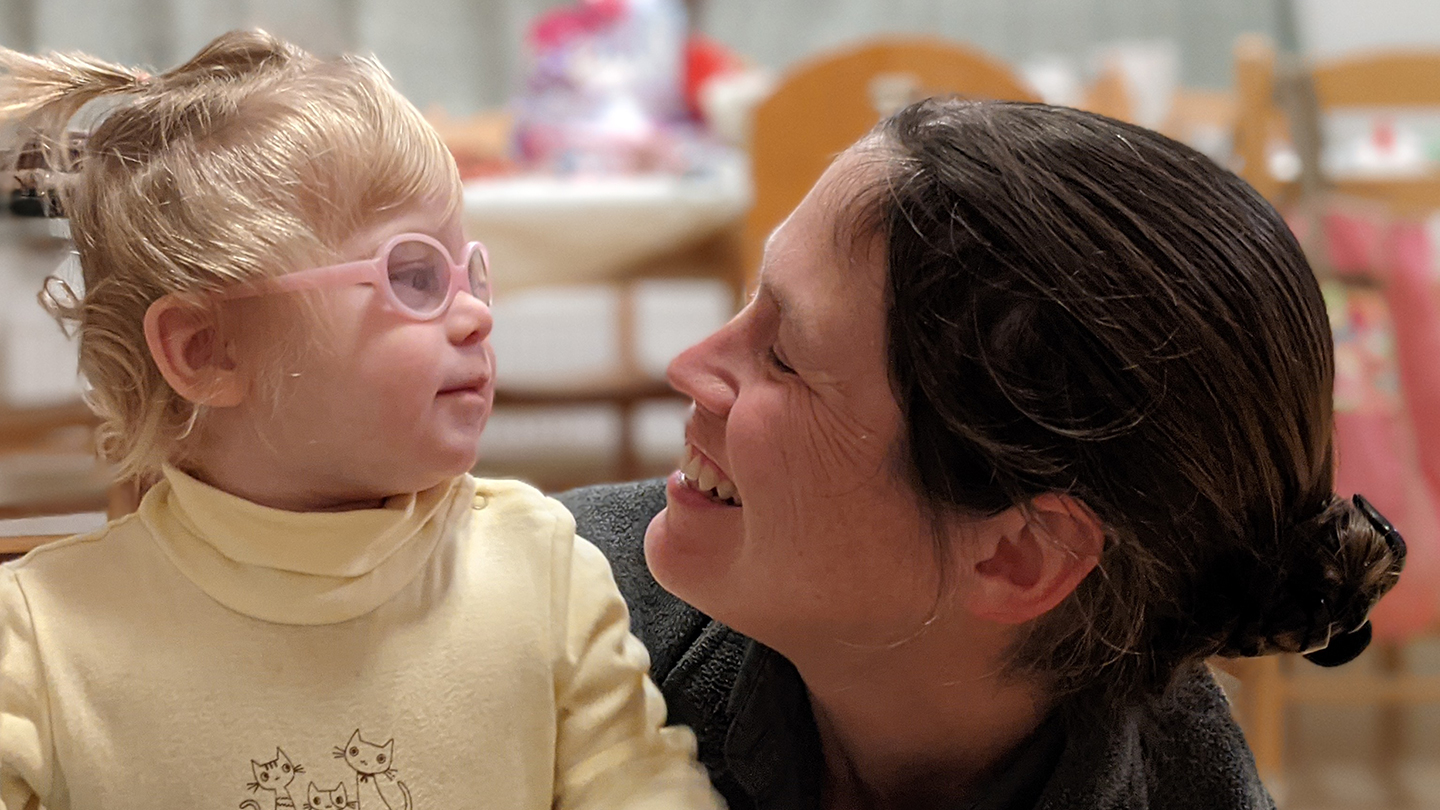
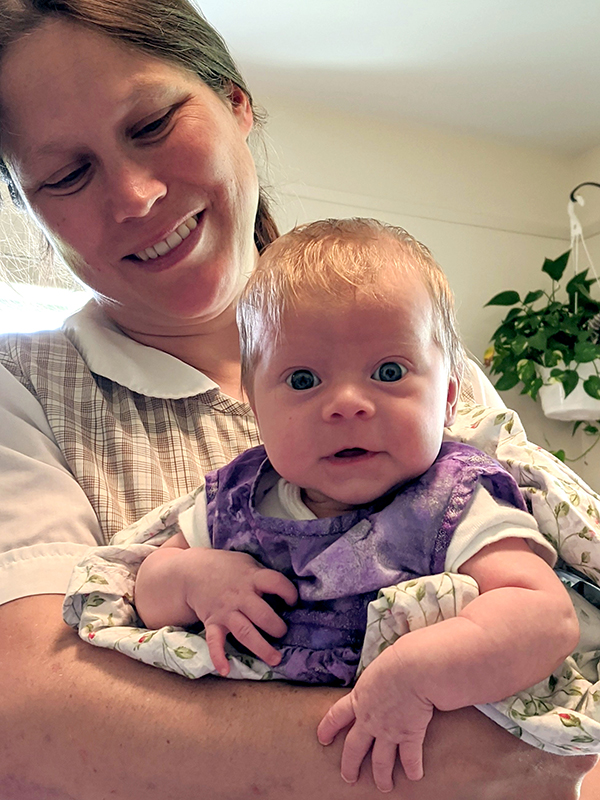
[.article__paragraph--cap][.small-caps]She was small,[.small-caps] back then – small, cuddly, and sweet – my baby. I remember hugging her to myself as the doctor relayed the results of her MRI: lissencephaly. I had to have it spelled out for me (and how many times have I spelled it for other people since?). Kate’s brain was underdeveloped – “smooth brain,” the doctor called it – a rare genetic condition that would cause severe limitations, seizures, and early death. Kate would likely never walk or talk. In fact, she would probably not survive childhood. I struggled to comprehend the diagnosis, my innocent eight-month-old baby in my arms, looking up at me with her big eyes. Days earlier, I had brushed aside a premonition that Kate’s condition would kill her in the short term, convincing myself that we would help her navigate her way into adulthood. Now, on Christmas Eve, there was no denying it: Kate’s diagnosis was terminal. Attempting to lessen the pain, the doctor assured me death was not imminent – we would have years together. I asked for a number – how many years? – and met the first professional who refused to give me an exact answer. I would later come to appreciate doctors who left room for interpretation, but right then I needed facts. I got one: most children with lissencephaly die before their tenth birthday.[.article__paragraph--cap]
[.small-caps]Just like her diagnosis,[.small-caps] Kate’s death at age five took me by surprise. That fall she came down with mycoplasma and spent ten days in the hospital, returning home just in time to celebrate Thanksgiving. But a week later she was back in the PICU – my precious child lying comatose with a bank of IVs funneling medicines into her small body and a machine breathing for her. I had never seen Kate so sick, and I finally told my husband we might have to settle in for the long haul. “Let’s try to get home by Christmas.” I’ll never forget his words: “Honey, that’s the best outcome – Kate might not come home.” That’s when I realized she was dying. Less than fourteen hours later, she was gone.
At the time it seemed so sudden. But looking back, I could see that the past year and a half had been a downward trend of degeneration as Kate began to lose all of her hard-won skills and spent much of her day sleeping. We frantically tried medicine, surgery, dietary changes; nothing made a difference. She was fading, and I was powerless to stop it.
Five years before, when Kate was diagnosed, I was assured that at least she wouldn’t die right away. She had years of life ahead of her. But I soon realized those blessed years were a double-edged sword. Every day of Kate’s life would be filled with pain – disability, limitations, seizures – and I would be helpless to alleviate that suffering. What do you do when your child, your baby, faces a life of pain? How do you deal with the knowledge that you will watch your child die?
[.small-caps]I remember the first time[.small-caps] I called the doctor to administer emergency seizure medications, remember Kate’s sisters kissing her goodbye the day after Christmas, as we took her to the emergency room for monitoring, remember cradling her at night – laying my sweet, blue-eyed child on the bed and weeping over her brain that condemned her to so much pain. I remember escaping the house and running far out into the nighttime woods to look up at the stars, no longer able to watch my baby having seizures.
Acceptance seemed an ugly word to me; how was it possible to just impassively receive a sentence of death for a child not even a year old? Every fiber of my being rebelled against the idea that my baby’s life would be defined by early death, by suffering and disability. The goodwill of people who immediately jumped to thoughts of God’s goodness or Kate’s role as God’s special messenger just because she was disabled nearly choked me.
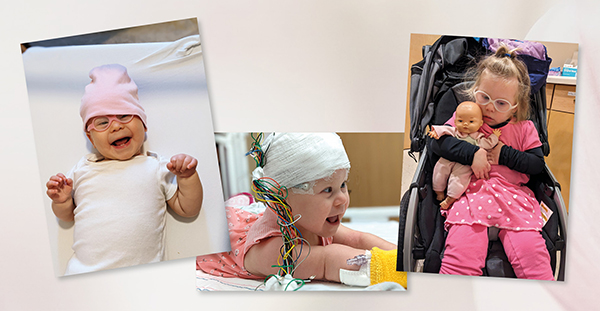
As Kate grew, that tension remained. I didn’t blame God, but at the same time, I could not accept that a God of love would be OK with a child suffering: those daily shots I gave my fifteen-month-old, the seizure medications titrated every few months, those twenty-four electrodes attached to her head to measure seizure activity, the hot, sticky leg braces she wore all summer long, the way my little girl was trapped inside a body that would not learn no matter how hard she worked – how did all that square with a loving God? For years I protested, determined to fight “against the dying of the light.” The raw wrongness of the diagnosis filled me with anger; why did evil, death, and sickness still exist in this world?
The first Easter after her diagnosis, reading the account of Jesus’ miracles before his death, I suddenly realized that Jesus’ glory was revealed through severely disabled individuals. Take the story of the man lowered through the roof by his friends. I have heard countless pastors extol the faith of the friends who believed Christ would help their companion, but the story says something different to me. I think of that crippled man who had endured years of pain, humiliation, and ignominious treatment, desperate to be healed. He was willing to risk ridicule and shame in front of a crowd; he allowed himself to be lowered on a mat, because he believed in Jesus. And perhaps it was that man’s unshakable faith that led his friends to action; their love for their comrade transforming into belief in Jesus’ power to heal. That’s what Kate taught me. As I watched my daughter grow, her indomitable character blossoming, undaunted by the immense challenges facing her and somehow able to spread sunshine wherever she went, my own heart changed.
[.small-caps]Kate’s smile was full[.small-caps] of that sunshine – but it was also unlike anyone else’s smile that I’d seen. I used to think there was something wrong with it; yes, she had that huge open-mouthed grin, but there was something about her eyes, those beautiful blue eyes, that made the smile different – somehow empty of the expected sparkle. Instead, there was something there I couldn’t translate. But Kate was like that; she expressed things differently. There was no doubt she meant it when she smiled, and her smiles warmed my heart. Even that first Christmas, she grinned up at me from her crib. That was the photo we shared with everyone. Merry Christmas from Kate, my smiling baby with a fatal condition. That was Kate: a child of contradictions. The pain, suffering, heartbreak were all there – but so was the sunshine, the bright spirit that belonged to her and no one else. Perhaps that spirit shone more brightly because of the dark shadows from which she smiled.
For five years, Kate brought joy into our house. Music bubbled up from inside her even though she couldn’t sing; she would wiggle her shoulders and bounce up and down when she was supposed to be practicing her walking. Her sisters loved dancing with her, hauling her around the room or spinning her adaptive chair as she giggled uncontrollably. Musical toys were a sure motivator during therapy sessions. She loved swimming, mirrors, graham crackers, applesauce, M&Ms, storybooks, pretty clothes, and princesses – just like any other little girl.
But there was never enough time for playing – not with up to twelve therapy sessions a week. That’s when I discovered what a hardworking kid Kate was. Mastering the skills most kids learn independently took her hundreds of repetitions and hours of painstaking practice. For Kate, the smallest task, from grasping objects with her hands to chewing food properly, to sitting, and finally standing, was hard won. In hindsight, I sometimes wonder if I did the right thing, asking Kate to work so hard, because in the end she would lose many of those skills. At the time, I reveled in my brave child who smiled during grueling therapy sessions and whose increasing independence allowed her to express her opinion.
Visitors to our house found my two-year-old daughter unloading the toy box onto the floor (she had finally learned to sit), grumbling as I brushed her hair, or helping herself to that grilled cheese sandwich, not wasting any time waiting for Mom to serve it up (she had finally learned to eat age-appropriate food).
Even though she couldn’t talk, Kate found ways to make herself understood. She complained when someone borrowed her favorite toy, and if she thought I might be reaching for it, she would hug it extra tight with a look on her face that said, “Don’t you dare take Scout away from me, Mom!” She refused to eat other foods when she could see rice on the table (or better yet, cheese curls). She was selective with her smiles. Try as he might to gain one, Grandpa was sometimes totally ignored, while sisters, classmates, and babies received grins and giggles.
Those were golden times, watching my daughter thrive, discovering that she was naughty, opinionated, and lovable, just like every other two-year-old. Now that she’s gone, my second grader often requests a favorite lullaby about the little angel who doesn’t want to go to bed, but instead collects stars and throws them down to earth, where they become daisies.
Of course, that sounds just like something Kate would do. But while she could be naughty, she was never deceitful; as Jesus said of Nathaniel, Kate was “without guile.” She made it so easy for everyone to love her. When it came time for us to choose a Bible verse to read at her funeral, it had to be Matthew 5:8, “Blessed are the pure in heart, for they shall see God.”
The time I spent with Kate changed me: watching her hard, uncomplaining work during therapy sessions, comforting her by holding her close during sleepless nights, splashing around together in the pool on hot summer days, or watching her play peek-a-boo with her five – yes, five – sisters. Kate taught me how to live fully, to put aside that terrible diagnosis and simply enjoy every moment.
I’ve often reflected on Victor Frankl’s remonstrance that a person’s attitude to circumstances is an individual choice. After living with Kate for three years, I was finally able to make my choice, to say yes – not to evil, not to senseless suffering, but to God. I never accepted that disability and death would define Kate’s life, but, by grace, I did find a way to say yes to God’s presence in the midst of pain. I found myself willing to be used in that story. And just like the story of the crippled man, Kate’s story ends with meeting Jesus.
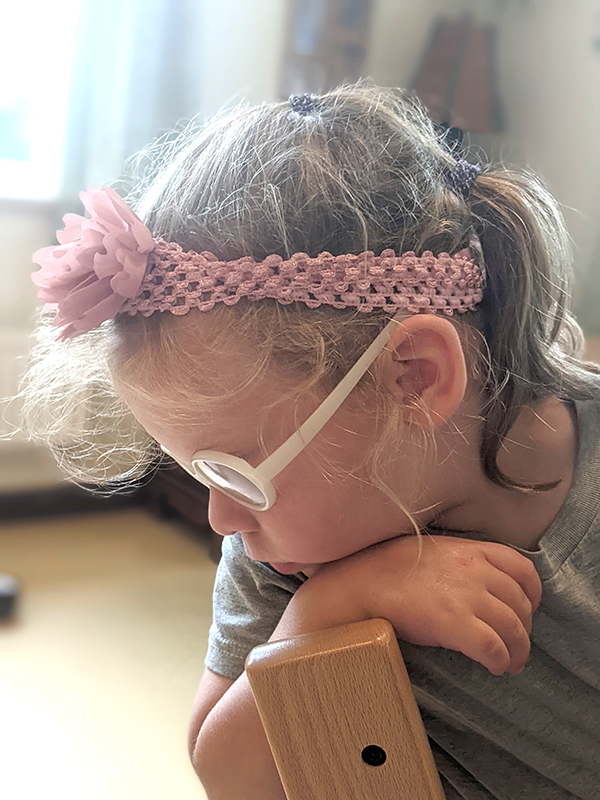
[.small-caps]As an active member[.small-caps] of the Bellvale Bruderhof community, Kate developed a circle of friends far beyond her family. Although she spent hours in therapy sessions and never followed a typical schedule for her age group, her teachers made every effort to include her in class activities. Her classmates pushed her wheelchair out into their woodland play area. She had a place at the classroom table, and a starring role in class productions. But Kate wasn’t just a member of her class; she befriended all age groups. Visiting the infants’ room was a highlight, as the teacher helped her hold a baby in her lap (who like as not would try to pull her glasses off) while Kate gazed down in wonder and delight. She could be found visiting the first-grade art class (she loved painting) or crashing the birthday party down the hall, because, let’s be honest, there’s nothing better than ice cream.
The school secretary always had M&Ms at the ready whenever Kate stopped by. The neighbor down the street honked his horn when he passed her on her trike, knowing he would get a big grin in return. Every member of the community had a special relationship with Kate – she had friends of every age and background and personality.
It was only after she died that I learned what Kate meant to so many others. The crowd at her funeral was wall-to-wall. Teenagers wept in the back row and later helped carry her coffin to the cemetery; rows of therapists and medical professionals were in attendance; and a little boy in Kate’s class leaned over to tell his dad how much he missed her. Kate’s short life touched more people and multiplied more love than I can ever hope to.
[.small-caps]And now I sit[.small-caps] in the living room without my girl – my Kate, who leaves such an enormous hole in our family. She is gone. For her sake, it is a relief. No more suffering; that little-girl spirit is finally free to sing and skip and dance. And I’m left here to wonder what her life means – what is it all about?
I remember how desperately we fought to prove science wrong, to convince the universe that if we worked hard enough, we could overturn her diagnosis. But it couldn’t be done. A combination of seizures and medications robbed her of what independence she had gained – her twenty signs, her ability to communicate with her iPad, even her smiles. ln the end, it all came true: Kate ended up wheelchair bound, unable to walk, talk, or even eat, on multiple seizure medications, intubated, and finally, dead at age five.
But that diagnosis and outcome was only part of who Kate was. So much else came true besides, because God was there all along. He gave Kate a shining spirit of love, laughter, and joy. I think because Kate suffered so much, she also glowed. She had a light that drew people to her and pulled love out of them. Kate taught me all about love, bravery, and innocent joy – side by side with pain and suffering. She taught me that, sometimes, just to be together is enough. She gave me the certainty of God’s presence every single day, not only at the celebrations, the days when Kate laughed, rode her trike, or practiced walking, but also on the days when she couldn’t get out of bed, vomited multiple times, battled her seizures. He was certainly there on the day she died.
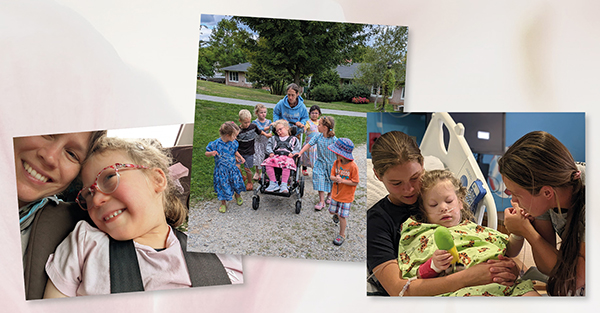
For years I had feared Kate’s death, unsure how I would respond and terrified of more suffering. But God granted a peaceful passage, his palpable presence ushering my sweet girl into the next world. I’d forgive you for wondering how the death of my child could possibly feel like a victory, but it did – it does – even through the constant ache of her physical absence. She overcame all her disability and pain. I may forget the neverending work that comes with motherhood of a disabled child. I may forget how to give injections and the details of G-tubes and VNS devices, just as Kate left all of that paraphernalia behind. But I will never forget anything of who she was. Just before Kate died, I asked her to visit often, and I know she does: that shooting star caught out of the corner of my eye as I stand by her grave, the single ray of sunlight slanting toward me on a gray day, the butterfly that suddenly flits across the path, almost close enough to catch. She is that close; her bright five-year-old spirit is dancing right next to me. And I’m not the only one who feels her freedom – she is with so many people, encouraging them to believe, to be brave, and to give love right now, to the person right in front of them, because ultimately that’s all we can do.
[.small-caps]Kate lived in the moment.[.small-caps] When I was with her, I was OK; the terrible future ahead faded, and the present, the togetherness, soothed all my heart’s crying. And now her message to me is that she will be with me forever. I don’t have to worry about losing her. But I will spend the rest of my life trying to understand and live out the lessons my five-year-old taught me. And I will continue to thank God for the honor of being Kate’s mother.