Essay
A Vision in the Dark
For my friend Wendell Berry, love was particular.
December 15, 2026
Try 3 months of unlimited access. Start your FREE TRIAL today. Cancel anytime.
START FREE TRIAL NOWA Vision in the Dark
For my friend Wendell Berry, love was particular.

[.article__paragraph--cap][.small-caps]In “Are You All Right?,”.small-caps] Wendell Berry writes of a night when Port William farmers Andy Catlett and Elton Penn traverse a flood-ridden landscape to check on their bachelor neighbors, Art and Mart Rowanberry.[.article__paragraph--cap][
The incident occurred in real life, as many (perhaps all?) of Wendell’s short stories have. When I visited the Berry home in March 2026, Wendell Berry told me the “real life” version. Elton is the fictional iteration of his dear friend Owen Flood. Andy is, in many ways, Wendell’s autobiographical self, written into a fictional version of his own hometown and history. And just as happened to Andy, on an archetypically “dark and stormy night,” Wendell received a call from Owen, who wanted to check on their neighbors Mob and Meb (Marvin and Melvin) Ford.
“The river is up,” Owen said. “What have you heard from Mob and Meb?”
The bachelor brothers lived down by the river, as the fictional Rowanberry brothers did. Wendell had not heard anything from them. Neither had Owen. The two friends set out to check on them; as Wendell put it, “we talked each other into going to see them.”
In the fictional version of this story, Wendell writes, “The country [was] all silvery with moonlight, inlaid with the bottomless shadows, and the air shimmered with the trilling of peepers from every stream and pond margin for miles, one full-throated sound filling the ears so that it seemed impossible that you could hear anything else.”
Owen picked Wendell up outside of the Berrys’ home, and they drove toward the Fords’ house. As the road dropped down into the valley, it disappeared into backwater. The friends were forced to stop; a pickup could take them no further. They left the truck behind and walked through woods toward the Fords’ home, picking their way quietly along the slope. By the light of the moon, Wendell told me, he could see the luminous glow of large white flowers lying all around his feet. In the first telling, he had described the landscape thus:
The moon gave plenty of light. We could see everything – underfoot the blooms of twinleaf, bloodroot, rue anemone, the little stars of spring beauties, and overhead the littlest branches, even the blooms on the sugar maples. The ground was soft from the rain, and we hardly made a sound. The flowers around us seemed to float in the shadows so that we walked like waders among stars, uncertain how far down to put our feet.
All the time, Owen’s and Wendell’s eyes were searching for light from the Fords’ windows. Finally, they spotted it – but water blocked their path forward.
“We got as close as we could, then hollered the extra two hundred yards,” Wendell told me. There was a pause, and then the friends heard Mob and Meb holler back at them. Relief and joy filled them. All was well.
There was emotion in Wendell’s voice as he recalled this memory. “There’s love involved in that – and beauty,” he said. I sat with him and Tanya in their kitchen, where a tiny bouquet graced their table. Wendell smiled and added, “I’m really interested in beauty.”
He was ninety-two years old. It was the last time I would ever see Wendell in person. After he passed away at the end of August, the moment immediately returned to my mind: Wendell in his chair, speaking of the moon overhead and the flowers at his feet, and his quest with Owen to check on two aging neighbors. I had been talking with Tanya for some time about the importance of beauty to human life: how it serves as a vital center to our homes and families, how it shapes our sense of place and belonging. On this point, as on most other things I know of, Wendell and Tanya were of one mind. Beauty mattered. It was an integral part of human life.
Focusing on beauty may seem trite or trivial, like a romantic and outdated notion. We have perhaps gotten a bit too used to people quoting Dostoyevsky’s famous line from The Idiot, “Beauty will save the world.” We’re threatened with imminent doom from AI, or climate change, or biological warfare, or perhaps all three. Is there truly time to pay attention to beauty?
But Wendell was more cognizant of the problems confronting us than most. He had written about them for decades. He criticized the Vietnam War in the sixties and battled Big Ag in the seventies. As small and midsize farms succumbed to “progress,” and agricultural homogenization threatened to wipe health and diversity from American landscapes, he responded with his classic work The Unsettling of America. He described the pains and injustices of racism in The Hidden Wound, and the perils of colonialism in his essay “A Native Hill.” He spoke of the decline of marital fidelity and respect for women’s work in his essay “The Body and the Earth.” He was arrested for protesting at a nuclear power plant in Indiana in 1979, and participated in a 2011 sit-in protest against mountaintop-removal mining in Kentucky. Wendell knew that we live in a broken world.
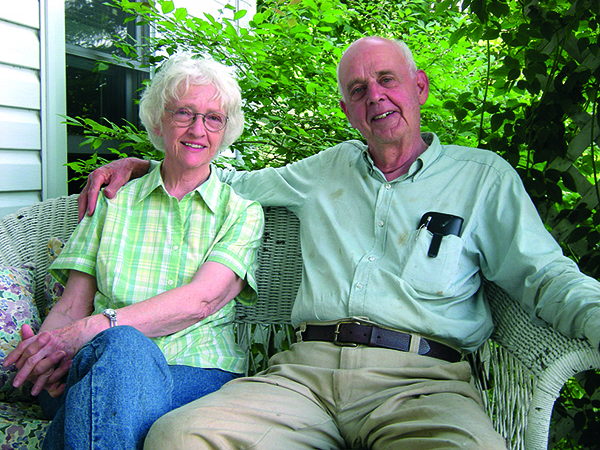
But he also focused a great deal of his writing and life on the twin venture of loving and preserving beauty. That focus may not be obvious at the outset (at least not to the casual or first-time reader of Wendell’s work). After all, Wendell was dedicated to his work (farming) and to his place (Port Royal, Kentucky). But in and through that medium and setting, he offered a virtue ethics anchored in love, fidelity, and hope. Because he cared about the issues shaping his community, whether for its nurture or destruction, Wendell sought to develop a universal pattern of care. That care, for its part, formed and heightened his attentiveness to beauty in the living world.
Love is particular; it must always be enfleshed in the lives of particular people in a particular place. We can talk about love in the abstract, but it never becomes love until it is embodied. Similarly, while one can describe beauty’s universal traits, beauty itself must be encountered. All the treatises in the world cannot compare with stepping in front of a Vermeer, picking roses in one’s garden, or watching the face of a sleeping child. Wendell knew this. Love and beauty are encountered in and through unique places and people. As a poet, essayist, farmer, father, husband, and neighbor, Wendell was constantly studying both:
I went away only
a few hundred steps
up the hill, and turned
and started home.
And then I saw
the pasture green under
the trees, the open
hillside, the little ponds,
our house, cistern,
woodshed, and barn,
the river bending in
its valley, our garden
new-planted beside it.
All around, the woods
that had been stark
in the harsh air
of March, had turned
soft with new leaves.
Birdsong had returned
to the branches:
the stream sang
in the fold of the hill.
In its time and its patience
beauty had come upon us,
greater than I had imagined.
(Sabbath Poems, IV, 1992)
Yes, Wendell knew all about climate change, the danger of machines, and the brokenness of humanity. And yet he believed in (and wrote regularly about) the power of faith, hope, and love. And he did not practice these virtues with a doleful expression: he embraced them with a grin on his face, a joke on his lips, and (at least occasionally) some good whiskey in his hand.
Wendell’s joy may not appear as readily on the written page, which is why I have felt some urgency and desire to communicate it now; I think it is vital that readers know Wendell was a jovial man. He carried lightness and delight in his words, mannerisms, and bearing. He was always ready with a joke and a smile.
This is remarkable, considering what Wendell wrote about and experienced in his lifetime. He encountered many griefs in his life – from the tragic loss of a beloved uncle to the sudden death of his dear friend Owen Flood, not long after the events described in “Are You All Right?” As Wendell writes at the end of his short story, “Now I know that it was neither of the Rowanberrys who was under the sign of mortality that night. It was Elton. Before another April came he would be in his grave on the hill at Port William. Old Art Rowanberry, who had held him on his lap, would survive him a dozen years.” Owen’s death was a crushing loss for both Wendell and Tanya (not to mention the rest of their local membership).
There were logistical difficulties and hardships, as well: Wendell was often juggling professorial work, writing, farm work, and speaking engagements all at the same time. For the love of his place in Henry County, he turned down secure academic positions and greater financial comfort. And so long as Wendell wrote on behalf of small rural communities, he had to put up with people calling him “curmudgeonly,” “backwards,” “cranky,” and “nostalgic.” Even the New York Times, in its obituary of Wendell, just described him merely as a “Writer Who Extolled America’s Agrarian Past.” Someone else trying to do Wendell’s work may have become bitter, hardened, or cynical.
But not Wendell. I wrote to him for thirteen years, staying in conversation with him throughout that time. I had the privilege of visiting his home three times in the last three years – primarily to talk with his wife Tanya, but also getting to see him every now and again. I also got to speak with him at length at a couple of conferences he spoke at. And in every encounter with Wendell, I was struck by his joy.
You don’t have to take my word for it. Ed McClanahan, one of Wendell’s lifelong literary friends, described the “gleeful, goofy Wendellian grin that lurked behind all that exterior gravitas.” When Wendell received his National Endowment for the Humanities medal, David Skinner wrote that Wendell was “cheerful in dissent.” Mary Berry has told me her father was always “easily affectionate, tender, and funny.” He enjoyed life, she said, and he always assumed the best of others.
A 2020 Orion Magazine interview of Wendell with environmental activist Tim DeChristopher also makes Wendell’s joy powerfully clear. DeChristopher’s tone and words often turned frustrated, understandably so. He had been studying the same problems Wendell had been studying, and he could not see easy solutions. “There is a lot at this point that is irretrievably lost,” he told Wendell during the interview, adding later that it “gets more complicated every day, to learn how to live and love with a dying world and a broken society.”
“The argument for despair is impenetrable, it’s invulnerable,” Wendell replied. “You got all the cards. You got the statistics, the science, the projections on your side. But then we’re still just sitting here with our hands hanging down, not doing anything. … You’ve got to cleanse that mess out of your heart.” The answer, Wendell told him, is not to fix the world. It is to “love your neighbor,” as the scriptures tell us. And it is to “take care of the responsibilities that we’ve got.” The rest is outside of our control. He explained further:
I had a student one time who told me she wasn’t going to be happy until everybody was happy. I was up there on the hillside one night, thinking about that girl, wondering what would be the use of adding one more unhappy person, and I made a poem:
O when the world’s at peace and every man is free
then will I go down unto my love.
O and I may go down several times before that.
The interview becomes more hopeful after this point. Wendell’s humor and tenacity open up new doors of possibility. They create space for beauty amid the heartache of all that is wrong and unjust – a heartache familiar to any activist. Perhaps the world is ending. Perhaps things are beyond our saving. But Wendell quotes Thomas Merton, who once declared, “If you know the world could end at any minute, you know there’s no need to hurry. You take your time and do the best work you possibly can.”
As Berry writes in another Sabbath poem,
Whatever is foreseen in joy
Must be lived out from day to day.
Vision held open in the dark
By our ten thousand days of work.
Harvest will fill the barn; for that
The hand must ache, the face must sweat.
And yet no leaf or grain is filled
By work of ours; the field is tilled
And left to grace. That we may reap,
Great work is done while we’re asleep.
When we work well, a Sabbath mood
Rests on our day, and finds it good.
Wendell believed that good work was worth doing, regardless of the problems we confront. Indeed, the good work was itself a solution to the problems. It could not fix everything. But it stood out as a “vision held open in the dark,” alighting with hope on the imagination of the worker. It taught the worker to recognize grace: abundance even in seasons of doubt and want. “Great work is done while we’re asleep,” Wendell writes, recalling the words of Psalm 127. The worker who recognizes his or her creatureliness and dependence can freely smile, laugh, feast, and rest.
Wendell’s awareness of this creatureliness grew steadily throughout his career – largely as the result of the embedded life he chose to live. When he wrote, he temporarily left behind his house and farm and walked a short way down the road to his Uncle Curran’s “camp house”: a little cabin on the banks of the Kentucky River, where he and Tanya spent the first summer of their marriage.
From this vantage point, Wendell addressed the issues and ills of the world. But he was never apart from the living fabric of his own locale. He could not forget his placed-ness. The cabin’s forty-pane window revealed his limits and surroundings, as well as the loveliness and conviviality of what remained. And I cannot help but think that this frame, this orientation, allowed Wendell to understand – in a way that few moderns have – the reverberating joy and lightness that remain underneath the currents of darkness confronting us. He had to laugh in wonder when he saw a hummingbird scratch itself midair (he describes this in one of his Sabbath poems). He had to smile when he saw otters playfully slipping along the river. As he beheld the beauty of his place, of everything that lives beyond human control, he knew there was more than pain, darkness, and despair.
As he puts it in his interview with DeChristopher, Wendell’s argument in favor of hope depends “on what I know of human goodness, but also on the flowers and the butterflies and the birds. The otters and the swallows – a lot of their life is just spent having a hell of a good time. The animals, so far as I can understand them, have a great deal to say in favor of life. It’s a good world, still.”
When Wendell left his writing work behind, he returned home: to sheep that needed feeding, lambs that needed pulling, a wife who would read his writing and critique it lovingly, a daughter and son who would help bring in the tobacco. Eventually, he also returned to grandchildren and great-grandchildren who loved to visit him and Tanya. He stepped out of the mesh of nature into the web of kith and kin – into a living network of love, duty, and fidelity. Here, the problems of the world had to submit to the present needs of human and animal life. They bowed to the life of one place, one family, and one hearth. Lanes Landing Farm could not be served by Wendell’s intellectual frustration with climate change or environmental decay. It could only be served by his determination to live well, to conserve what he could, and to love what remained. As Wendell has put it in several interviews and essays, he had a duty to live in hope: to act in a way that offered change and health to his corner of the world. He did not ignore the rest. But he would trust the God of hummingbirds, otters, and lambs to hold and change what he himself could not hold or change (and, if all else failed, to handle the end of all things when it arrived).
The impact of Wendell’s humble way has been enormous. Thousands of readers and writers are seeking to live out a pattern he has described for us. Our lives have been shaped by his forty-pane window, as well as by the poetry and prose he wrote from that vantage point. He has oriented us toward something true, good, and – yes – beautiful.
And yet, as we sat together in his kitchen that lovely March afternoon, Wendell told me something I never would have expected.
After telling me how interested he was in beauty, Wendell added, “I haven’t paid enough attention to beauty in my life.”
When I related this anecdote to a friend some weeks later, he laughed. It was a laugh of consternation and bemusement. He shook his head. “If Wendell Berry hasn’t paid enough attention to beauty in his life,” he said, “the rest of us are in big trouble!”
Yes, indeed. The poet of place seems to have always been paying attention to beauty. Wendell is the author of myriad poems about the glories of the natural world. His fiction and nonfiction reverberate with praise for the grace of God’s world, creatures, and human communities.
Yet five months before his passing, Wendell still wished he had attended more to the beauty that surrounded him. It was not a regretful statement; Wendell did not seem sad when he said it. He just seemed wistful, eager. There had been missed opportunities to dwell on the glories of God’s creation, but there were beauties still to be enjoyed. There was more of earth left to discover.
In The Brothers Karamazov, Father Zossima tells the story of his brother Markel, who experienced a spiritual awakening at the end of his short life. When his mother finds him crying in a garden, Markel explains to her that there is a glory all around him – a glory of trees, sky, birds, and living things. He is only weeping tears of joy, he tells her, for he doesn’t know how to “love them enough.”
At age ninety-two, Wendell seemed to express this same longing and desire to press into the beauty that surrounded him – the same realization that perhaps he (perhaps all of us) has not yet loved them enough.
As I reflect on the legacy Wendell has left behind, I am sure many folks will rightly praise his rootedness, his agrarianism, his literary prowess, and his vision of the good life. But I want to make sure of two things.
First, we must not lose sight of the happiness that fueled Wendell. As he said, the world does not need another doleful person. Even when things are wrong (very wrong), we must attack them with “cheerful dissent” – not sour-faced pessimism.
Second, we must pay attention to the source of Wendell’s cheerful dissent, those disciplines that he modeled well, including the one discipline he somehow believed he might have done better:
We should do good work – work whose means
and ends are well-ordered and lovely.
We should sabbath well, cognizant of our limits
and creatureliness.
We should attend well to the people and places
we love, giving thanks for them.
And we should pay close attention to the beauty
all around us.
It isn’t that these things are some sort of prescription for a perfect world. Rather, they describe the rhythms of a healthy life in a very imperfect one. Simple as they may seem, many of us do not do them. And we suffer the ill health that stems from their neglect.
As a writer and mother, there is a good chance I would be a very depressed and overworked person if not for Wendell Berry. There have been many times in my life, some of them quite recently, when I have been tempted to focus on all the problems around me, to endlessly chase big, universal solutions, and to extend myself beyond all cure. The world becomes very dark when we get mired in such habits. Wendell has always been there to steer me back to good sense. We are all beset with problems, hardships, and uncertainty. Sometimes we need to write about them, think about them, solve them. Other times, however, we will find our answers by not looking at them at all – but rather, by constructing our own Lanes Landing Farms and forty-paned windows.
[.article__paragraph--cap][.small-caps]Wendell’s “Are You All Right?”[.small-caps] is, in fact, a story of reorientation in the dark. It is a story of fear, the looming threat of darkness and loss. The way was lost; the road was flooded. Owen and Wendell had to proceed into the dark, not knowing what they would find. Mob and Meb could have been dead. And in actual fact, death did walk alongside Wendell: Owen would not remain long on the earth. But even amid the fear of impending loss, and the uncontrollability of the world, beauty was palpably present. Owen and Wendell would not have been able to see it if they had turned on their flashlights, but thankfully, they chose to walk without them. By orienting themselves amid the dark, and amid their own limits, wonder joined them. It was present in the hooting of owls overhead, and the chirping of crickets. It was present in the luminous anemones and the softly budding trees. “Yea, though I walk through the Valley of the Shadow of Death, Thou art with me.”[.article__paragraph--cap]
The “rightness” of something can speak of its moral goodness, its health, or its particularity. We can be right to dissent to something, eat the right things, or find the right place. But to be “right” can also speak to our direction and position: it can describe how we stand in relation to things, pointing the right way, or standing upright, for instance. In asking the question “Are You All Right?” I think Wendell pushes his readers to consider: Where are you? From your vantage point, what do you see?
The story ends with the watery divide that stretches not just between Wendell, Owen, and the Fords; it ends with the mystery dividing Wendell from Owen, as he could not have known just how soon his dear friend was going to die. It ends with a cognizance of human limits, of all we cannot reach, fix, or know. But even amid this mystery and the pain, Wendell chooses to end with joyful remembrance: he attends to the eager rush of his friends’ voices, as they shout to each other across the watery divide:
“Are you aaalll riiight?”
“Yeeeaaah!”
The story, elegiac as it is, ends with laughter. Some good things accompany us into the valley, if we look about us rightly. Some good things remain with us, even when the valley is past.
When I heard that Wendell had left the world behind, I felt the ache of the divide: the palpable mystery now lying between him and us.
But when Jesus prepared a place for Wendell – those mansions he speaks of in his Gospels – I wouldn’t be surprised if he prepared a camp house. Its windows look out onto all the glorious beauty he has made. And praise be to God: Wendell has all of eternity to soak it in.
I believe he is all right.