Oops! Something went wrong while submitting the form.
To reset your password
Enter your address, and we'll email instructions on how to reset your password. If you do not receive the email in the next few minutes, check your spam folder. The link in the email will only work once. Login here.
Thank you! Your submission has been received!
Oops! Something went wrong while submitting the form.
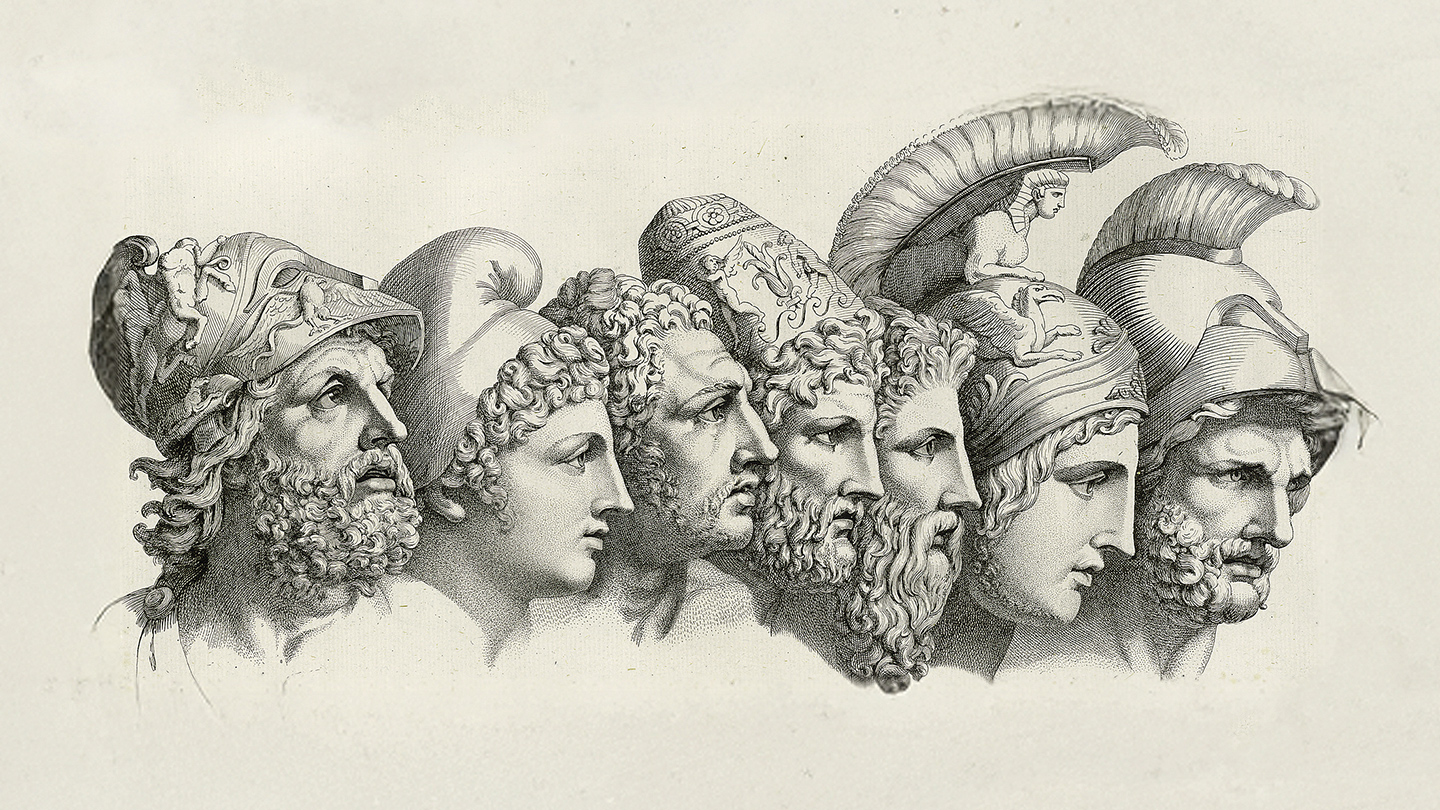
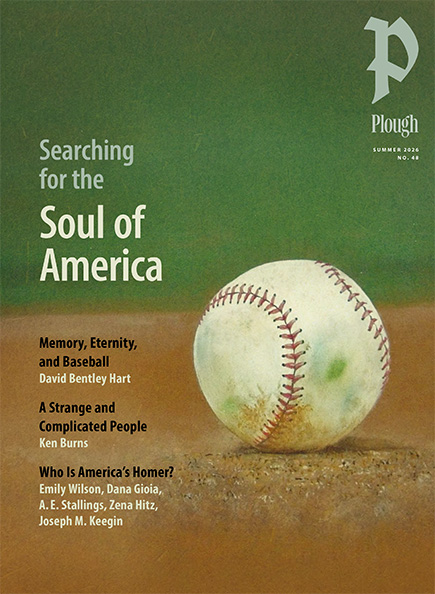
If England has Shakespeare, Spain has Cervantes, Italy has Dante, and Russia has Pushkin, then who do we have? Do we have a great poet who captures the American spirit, the American story, the American identity? We asked a posse of authors and poets to send us their votes.
[.article__paragraph--cap][.small-caps]Homer and Hesiod,[.small-caps] Hegel notes, “gave to the Greek gods their names and their form,” but only the former concerned himself too with heroes. Both of Homer’s great poetic epics open with divine invocations directed at human objects: “Sing the rage of Achilles, goddess,” Homer demands at the outset of the Iliad; “Tell me of the man, Muse,” begins the Odyssey. Several centuries later, Virgil starts his self-consciously Homeric fabrication of the founding of Rome by pulling poetry down from the heavens: “I sing” – no longer the gods – “of arms and the man.” Nearly two millennia later, a poor, barely-schooled Quaker’s son writing from “this puzzle, the New World,” the “athletic Democracy” unfolding an ocean away from all known civilization, made himself both singer and song: “One’s-self I sing.”[.article__paragraph--cap]
Thus Walt Whitman, too, named for the Americans their hero and their god. We are, Alexis de Tocqueville once said, natural Cartesians: “In most of the operations of the mind, each American calls only on the individual effort of his reason.” I think, therefore I am American. We are a nation of isolatoes, in Melville’s phrasing; an entire country corrupted by Socratic skepticism and folded inward by Luther’s doctrine of the heart. In earlier times, this made America a Petri dish of Protestantisms – more recently, it has made us the world’s greatest exporter of breaking news (as Hegel observed, modern man’s lauds) and all varieties of moralism, egoist occultism, and psychotherapy.
Whitman presages this all.
What do you suppose creation is? What do you suppose will satisfy the soul, except to walk free and own no superior? What do you suppose I would intimate to you in a hundred ways, but that man or woman is as good as God? And that there is no God any more divine than Yourself? And that that is what the oldest and newest myths finally mean? And that you or any one must approach creations through such laws?
[.article__paragraph--cap][.small-caps]In my years of public life,[.small-caps] I did hundreds of interviews. No matter what the topic – arts funding, education, reading trends, government policy – the reporter would usually ask me one of two questions, “Who is your favorite poet?” “Who is the greatest American poet?” At first, I responded by declaring the impossibility of answering either question. How tiresome I was, responding to a simple question by quibbling about its premise! It gradually occurred to me that the reporters were just being friendly. They didn’t know much about poetry; they were trying to open a personal conversation about the art. I relaxed and gave them answers.[.article__paragraph--cap]
My first answer always disappointed them. Favorite poet? “Shakespeare… sorry.” How boring! The second question was harder to answer. At least a dozen major American poets came to mind – Longfellow, Whitman, Dickinson, Robinson, Frost, Stevens, Pound, Eliot, Jeffers, Millay, Hughes. (Not to mention great writers who worked both in prose and verse, especially Emerson and Poe.) And that only brings us up to the middle of the last century! Which writer was the greatest? Who, then, is our Homer?
I wanted to answer the question in a way I could explain, though as it turned out, no reporter ever asked about my rationale. I settled the question (at least for myself) using five criteria – poetic excellence, thematic depth, creative abundance, literary versatility, and historical precedence. Let me explain the last criterion first. Our “greatest poet” needed to be foundational; that poet needed to make his or her mark on the tradition early, before it was fully formed. Homer appeared at the start of Greek literature, not toward the end.
For excellence, everyone in my top dozen qualifies. They wouldn’t have made the list otherwise. For thematic depth, most of them do very well too. No one would accuse Jeffers, Eliot, Hughes, or the others of talking about shallow subjects. Longfellow was excellent and foundational, but his optimistic imagination could not encompass tragic themes. Abundance eliminated only Eliot, a parsimonious poet, who let criticism replace verse in his later career.
That brought the final decision to versatility. Wallace Stevens was a sublime author, but he spent most of his career writing variations of the same supreme poem. I would make similar criticisms of Whitman, Robinson, Jeffers, and Eliot. Neither Poe nor Emerson had much versatility; their obsessions were part of their strength. Likewise, Millay and Hughes were at their best in short poems on certain characteristic subjects.
For me, the final choice came down to Dickinson or Frost – the weird power couple of American poetry. Ultimately I chose Frost because only he wrote with equal authority in all four modes of literature: the comic, tragic, satiric, and romantic. He also wrote, at the highest level of excellence, both lyric and narrative poems. No other poet equals Frost’s creative range.
Finally, Frost wrote in ways that appealed to the common reader as well as the literati. When American students are asked to name their favorite poem in the English language, they consistently choose “Fire and Ice.” When instructors name their favorite poem to teach, they inevitably select “The Road Not Taken.” I understand those two choices. I loved Frost at fifteen. I still love him at seventy-five. He covered a lot of territory with me and always had something indispensable to offer.
[.article__paragraph--cap][.small-caps]In the first volume[.small-caps] of Democracy in America, Alexis de Tocqueville gently mocks the heroism typical of Americans: “During a crossing of eight or ten months [the American navigator] has drunk brackish water and lived on salted meat; he has fought constantly against the sea, against disease, against boredom; but upon his return he can sell a pound of tea for one penny less than the English merchant. The goal is reached.”[.article__paragraph--cap]
How could the humble hero of commerce, the American sailor, be glorified? He bears no carved shield or helmet. His lance is a whaler’s lance, for butchering the great whales so as to boil down their oil for the market. Herman Melville hangs mystery like Blake and tears it down like Cervantes. His restless schoolmaster, Ishmael, goes to sea for wisdom, but he is too savvy to get carried away by his own poetry. The voyage of the Pequod is America’s greatest quest, the search for meaning. What wisdom is won from the terror of the hunt or the tedium of butchery? Enchantment descends when Ahab calls for the death of the white whale. It recedes in the cycle of whale-sighting, the chase, geysers of blood, cutting and processing. Each majestic whale lights up dollar signs in second-mate Stubb’s eyes. The mists of enchantment return as the erstwhile whale-butchers gaze in awe at a pacific nursery protected by circling whale bulls. They scratch the head of the baby whale whose umbilical cord still hangs in the water. An episode or two later a whaleboat on the chase abandons young Pip, a rookie oarsman, on the sea for hours. Floating in emptiness, he sees the busy heartlessness of nature. He loses his wits and never recovers. Ishmael imagines his way into the heart of each sailor and the particular ghosts and dreams of each. The enchantment of Moby-Dick is not allegory or “symbolism” or anything so crass, but the enchantment of the longings of the human heart for beauty, peace, wisdom, understanding, adventure, grandeur, courage, and immortality.
[.article__paragraph--cap][.small-caps]Who is the American Homer?[.small-caps] The original Greek Iliad and Odyssey are monumental texts, based on a centuries-long preexisting oral poetic tradition – and the epics themselves were usually experienced in antiquity out loud, as rhythmical, proto-dramatic, musical performance pieces. There were numerous musical and poetic genres in archaic Greece; the Homeric poems are primarily “epic” – glorious, gripping narratives of the mythical “deeds of men” (klea andron). But these poems also draw on other poetic and musical traditions, such as lament. So an American Homer would have to be a lyricist, singer, poet, or quasi-epic writer who encapsulates, transforms, and canonizes a set of earlier American oral traditions, and also speaks to core American values and experiences. There are many musical traditions in the American cultural bloodstream: spirituals, Gospel, blues, folk music, railroad songs, sea shanties, and more.[.article__paragraph--cap]
The Homeric poems were composed at a time when Greek speakers from different regions of the Mediterranean world were beginning to form a new awareness of their “Pan-Hellenic,” unified identity. By contrast, the United States, since the time of its founding, has retained deep and painful racial and regional divisions – so it’s hard to think of an artist who resonates equally across white and Black America, across rural and urban communities, and across both North and South. Some obvious candidates for such musical American Homers include Ma Rainey, Fats Domino, Louis Armstrong, and Nina Simone – Woody Guthrie, Bob Dylan, and John Prine.
But if we want a single American epic song, I’d nominate Tracy Chapman’s “Fast Car,” whose multiple covers (including by male and white artists) showcase its ability to speak to the broader American cultural experience, and the tragic gap between aspiration and achievement. To my ear, Chapman’s original 1988 version is still, forever, the best. Her wonderfully controlled structure tells a heartbreaking narrative that lasts less than five minutes, but gestures at an epic narrative. Like the Homeric poems, the song makes powerful use of repetition and formulaic language: simple repeated words take on new meanings on later iterations: work, drunk, got, feeling, belong, away, you, me, somewhere, anywhere. The desire for eternal kleos drives the Homeric warrior; Chapman’s speaker is driven by the desire to “be someone, be someone,” and for her, as for Achilles and Hector, the stakes are life or death: “Leave tonight or live and die this way.” And yet the “anyplace” that should be better than here never materializes, however fast the car. Achilles in the final sequence of the Iliad moves from his overwhelming, limitless rage, to a partial awareness that loss is inevitable, and mortals must accept the inadequate comforts of grief and community in the short time we have to live. Chapman’s speaker enacts a comparable but different emotional arc, from the zealous hope of youth to the despairing, attenuated hope of middle age. The fast car, that iconic symbol of American industry and the highway out west, which had seemed to promise a trip out of poverty and away from the speaker’s broken rural home into the wealth of the city, becomes useful only because it might, just might, enable her unemployed, absent, alcoholic partner to “fly away” from her. The narrator, whose choices have been limited to her ability to work, “pay all the bills,” and take care of her nonfunctional male family members, nostalgically remembers a feeling of release in the fast car of the past that partly echoes the habits of her father and her partner: she “felt like I was drunk.” The car is a place of eternal motion, and only in this nowhere place – not the impoverished country, not the disappointing city, not the unattainable suburbs – she “had a feeling that I belonged.” The Iliad and the Odyssey are both focused on warriors who are alienated from their communities, and find a slow, painful way back to a place of belonging. But both poems acknowledge the experiences of suffering and conflict, even at moments of triumph. Chapman’s American epic tells a story of hope, joy, memory, and connection, and a repeated longing for the sense of belonging that may be, for some Americans, forever out of reach.
[.article__paragraph--cap][.small-caps]My short answer[.small-caps] is Emily Dickinson, how she takes hymn meter from the English psalmists, sets the rhymes at jaunty angles, and discusses atoms, chemistry, volcanoes, advertising, God, doubt, the steam engine, and the individual. But my longer answer is Laura Ingalls Wilder and the Little House books. I’m not the first to say they are our true national epic. But I’ve given it some thought. I was listening to the audiobook versions read by Cherry Jones with my daughter some years ago, and I kept thinking – this is Homeric. [.article__paragraph--cap]
The books are an odyssey, a homecoming, but the home is over the horizon. (OK, here, more like the Aeneid, with its promise and destiny.) But they also have an oral tradition’s formulaic simplicity. The stars over the prairie are always large and low: “The large, bright stars hung down from the sky. Lower and lower they came, quivering with music.” The epic punctuations of meal-taking and preparation sometimes sound like translations from Greek: “Pa skinned the deer carefully and salted and stretched the hides, for he would make soft leather of them. Then he cut up the meat, and sprinkled salt over the pieces as he laid them on a board.” There are stories within stories, singers of songs. Listening now as a parent, I find many scenes terrifying: when Ma nearly breaks her ankle, or when they all come down with malaria. (In the end, it is an African American doctor, Dr. Tan, “a doctor with the Indians,” who saves them.) The Native Americans are definitely “other,” but observed with a child’s not unsympathetic curiosity. As in Homer, the books abound in “object biographies” – how a doll or a chair has been made, out of what, by whom. I gasped at the description of making a door without nails – it might have been about Odysseus making a raft, or about the thong door hole through which the ghost comes to Penelope. The later books become more problematic and complicated, as Wilder’s daughter, Rose Wilder Lane, traveler, writer, and libertarian, shapes them to a political agenda. There is the myth of the nuclear family as all one needs in the world. And there is the promise of progress balanced against sorrow as the wildness of the vast natural world is tamed and exploited, as the seemingly infinite abundance of birds dwindles from Silver Lake, as innocence shades into experience.
It’s difficult to answer the question of who the Homer of American poetry is, since I don’t think there is another Homer, in the same way that there’s not another Shakespeare or another Dante. Regardless, when I was asked the question, my mind immediately went to Frank O’Hara, not only because of the mass of his poems but because of the simple yet brilliant way that he consistently expressed a love of New York City, his friends, and the world in general in even the most frivolous of his poems.
O’Hara is a real poet to me, in the sense that his poetry lives in the real world, moving with him and the people that he was with, with love as much as despair, but without remove and a performance of self-importance that poets often do as a way to distance themselves from the world, to set themselves above it, to be capital P poets who are doing the work of the divine, possessed by the spirit of language and poetry.
Yet in thinking about all of the things that I love about O’Hara, I realized that he was not who I was looking for. In the same way that one can read Jon Fosse, Karl Ove Knausgaard, and W. G. Sebald, acknowledge their superiority but still realize that they are students to Thomas Bernhard, when I think of the great master of the kind of American poetry that I love – poetry that speaks like and speaks to the real world, one that grapples with the material America as well as its meanings, its promises and its failures, poetry that is humble, not because of a fake modesty but because it can’t speak about human beings unless the language lives on the same ground floor as the people, poetry that turns the American experience into an epic as well as something that is sometimes small and banal, when I think of that kind of poetry and who best represents it – I remember the great book of poetry by William Carlos Williams that I returned to over and over when I was young. Just as I was a young man, I’m still blown away by his ability to capture the dreams as well as the ordinary and rooted experience of living in and a part of America with so much emotional depth packed in direct language.
What other poet can write about baseball and the American relationship to its pastime in this way that captures the thrill of the game as a spectacle, and the way that the shared joy of the crowd elevates the experience into something sublime and everlasting? The baseball game might easily stand for the New Jersey city of Paterson, the subject and main character of Carlos Willliams’s great epic, but it can also stand for a general experience. And the crowd – well, the crowd is us: all of us Americans, struggling to live together within the greater promise of the country’s project:
The crowd at the ball game is moved uniformly by a spirit of uselessness which delights them— all the exciting detail of the chase and the escape, the error the flash of genius— all to no end save beauty the eternal— So in detail they, the crowd, are beautiful
Everyone has heard an argument or two about the “great American novel,” but there is much less debate about the “great American epic.” That’s because there is no such thing – yet.
This isn’t to say that American literature is unaccomplished. But there is, as of now, no single, large-scale verse work that, through both its form and its subject matter, represents for the ages the contours of the American soul.
That’s more or less what we expect of a national epic: not simply good lines and lovely images, but a perfect union of form and subject that shows us what it feels like to be us. And even that’s not enough. To be a true epic, a poem must also show others who are not us what it feels like to be us. An epic must contain within it the experience of a people, incorporating the cultural and religious and social tics of that people so thoroughly into its body that anyone who approaches it meets something so total, so utterly complete, that he is compelled to accept it.
Think about the weirdness of the beginning of the Iliad: there’s a random petty war about a guy’s wife, but the poem doesn’t start there. Instead, it starts with someone with a funny name being angry because someone else with a funny name (neither of whom is the guy whose wife started the war) took something he wanted. Also, the gods sent a plague, which killed a lot of people. It should be incomprehensible. But when we encounter the Iliad, it is so compelling that we are willing to submit to the toil of learning the details of an entire dead-and-gone civilization in order to draw just a little bit nearer the heart of the thing.
No American poet has written an epic quite like that. That’s partly because America is just too big. Our strength – our diversity and myriad subcultures – is a weakness here. A national epic must go down into the spiritual muck, into the bog of gods and religious practices and baseline convictions that bind a people together. America has plenty of spiritual muck, but it’s not shared. Everybody draws from their own little pool, which makes it very hard to write an epic that truly captures and distills the experience of the nation.
But we shouldn’t despair; the American people is only 250 (or thereabouts – we could argue that America began before the Declaration) years old. No people in history has brought forth their definitive national epic at such a young age. Greek civilization was upward of 2000 years old when Homer wrote the Iliad and the Odyssey. Caesar Augustus asked Virgil to write the Aeneid when Rome was almost 800 years old. There were robust Hindu civilizations in India for centuries before the Mahabharata was written. We have plenty of time for the bog to ripen and spread.
But an epic needs more than time. All these epics (and the ones I haven’t mentioned – Beowulf, Gilgamesh, the Nibelungenlied, the Commedia, the Chanson de Roland, Anathemata) have something in common: they were all written after the collapse, or apparent collapse, of the civilization they represent. A people doesn’t think to write an epic in its heyday. Rather, an epic – a true epic – comes only after a people has gone through some convulsive change, some transformation or defeat or desolation so total that they no longer know who they are, and they have to write an epic in order to recognize themselves again. For the Greeks, it was the coming of the Sea Peoples. For the Romans, it was the transition from republic to empire. For Dante, it was the self-consuming corruption of the Roman Catholic Church and the city-state of Florence. For David Jones, it was the collapse of Europe after the world wars.
All epics have this in common: they are written by someone who has imagined what it would be like for the world he represents to vanish entirely, writing for a people that has collectively had that experience. A placid people does not produce epics; it is the threat, or the reality, of annihilation that makes the muck fertile.
American is getting to this point. The three epic poems of Frederick Turner, the last of which was published in 2016, show how the experience of civilizational decline works on a poet’s imagination to distill and clarify his sense of the nation. Turner’s poems aren’t quite national epics, because the nation is not quite ready for its epic. But they indicate that we are getting close.
Many nations have national poets who helped form their nation’s identity. José Martí was an inspiration for Cubans as they fought for their independence from Spain. Alexander Pushkin has for two centuries been the beloved national poet of Russia. One could argue that Seamus Heaney is the national poet for a unified Ireland.
In territories where Britain did more colonizing than co-opting, its former colonists lacked strong national poets and seemed to be divided about whether to embrace or reject Britain’s literary legacy. Some people will disagree with me, but I do not see a Martí or Pushkin in the United States, Canada, Australia, or New Zealand. For America, it may be that the Jeffersonian rhetoric inspired by Locke and other European philosophers played the role in the Revolutionary War that poetry played for Rome and Greece.
But our lack of a national poet has not been for a lack of trying. In the nineteenth century John Greenleaf Whittier wrote some excruciatingly bad poetry in an eager effort to wear that mantle. Henry Wadsworth Longfellow had some understandable trepidation about the “national poet” label, and perhaps these concerns drained his abolitionist poetry of some passion and infused his national mythmaking with too much comfortable sentimentality. Walt Whitman made the best run at it in that era, but ironically, the innovations in prosody that Whitman thought would help him reach ordinary Americans, in fact, left his work mostly the property of our ivory towers, and not our churches and pubs.
In the twentieth century, Robert Frost has come closest to “national poet,” a fact recognized in 1961 by President Kennedy when he invited Frost as the first poet to read at a presidential inauguration. While Frost did not write war poetry, mythologize American history, or inspire political reforms, he did help reshape our nation’s consciousness as we moved from a primarily agrarian to primarily urban society. Even sixty-three years after Frost’s death, the average American is more likely to have memorized a poem by Robert Frost than any other poet.
Frost is unlikely to have a significant rival any time soon. The universities have built MFA programs, conferences, and journals that allow only the kind of poetry that is easy to teach and painful to try to read. Accordingly, poetry seems permanently relegated to sideshow status in America.
There is no shortage of ways to describe Hart Crane, the poet who leapt to his death in the Atlantic Ocean when he was only thirty-two. He was a Romantic in an era of High Modernism, a prophetic artist of searing intensity who twinned the legacies of Walt Whitman, Ralph Waldo Emerson, and T. S. Eliot. If there is a single indispensable poet of our perilous and brilliant country, a conduit for all that shimmers and rages within us, it might be Crane. In The Bridge, his 1926 epic – intended as a rejoinder to The Waste Land – Crane made his bid for a single poem that could grab hold to the spirit of the age – any age. “O harp and altar, of the fury fused, / (How could mere toil align thy choiring strings!) / Terrific threshold of the prophet’s pledge, / Prayer of pariah, and the lover’s cry,” writes Crane in his ode to the Brooklyn Bridge. In The Bridge, Crane sought to meet the past and present head-on, writing with a jazz rhythm, incorporating references to Pocahontas, Rip Van Winkle, Edgar Allan Poe, and minstrel shows, to behold, in glittering language, a polyphonic America. Critics have lambasted Crane for his sentimentality as well as his inconsistency, and dismissed him as a young man who failed while attempting greatness. They miss the mark; Crane is at his most American when he is empyrean, when he has thrown all restraints away. An American poet must be an ambitious poet, almost demonically so, and they should embody, if nothing else, the American sublime, situating themselves on the knife’s edge of beauty and terror. Crane did this. Few poets have ever attempted to capture the scope of national political and literary history, to stare down into the enormous maw of the United States and refuse to blink. Crane should be better known today. He embodied, if nothing else, the great promise of this country.
Czeslaw Milosz suggests in an essay that no American poet feels himself part of an “American literary estate.” This is very true, since Whitman at least, though in his case, it’s not so much that he felt himself a part of such a thing as that he believed himself the founder. Heaney and Ireland, Milosz and Poland, Akhmatova and Russia, Amichai and Israel, Montale and Italy, even Celan and Germany (contested, but the fact that it could be contested, that his work could amount to a coherent contestation, proves the point) – all of these writers speak from and to a coherent culture. This simply isn’t true of American poets. Robert Lowell definitely aimed at a distinctively American identity, but there is something factitious and far too self-conscious in the effort. It feels ginned-up rather than genetic. A few years ago, reviewing her collected poems, a reviewer in the Times said of Elizabeth Bishop that we (meaning Americans) were all living in her world whether we realized it or not. This is preposterous. If anything, her work perfectly confirms Milosz’s point. The most lauded American poet of the past seventy-five years is determinedly, obsessively private, minuscule, withdrawn into an arena of one. (One consciousness, I mean.) There couldn’t be a poet less expressive of yet attached to a country, unless perhaps it’s Louise Gluck, who brought self-expression and interiority to a point beyond which (I hope) it’s impossible to go. Is it that America is simply still too young? But Les Murray is utterly Australian, his work speaks that country. Is it that America’s defining quality is individualism, which doesn’t lend itself to collective expression; the best we’ll ever get is an extreme instance (Gluck)? But some novelists do seem to understand themselves and their work as part of an “American literary estate,” and reading them one can get a sense of such a thing, however hard it may be to define. (Roth, Bellow, O’Connor, and Morrison make an odd melt, but there is a solid pot.) Maybe America is simply too prosaic a nation in the end, a fact that Whitman’s work might actually confirm.
Joseph M. Keegin is assistant professor in the Center for Civics, Culture, and Society at Miami University of Ohio, and contributing editor at The Point magazine and Plough.
J. C. Scharl is a poet and critic, and the poetry editor of Plough. Her poetry has appeared internationally on the BBC and in some of the nation’s top poetry journals, including The New Ohio Review, The Hopkins Review, and The American Journal of Poetry.
A. M. Juster is a poet, translator, and essayist. He worked in senior positions for four US presidents, including twice in the White House and as Commissioner of Social Security. His most recent book is Wonder and Wrath (Paul Dry Books, 2020).