Personal History
All That Heaven Demands
When my friend Keith was dying, he called me with a request.
September 19, 2026
Try 3 months of unlimited access. Start your FREE TRIAL today. Cancel anytime.
START FREE TRIAL NOWAll That Heaven Demands
When my friend Keith was dying, he called me with a request.
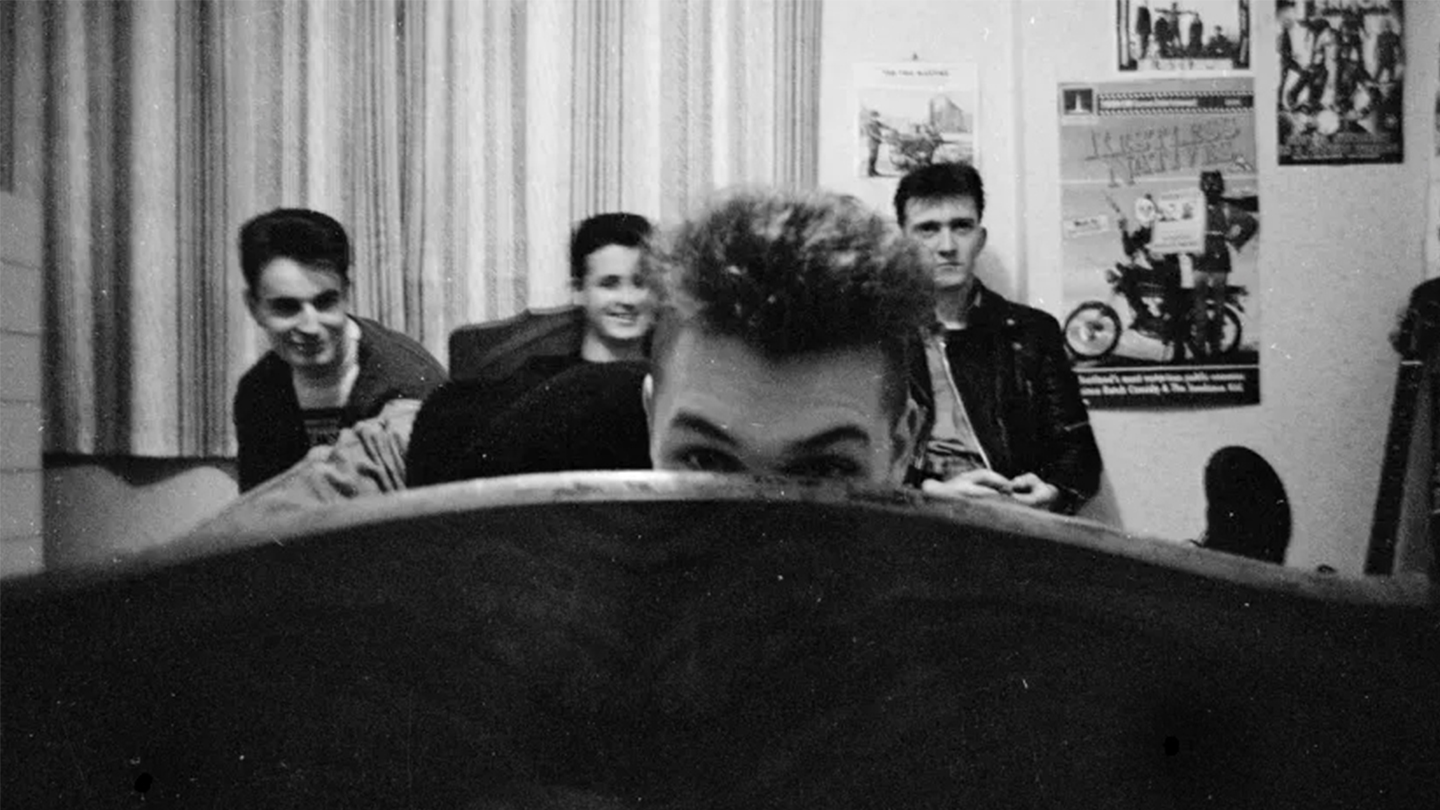
Keith with members of his band, The Big Gun, 1986. [.smalltext]Photograph by Gordon Hay. Used by permission.[.smalltext]
[.article__paragraph--cap][.small-caps]Death doesn’t really[.small-caps] end a friendship; it sanctifies it. It makes a closeness permanent. The fact that you won’t see the friend again is a bitter loss, but at another level their vital presence may be guaranteed, a friendship that is now safe from the vagaries of human nature and changeable weather. Death is a disaster but also a fixity, I suppose, which traps in aspic every brilliant relationship it touches. There will be no more to add, just a perpetual reflection on the living value of what has been. With any luck the effect of the catastrophe quietens, becomes part of the essence of the friendship, an echo of the years. If the person died young and was a friend from your early days, you might experience the loss as a kind of reckoning, an event that shocks you into a sense of what actually matters. In that way, death is a shaper. It brings a final order to the spontaneous disorder you once mistook for normality.[.article__paragraph--cap]
My own contribution to this question was Mayflies, a novel that attempts to expound the joy of a particular group of teenage friendships and follow that energy with the obligations that come thirty years later, when the group faces a crisis. The book grew very quickly from an incident in my own life, when an old friend, a vital character of the 1980s, suddenly grew ill and called upon me in a way I had never expected. Our friendship, as with all the boys in our cohort, had been a thing of laughter, music, vulgarity, and shared history, and now it came with an expectation almost too deep for tears, to help him through the worst, while maintaining a semblance of the old magic. We know that mayflies only live for a day, and the title came to me through a winter of generational pain as I tried to look at a lifetime of sublime songs and strong beliefs. (“Ye Mayflies,” Charles Dickens wrote in David Copperfield, “enjoy your brief existence in the bright morning of life!”) Keith Martin, the inspiration for my main character, stood near the front of our gang. He was the funniest, the cheekiest, the best looking of us all, the most outrageous, the most tactile, with a decent record collection and a sense of political clarity that seemed guaranteed to bend the world to our will. In actual fact, he was a small-town boy in a world of change, but when he shared his sunshine with you, it felt as if fate had just offered you a passport to being the kind of person you wanted to be. I had other friends, and they were pure magic, as we said in the Ayrshire of my youth, but when Keith started telephoning my house from the factory where he worked (most of them had left school at sixteen) it was a signature event in my bid for independence. By today’s standards, Keith was bullish, rude, dogmatic, and judgmental, but none of that dilutes charisma when you’re young, and if you can back it up, as he could, with dimples, vivid green eyes, and a love of disorder for its own sake, then the connection will be solid. He had a tenderness about him as well as a breakneck comic engine. As the sands of life ran down for him, he needed his friends in ways that none of us had bargained for and which re-engaged our shared past at the deepest levels. We were young again as he died.

In the years since we were boys, something in Keith had remained the same. Some boys don’t really grow up, they enlarge upon their youth, and Keith had a touch of Peter Pan. He did the adult things – career, his own home, relationship – but unlike most of the guys I knew he remained focused on the old goals, growing in a way but never shifting from who he was. Others drifted, fair play to them, but Keith behaved as if the friendship was still ripe. (Sometimes on the phone he convinced me it was still in its infancy.) Of all my old friends, he was the one who read each of my books with a sort of trepidation, he once told me, as if he had something personal invested in them being OK. He behaved as if old friendship was one of the markers by which he set his watch.
It was September 2017 when he called me in London to say he was ill. He said it was too late. He didn’t know what to do but he didn’t want to die like a “schmuck” (half of what we said to each other came from the movies we loved). Could I “help him across the line”? Over the subsequent year, this came to mean a lot of things. He had the support of all his friends and family, and he needed us to be practical and good at organizing, so that is how we progressed. As the months passed and Keith married Alison and prepared for his end, old friendship for some of us took on the power of magical thinking, and it was hard not to see the closeness as a kind of fulfillment of an old set of priceless bonds, some of them political and musical but somehow newly meaningful in that time of heartbreak.
“Write about us,” Keith said to me one day. “We had a brilliant time, didn’t we?”
He wanted to leave something. He wanted to control his death. He wanted friendship to carry him forward as it had in the past.
I felt armed with a lifetime of rock-solid feeling about what friendship was. It hadn’t always been perfect, but it had, as he said, been brilliant. We began looking back. I still have notes that Carol Nolan scribbled and threw onto my desk during Mr. Lucchesi’s English class in 1984. She lived in the next town along and knew a bunch of boys in bands, and I started going to a youth center in Irvine where they all hung out. Sitting down forty years later to write, I could see the silk parachute spreading from the ceiling in that long wooden hut; I could see a wonderful boy called Larry Rhodes with gelled blond spikes. And I could see all the other people who had quickly become my friends: girls in Campaign for Nuclear Disarmament T-shirts and Doc Martens, boys wearing jeans with turn-ups, white socks, and brothel creepers. Eccentrics, loudmouths, 1980s heroes. Living for a day.
[.pull-quote]Some boys don’t really grow up, they enlarge upon their youth, and Keith had a touch of Peter Pan.[.pull-quote]
I wrote a lot of the book on an old typewriter in a caravan I had near West Kilbride in Ayrshire. I could see Keith in black jeans, studded belt, and a Pop Group T-shirt showing Margaret Thatcher’s face with the words “We Are All Prostitutes.” I typed hard at a kitchen table facing a window onto the Firth of Clyde, my head spinning through the years: the hundreds of sleepovers at his house; my friendship with Joy, his mum; the trips to gigs and festivals with Kevin, Wee Peter, Rab, Tiny, Wullie, and a pair of Andys. Out of all the gigs I could have chosen, the one that seemed most eminent, most like the summit, was the Festival of the Tenth Summer, a Factory Records event to celebrate punk at the G-Mex Centre in Manchester in July 1986. It all sat in my mind with dialogue and sunshine.
My memory turned like an old record, and I saw Keith in 1984 as we went through Kelvingrove Park on a march with CND, and later that year at a benefit for the striking coal miners. I saw him in a dozen pubs in the north of England when we toured with our band, The Big Gun. I saw him through a fog of grief the night his father died, and later at his kitchen table as we studied books together when he went to night school and got into university and then trained as a teacher. I saw him on the day he left the factory for the last time, I saw him the summer we Interrailed across Europe, the time we gathered around an old bedroom stereo stack to hear our band’s single being played on the John Peel Show, the winter night we took acid at my flat in Glasgow and laughed until our stomachs hurt, staring into our faces reflected in Christmas baubles. I saw us the night we bumped into the Stone Roses after their gig on Glasgow Green and later led them onto the Sub Club dance floor. And in each image his face was smiling, his arms encircling himself as he danced or encircling one or other of his friends. Keith in his element. After those nights, when I was sleeping over, he always stayed in bed late and I would be up early, sitting on his guitar case reading a book. He’d eventually sit bolt upright and begin his patter and already he was prepping for that night’s shenanigans. Keith. That kind of friend, a quintessence of life while it’s happening and a tonic presence to all his friends.
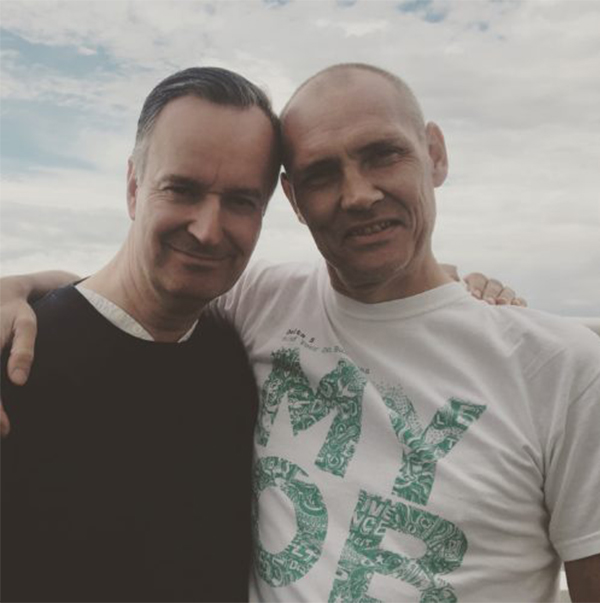
For me, friendship was a subject that had lain unannounced at the center of my writing life. It was only in the losing of such a friend that I finally knew it. After his death, the novel poured out of me like a three-minute pop song, true to all the shared politics and drunken nights and sworn affidavits of teenage camaraderie. Sometimes your heart just bounds onto the page. No research. No delay. I listened to some old records and had a few late-night conversations with friends in Scotland who were shattered like me. As I wrote the final pages and thought of our journey, I recalled those last hurdles and read again many of the letters Keith had written to me during the time of his illness. He’d needed a task and I asked him to select the fifty best songs of his life, his own Festive 50, to put into a vintage Rock-Ola Princess jukebox that I’d had installed at a café in London. He did it with huge dedication, and each record he chose brought Silk Cut–scented memories. Once he was gone, those tunes seemed to echo for me through the hours of sleep.
Mayflies was published during lockdown. Readers were isolated at the time and I think the book’s celebration of old friendship found a ready audience. We were yearning, perhaps, for distant drums and old jangly guitars, for nights out with chums, and for me, as for others who had lost friends, the sound came with a relief that was tinged with the most incredible sadness. That period of separation had made us think again about what truly mattered, and who. I’ve now received many hundreds of letters, often from men who tell me that they don’t usually read books, saying that friendship is what made them who they are.
The adult friendship, the professional alliance: it may contain expectations that we never bargained for in the pastures of youth. Until I was forty, I don’t think it had ever occurred to me that friendship might also mean helping old friends out of the world, clearing their path toward a death that appalled us. But I felt a responsibility, a wish to honor the spirit of those friendships. Some of them, it turns out, were not just about glorious hours spent in the pub or in the fantastic limbo of youth, but were heaven itself all along, with all that heaven demands of earthborn companions. I would argue that writers have a rare but not unhelpful sickness: we wish to manage time, to consort with life at the level of myth and to seek connections everywhere, which is why real camaraderie is so stabilizing. Sometimes our friends are the only characters we know who are not invented, and yet, with the friend of genius, you make a leap into enchantment that also feels like home.
[.smalltext]Source: Andrew O’Hagan, On Friendship. McClelland & Stewart (USA), Faber and Faber (UK), 2026. Reprinted by permission of the publishers.[.smalltext]