Podcast
What Makes America Great?
For all its flaws, there’s something exceptional about the United States of America.
June 30, 2026
Try 3 months of unlimited access. Start your FREE TRIAL today. Cancel anytime.
START FREE TRIAL NOWWhat Makes America Great?
For all its flaws, there’s something exceptional about the United States of America.
[You can listen to this episode of Another Life on Apple, Spotify, Amazon Music, or wherever you get your podcasts.]
Joy Marie Clarkson: Welcome to Another Life, a podcast of Plough magazine. I’m your host, Joy Clarkson, and I’m so glad you’ve joined me. This episode begins a series in support of our magazine’s summer issue, Searching for the Soul of America. While there has certainly been much soul-searching in America over the past years, with much discouragement and dismay, in this issue we embark on a positive, hopeful search for what is good, admirable, and even providential in the American project.
Sometimes, to find that goodness, we must search in the far corners of America: the far corners of its history, its land, and its people. But we believe that there is still good to find in America. And in the pages of our most recent issue, we invite you to discover that goodness, to celebrate it, and to find ways to continue it. In this series of episodes in the podcast, I speak with a range of fascinating guests who help us do just that.
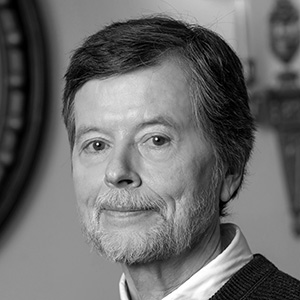
And I could not be more delighted to introduce you to our first guest, the American filmmaker Ken Burns. Ken Burns is one of America’s greatest living storytellers, having produced many celebrated and beloved documentaries about America’s history and culture. With documentary topics ranging from the Civil War to Prohibition, from jazz to baseball, from the Vietnam War to country music, Ken Burns is always asking: Who are we? What does it mean to be an American?
On today’s episode, I speak with him about this question, his most recent documentary on the American Revolution, and about what makes America the greatest nation in the world. I hope you enjoy today’s episode. And remember: Another life is possible.
Joy Marie Clarkson: Ken, thank you so much for joining us today. I’ve been so excited about having this conversation.
Ken Burns: Thank you for having me, Joy.
Joy Marie Clarkson: So I always like to begin by asking people where in the world you’re speaking to me from.
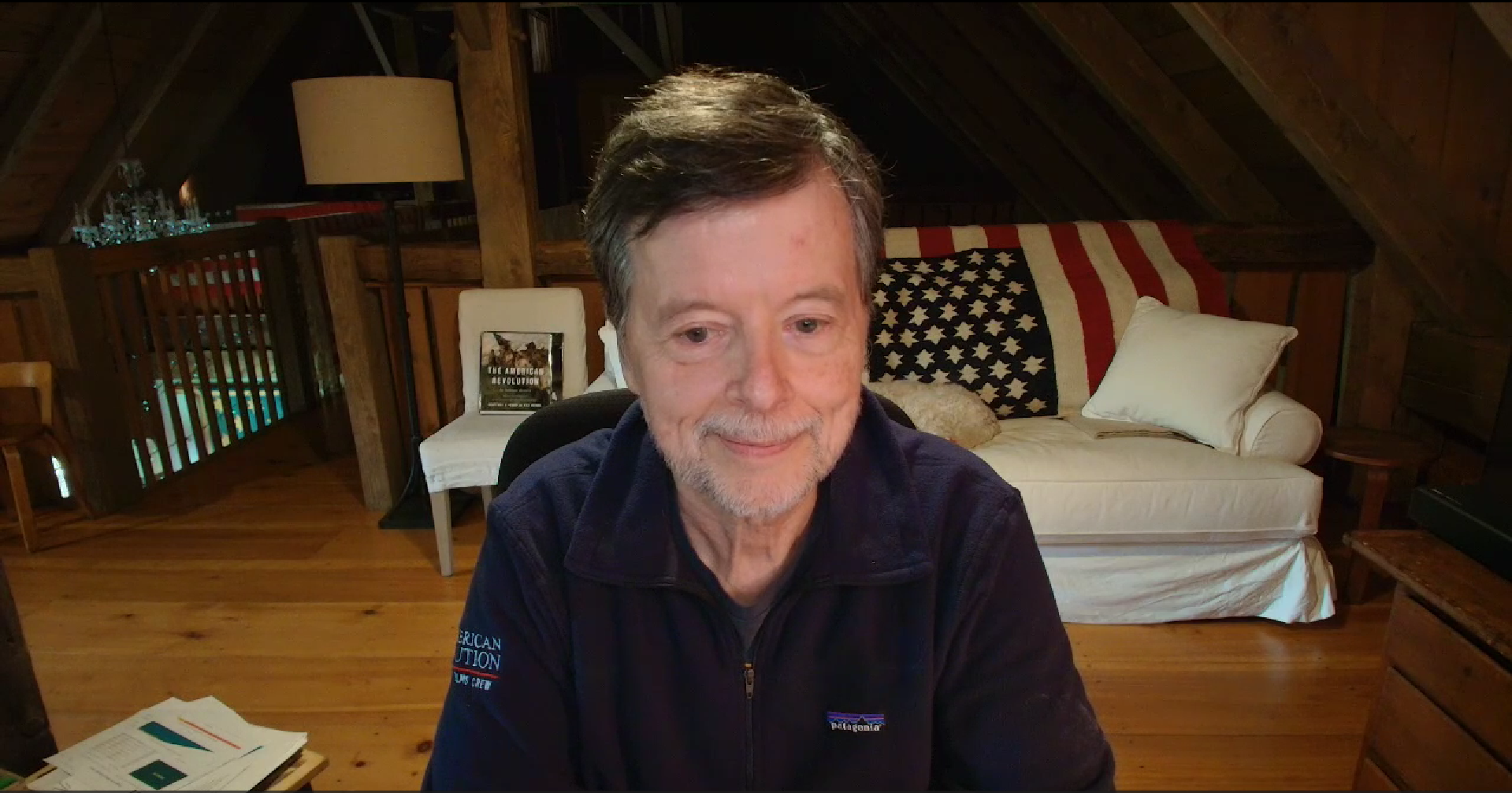
Ken Burns: Oh, I’m very happy to report that I’m speaking to you from a tiny little village in New Hampshire called Walpole that I’ve lived in for forty-seven years. And I am in the loft of a barn I built about fourteen years ago to help expand the screenings for the visitors who come to help us make the films. And since Covid, it’s been a place where I and my trusty executive producer, who’s sound asleep in the back, hold forth working most of the day.
Joy Marie Clarkson: Yes, well, it’s wonderful to see an American flag and a sleepy dog on the couch behind you.
Ken Burns: Well, I’ll tell you the American flag is actually a little bit more interesting than that. It’s not a flag; it’s a blanket. It’s a Navajo blanket. And so it has for me extraordinarily deep and complicated meanings because I think that the histories we’ve tried to pursue have depth and texture and richness beyond the superficial. So, to have a Navajo blanket in the shape of the flag of the people who spend a good deal of their time dispossessing not only the Navajo, but other Native tribes is an interesting thing. And of course, as you probably already know, Native Americans fight proportionally more for this country than many other groups.
Joy Marie Clarkson: Yes. And that was something that came out to me really profoundly in watching your most recent documentary about the American Revolution. It really brought out some of the texture and agency and ways in which agency was taken away from Native Americans. That was something that really struck me
Ken Burns: To me, the one statistic that stands out is that there’s a woman named Rebecca Tanner who we found in a list of things in an old archive. And she was a Mohegan woman, which would put her probably in North Central Connecticut. And it says next to her name: “lost five sons fighting for the Patriot cause.” Five sons. Many Native Americans fought with the British hoping to forestall what they thought was an inevitable move west. Many Native peoples were coexisting or had assimilated with Americans in what is the original footprint of the thirteen colonies. And I think that’s the case with Mrs. Tanner’s sons, who were fighting in large measure because they hoped that by participating in that revolution they might gain the freedoms that were implied and promised, and might also be able to reclaim some of their land. And it’s just complicated and bittersweet in the way that I think most of life is. We tend to fail ourselves and our posterity by giving a superficial Madison Avenue version of our past when the real thing is much more interesting, more compelling, and I think at the end of the day much more inspiring than those that would try to regulate our history as to be bland and not at all appealing.
Joy Marie Clarkson: One of the things that stands out to me about your documentaries and about this anecdote you just shared is that you like to focus on these small snippets into lives that might otherwise be invisible. And I think in another interview, talking about this moment, you used the phrase “better angels.” And I think that comes from a story in your childhood. But why is it important to you? How does this shape your approach of telling the stories of those who might otherwise be invisible in the history of our nation?
Ken Burns: Well. The “better angels” refers to a phrase in the First Inaugural of Abraham Lincoln when he’s trying desperately to keep his country from going to war – even though many states have already seceded, and a few more will, and the war will start the next month – where he asks that “the mystic chords of memory stretching from every battlefield and patriot grave to every living heart and hearthstone all over this broad land, will yet swell the chorus of the Union, when again touched, as surely they will be, by the better angels of our nature.” It’s a wish that even his beautiful words couldn’t stop. But I think it’s part of what we try to, in our own way, appeal to.
So essentially in my work, most of the history we’re taught is top-down, is just the story mostly of Great Men – capital G, capital M. And what we’ve tried to do is tell the story of those familiar faces, the bold-face names, if you will, but to give them dimension, not perfection. Nobody’s perfect. And so we complement that with a bottom-up style. And I think that’s really important is that we begin … you can’t possibly relate to history if your ideal is merely a statue of somebody you think is perfect. George Washington never told a lie? Oh, please.
What you want to do is make them dimensional and relatable, but also fill the story with scores – in the case of the American Revolution – of people who are bottom-up: that are women; that are teenagers; that are the poor; that are free and enslaved African Americans; that are Native peoples, both assimilated and coexisting and resisting on the borders. And understand who the, quote, enemy is, what it meant to be a Loyalist, what it was like to be a soldier in the British army or a German soldier.
So all of those things become important. And together, the totality gives you a much more nuanced and complicated portrait, but one that’s ultimately that much more relatable to. You go, “Oh, I recognize that person,” or, “I find in this story something closer to me.” Or understanding the dimensions of George Washington makes him more understandable and even that much greater a figure. And you can accept with all the exhilaration that comes with it the idea that without this person, we don’t have a country.
And it’s very rare that you can say that about anybody. But in this case, for someone who has promoted a bottom-up story to be able to take the most top-down of all top-down people and show his flaws – he owned 577 human beings. You can’t excuse that away. He made some pretty bad battlefield decisions. But at the end of the day, we don’t have a country without him – and for all the important reasons of humility, deferring to Congress, being inspirational to people, bravery. He’s also somebody who at the height of his military power gave it up, and at the height of his political power gave it up, setting in motion the most extraordinary aspect of our democracy, which has been the peaceful transfer of power.
Joy Marie Clarkson: So one of the things that you say about your work is that each documentary you’ve made, whether it’s about Vietnam or baseball or jazz or this most recent one, is that they’re all an answer to the question of who are we as a nation. How do you think the American Revolution series answers that question?
Ken Burns: I don’t think it’s an answer. I think that all of us, our whole purpose here is to ask questions and not necessarily receive the answers. Who am I? Where did I come from? What is my purpose? Where am I going to? These are all the essential fundamental questions that animate philosophy and religion and our own individual searches. And so I think what I’ve asked in my professional life is, Who are we? Who are those strange and complicated people who like to call themselves Americans? And what does an investigation of the past tell us about not only where we’ve been, but where we are, and, more importantly, where we may be going. And so I think that while you never answer the question, you deepen it. What The American Revolution does is it goes back – particularly in this fraught moment that we’re in right now – it goes back to our origin story and asks those essential questions: Where’d you come from? Who are your parents? What was your early life like? And I think that that’s helpful if you’ve got a complicated and realistic version of that that helps people understand now, “Oh, this is what we’re about!”
This word “liberty” had an incredible effect. Why would anybody want to give up the benefits of being a citizen of the British constitutional monarchy? Most of everyone’s wealth and education, prosperity, and literacy came from that. Why would you give it up for this other completely-untried-ever-in-human-history idea of freedom and democracy? And so at the heart of the American experiment is possibility. At the heart is risk. At the heart of it is this willingness to be this new thing, a citizen. It’s not hard to be a subject. You’re under authoritarian rule and you’re just putting up with stuff.
But to be a citizen is to assume responsibility, to assume pursuit of happiness, which the Founders meant was lifelong learning, not the acquisition of things. Because lifelong learning made you more virtuous. And the more virtuous you were, the more possibility you had to become closer to the responsibilities of citizenship and to being able – if not to answer, then to ask more authentically – those essential questions: Who am I? Where did I come from? What is my purpose? Where am I going to?
Joy Marie Clarkson: One of the other things that stood out to me in this particular series was the extent to which you describe the American Revolution as a civil war, right? That it was countrypeople fighting side by side and against one another as well. Could you say a bit about that?
Ken Burns: Sure. Well, I think in our popular imagination, the way we celebrate it has been with a bloodless, gallant myth that here we were, and the enemy was 3,000 miles away, the British government, and they were imposing taxes on us. And when you learn a little bit more about it, they’re also not allowing you to move westward and take Indian land because they can’t afford to protect you. So it gets even more murky and more complicated. But in fact, it’s a civil war. It’s a revolution of ideas, but it’s a civil war because a good portion of the population is not interested in that – and for very understandable and legitimate reasons. So there are some battles – you can take one called Kings Mountain in North Carolina in the final third of the war – in which the Loyalists are led by a British officer, a Scottish man named Ferguson, but everyone else on both sides are Americans killing one another.
And that is true in many, many, many precincts of the Revolution. And I think we don’t want to acknowledge that or the bloody nature of it. It’s an incredibly bloody, bloody war. And I think in large measure we think that the big ideas that are taking place in Philadelphia will be diminished in some way. They’re not. They’re made even more spectacular, I think, by understanding what they came out of. This is a revolution. It’s a civil war, and it’s also a world war. It’s the fifth world war over the prize of North America. And when you say “prize,” you’re talking about the land, and that land is occupied by many, many – hundreds – of Native nations. And this is desired by the Spanish, by the French, by the Dutch, by the British, and new players will arrive on the scene in the West. And there are, of course, imperial powers within those Native tribes that are seeking domination of their regions, like the Lakota or the Cheyenne. It’s an incredibly fluid and dynamic story. And I think we do a disservice when we just make it about, oh, dumping tea and protesting taxes against them over there. But understand the extent to which it was a very fraught and not at all assure . . . the chances of success at Lexington Green on April 19, 1775 are zero. And six-and-a-half years later at Yorktown, they’re 100 percent. And it’s pretty interesting how that happens. And it isn’t just a story of guys in powdered wigs in Philadelphia. It’s a story of how teenagers and the poor and women and children and recent immigrants and amazing groups of people come together under this idea and expand the original intention of the revolution, which was not to create a democracy. Democracy was the unintended consequence of it because of the number and variety of people that fought for this abstract idea never before tested called liberty.
Joy Marie Clarkson: That relates to something else, which was that what stood out to me was thinking about the incredible diversity of the different sorts of people who were able to come behind this ideal. But that also, I think, is a thread through American history, which is: We are the United States of America, but we’re so often disunited. There’s so often tension and contention. And in a way, there’s something comforting to me about knowing that it has always been this way. It is not something new when we see these seemingly fundamental tensions between people in our states. But in this issue, we’re thinking about searching for the soul of America. So I was wondering, putting on your history lens, are there moments that you would say are shining moments of the times when America is able to be united? And what would you say are the features behind that?
Ken Burns: That’s interesting. We come together usually after periods of great division. So you then have to ask yourself a fundamental question: how central is division to the progress that we make? We’re way more divided during our revolution than we are now; way more divided, obviously, during the Civil War; way more divided in the period after the Civil War, the most misunderstood period. We’re working on a film about that now called Reconstruction. Certainly we were divided during the Vietnam period.
Ken Burns: And yet things have happened. One could think of the post-Civil War period of the Reconstruction Amendments, like the Thirteenth, which outlawed slavery, the Fourteenth and the Fifteenth, which expanded the rights to include all citizens and all people who were born in the United States, the ‘60s civil rights activities, born out of so much of the struggle there, the Civil Rights Act and the Voting Rights Act, now being dismantled. So you have never a permanence to any of this to show us coming together in really good ways. You’d like to look to a moment like a 9/11, where we supposedly came together but almost immediately came apart. And so I’m interested in these gigantic conflicts like the Revolution that produce something as spectacularly interesting as this idea that people, for the first time in human history, could govern themselves. And it wasn’t just the elites, it wasn’t just the aristocracy as it originally turned out to be or had been once, perhaps in Greece, but was going to be just ordinary people. The debate over the ratification of the Constitution and the subsequent Bill of Rights is one of the most active moments in the history of humanity. People came together in a civic way to create it. Did they agree? No! Not at all. There was the perpetuation of slavery in the compromises of the Constitution even though you had just proclaimed eleven years earlier that all men are created equal. So there is lots of stuff that didn’t work, and yet by saying these things you were beginning almost to open the door to permit even the people who knew that it wasn’t about them, that it was about white men of property. Women, Native peoples, free and enslaved Black people, the poor also understood that this was the opening salvo in battles that they could fight to make the words truer and less hypocritical. So there’s amazing struggles. So for me, the best sometimes comes out of the worst, and sometimes out of the worst comes the best.
Joy Marie Clarkson: Hmm. So I’ve lived in the United Kingdom for the last ten years, and I’ve been in academia, and that really takes the confidence out of being an American sometimes.
Ken Burns: Indeed.
Joy Marie Clarkson: But something that I was also struck by in the documentary is how often you say things like, “This is the most significant moment in history.” So I wanted to ask you, Do you think America is the greatest nation in the world? And if so, why? Or, what do you mean when you use language like “the most significant moment in history since X”?
Ken Burns: Well, you gotta separate a lot of what the rhetoric of promotion is. I did say that I thought the Revolution – while I was promoting the film, not in the film – was the most important event since the birth of Christ. And I did that as a way to provoke people to think, to offer other alternatives, to argue – in a good way, in a civil way – about it. The superlative that is in the film is that the Revolution is the most consequential revolution in history. Now, whether that makes us the greatest country ever . . . I believe we are, for all the flaws, but it’s certainly a conversation to be had and an ongoing conversation.
And you cannot remain exceptional or be the best if you’re not constantly improving yourself. If you’re Tom Brady, you don’t win your first Super Bowl and go, “OK, I’m it, I’m the greatest that’s ever been, I don’t have to do anything.” In fact, he works harder than ever for twenty years to maintain that. And I think Americans do really well when they are liberated from the tyranny, the oppression of this idea of exceptionalism. Where we get distracted by our own exceptionalism, we become certain. And in that certainty, we make others wrong and we make enemies.
I like to say that I’ve made films about the United States for the last fifty years, but I’ve also made films about us. All of the intimacy of that lowercase two-letter plural pronoun and all of the majesty, complexity, contradiction, and controversy of the United States. That’s been a magnificent space. So I think that we’re saved, in a way, by the fact that we have these words that remind us that we’re in the process of becoming. We’ve not already arrived there. We say “pursuit of happiness.” You can argue about happiness, but it’s actually pursuit. It means a lifelong search for that. Eleven years later in the Constitution’s preamble, we say “a more perfect union,” as if this is not there yet; it’s the obligation to do that. So I think it makes us unusually restless and curious. It gives us a work ethic, just as we tend to incubate less attractive habits: love of money, love of guns, making the other wrong, as I suggested. So there’s room for improvement.
But I could also lay out, starting with the Declaration and the Constitution and the Bill of Rights, 250 years of extraordinary contributions to world history, not just that have benefited the United States, but all of us, and they’ve been as recent as the men on the Moon and the interstate highway system, the G.I. Bill, the Marshall Plan, the rebuilding of Europe after the Second World War, the involvement in the Second World War. It was really American manufacturing and Soviet sacrifice and Allied sacrifice, in that order, that is responsible for the end of the greatest cataclysm in history. There’s lots to admire and then there’s, of course, as we would find in our own self-reflection, imperfections as well.
And so my films are not an attempt to say, “Good” or “All bad,” but to call balls and strikes. That’s the phrase that I like to use more than anything else. If we live in a media culture where everything’s a highlight reel, then the baseball hero hits only home runs. But baseball heroes usually strike out many more times than they hit home runs. And they only come up to bat once every nine times. So you have to ask yourself who else is involved, if it isn’t just George Washington, and he’s not just hitting home runs; he’s striking out. Who else is involved? Who’s the second baseman who’s making the least amount? As it turned out in the most recent World Series, in the seventh game, the dramatic seventh game, it was the second baseman and not the big, huge, heavily paid stars that was responsible for the victory of the Los Angeles Dodgers over the Toronto Blue Jays. It’s lawful. And so I’ve spent my professional life trying to call balls and strikes.
Joy Marie Clarkson: I love that. Also, I suppose that there’s something helpful in thinking about the fact that greatness doesn’t always mean goodness.
Ken Burns: That’s exactly right.
Joy Marie Clarkson: So we can be the greatest and also be problematic and difficult and have our things that we need to work on.
Ken Burns: And I don’t know what would be the greatest without those things. I just think this notion that we have about heroes as being perfect is ridiculous. We inherit from the Greeks the concept of that, and they know their heroes aren’t perfect. Their heroes are having negotiations within themselves, sometimes wars within themselves over their strengths and their weaknesses. Achilles had his hubris and his heel to match his great strengths. And so we’re looking at these stories not as examples of perfection – that’s only a recent lazy media environment that does that. We actually have these stories to remind us of the imperfections of us all. And so we would not be looking for perfection as much as we want to build a system – and that’s where I think the American system is so interesting – that has this notion of getting better, of becoming, of the pursuit of happiness, of a more perfect union.
Joy Marie Clarkson: Exactly. So I was glad that you brought up baseball because something that has come up oddly a lot during the writing of this magazine has been baseball as a kind of emblem of American-ness.
Ken Burns: Yeah.
Joy Marie Clarkson: And I know that one of your earlier documentaries was on baseball. So I was wondering if you think there is something about baseball that captures the American spirit.
Ken Burns: Yeah, it does. It’s still the greatest game, I think, that’s ever been invented. It’s no longer the national pastime. There’s been many other sports that have come in, many other forms of entertainment. At the time, it was most definitely that. But I don’t think there’s any other sport … maybe there are more popular sports, sports with more viewers, more money, but there are no better sports. It’s the only sport in which the defense has the ball. It’s the only sport in which the person scores, not the ball, the puck, the whatever-it-is. It’s got incredible rules. But there is not one ballpark which is exactly the same as another, whereas every single basketball court, every hockey rink, every football field is exactly the same and cannot be anything but that. There’s no clock. There’s a funny combination of things that reflect us.
And for a time, it was this thing that united us, and I still think it does. We have these experiences where everybody’s there because of these things. We’re our own independent free agents. We call it social media but of course there’s nothing social about it. Right? It’s not. Social media is not. But you get together at a ballgame and you sing a couple of times together. Nobody asks you who you voted for president. Nobody asks you why you’re rooting for that team or rooting for the other team there. You have a kind of sense of community that offers things.
And I would also suggest as a sort of baseball chauvinist that when you tell a story about basketball or football, it goes right to the action on the field. Joe Montana threw a pass to Jerry Rice and we won, or Michael Jordan hit a three-pointer at the buzzer and we won. But a baseball story always says, “My mom took me” or “My dad took me,” and then you describe the action. So it’s very much about who you see it with. And so it reflects back on a sense of your own experience in the continuity of your family, as well as your community, your team, the identity that that means, and, as I’m suggesting, it’s a hell of a good game. I think it’s been a good thing to accompany us. I saw our baseball series as a sequel to our Civil War series because the first real progress in civil rights after the Civil War and after the collapse of Reconstruction was when Jack Roosevelt Robinson, the grandson of a slave, made his way to first base at Ebbets Field on April 15th, 1947. It’s a long time after the Civil War. But that’s the great moment in the history of baseball, and to this day one of the most moving moments in all of baseball for the last many, many years has been that on every April 15th – every April 15th – every person – every person – coaches and managers as well as all – wear the same number, 42, and no one else wears that number. Mariano Rivera, the great, great relief pitcher for the New York Yankees, was the last person to wear that number, and he had chosen it because it was Jackie Robinson’s number and consciously wore it. And when he retired, it was retired – except on April 15th, when we all do it. And it’s a very democratic, very American kind of “I am Spartacus. I am Spartacus. I am Spartacus.” Are we willing to shoulder the kinds of things to move forward as baseball did at that moment and the burden that Jackie Robinson carried having to be the first person in the modern age of color to be in Major League Baseball.
Joy Marie Clarkson: Thank you so much. I could ask you many more questions, but our time is almost up. So I will finish with a slightly leading question that I ask all of my guests, which is, What is one thing that reminds you that another life is possible? It could be anything: a person, a place, a poem, something that doesn’t start with P. And my leading question would be, Is being able to tell our story and the stories of who we are, a part of what helps us have a sense of another life being possible in America?
Ken Burns: I think stories are the things that unite us. These are the complex narratives that are the glue that sort of hold our own fragile sense of self, our family’s fragile sense of self, our community’s sense of self. You asked in the first question where I was. I told you I was in Walpole, New Hampshire. Right outside these barn doors is nature. And nature is perfect. We human beings, the societies we make? Not so much. But nature offers in this mirror of your own imperfections, the possibility to imagine something else. So you can see in a sunset, you can see in the unfolding of a leaf in the miracle of spring, you can see in the frozen water of a little pond by a ditch in the myriad ways that ice is formed, you can see it in an animal, something bigger that asks you to imagine what is in fact our human capability. What is our human potentiality? What would another life be like? What could I be? What could I yearn for? What pursuit of happiness could that be? And I think baked into our system, however flawed it is – and, my goodness, we are exposed almost daily to its flaws and the ways in which not everybody is treated equally – we have the possibility of improvement. I’m also the father of four daughters and I’m so grateful to look into their eyes and reimagine possibilities in their perfection.
Joy Marie Clarkson: Thank you so much for joining us.
Ken Burns: My pleasure. Thank you.