Book Excerpt
What the Apple Trees Tell Us
Can you become native to a place even if you weren’t born there?
November 10, 2026
Try 3 months of unlimited access. Start your FREE TRIAL today. Cancel anytime.
START FREE TRIAL NOWWhat the Apple Trees Tell Us
Can you become native to a place even if you weren’t born there?
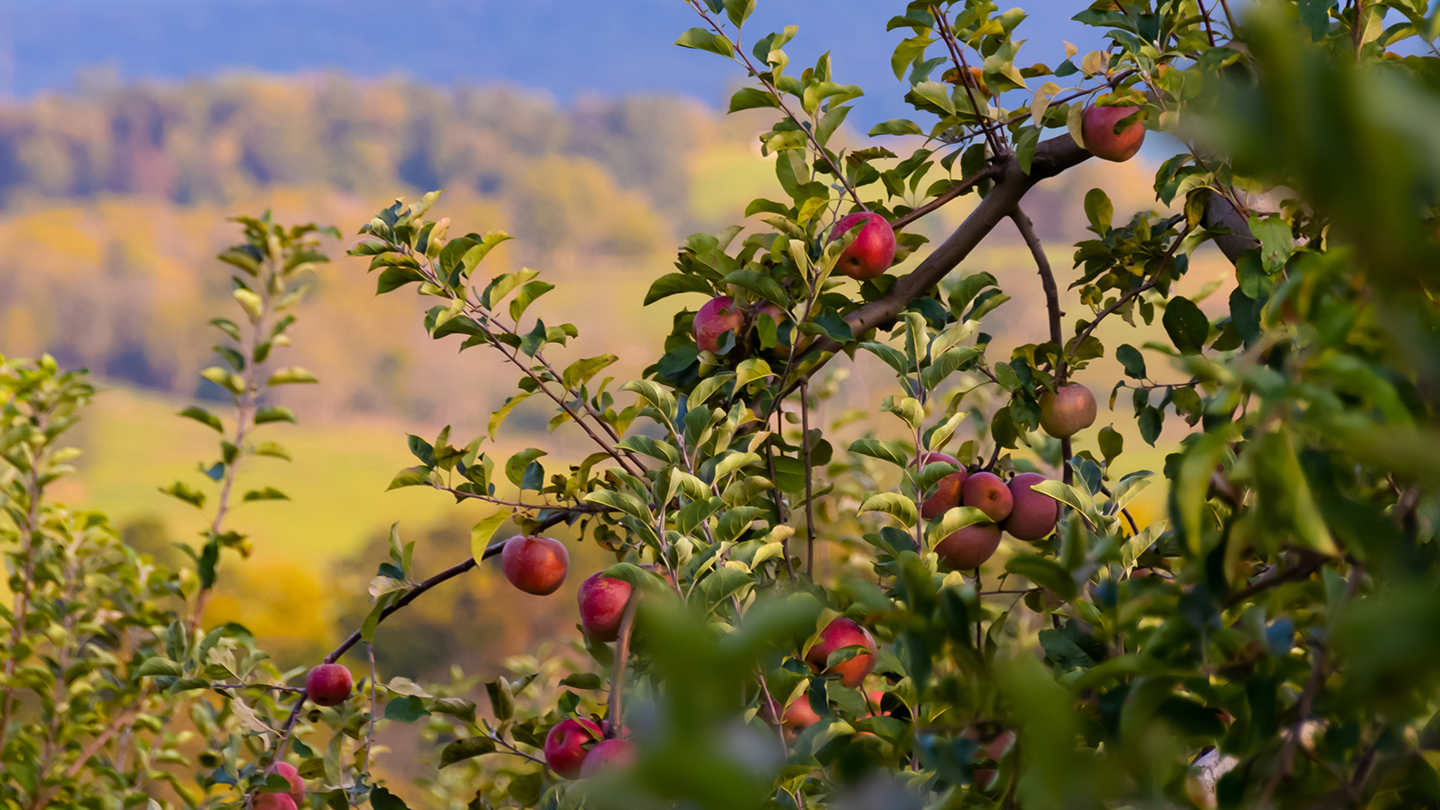
[.smalltext]Photograph by Jenna / Adobe Stock.[.smalltext]
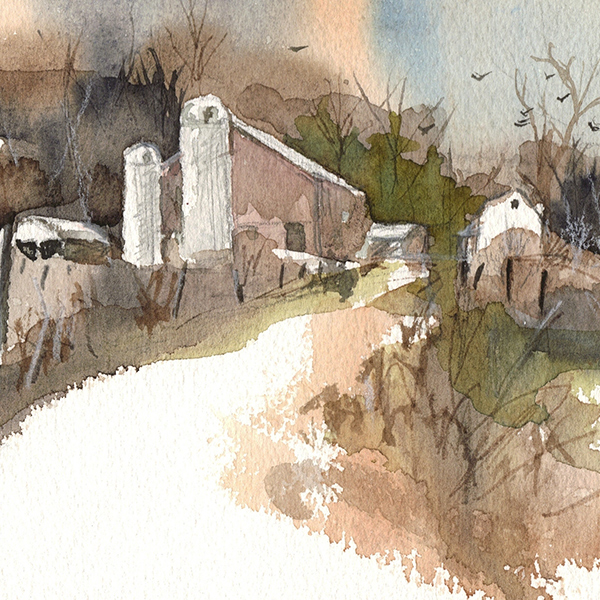
[.article__paragraph--cap][.small-caps]In front of Granny Grace’s farmhouse[.small-caps] grows an old apple tree. Its branches are twisted and gnarled, its leaves sparse. I wouldn’t call it a bountiful tree. But every fall without fail, its limbs grow heavy, pulled to the ground by large, sweet, bright-yellow apples. And while most of my kinfolk who would spend long afternoons in rocking chairs on the porch died or moved away, that apple tree remains. I suspect it always will.[.article__paragraph--cap]
Apple trees hold a special place in the hearts of Appalachians because they are an emblem of stamina and survival. The high elevation, temperate summers, and cold autumns create an ideal environment for apple trees. Colonists from Europe came with their tree cuttings, planting orchards so they could make cider. It is thought that as many as 1,600 varieties once grew in this region.
This number has significantly dwindled, but the truth is, no one knows exactly how many old varieties still exist out there, flourishing on some old, forgotten homestead. As I type this, I’m eating a slice of an apple from an old tree growing on our little spot of earth here in Meat Camp, North Carolina. We have no idea who planted the tree or when. I just know those apples taste like nothing I’ve ever bought at the grocery store: flowery, honeylike, aromatic.
Apple trees are remarkably resilient, many of them enduring for decades without the help of human hands. Old orchards, long forgotten as the diaspora drained these hills of its human population, still bear an abundance of fruit. Though other trees threaten to swallow them up, they remain. Stubborn. Prolific. A gift from our ancestors waiting to be rediscovered.
I spot them sometimes as I’m driving down a backcountry road or taking a walk on an old, wooded path. Through the dense growth of pitch pine, black locusts, and rhododendron, gold or pink orbs appear, clinging to knobby branches. The tree is a sign of habitation, of past provision. It always makes me a little sad to come upon an old, abandoned apple tree, weighed down by its unpicked fruit. It has such a forlorn way about it, like it is just begging someone to come home. It is evidence that a family of souls once lived nearby – and maybe could again someday.
[.article__paragraph--cap][.small-caps]When someone asks me,[.small-caps] “Where are you from?” I’m never quite sure what to say. At face value, the question is simple. But when asked, a sense of unease always seems to surface. It is an inquiry that nags at many of us, a longing to truly know our own unique origin stories. Or, to put it geologically, to map the headwaters of our very own lives. The question is not simply Where was I born? or Where do I live? The question, for me, is really Who am I?[.article__paragraph--cap]
I have sometimes questioned my belonging here. Perhaps it was my birth in the outskirts of the region or my family’s time away from the mountains – that generational break in the chain. I’ve always wondered if I was eavesdropping on a culture and community that wasn’t really my own. Moreover, the fact remains that I am a descendant of settlers, many of whom came as conquerors rather than caretakers. I deeply love a land that wasn’t originally mine, and I don’t always know what to make of that.
Funny how you can spend nearly your entire life in a place and still question if you are truly from there, if you have a right to call it home.
When can a person claim a place as their own? Does an apple orchard planted by ancestors testify to a legitimate claim? How about a tree planted by someone else’s ancestors but that is now within your care because a piece of paper at the county clerk’s office says the acre of earth it grows on is owned by you?
The author and poet Jim Minick once had a conversation with Wendell Berry about the word “native,” which he recounts in the book Appalachian Reckoning:
“Native means to be born here,” Berry said. “But it’s possible now to be born here but not made here. You can live [in one place] and yet be made by imported nutrients and imported influences. If native is going to mean anything, you have to say you’re born, nourished, and educated to a significant extent in and by your place, your local community.”
Minick goes on to ask about how one goes about this: “How?” Berry replies. “By becoming a native and a citizen. By learning – when it’s possible – to live in one place. By embracing the responsibility that comes with citizenship.” Minick asked Berry, “Can you become native to a place even if you weren’t born there?”
“We better!” Berry replied with passion.
[.article__paragraph--cap][.small-caps]Becoming a native citizen[.small-caps] seems especially important because scripture tells us that in the final days, when all that was broken in the garden is mended, we will not be whisked away to some far-off heavenly home in the skies.[.article__paragraph--cap]
Rather, the image is of heaven coming down to earth. And it will not be disembodied souls that inherit this newly redeemed earth. It will be resurrected bodies, humanity coming home to flesh and bone. “Look!” Revelation 21:3 says, “God’s dwelling place is now among the people, and he will dwell with them. They will be his people, and God himself will be with them and be their God.”
Dirt and divine breath – these have always been our constitution. I believe this is why we yearn for both, why we desire to be reconciled to both God and to the land, why a longing to feel at home throbs, often unnamed, in the deepest parts of us. Some of us are learning to name it, learning to see the land as the home God intended it to be … beckoned, perhaps, by the scent of an old apple tree, begging us to come home.
[.smalltext]Source: Adapted from Provisions by Amanda Held Opelt and reprinted with permission from HarperOne, an imprint of HarperCollins Publishers. Copyright 2026.[.smalltext]