Podcast
Growing Roots in Appalachia
A conversation that covers returning to Appalachia, the Scopes Monkey Trial, leather britches, shucky beans, and blue ghost fireflies.
July 28, 2026
Try 3 months of unlimited access. Start your FREE TRIAL today. Cancel anytime.
START FREE TRIAL NOWGrowing Roots in Appalachia
A conversation that covers returning to Appalachia, the Scopes Monkey Trial, leather britches, shucky beans, and blue ghost fireflies.
[You can listen to this episode of Another Life on Apple, Spotify, Amazon Music, or wherever you get your podcasts.]
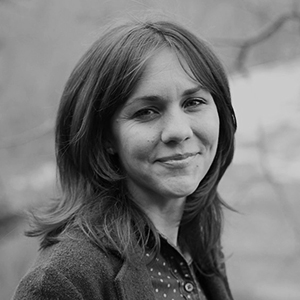
Joy Marie Clarkson: Welcome to Another Life, a podcast of Plough Quarterly. I’m your host, Joy Clarkson, and this is an episode in our series, Searching for the Soul of America. In this series, we embark on a hopeful search for what is good, admirable, and even providential in the American project. On today’s episode, I spoke with Amanda Held Opelt. Amanda is an author, speaker, and songwriter. Today, we spoke about her piece in the most recent issue of Plough, where she discovered hidden histories of the place that she calls home, Appalachia.
Then we spoke about Amanda’s new book, Provisions: Finding Home Through the Food Folklore of the Appalachian Table. Our conversation was warm, encouraging, and fascinating. I hope you enjoy this episode of Another Life.
Hello Amanda, and thank you so much for joining us today.
Amanda Held Opelt: It’s good to be with you, Joy. Thanks for having me.
Joy Marie Clarkson: So I always like to begin these conversations by asking where you are physically in the world. I’ll give you my answer, which is that I’m in my not very inspiring office at King’s College London. I say not very inspiring because it’s currently covered in boxes because my office main is doing archive work. But it’s very inspiring to me because the United Kingdom has been having an ongoing little surge of heat waves, and it’s boiling to me. It’s in the 90s, it’s almost 100 today, speaking in US Fahrenheit terms. And nowhere has AC except for my beautiful, sweet office. So I am sitting in my office, escaping the heat and excited to talk to you. Where are you speaking to us from?
Amanda Held Opelt: Well, I will say we have heard of your heat wave over here in the United States and we send condolences and solidarity because that’s pretty much the norm for summer here in the southern part of the United States. But I guess I am actually in a little bit of a different circumstance because I live up in the mountains of western North Carolina. That’s where I am right now, and we actually do stay a lot cooler than the rest of the country. So right now we have all the tourists that are coming from the flatlands and the 90 and 100 degree heat to come up here because it’s about 75 and sunny today. I know, don’t hate me. But yeah, I know it’s wonderful. But yeah, I’m sitting in the little – I’m in my basement and our little community here just north of Boone, North Carolina, is tucked up in the corner of Western North Carolina. I can almost spit into Tennessee and Virginia. It’s very close to the border, and I’m sitting here looking out the window at the mountains, and it’s a beautiful day.
Joy Marie Clarkson: That’s wonderful to imagine. 75 degrees sounds – to me that’s just the perfect weather.
Amanda Held Opelt: It really is. I mean we pay for it in the wintertime or it’s constantly snowing and the wind is blowing fifty miles an hour on the norm. Like we get really intense winters here, but the summers are …
Joy Marie Clarkson: It makes me actually think of the opening of your piece, where you talk about being a teenager and swimming in these abandoned mines, which sounds very ideal to me in this in this weather. I live near (well, everyone in London lives near) the Thames in some way or another. But I live near the Thames and there’s this big part where no one’s supposed to swim, but everyone, when it gets hot like this, they all just jump in and it’s just a part of the summer rule breaking. But you begin your piece by describing this place, this haunted place that you just enjoyed as a teenager whiling away the hours. And then discovering the hidden history, and the dark histories of it, but also some of the bravery and character behind the people of Appalachia. Could you tell us a little bit, give us a little peek into your piece, and then I have more questions for you.
Amanda Held Opelt: Yeah, that wilderness area where I spent so many of my summer Saturdays as a teenager, because I grew up in a small town, we you know, it was like, you know, fifty minutes to an hour to drive to the largest nearby city. And so when we were looking for a good time, we would hike, we would go to the creek and swim ‘cause it was so so hot, so hot. And so we had a beautiful swimming hole out there called Blue Hole and so we would, you know, hike about twenty minutes to get to Blue Hole and just spend hours and hours jumping in the water and splashing around. And it was a pretty idyllic way to spend like a teenage you know, summer, other than the poison ivy and mosquitoes that were as big as your face. But yeah, as I say in my piece, all along the trail, there were these you know, derelict remnants of the coal mining industry. And I didn’t even know at the time what was being mined in that area. I didn’t even really think about the structures so much. They were just part of the landscape. There’s a big hole in the side of the ridge. There were these old railway trestles, stone trestles emerging from the creek bed that you just saw it almost as no different than the trees or the rocks or the the flowers that were blooming. It was just part of the landscape.
And we would always, you know, dare each other who’s gonna venture down into the dark hole of the mine. I do want to say as a disclaimer to your listeners, one should never walk into an abandoned coal mine. It’s very dangerous and our parents weren’t there to tell us any different. So I’m thankful we all survived. But yeah, that was just how I spent a Saturday and I never really thought to ask questions about, well, what did go on here? How old are these structures? Why are they here? Until I got much older.
Joy Marie Clarkson: And so then you ended up diving down – you talk about how now in your adulthood you end up diving down to the histories of not only of those coal mines, but of Appalachia more generally and how it’s misrepresented sometimes in history and in popular culture. It’s interesting, I feel like Appalachia’s history and its culture have been in the spotlight ever since J. D. Vance did his Hillbilly Elegy and there’s this very particular story that’s told about the experience. But I would love to know how much did you identify with that history or culture when you were younger, or how much did that develop as something that you reclaimed in your adulthood?
Amanda Held Opelt: Yeah. I mean, I think I write about this in the piece that when you’re part of a hometown, you’re part of a community, you’re part of a landscape, you’re so much a part of it you can’t see it. It’s like you ask a fish what’s water? It’s like, I don’t know – what is water? What’s this thing all around me? You don’t really know to describe it, don’t know it as an entity. And so I think for me, what did it mean to be, you know, a kid growing up in Appalachia? It meant a kid that loved the mountains, a kid that loved swimming in the creeks. Landscape is just very much a part of the DNA of anyone who lives here because the mountains literally rise up around you. It’s actually hard to forget that you’re part of the created world when you live here because the landscape is so imposing and so beautiful. And so when I think about identity or what it means to be Appalachian, I think of the land and I think of what it meant to really love the land, but I don’t think I had any sense of like, hey, there’s a unique history here, or there are stories here that we actually don’t even talk about amongst ourselves.
And that’s still a bit of a mystery to me is how could I have grown up in this small town and never known that three horribly deadly coal mining accidents had happened in this location where I used to play on a Saturday in the summertime – we never talked about it. It was never seen as like an impactful or formative part of our town’s history. And so as I got a little bit older and started asking a little bit more questions, and honestly, J. D. Vance’s book was a little bit of a catalyst moment for myself as well. I have the same experience as a lot of people from this area when they read the book, they read it and it’s well written, it’s a fascinating story, and there are parts of it that you resonate with, but something in you is like, wait a minute, something feels a little bit incomplete here.
And so you start to pull on the threads and you say, well why is there so much poverty in this region? Or, you know, what is it that happened that formed this story in the broader American imagination? And so I just started looking into what was the impact of the coal mining industry in this region? What was the impact of the timber industry in this region? And why have people forgotten that part of American history? And so it really was something that happened much more in my adulthood. Again, because I think when you’re part of something it’s hard to see it. You’re so much a part of something it’s hard to see it clearly.
Joy Marie Clarkson: It reminds me of – and I’m gonna misquote this because it’s too hot for me to think, clearly, but that line at the end of Little Gidding where T. S. Eliot says, you know, to arrive at the same place [where we started] and know it for the first time. There’s a sense of – I think, a lot of us go through that in different ways – of developing a sense of belonging in adulthood can sometimes mean returning to some place that you have always belonged but encountering it in a new way for the first time. One of the things I thought was really interesting was how you talked about how Appalachia is sometimes misrepresented and when you talked about the Scopes Trial I thought that was so interesting about the way that it’s talked about is as though the resistance to science was just this fundamentalist, knee-jerk “the Bible said it, I believe it, that settles it.” But that there was actually this different motivation behind it of a desire to protect creation and to not have this acquisitive Enlightenment conquering mentality. Could you tell us a little bit about that?
Amanda Held Opelt: Yeah, I think the Scopes Monkey Trial is so fascinating because I didn’t really know the history of coal mining in my community, but I will tell you that I for sure knew the history of the Scopes Monkey Trial. I mean, that was the dominant story that everyone in my town knew. This is what happened. It was the trial of the century. We are Monkey Town. Dayton, Tennessee, is Monkey Town. And again, like there’s so much missing information there. Like one thing most people don’t know is part of the reason you know the town leaders cooked up the trial, it really was meant to be a fundraising scheme for the town. Why? Because coal, the coal economy, has this way of creating boom and bust.
And so when all those mining accidents happened and the miners went on strike and they depleted the seams, the town, which had been almost like a mono-economy, fell on really, really hard times. So the Scopes Monkey Trial, in some ways, I’m not sure it would have happened had it not been for these coal mines, you know, over there by Richland Creek. And again, it’s so fascinating. And Joy, I know you’re not my therapist, so I’ll spare you some of the details here. But I always tell people if you grow up evangelical in Dayton, Tennessee, there are many stages of your relationship with William Jennings Bryan. Because I think when you grow up evangelical, initially he’s portrayed as this, like, a hero of the faith who stood up against, you know, the monsters of atheism and you know godlessness, and stood up for the Bible, and he’s this heroic presence.
And then as you change, and maybe your faith changes, or you start asking more questions about the relationship between faith and science, you start to have questions about him, like well, wait a minute, like is evolution and faith and Christianity maybe compatible, or was he just stuck in this old fundamentalism? And then you realize that your town wasn’t necessarily held in high esteem by the rest of the country, it was actually the butt of the joke. And that your people were made fun of for their faith and made fun of for maybe being backwards or ignorant. And so as you process all of this and you know, I think now that I’m a little bit older and have gone through these stages, I’ve formed a new I guess a form of respect for William Jennings Bryan. Not that he was a perfect man by any stretch of the imagination, you know, he never really stood up against the Jim Crow laws in the South. I’m not saying that he is this perfect person that we should idolize in any way.
But what motivated him, I believe, was not a fear, as so often he was portrayed as being, you know, fear of change, fear of progress. But he and many people who held some of his same ideas were really concerned about the eugenics movement that was on the rise in the wake of these new evolutionary theories. It was this belief that without the guiding principles of, you know man and woman created in the image of God as having inherent value just by being created and loved by God. When we lose that, what happens? Do people become disposable because they don’t contribute to society or because society deems them to be less than?
And so there was a lot, I think it was really important to him to stand up for those values and say, hey, we see there almost there’s a canary in the coal mine and not to belabor that coal mining idiom, but this idea of like, hey, science can’t answer all the questions we have about meaning and dignity and worth and what it means to be human. And we want to recognize that and say that we’re gonna lose something if we lose this creation narrative, if we lose this idea that every human being is made in the image of God. And so I have a newfound maybe respect for Brian. Again, not a perfect man, a very complex figure, but and certainly a deeper understanding of the trial itself.
Joy Marie Clarkson: That’s something I really love about your writing in general, Amanda, is you’re able to be very charitable and careful in how you think about things. And I think that’s increasingly difficult in the world that we live in. I want to ask you about your new book, because you have this wonderful – I love the title, Provisions – you have a new book which is talking about Appalachia through its food. Can you tell us a little bit about the book?
Amanda Held Opelt: Yeah, it’s so interesting, if you had told me like ten years ago, you’d be writing a food book, I would say that’s crazy because I don’t consider myself to be like I’m not like a food influencer on the internet.
Joy Marie Clarkson: I don’t know, you food influence me. I enjoy your Instagram stories!
Amanda Held Opelt: I do like to post pictures of my chicken and dumplings on the internet. but yeah, I’m not doing the homestead thing. You know, we’ve got some beehives and a couple of, you know apple trees and a very meager garden, but you know, I’m not doing the tradwife net thing, not doing the homestead thing. But food became a pathway for me to really reconnect to this land. You know part of my story is that, you know, the Appalachian diaspora is part of my story, like it was for J. D. Vance. You know, I had family that lived outside the region. I was born at the farther southernmost perimeter of the region. And then our family found our way back here, and then I moved away because that’s honestly what a lot of young people growing up in small-town Appalachia believe is if you want to be successful and have a real life, you need to get out, you know, you got to get out of here. You gotta move to a big city where there are opportunities and things like that. But I eventually found my way back here. And once my daughters were born, I realized I really want to grow roots here. I really want to be fully present here. How can I get to know this place? And looking at the food ways and the food traditions was really a way for me to do that.
But it was also a way for me to heal from it to heal my relationship with food because I, you know, I grew up in the toxic diet culture of the, you know, ’90s and 2000s, where women were really told to hate their bodies if it didn’t, you know, measure up to this you know, impossible ideal, and food is bad for you. And food you know, hunger is just an indication of weakness and a lack of self-control. And learning to delight in food again and learning to, you know, actually feed myself. When I was pregnant, all of a sudden I realized I had to heal my relationship with food because I had to feed myself in order to feed my baby. And I needed a way to re-engage with food that wasn’t couched in guilt or couched in shame, but was really more about like delight and feeding yourself and delighting in the food that God made to taste good. And so I just told that story, told the story of returning to my own body, returning to this land that has been such an important part of my family history going back to the 1700s. Returning to my community in many ways. There’s no better way to connect with people than through food. And that’s what the story is about. The provisions I found on that journey.
Joy Marie Clarkson: That’s beautiful. And it goes back again to that theme of returning somewhere anew, somewhere that you have hopefully experienced before, but discovering it in a new way. Does the book in fact include recipes?
Amanda Held Opelt: It does include recipes, some really great traditional Appalachian recipes like leather britches and chicken and dumplings, like I said, kilt lettuce, shucky beans, fried trout, and creamy grits, just all of my favorite comfort foods that some of which you can really only find in Appalachia and they’re like not complex. Like anyone can make them. and so yeah, I’m excited for people to read it and to try the recipes, see how they like it.
Joy Marie Clarkson: That’s very cool. OK, can I ask you to give us an imaginative taste test of maybe three of the things you may have just listed. Maybe a little bit about either their history in your own life or their history in connection to the different communities that live in Appalachia.
Amanda Held Opelt: Gosh, how much time do we have? All right, I’ll try to be concise. I start talking about ramps and taters, and I get pretty verbose. But like some my favorite recipes maybe in the book, ramps and taters. I don’t know if you’ve heard of ramps. They’re a wild onion that grows on the northern facing slopes of Appalachia. And what’s so special about ramps is they’re of the first taste of greenery after a really long winter; their leaves sprout up underneath these deciduous trees where the canopies are bare and the sunlight’s coming through and they sprout out of the leaves, and they’re like a very strong onion-y, garlicky flavor. In fact, it’s quite a point of contention in many families because you either love ramps or you hate ramps. But it’s just such a fun experience to be watching the mountainside and you see them poke up out of the ground. It’s like it’s time for the ramps.
There’s no flavor like it in the world. So you go, you forage the ramps and you slice them up, throw them into a pan with some fried taters and it really is like the taste of spring, the taste of hope. Like summer’s coming, it’s on its way. Winter’s over. It’s really – you know how taste is memory and taste is hope. They taste like hope. They taste like hope that the cold days are over. That’s one of my favorite recipes in the book.
I also have a recipe for sorghum popcorn balls, which are a really … it’s a traditional recipe to serve at Christmas, Halloween, Thanksgiving. I don’t know if you’re familiar with sorghum, but the whole sorghum-boil process is really just a community gathering in Appalachia. It’s called a work frolic, where you harvest the sorghum and then you press – so sorghum is a long cane, almost like a sugar cane, but it’s a different type of grass plant.
And you press the sorghum and then you boil the sorghum and it is an all-day process. And people bring their fiddles and they bring their banjos and they bring potluck and they work on, you know, pressing and boiling the sorghum together. And you all leave with a big old jar of this syrupy – it’s not quite like maple syrup, it’s a little thicker than that, but it has an appley, earthy flavor to it. And you can use it to make sweet popcorn balls. So those are two of my favorite recipes in the book. There are others.
Yeah, leather britches are a really fun recipe. It’s just dried green beans. So when I think about it when people ask me … when you talk about Appalachian food, what makes it uniquely Appalachian? And the ability to preserve food over the long winters is really to me what makes food uniquely Appalachian, it’s preserves because these were isolated communities. It was hard to get provisions from outside the region. So whatever you could grow over the summer and preserve is what you had to eat over the winter.
And so people would hang their green beans, they’d string them together on the porch while telling stories and singing songs. And then they would string them on these long garlands and hang them up on their porches or attics or by the fireplace. And they’re almost decorative in some ways, these beautiful garlands of green beans, and they would dry and shrivel up and look like leather britches. And then over the winter you can boil them in pork fat and bring them back to life. And they have just a different texture to them than when you eat regular cooked green beans. They’re meaty and gritty and really, really like they just taste like a dish that’ll stick to your ribs, you know what I mean? Like really fill you up in the winter. So that’s another one of my favorite recipes in the book.
Joy Marie Clarkson: That is tantalizing, and it makes me excited to get your book and other people should pre order it as well because it’s on its way to us in not too long. It’s just in time for Thanksgiving, I think, if I remember right. November 10th. Also, I think in general that a lot of traditional foods, depending on their region, depend in some way on preservation. Like, if you’re in a really hot place, it’s on things that you can dry and salt cure, you know, before they go bad. If it’s in a really cold place, it’s things that can be preserved over the winter. And that’s not just a practical thing. Like you said, it does change texture and taste and you know, everyone’s all into their microbiomes now and a lot of all those pickled things, you know.
Amanda Held Opelt: Yeah, that tart pickly flavor, pickled corn, pickled green beans, all of that is really is like you know, a quintessential Appalachian flavor.
Joy Marie Clarkson: Mm mm, I do love a pickle, whatever form it comes in. And with whatever yeah, I’m a great fan of pickles. So to me it seems like a theme in a lot of this, in your own life and your book and your piece for us, I sense this impulse to remember and return, right? and I just wanted to hear your perspective on why you think that is important and what it might speak to us in our present day, I feel like there’s a general sense of dislocation amongst people. You know, we live in a time when, you know, when you were telling the story about what it meant to be successful as a young kid in Appalachia, to move out. I think that’s true of Appalachia, but I think it’s true of a lot of places, whether pushed by just globalization or you know, it’s a difficult economy looking for jobs, there’s this sense that a lot of people have of not knowing where they’re from and I think that that can be this push to search eternally for the thing or the place or the person that’s gonna make us feel like we belong. And I think that also creates in us a sense of amnesia that we then begin to forget where we come from and the thing is I don’t think that it is the case. Not all of us are lucky enough to be from somewhere where we can return. But there is something really beautiful about the idea of trying to return to remember and to be able to tell stories of our past so that we can turn towards the future with hope and with care. So anyway, I’ve just been blah blah blahing, but I would love to hear your thoughts about returning and remembering.
Amanda Held Opelt: I mean, do you think part of that, Joy, is that like we’re a very forward-thinking society? Like Americans are always, I feel like it’s in our DNA. Like we literally left, like if you are of European descent in this country, it is because you literally left the motherland and the troubles that were there behind in search of brighter horizons to pull yourself up by your bootstraps and like, you know, “tame the wild” and make a better life for yourself here in this new land in the new world, new to them, I’ll just note. It’s like in our DNA to think forward. And we don’t do a whole lot of like, you know, think about those long lists of ancestors we find in scripture. And the long lists of the place names that often show up in the Psalms. And I think it’s because there’s this inclination in scripture to remember.
History happens in place. God’s faithfulness plays out in place and in the lives of our ancestors. By remembering our ancestors, remembering these places where these promises were kept and covenants were made, we remember who we are. But in America, we’re just self-improvement. We’re always focused – so much on progress and not the past. And I would love for us to just reclaim a love of the past or respect for the past and how the past has contributed to who we are. You talk about transience and uprooting and it is true, we are a more transient culture. Very few of us live in the town that we were born in. And that’s not always a bad thing. In some ways it is a good thing that people have the option to move to a place where they can better provide for their family or even escape harmful situations.
But what we don’t do a good job then of, I don’t think, is like rooting wherever we are, because we’re so distracted by these little slick black boxes we keep in our pockets, this constant stream of information of like, look at this somewhere out there, let’s, well, we’re gonna transport you to this other place in this in the world, these other things that maybe you wish you had. We’re constantly distracted from being present in the moment and the place that we’re in by the content that’s constantly streaming at us.
And so there’s this beautiful quote from Wendell Berry. We can’t really talk about land and place without talking about Uncle Wendell Berry. But he talks about what does it mean to be from a place or be native to a place? This idea of do you have to have been born somewhere, do you have to have lived somewhere a certain number of years to say, I’m from here, I’m rooted here? And he says, No, we should all become “native” to where we are. We should all be citizens of where we live. And, well, what does it mean? It was an interview. It’s like, well what does it mean to be a citizen of the place that you are? And he says, it means to be humble before it. It means to learn from the place that you are, to literally eat of its fruits, to recognize its history, to dive deep into its history and recognize its history, its people. Who are the people that lived here a hundred years ago, two hundred years ago, three hundred years ago? And then do your part to contribute to the well-being of that place in that community.
So I think it’s less about everyone just stay where you are all the time and more about being where you are, being fully invested and fully rooted and deeply curious about where you are now. And I think it was my curiosity about this place that led me to write the book that I just wrote. And food is a great way to learn about a place. You learn its ecology; you learn its cultural history. It’s a great way to learn a place.
Joy Marie Clarkson: I love that too, because I think you’ve touched on so many important things, but I feel like in the placelessness that people have, there can be this like almost violent sense of, you know, I need to find a place where I belong and no one else can belong there, you know, and you can end up with these frightening – something like blood and soil commitments. But I think when you start to do remembering for anywhere, you will realize how much of human history is a history of migration but also that that story of migration and people going from place to place and being driven by famine and being driven by war and then choosing a place to belong, and investing in it, is that that is a part of the remembering too.
And it’s something I’ve thought a lot about you know, ending up in London, which is not something I ever would have particularly like thought for myself. You know, it’s funny because I think in some people’s minds you know, London is like the fairytale dream place you’d end up, and I love London. But it wasn’t like something that I dreamed about. But it looks like we’re here. And so that’s something I’ve thought a lot about – is that sense of as you talked about with the Wendell Berry quote, finding ways to belong to this place, to decide to, because this is where we are. And food often is a part of that. When you were talking about that, I was thinking about my experience of local cuisine. Britain is not famous for its cuisine. I live in East London – when we first moved here and we were choosing where to live, London’s very expensive. And so we looked and tried to figure out where we could afford and where was friendly and safe, and we found a place. I was at this wedding in South Kensington, which if you know London is like a very posh place, and someone asked us where we were planning on living and we said where we were planning to live and he said, “East London, that’s where the smoke from the chimneys blows.” But it’s interesting that that memory, even though that refers to like a time literally two hundred years ago, when you literally had coal smoke blowing toward East London and the docks, is still present in his mind. But East London is famous for two things off the top of my head. One is white bait, which are these little tiny … it’s little tiny fish that you bread and fry and then you eat the whole fish, which actually reminds me of things in my Tennessee childhood, and Texas. Like there’s a similar flavor profile. So they’re just, you know, they’re just little, they’re not fancy. They’re just white bait, fried up fish and you dip them in some tartar sauce or mayonnaise. And then eels. East London eels are also a very famous thing. But when we moved to East London, a part of trying to become a part of this place was eating its food and walking its paths.
And my dad became really invested in mudlarking, which is – do you know what mudlarking is? Have you ever heard about this?
Amanda Held Opelt: I’m so curious. I don’t know!
Joy Marie Clarkson: Well, it reminds me of your walking along the mines. Mudlarking started as something that kids in the nineteenth century would do to find pieces of coal. So they would go into the river and they would mudlark, so they were mudlarks, to look in the mud of the Thames to get pieces of coal that they could sell so they’d make money. But then because London has been a city or metropolis forever, people would sometimes find little treasures. They’d find bits of Roman coins, or you know, things from the Iron Age. And so then then it developed over the years and there were, you know, mysteries that were solved and like whole pieces of body armor that were discovered with these gems, you know, tucked inside them. And now people do it, you know, it started as a practice for orphans to make money. You’d think, right, Dickensian. And now people do it, just, like, they go and they find their little treasures from out of the Thames, of like the multi layers of a place.
Amanda Held Opelt: Yeah, it’s so fascinating. When you said that about East London is a place where the smoke blows, like it really has me thinking. As I am thinking about the history of this country and the semi quincentennial, it’s like the stories we continue to tell about certain places, the role that certain places play in our broader American imagination. I think about that a lot with Appalachia, because Appalachia’s known as this place, like we’ve been called yesterday’s people, the land that time forgot, the strange land and a peculiar people, according to William Wallace Harney. Like these names that have been given to this region, but being seen as a region apart, outside of the mainstream, an impediment to, you know, American progress. It’s a place for which we write elegies, right? And I think if we want to unify as a country, which of course feels a little pie in the sky right now. We just gotta be really curious about these stories that we tell about one another.
How do we imagine our neighbors to the south versus our neighbors to the north? How do we imagine our fellow citizens in urban areas? How do we imagine our fellow citizens in rural areas, in East London, in New York City, in West Virginia? And because a lot has conditioned us to believe, like, these stories are old, right? These stories are from a long time ago and they’re embedded in us, and we might need to just figure out how to be a little bit more creative and tell better stories about each other, you know?
Joy Marie Clarkson: Absolutely. And that’s what I loved about your piece. It was mudlarking through the history of Appalachia and finding these treasures that show that the stories we tell can be limiting, and you’re doing your part for maybe spinning some new stories about Appalachia and its people and its character. We don’t have too much time left, but I want to ask you a question which I imagine you’ll have a good answer for. But speaking of this question of – you said earlier a wonderful little thing – you said something like, food is hope ‘cause you were talking about the … what are they called? The preserves or the leather britches, the ramps are hope that winter’s coming, yeah, yeah. Or that summer’s coming. Yeah, ramps, the only reason I know them is actually that I follow this food influencer called Justine Snacks and she was really into ramps so that is my singular knowledge.
Amanda Held Opelt: It’s so funny, they’re very in vogue now. They used to be like the hard scrabble food of “hillbillies,” and now you’ll find ramps in like high-end restaurants in New York City. Yeah.
Joy Marie Clarkson: I know, it’s funny how that happens, isn’t it? But I was gonna ask you, aside from ramps, what are some things that make you hopeful for America?
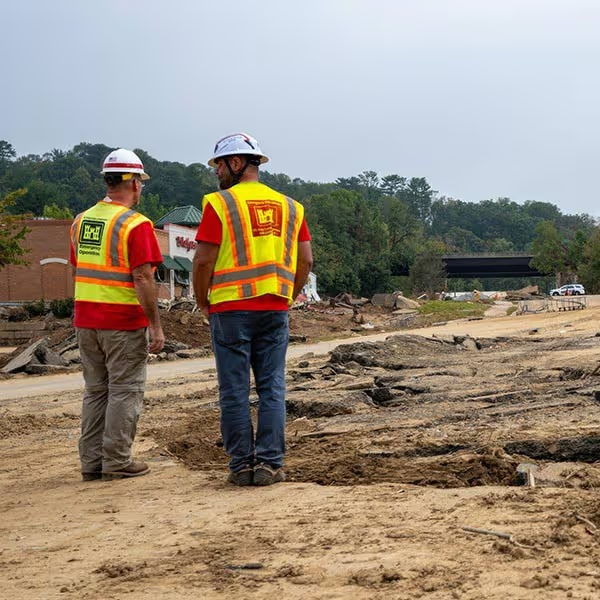
Amanda Held Opelt: Well, you know, our region just lived through the devastation of Hurricane Helene. And I don’t know if your listeners follow, but like the entire western part of the state was totally devastated. At one point the governor issued a statement saying, consider all roads in western North Carolina to be closed, because they had literally been pulled into the creek. We’re still really recovering and thank you, so many people gave and volunteered and sent water bottles and all that. So we’re so appreciative. But I think what gives me hope is just seeing how when you see someone hurting – my gosh, Joy, why am I crying? When you see someone hurting, I think it stirs something deep and good and generous in us. That like I saw people who would have never wanted to come to like the back hollers of Appalachia come with donations that they spent so much time and energy collecting. We saw people from Canada and Mexico and California come to work on our power lines. It didn’t matter. Like politics didn’t matter. Our differences didn’t matter. And I think there is still … Yes, the human heart is so prone to brokenness and failure and hurt. I think it’s prone to generosity and kindness. And when we see a fellow human being hurting, something in us rises up and wants to help. And I got to see that on full display. And it was a really beautiful thing. And even though the storm was really rough and really bad and still so many people are suffering, that was a beautiful thing to witness.
Joy Marie Clarkson: That is beautiful. I’m sorry that you had to undergo it, and I’m sure that there are still repercussions of it and things that need to be both repaired and made strong in case storms come again. But it’s beautiful to know that people can rise to the moment. And that they do. And that reminds me of the final question I want to ask you today, which is a question I ask all of our guests. Which is, what is one thing, and it can be anything, it can be food, it can be poetry, it can be a person. What is one thing that reminds you that another life is possible?
Amanda Held Opelt: So right now my current obsession is the blue ghost fireflies. Have you ever heard of these?
Joy Marie Clarkson: I don’t think I have.
Amanda Held Opelt: They are a firefly species that is … I don’t think they’re endangered technically, but their habitat is very fragile and in danger. But they’re a very specific form of firefly that they glow blue and they stay lit for longer. And so they’re only in very certain spots, sparse spots of the Blue Ridge Mountains. And in the two-week period that they are mating, it is absolutely magical if you can find them because it’s like just these blue orbs just floating all around you. And I was thinking about it because we took our kids – there’s a spot that we know that you can find them which I will not reveal because I don’t want it to become a tourist trap. We took our daughters there, and I just remember telling the kids, “be quiet, you gotta be still so that the bugs come out.” But they were just like, they were so excited. They were just dancing around, squealing, doing cartwheels on the road. And sure enough, those blue ghost fireflies still came out and they kept getting tangled in my daughter’s hair. And I was just thinking, like, you know what’s possible is like these beautiful, miraculous little bugs.
If you know to look for them, they’re there. And you like don’t have to be careful with joy, I think what I’m trying to say is that like my daughters were just like recklessly enjoying this sweet moment and it still came for them. And we can be reckless and abandoned in our pursuit of joy and joy will find us if we know what we’re looking for and if we show up for it. So that’s what I’m hanging onto right now.
Joy Marie Clarkson: Hm, that is beautiful. Well enjoy the blue ghost fireflies, on all of our behalf. Thank you so much for joining us, Amanda.
Amanda Held Opelt: Thanks, Joy. It’s been a good conversation.