Essay
The Quiet Glory of Potsherds
The apostle Paul used jars of clay to describe the Christian experience. I went to Rome and found a mountain of them.
October 24, 2026
Try 3 months of unlimited access. Start your FREE TRIAL today. Cancel anytime.
START FREE TRIAL NOWThe Quiet Glory of Potsherds
The apostle Paul used jars of clay to describe the Christian experience. I went to Rome and found a mountain of them.
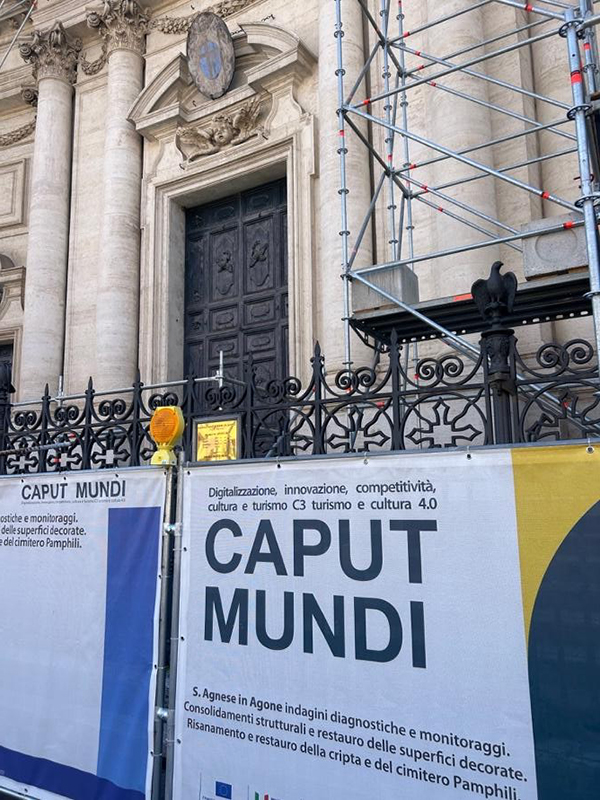
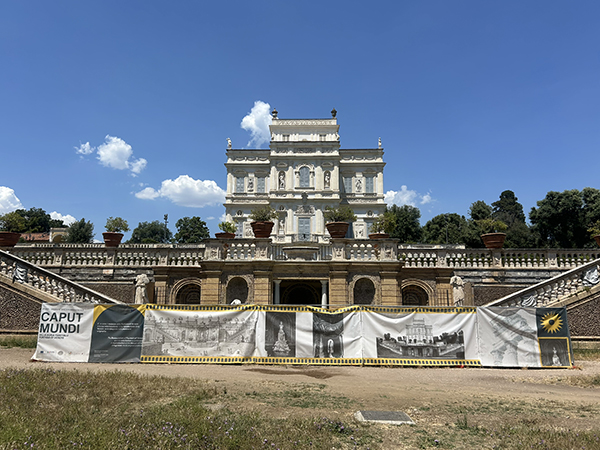
[.article__paragraph--cap][.small-caps]Meandering through the center of Rome[.small-caps] (amid crowds of tourists, hordes of speeding mopeds, and a stream of overzealous taxi drivers), even the casual observer might be struck by the fact that the city exists in a near-constant state of renovation and refurbishment. This does not detract from its remarkable beauty, but that very beauty necessitates a list of running repairs. It is as if every other grand palazzo or ancient monument is encased in scaffolding; dozens of famous sites are fenced off, shrouded in plastic sheeting embellished with the slogan of the government’s citywide program of architectural preservation: Caput Mundi. Even in its shabbiest moments the city maintains its proudest boast: Rome, the capital of the world.[.article__paragraph--cap]
Few cities would dare feign such pretensions, but in Rome this self-promotion feels appropriate. The capital of the greatest of ancient empires, the ecclesial and political center of the medieval world, and a melting pot for the finest intellectuals and artists of the Renaissance, Rome has, since the earliest years of the faith, played an integral role in the Christian story. The micro-state of Vatican City, a stone’s throw from the west bank of the Tiber River, stands as a prominent reminder that this city endures as the locus of the faith for Catholics across the globe.
Millions of visitors each year throng to a list of sites that travelers the world over can recite with an almost creedal quality: the Colosseum, the Forum, St. Peter’s, the Pantheon, the Trevi Fountain, the Spanish Steps. An itinerary for even the briefest of visits is dizzying with its possibilities.
Many stick to these tourist hotspots, but others venture further into the city, and Rome richly rewards those who choose to look a little closer. But even the most enthusiastic sightseer is unlikely to take the short walk from the Pyramide Metro station (so-named because of an enormous faux-Nubian pyramid that faces the station entrance, initially constructed as a tomb for a Roman aristocrat and later incorporated into the city walls) to a petrol station on the Via Galvani. Standing in the rather uninspiring surroundings of the oil-stained forecourt it is possible to glimpse one of Rome’s more remarkable archaeological gems, an enormous ancient construction hiding in plain sight: Monte Testaccio.
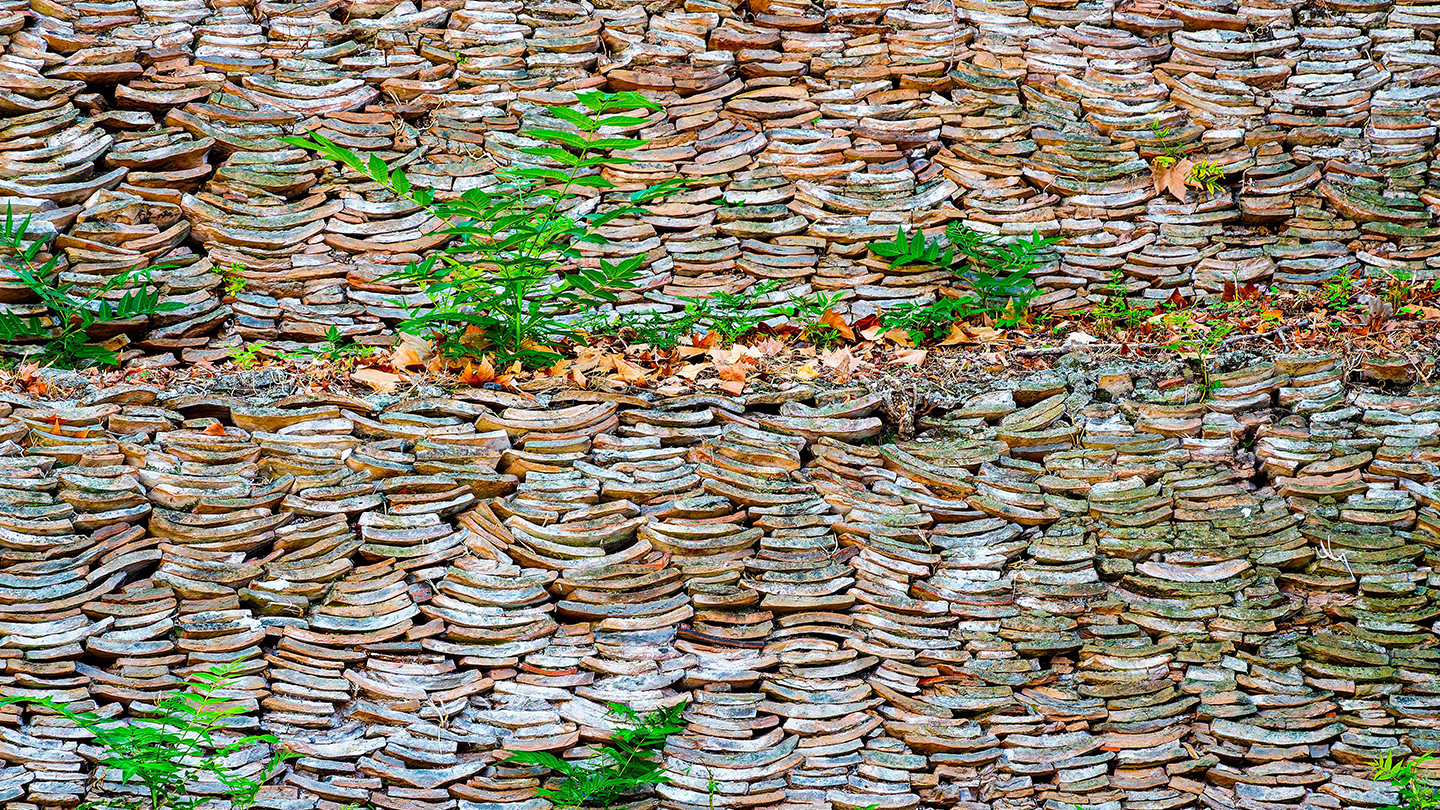
Across the street, behind an inconspicuous metal gate (all too often, alas, locked) lies a rough path that rises quickly up the slopes of Monte Testaccio. This man-made hill erupts out of the surrounding level ground and is made – almost incomprehensibly – out of the remains of over fifty million Roman amphorae. These mass-produced, cheap clay storage jars were used for the transport of foodstuff in antiquity, with huge numbers making their way into Rome on a daily basis.
With over a million hungry inhabitants, by the early first century AD Rome relied upon its many provinces and territories for a constant supply of products like grain, wine, and olive oil. It was the latter that led to the construction of Monte Testaccio. Though its exact origins remain a mystery (it is unclear whether the hill was constructed for ritual reasons, or out of practical necessity), over the span of about two centuries, once their contents had been decanted into more manageable containers, these enormous clay vessels were brought to Monte Testaccio and broken up into rough fragments, before being arranged in neat terraces. The site lay at the then-edge of the city limits, and over the years the hill gradually rose, step by step, above the nearby warehouses. By the end of its construction the mound towered thirty-six meters above its surroundings, a physical dominance that endures today.
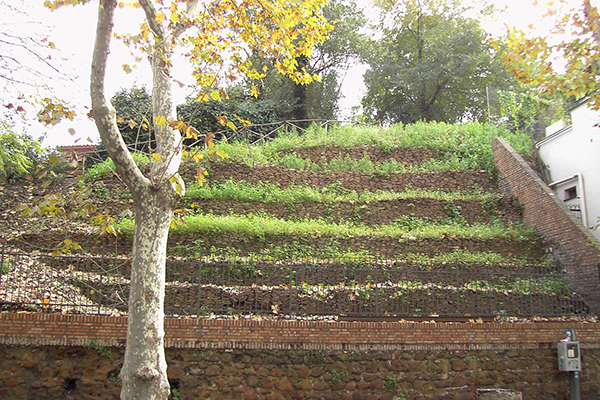
In a city celebrated for its markers of imperial power, Monte Testaccio stands more as a celebration of the full bellies of the Roman masses than as a monument to its all-powerful emperors or conquering generals. The amphorae that constitute its terraces flowed into the city to satisfy that most basic human need: hunger. Their fragmentary remains dwarf many of the more beautiful and well-known sites, a lasting witness to the voiceless majority who inhabited this great city in ancient times.
Monte Testaccio is one of the most significant spoil heaps in the world. Or, to move away from the formal language favored by archaeologists and ancient historians, Monte Testaccio survives as one of history’s most interesting piles of rubbish, but the site takes on a new quality when one considers an intriguing contemporary comment on its contents.
Writing about the same time as the first terraces began to rise above the surrounding buildings, the apostle Paul borrowed the language of amphorae to describe the Christian experience.
For what we preach is not ourselves, but Jesus Christ as Lord, and ourselves as your servants for Jesus’ sake. For God, who said, “Let light shine out of darkness,” made his light shine in our hearts to give us the light of the knowledge of God’s glory displayed in the face of Christ.
But we have this treasure in jars of clay to show that this all-surpassing power is from God and not from us. (2 Cor. 4:5–7)
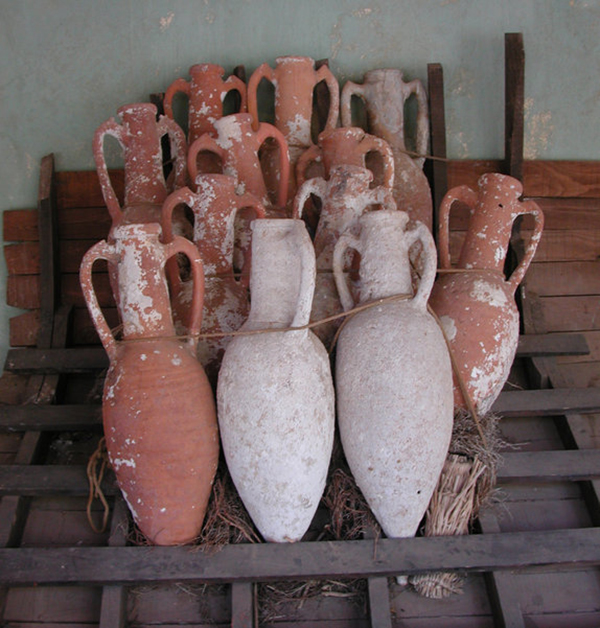
Paul’s original readers would have been familiar with the life cycle of such objects. These were not the kind of richly painted ancient vases you might find enshrined in the great museums of the world. These were roughly made, simple and cheap. Once they were emptied, there was no economic case for reuse; they would simply be thrown out. The epitome of finite insignificance.
Paul suggests not only that the believer is akin to one of these disposable jars, but that, conversely, the treasure they contain is beyond comparison. It is typical of a Gospel that is so counterintuitive in the face of human self-exaltation that Paul considers the broken contents of this forgotten monument to be exemplars of genuine glory. We hold wondrous treasure in jars of clay. In Christ alone we become vessels for true and lasting glory.
The capital of the world often goes by another name; the Eternal City. While the many boasts of Rome are so often justified, perhaps this moniker is a step too far. This is a city ever under repair, the scaffolding and plastic sheeting a jarringly modern reminder that even the greatest of empires and cultures rise and fall. Under the baking Italian sunshine even the most famous monuments to human achievement crack and crumble. Dust to dust.
In the backstreets of a city suburb, with the laughter of children from a nearby school carried by the wind across the gently rising hillside, Monte Testaccio hints at an antidote to the power and might for which Rome is so often celebrated. The quiet glory of this mountain of potsherds urges us to shrug off the burden of self-exaltation. The need to promote ourselves and push ahead, to command the attention and adoration of our audiences: it all fades as you trudge, pottery-crunching step by step, up the side of this monument to human fragility. Jars of clay filled with riches beyond compare. Finite, broken beings filled with an infinite, unbreakable divinity. Human necessity turned lasting glory. Behind that unassuming gate, across from the uninspiring petrol station forecourt, we are reminded of the quiet glory of the Christian life.