Book Excerpt
Reconciliation after October Seventh
How can Israeli Jews and Palestinians find empathy for one another?
October 8, 2026
Try 3 months of unlimited access. Start your FREE TRIAL today. Cancel anytime.
START FREE TRIAL NOWReconciliation after October Seventh
How can Israeli Jews and Palestinians find empathy for one another?
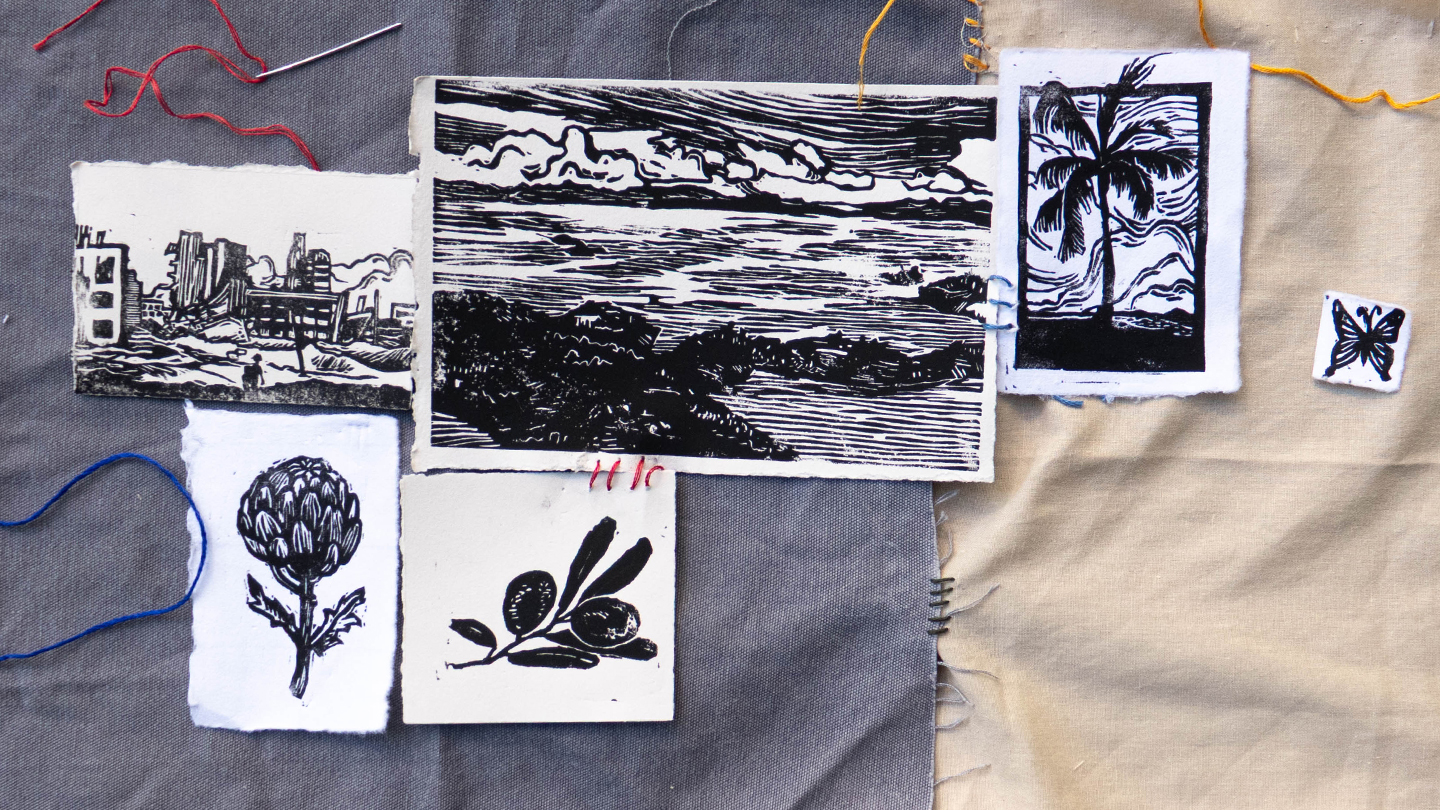
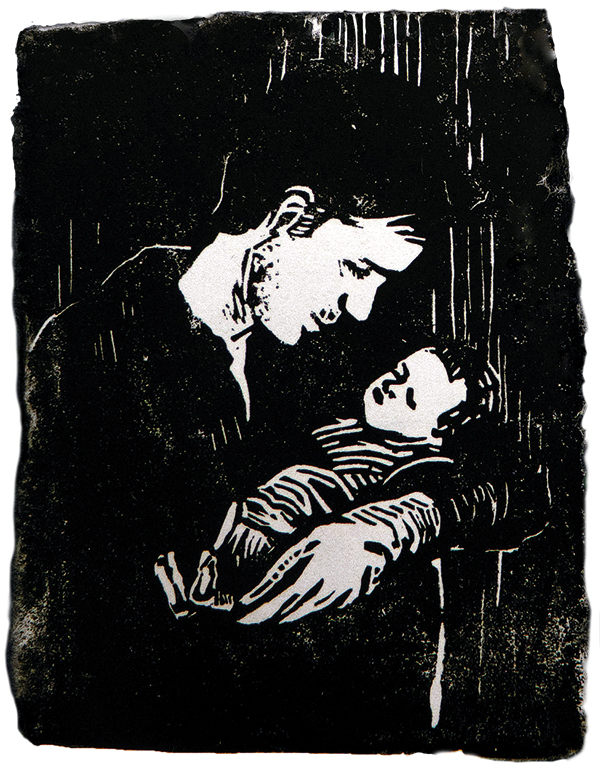
[.smalltext]All illustrations by Jocelyn Maendel.[.smalltext]
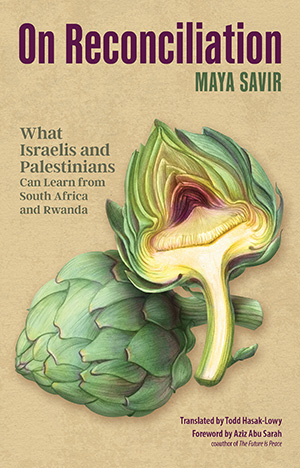
[.smalltext]From On Reconciliation: What Israelis and Palestinians Can Learn from South Africa and Rwanda, by Maya Savir (Plough, October 2026). Translated from the Hebrew by Todd Hasak-Lowy.[.smalltext]
[.article__paragraph--cap][.small-caps]Once, when I[.small-caps] wanted to understand something, think about it, process it, I knew just what to do: invite myself to the desk in my study, in my home, and in my city, and in my language as well. To a space whose protection had been obtained through much work and at great expense, and whose existence had become a constant in my life. Even when I wasn’t there, because writing had grown threatening and I needed to give it a break, or because life was pulling me away, I knew at some point that I’d return. To this place that I describe here in a way that situates four spaces, each of which is marked by some kind of border: psychological, architectural, municipal, linguistic (of course it can be described in other ways too). However, the reality after October Seventh is one in which all spaces – physical, mental, verbal – have been violated. It seems that humanity itself has been violated. I write these words from a space that to a large extent no longer exists.[.article__paragraph--cap]
I wrote the book On Reconciliation in Hebrew during the years I worked for the prevention and treatment of malnutrition among impoverished communities in South Africa, Rwanda, Kenya, the Democratic Republic of Congo, Ethiopia, and Uganda. The work there stirred my heart and my conscience, and it occupied my thoughts as well, but it was my encounter with South Africa and Rwanda that, in many ways, felt like a homecoming. I got to know societies that in the recent past were consumed by seemingly endless conflict, yet underwent a transformation and became societies where reconciliation is ever present. Present in discourse, in thought, in public spaces, in emotional life. Present in everything, because at its deepest level, at its essence, reconciliation is the exact opposite of conflict. This presence resembled – in the mode of thinking, of reasoning, in its rhythms and associations – the conversations that took place around the dinner table in the family in which I was raised. My family knew the costs of war intimately and understood peace as a moral imperative, as a collective project of humanity, whose sons and daughters have an obligation to do whatever they can for its sake. And here in South Africa and Rwanda I felt that I was again sitting around the family dinner table on Friday, talking about life and reconciliation, about reconciliation and life, thereby weaving them into a single fabric.
Writing On Reconciliation was a journey that began in 2014, following my time in South Africa and Rwanda, with a re-examination and sharpening of my thoughts about the ways and conditions in which conflict ends. It continued with conversations that took place following its publication in Hebrew in 2017, as well as lectures I gave to diverse audiences with varied backgrounds and political views, mainly in Israel but not only. The ideas that I put forward in this book and conveyed in these gatherings were by and large received positively and sympathetically. I attribute this positivity and sympathy to two factors. But before I touch on them, I want to acknowledge that the very fact that I must explain them here points to the underlying question: How can ideas about reconciliation resonate positively in a society that for years has rejected outright its very possibility? The first factor is Africa, whose people, landscapes, and stories I discuss. The imagination of the Global North perceives Africa as exotic and mysterious, and thus inherently intriguing. The second factor is the illusion of control. In the era before October Seventh, and especially over the last two decades, in the eyes of most Israeli Jews, the Israeli-Palestinian conflict was something that existed but was distant and mostly under control, something that could be put aside or pushed to the back of the mind. If I had to articulate this rationalization, it would sound something like this: “Someday, sometime in the far-off future, so far off it can’t even be seen, when the conditions are ripe and there’s someone to talk to on the Palestinian side, and after we’ve tackled other, more urgent issues, we’ll address the conflict and then the ideas of reconciliation will be relevant and the cases of South Africa and Rwanda can be our inspiration. So why not listen to talks about reconciliation in the meantime? Such theoretical matters are interesting.” This illusion of control naturally sits on the foundations of blindness and repression – more on that later.
Then October Seventh happened. My use of the word “happened” does not imply an event that appeared alchemically, something that emerged out of nothing. Similar to tectonic movements that precede the eruption of a volcano and portend it, there were tectonic movements that preceded October Seventh and could have anticipated it, but they were, by and large, suppressed.
By “October Seventh” I mean the massacre carried out by Hamas in the Israeli communities near the border of Gaza, on army bases, and at a music festival of young men and women. Random passersby were also targeted. Then came the response of Israel in Gaza – if one can call what has been done there, the indiscriminate killing, the destruction, the starving, a response. As is typical of violent conflict, this response would not be contained to this one space, but instead spilled over – to the West Bank, to the war with Hezbollah in Lebanon, and to a volatile, multi-arena war with Iran involving many regional and international actors.
[.article__paragraph--cap][.small-caps]After the initial,[.small-caps] paralyzing, mindnumbing, all-encompassing shock, which lasted many weeks, and which I will return to, it became clear to me that On Reconciliation was not finished, and there was another chapter I would have to write. The sealed membrane enveloping the life-affirming Israeli-Jewish mentality – that is, the part of this mind that does not sanctify holy war, that is, most of it – had been torn open. In this sense, the sounding board against which the book had been echoing had changed, had matured in the sense that it now recognized not only the relevance of dealing with the Israeli-Palestinian conflict by looking at other conflicts, but the necessity of doing so. New audiences were exposed to it and demanded that I clarify the meaning of reconciliation, or even just the meaning of talking about reconciliation, in the new era following October Seventh and the war. Because the world had changed. Here was a world where, to return to the idea of violated space, all fears had been realized. Where waking up could not end the nightmare. Where both Jews and Palestinians – many of whom on both sides unfortunately feel that the right to raise this question is reserved for them and them alone – ask: Is it possible, is it at all reasonable, to talk about reconciliation? In other words: Isn’t it obscene to speak about such a thing after everything that’s happened?[.article__paragraph--cap]
Well, I’ll start with the basics.
October Seventh is what happens when there is no reconciliation, and reconciliation is the only way to prevent it from happening again. As to the question: How is this night different from all other nights, that is, after October Seventh? The answer is: This night – this post–October Seventh darkness – is different from all other nights (which is self-evident, I contend) in that it has impacted every Israeli and every Palestinian, bestowing new urgency on finding a different approach than the one that brought us to the place we’re at. The conflict has demonstrated that it will not be suppressed. The equation that previously informed the Israeli-Jewish perception and that of many people across the world no longer computes. According to this old equation, power and a sufficient amount – the minimum necessary, of course – of normal life and the appearance of autonomy for the Palestinians can render the conflict marginal, an issue that only requires occasional confrontations, once every few years, and nothing more. It is now clear that a people’s yearning for self-determination cannot be extinguished and that systems based on oppression are unstable. It is now clear, quite simply, that unaddressed problems only get worse.
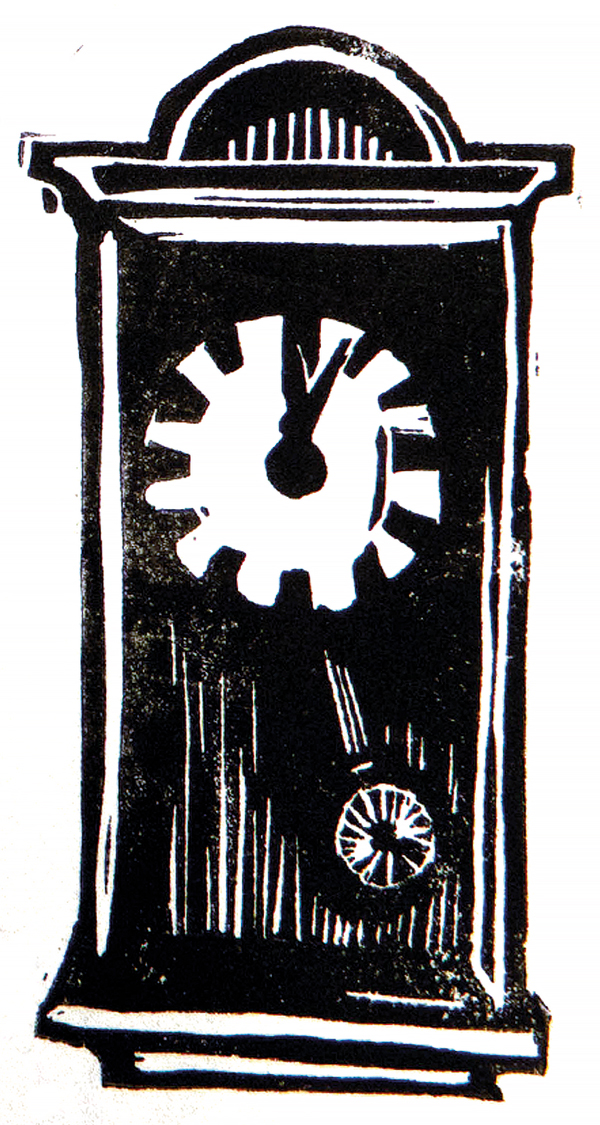
[.article__paragraph--cap][.small-caps]An x-ray of my[.small-caps] insides would reveal that I have grown a new organ: a pendulum hanging from my larynx, descending down my throat, with a weight at its end that swings from side to side in my chest, a movement that echoes the one between my two states of consciousness: grief and shame. Grief and shame. On one side of this perpetual motion, grief over what has been done to us, the Israelis. Grief over the people who lost their lives, their freedom, the integrity of their bodies, their mental health, their homes, their faith in humanity. Grief over a friend, a woman from a kibbutz near Gaza, a peace activist, who was murdered. Grief over another friend, also a peace activist, whose two parents, themselves peace activists, were murdered. Grief over a colleague who was kidnapped from her home together with her daughter and grandchildren, and whose partner was murdered. Grief over a neighbor whose son was critically injured. I could go on, as there are other people I know firsthand for whom October Seventh was a watershed. Their lives will never be the same again. But I’ll stop here. Bottom line, it’s all very, very personal.[.article__paragraph--cap]
But then, on the other hand, shame for what has become of us, the Israeli Jews. Shame for the things that have been done and continue to be done in our name. Shame for our hearts that have grown rough and coarse and above all closed up like a fist. Shame for a Gazan friend I made at an Israeli-Palestinian meditation conference for peace a few years ago, with whom I’ve corresponded several times a week since then, a text exchange dotted with emojis filling the language gap. Right after October Seventh he wrote to me. When the Israeli bombings in Gaza started, I wrote to him. We exchanged hearts and wishes for safety. A week later he sent me videos of his bombed house. After a few days he sent similar videos of his son’s house, to which he had fled. A few days later his phone went silent. Shame for a colleague in Gaza with whom, a few years ago, I tried to establish a project to promote food security in the Strip. During all the previous rounds of fighting we maintained interest in each other’s well-being. When Hamas fired rockets at Tel Aviv, he wrote to me: Take care of yourself. When Israel bombed Gaza, I wrote to him: Take care of yourself. Shame for two peace activists who escaped from Gaza a few years ago after spending months in a Hamas prison for having ties to Israeli peace organizations. Their families are still in Gaza.
But my shame is older, and layered. One layer, formed before October Seventh, is like an ever-present undercurrent. Because even though it seems that the Israelis and the Palestinians are all swimming – and sometimes drowning – in the murky waters of this painful conflict, the truth is that the power relations between the parties are not symmetrical, not now and not before October Seventh. Yes, both sides abuse their power, but there is a strong side and there is a weak side. And the power wielded by the strong side is immeasurably greater than that wielded by the weak side. And I belong to the strong side. In other words, if I were to ask a person who has nothing to do with the conflict to put aside their identifications and values and refer only to their picture of reality and answer this question, If you had to choose, would you choose to live in Israel or Gaza? is there anyone who would choose the second option?
And there is another pendulum. It hangs as if from nowhere, perhaps from the sky, moving from side to side in this space where Jews and Palestinians live and have for generations done horrible things to each other. The existence of each of these people is a matter worth dwelling on for a moment, because although there is no disputing that both Jews and Palestinians live in this space, many on each side refuse to recognize that this fact alone is enough to establish another fact, which is that Jews and Palestinians are in a relationship – whether they like it or not, whether it aligns with their worldview or not. The denial of this relationship is equivalent to the refusal of a person who lives in an apartment building to acknowledge that there is a relationship between himself and the other tenants in the building. It can be good or bad, but it is a relationship nonetheless. Because if one of the neighbors dirties the stairwell, the neighbor who denies this relationship can persist in denying this relationship, but still, when he goes up or comes down the stairs, on his way home or on his way out, his feet will step through trash. And if one of the neighbors plays loud music in the middle of the night, the neighbor who persists in denying this relationship will still find himself lying in bed, unable to fall asleep and unable to explain to himself what these sounds are that fill his acoustic space. In the same vein, a professor at Bethlehem University said to me, when I visited his laboratory, “I can’t understand you Israelis. You won’t approve the construction of a sewage system in Gaza, so the Gazans pour their sewage into the sea. You think that their shit doesn’t reach the beach in Ashkelon, where you swim?” The refusal to recognize this relationship – and in some cases, refusal to recognize the very fact of the other’s presence in this space – reflects nothing less than a warped view of reality.
Back to that second pendulum and its perpetual motion through space. On one side the Jews are the victim (and, accordingly, the Palestinians are the victimizer), and on the other side the Palestinians are the victim (and, accordingly, the Jews are the victimizer). A victim, a victimizer. A victim, a victimizer. The central question of the conflict may be whose land this is, but the central question that seems to stand in the way of any attempt to end it is this: Who has the right to claim victimhood and who, as a result, is the victimizer?
The identity of the victim and the victimizer, as viewed by both sides, is, of course, related to the current reality, but no less to the ghosts that haunt this land. Among Jews, October Seventh resonates with pogroms in Europe, and its graphicness – the hunting, the burning of bodies, the dismembering of corpses, rape, children hiding in closets – with the Holocaust. The Israeli-Jewish consciousness was flooded with terror, and it appears that parents, grandparents, and great-grandparents’ stories of persecution in exile were awakened in response, filling up this consciousness and eclipsing the sense of protection Israelis thought we had secured in Israel. Whereas among the Palestinians, the war in Gaza and its ripples in the West Bank echo the Nakba. Children and grandchildren of refugees – and sometimes, as in the case of my friend in Gaza who is a 1948 refugee from Haifa – were once again expelled from their homes. There was no one to stop the numbing ease, the unbearable casualness, with which they were cast aside.
It is easy to understand the speed with which both sides, in the blink of an eye, retreated to the position of the victim. The current trauma recalls, on a sensory level of smells and sights and sounds, the previous trauma – personal and collective. This conditioning works on Jews and Palestinians like a spell. However, in order to understand the forces that drive this perpetual motion, this movement between the two sides, each of which is convinced that they, and only they, are the victim, it is not enough to understand the mechanisms of memory and conditioning. Because there is another variable, tied to the benefits that accompany the position of the victim. In other words, it’s easy to understand why neither side wants to be the victimizer. But why does everyone long to be the victim?
The obvious part of the answer lies in the fact that the victim naturally receives empathy, solidarity, and sometimes even physical support and assistance. However, there is another, less obvious part, which originates from an intuitive connection that most of us draw between victimhood and righteousness. In the simplest sense and according to the crudest distinction – which in many cases is also false – the “winner” of the title of victim is seen as right and the victimizer as wrong. It is easy to see, then, why victimhood is so desirable, since this link carries with it confirmation of the claims of the victimized party. In the emotional realm, this logic is deciphered as such: Injustice is bad. The one who is wronged is a victim and the one who committed this wrong is a victimizer. Therefore, the one who committed the wrong cannot be right. Hence the victimizer is wrong and the victim is right.
However, the victim-victimizer distinction is a false distinction, because it does not take into account the full complexity of the person in a conflict. In fact, it perpetuates and even deepens one of the more profound, oppressive injustices inflicted on people who are in conflict: it erases their uniqueness. Because a person, each person, is singular and unique, and at the same time a part of the group to which he or she belongs – Israeli Jews and Palestinians in this case. The victim-victimizer distinction affixes a value judgment to him based on the collective to which he belongs, thereby nullifying his stances and choices as a private individual.
The automatic link between victimhood and righteousness distorts reality, which is more complex than the victim-victimizer dichotomy, certainly when you find, as we will see later, that a person can be a victim through his collective affiliation and a victimizer as an individual, and vice versa. This link distorts matters further, since the “winner” of the victim title weaponizes the attendant righteousness against the victimizer, whose characteristics he exaggerates and intensifies, unable to see that there are, always, reasons – not justifications – for this unjust behavior. The victim feels that his victimhood allows him to do things that he could not otherwise justify. A victim position is a sick position. So sick it can blind. So sick that a Palestinian can say, for example, that the Jews brought October Seventh on themselves. So sick that an Israeli Jew can, for example, be blind to the unbelievable historical twist in which her side is starving children in Gaza.
As to the question of who at this point in time in the Israeli-Palestinian conflict is the victim and who is the victimizer, the natural, and perhaps tempting, response would be that the answer depends on one’s point of view, although in this era subjectivity is both the foundation on which tolerance is based and, at times, a weapon in the hands of those who reject tolerance altogether. However, I would like to claim that to answer the question of who is the victim and who is the victimizer requires an ability to maintain a complex, multifaceted, and multilayered point of view, an ability that was gradually eroding and seems to have disappeared altogether since October Seventh. Here’s what I mean. In the broader context, the Palestinians – under occupation, without political rights, and with unimaginable restrictions on their most basic human rights – are the victim. And Israel, whose boot is on the neck of the Palestinians, is the victimizer. However, on October Seventh, Hamas went so far beyond what is considered acceptable human behavior, even among people immersed in conflict, that from the point of view of the Israeli Jews, the roles were reversed. From the point of view of many Israeli Jews, the Palestinians have lost their “right” to victimhood, and the pendulum of the coveted victimhood has swung to the Israeli side.
This is a position whose logic can be understood, because in the absence of context – assuming a situation without a context is possible, more on that in a moment – whoever is murdered or has had a loved one murdered, is kidnapped or has had a loved one kidnapped, is raped or hunted or forced to witness this is a victim. And whoever murders, kidnaps, hunts, or rapes another person is a victimizer. But a person can, at the same time, belong to a victimized group and be a victimizer as an individual. Conversely, a person can simultaneously belong to a victimizing group and be a victim as an individual. In order to hold this complexity, one must think in a way that is in sharp contrast to the way people usually think in a situation of conflict. One must recognize a person’s collective identity and also their private identity, the one that gets lost, because the conflict is a black hole that swallows everything singular and unique about a person, to the point that each and every member of this collective has the same characteristics. Holding this complexity is a great challenge for the parties involved in the conflict, and, as it turns out in this war, for many in the world as well. Too many people seek to express identification with one side or the other and find it difficult to contain the nuances, layers, and uniqueness of the other side. Thus, while it seems to them that they are supporting the “side” with which they identify, in fact they are reinforcing the distorting victim discourse and perpetuating the conflict. It is understandable – but not justifiable – that those who are neck-deep in conflict are overwhelmed by grief and terror to the point that they struggle to see the suffering of the other and, in fact, struggle to see the other at all. But the international supporters of either side should be able to handle complexity and hold it for the sides as a flame of hope and a vital tool for helping the parties extricate themselves from the conflict.
As I write these things about victim-victimizer relations, I carry with me, like a smooth stone one takes home as a souvenir from a special place, another way to understand these relationships, a way I have been repeatedly exposed to in my conversations with people who live in reconciling societies. It is a stage in the relationship between the sides, an evolution that transforms the victim-victimizer opposition so dramatically that it eclipses the simple, common-sense nature of it: by moving away from their roles as victim or victimizer, which the conflict assigned to them, the parties involved make way for a movement in their consciousness as well. This movement enables them to see both themselves and the other more clearly, and more fully. The victim can, for example, recognize in himself those impulses, those dark areas of the soul that until then he attributed only to the victimizers, and will thus be able to imagine a different state of affairs in which he himself would have behaved as they did. And the victimizer can, for example, identify within himself those parts that yielded to the primal impulses of superiority and expansion, and cultivate antibodies against these impulses. There are moments – I witnessed them again and again – when those involved in reconciliation look at the conflict from the other side of it and come to share this understanding: the conflict has exacted a monstrous price from both parties.
[.article__paragraph--cap][.small-caps]The struggle between[.small-caps] Israeli Jews and Palestinians rages in another arena, that of narrative, where the battle revolves around the question of context and more precisely, when, if ever, it is reasonable to disregard it.[.article__paragraph--cap]
As far as the Palestinians are concerned, October Seventh did not take place in a vacuum but in a context where the balance of power is clear: Israel is an occupier and Palestinians in the West Bank, East Jerusalem, and Gaza are waging a struggle against this occupation. The atrocities committed by Hamas – legitimate or not, depending on one’s point of view – are part of this struggle. The Israeli-Jewish insistence on ignoring the context is, for Palestinians, a direct continuation of Jewish Israel’s longstanding denial of the Israeli-Palestinian conflict and the occupation at its center.
As far as Israeli Jews are concerned, the acts committed on October Seventh were so extreme, so horrifying, that nothing can justify them. Therefore, the very discussion of a context suggests that there might be – even theoretically – mitigating circumstances for these acts. Indeed, in the simplest and most basic way, there is only one answer to the question, “When is rape allowed?” Never.
Interestingly, the math of the Israeli Jews and the Palestinians is similar, but their conclusions are different. And both sides are wrong, because what they are seeking in this is self-justification and sympathy, not moral clarity or a road map to climbing out of the deep, dark pit both sides have fallen into.
October Seventh + context = a reduction in the severity of October Seventh
Therefore, based on the same equation, Israeli Jews wish to avoid context, while Palestinians wish to emphasize it.
A similar struggle is underway regarding the war in Gaza. In this case, the context is not the occupation but October Seventh, and here the motivations are reversed. From the point of view of Israeli Jews, it is impossible, and inaccurate, to see the war in Gaza except in the context of October Seventh. The war is a reaction, and therefore context is warranted. From the point of view of the Palestinians, the acts that Israel has committed in Gaza are so extreme, so horrific, that nothing can justify them, and therefore the very discussion of context suggests that there might be – even theoretically – mitigating circumstances for these acts. Indeed, in the simplest and most basic way, there is only one answer to the question, “When is it permissible to starve children?” Never. The Palestinians are therefore interested in downplaying the context.
Like the struggle over victimhood, the struggle over context sits on the foundations of another intuitive, and false, link: between context and justification. Thus, while context can, at best, offer an explanation, both sides are mistaken in thinking that it provides legitimacy or permission to do something that under any other circumstances they would not do.
Nevertheless, I would like to argue that context is warranted. Not because it has any implications for one’s moral judgment of the events in question. Nothing, not even the occupation, can justify October Seventh. And nothing, not even October Seventh, justifies Israel’s actions in Gaza. Context has another value distinct from the question of justification, as it addresses a question that constantly hovers over us all: What will be? Because despite the desire, and perhaps also the instinct, of Israeli Jews to push October Seventh outside the realm of humanity, and of Palestinians to do the same with Israel’s actions in Gaza, these acts were not committed in some parallel universe. Unfortunately, they were committed in our universe, a universe where there is a conflict and where resolving it is the only way to prevent such acts from being committed again.
At this point, we must call on our ability to hold complexity: there is context, but while it is weaponized in a conflict state of mind, in the framework of reconciliation, context is what offers us a roadmap to a different future, one where both sides picture reality and experience it at its fullest and richest. Because on the other side of the conflict, different and sometimes contradictory narratives can exist side by side. Through reconciliation, humans can feel their own pain and the pain of others as well, even if they belong to the opposite side. Humans still experience intense and sometimes destructive emotions, because that’s how we are – we contain everything, including, thankfully, social and emotional mechanisms of regulation that become sharper and more sophisticated when practiced. Through the process of reconciliation, the energy that was formerly directed toward rebuke and destruction is directed toward healing and rebuilding.
I will touch on the disappearance of complexity later, but first a few more words regarding the charged nature of context, because make no mistake, none of this is easy to swallow. It is not easy to accept the idea that the acts that were committed took place within a framework that can be referred to at all. It seems to me that this is because although October Seventh and the war in Gaza can be explained – but not justified – in terms of the historical context, what the psyche has encountered in them cannot easily be explained in terms of a psychological context. Because the acts committed on October Seventh – sadistic acts whose purpose, so explicitly, was to cause indescribable suffering – are difficult to fit into the ways of thinking we are used to, that is, into the accepted patterns of behavior between human beings, even among those who are in conflict. Similarly, the ways of thinking to which we are accustomed reject unrestrained revenge and apocalyptic scenarios involving starvation, expulsion, and indiscriminate bombing.
Indeed, when the mind meets the indescribable, it rushes to place it in the realm of the abnormal, the deviant – beyond what is considered human. To a place beyond the limits of logic, the only place where such raw and absolute evil goes unopposed and can therefore exist.
The attempt to place evil beyond the limits of logic occurs in an instinctive, survivalist, and also understandable manner, since accepting evil as something that is possible within the scope of what is considered human hollows out the very definition of humanity, emptying it until all that is left is its shell. However, denying the evil in humanity is a fruitless endeavor since it cannot change the fact that this encounter with evil has already happened, has already been burned into the mind. Placing the acts under the heading “inhuman” does not eliminate their reality. In reality, inhuman things were done by human beings.
It’s worthwhile to consider the fate of the psyche that remains stuck there, in the lawless and perverse realm where one person can hunt down another, burn them, cut off their limbs, rape them, kidnap them, and do all this while others – sometimes those related to the one being hunted down, burned, cut apart, raped, kidnapped – witness all this. There may lie an explanation – but not a justification – of Israel’s unrestrained, unhinged reaction. In other words, a consciousness thrust into a lawless, perverse space tends to react in a lawless, perverse way. After all, indiscriminate killing, mass expulsion, total destruction, and starvation are not acceptable actions, not even in war. They can only be the result of a sickened state of mind in the throes of war’s frenzy, a frenzy that should also be considered outside of what is human.
This is a situation where, in practice, the psyche has been suspended. Israeli Jews as well as Palestinians are in such great pain that the psyche cannot bear it, so it urges the body to act, but to act independently of it. Because killing, destroying, razing, expelling, raping, kidnapping, starving are actions that require the psyche to detach itself from the acting body. And this is how Israeli Jews and Palestinians communicate with each other. They appear to speak different languages, but in actuality they communicate with each other in the shared language of soulless action.
[.article__paragraph--cap][.small-caps]During my years working[.small-caps] in Africa, I found that when I returned to my life back home, I could convey a bit, a tiny bit, of what I encountered and experienced. Or perhaps more accurately, who I was when I was there. I was able, I think, to provide details and describe situations. For example, I told people about Katanga, a huge shantytown in Kampala, or about Kibera, in Nairobi, both of which are hard to imagine as places where people actually live, the vastness of their size matched only by the degree to which their inhabitants have been abandoned. Shacks stretch to the horizon like an ocean. Children walk around barefoot, their bellies bloated. Sometimes edema, caused by malnutrition, is visible in their legs, arms, and faces. There’s no running water or electricity, and sewage flows in the streets. I told people about a young mother, or maybe it was an older sister, who washed a little boy standing naked next to a small tub at the threshold of their shack. There was very little water in the tiny tub, and she dipped a rag in it and wrung it out well before running it over the boy’s skin, being careful not to waste a drop. And I told people about a woman who set up a clinic there. She’s a public health worker who also functions as a doctor, social worker, and psychologist. People come to her and she does what she can for them, even if, in the absence of medicine, food, and medical equipment, it’s simply to let them lie down in her rickety hut, which doesn’t even have a door, just a sheet for a partition. And I told people how I stood on a pile of garbage, one of many, since the neighborhoods are dotted with piles of garbage, and I couldn’t help but think: humanity is garbage. But I doubt I was able to describe my obliterating, nullifying encounter with a poverty that is both immeasurable and unforgivable. The obliteration and the nullification, these I couldn’t convey. Nor the knowledge – which when I stood there couldn’t have been more clear to me – that if the world of plenty really cared about its hungry brethren, things would be different.[.article__paragraph--cap]
So here, too, in this text – though I’m not on a garbage heap in Katanga or Kibera, but in my writing nook, in my room, in my city, and in my language – I’ll try to convey to those who don’t live here something of what living here feels like since October Seventh. I know that my ability to do this is limited. Not only because it is difficult to describe a reality that is unimaginable even for those experiencing it, but also because for many people across the globe my voice as an Israeli Jew has lost its legitimacy.
At this point, my insides become split between different and, at times opposing, identities and identifications. As an Israeli Jew, I feel that the gaze of those uninterested in hearing me reduces me down to the single identity of an Israeli Jew, and flattens me altogether. Under this gaze and this silencing, being a woman, mother, writer, and human rights and reconciliation activist is meaningless. My critical view of the society in which I live and of myself is meaningless, as are the solidarity and empathy with which I try to orient my life. As someone who defines herself as a humanist, I actually understand the emotional and moral impulse of those who feel that today’s Israel represents values that are unacceptable to humanism in the simplest and most basic sense: equality between human beings whoever and wherever they may be. I understand the desire to say to Israeli Jews: “You have lost your right to attention and compassion; come back to us when you wake up from the delusion that your behavior is legitimate.” However, as someone who researches reconciliation and writes about it, I know that when zooming in, nuances and complexities are revealed, and I know that silencing people on the basis of group affiliation (ethnic, religious, gender, etc.) actually deepens and reinforces conflict, it doesn’t bring its solution closer. Deeming an entire side illegitimate delegitimizes as well its reconciliation and equal rights activists, that is, the very people who want and can change reality, along with all the many others who want with all their heart to see the conflict end but still struggle to see how this might happen. If there is anything that my encounter with reconciling societies taught me, it is that reality can be changed, because it is human beings who create it, or at least significant parts of it. Human beings know how to change, know how to transform as individuals, and know how to transform as a collective.
Survivors of October Seventh said that while they were hiding – in shelters, closets, garbage cans, in holes they dug in the ground and buried themselves in almost completely – their babies and their dogs were silent. They didn’t cry, they didn’t bark. In fact, they didn’t move. They felt – instinctually, in their cells, deep inside the same mechanism that makes them a living organism – that they were in grave danger. They experienced a survival response: in the absence of the ability to fight or to flee, there was nothing left for them to do but freeze. This paralysis – before it tumbled in the other direction, into wild, unrestrained action – was everywhere.
Inside me too. October Seventh left me speechless. Not only in the physical sense of my jaw locked and my mouth closed, but also in regards to my inner voice, which was shocked and muted in the face of the horror, which silenced my ability to write as well. Again and again, I found myself bringing my hand under my chin to lift my jaw, which constantly seemed to be dropping in response to the sights, the voices, the information that flowed into me. I could do nothing to stop it, because it came from everywhere – from the news, from conversations, from texts, from the testimony of people I knew. And this information was so extreme, so disturbing, that it activated every skeptical mechanism I had, so that when I was able to say something, it was mostly: “What?” And if there was someone next to me, I would turn to him and ask, “Is this really what that person just said? Did you hear that too?” Or, “Is this what you’re seeing in that picture? Do you see it too?” I was sure I wasn’t seeing, hearing, or reading right, or maybe that’s simply what I wanted to believe – that I couldn’t see well, hear well, or read right. These things went beyond what the mind can grasp, and this is what the mind does when it encounters things that lie beyond its grasp: it pushes them away or looks for confirmation from other sources.
But there was nowhere to escape to. The experience was overflowing with graphic horrors and loss, much like the air can be saturated with dust or moisture that clings to everything, sticks to the body, and penetrates the mind. And this experience was drained of those things that are essential to existence: vitality and logic, until it took on the form of death and irrationality. The public sphere resembled a house in which people sit shiva. Feelings were exposed and raw. It appeared that the seam separating people’s inner speech – that discourse resonating internally with coherence and reason – from their speech with others – where the same things suddenly hover in a hallucinatory space – had been undone. People stood in the streets and cried, or walked and cried, or sat and cried, or paid at the cash register in the supermarket and cried. People ran into each other in the street and fell apart on each other’s shoulders. Or reached out to caress someone’s shoulder or arm, to offer comfort, even when that someone was a perfect stranger. Fragments of conversation that float in the acoustic space of our cellular age suddenly changed. Normally, a person walks down the street, passes people, and hears things like: “I’m stopping by the supermarket and then I’ll come, OK?” Or: “You don’t want to know about the traffic.” Now you’d walk down the street and were exposed to bits of dialogue that in any other context would have seemed impossible: “Their two children! Do you hear me? They found pieces of the daughter; the son was kidnapped!” Or: “There’s nothing left of them, just soot; there wasn’t even anything left of their glasses.”
One day I was standing at a crosswalk. Next to me stood a young woman pushing a stroller with a baby in it. She was wearing dark sunglasses, and underneath, tears were running down her cheeks and face. They flowed off her jawline like a waterfall over a cliff. Her expression was frozen. Nothing moved except for the tears wetting her shoes. Normally I would have asked her if I could help somehow. But there was nothing so unusual about what she was doing. So we stood side by side, both of our shoes stained with tears. The pain was so raw and so exposed, so wild, that public space felt like a butcher shop, and the people filling it were bloody pieces of meat, hanging on hooks or lying, cut wide open, on butcher blocks. A few weeks into the war, reality echoed the feeling of the butcher shop and those pieces of meat. In those days, many of the murdered had already been identified, and from the videos released by Hamas it was clear that many had been kidnapped, but there were still many who were missing. It was then that various birds of prey known to feed on corpses entered the frame of our hallucinatory reality. The Nature Reserve Authority had attached transmitters to their legs to monitor their flight and health, and now in the areas where they circled the air rescue forces would search and find bodies, and parts of bodies.
And throughout this time I saw, and still see, the sign that a father, whose daughter was kidnapped, posted on the street: “This could have been your daughter.” And I knew then and I know now: it’s true.
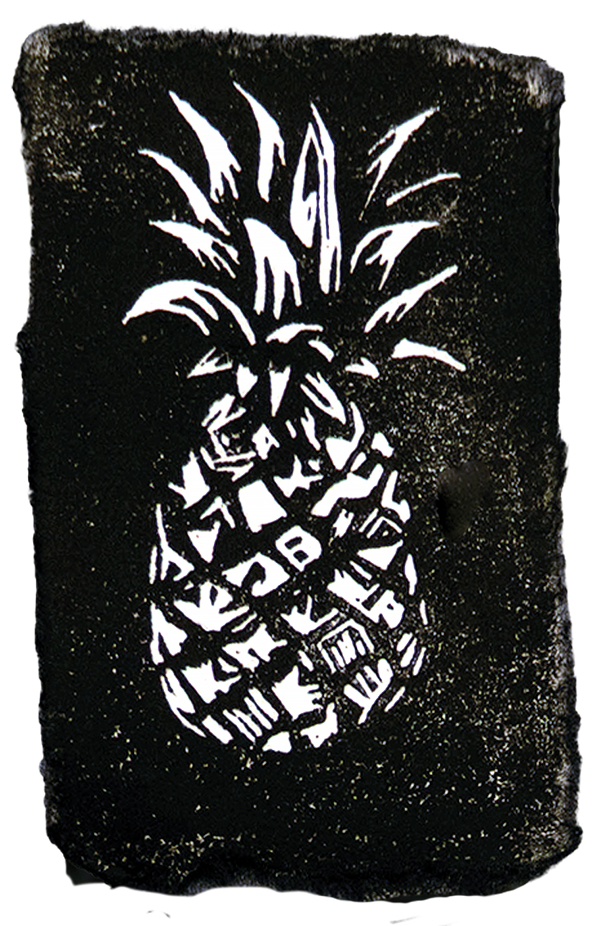
[.article__paragraph--cap][.small-caps]Two weeks after[.small-caps] October Seventh, I was in the car. The ground entry of the Israeli army into Gaza had not yet begun. Every day we learned of people who had gone from the status of missing to the status of dead or kidnapped. Every few hours a siren tore through the membrane surrounding reality. It once seemed – incorrectly – that this membrane could keep reality intact. People ran to shelters or, in their absence, to stairwells, and if they were outside they lay down on the road or on the sidewalk and covered their heads with their hands. I was driving and daydreaming at the same time, a state in which the imagination does what it wants with the mind, and the laws are the laws of the dream world even though you know it’s a dream. Your consciousness signals: “You know it’s not real. Don’t be confused.” But in those days what I had to remind myself was precisely the opposite: “You are not dreaming. You know this is real. Don’t be confused.” The radio, like the television, became an open channel that broadcast nonstop reports about missing persons and bodies and hostages and in between played sad songs as a lament. And suddenly my attention was caught by a man running on the side of the road. He was facing me; he ran toward me and then passed by and continued on, and all the while I followed him with my gaze to make sure that I was indeed correctly deciphering what I was seeing, because although I remained unmoved, another part of me was telling me that there was something wrong with this picture. Exercise clothes for his body, running shoes for his feet, and a pineapple resting on his head. A real man, a real pineapple. A scene that seems to have been taken out of a hallucination, but at that moment it struck me as something that was utterly explicable, because in an insane reality, what’s wrong with a man running on the side of the road with a pineapple on his head during a war?[.article__paragraph--cap]
I dwell on the man and the pineapple because it seems to me that what defines insanity is not the crazy details, but rather those same details that, within a ruptured reality, suddenly become normal and seem sane. Thus, just as a person visiting a psychiatric ward will not be dumbfounded if they stumble upon a conversation between two people in which one is telling the other, as a trivial matter, that the TV announcer spoke to them and ordered them to do something, so I was, for the very first time, encountering parts of myself that were newly indifferent to what in any other context would have raised a dozen red flags inside me. A friend told me she was looking into how she could get her hands on cyanide, in case Hamas or Hezbollah reach the center of the country. She’s not willing to go through something like that, she said, she’s not willing to be hunted down. And that seemed reasonable to me. A friend told me that he tested the escape routes from the balcony of their apartment on the second floor, that he practices this escape from the balcony to a tree in the yard of their building and from the tree to a stone wall, and that he taught his daughters how to do this. And this seemed to me a logical course of action. A friend placed a knife in every room of the house. If terrorists come, she said. And I thought to myself that in the event that such terrorists come to her home, a kitchen knife would not help her, yet her desire to have something to hold on to seemed not unreasonable to me.
This is a pattern that repeats itself among people in conflict, and certainly in war: the consciousness operates in survival mode, reality is misread, and people’s actions are limited to grabbing on to whatever is possible, sometimes while knowing – on one level or another – that the thing you’re grasping is nothing more than a twig floating in the ocean drowning you. South Africans, black and white, and Rwandans, Hutu and Tutsi, told me that they look at who they were then, in the midst of the conflict, as people who acted as automatons, who fulfilled a role assigned to them, and who did so with very little hesitation. Again and again, I was impressed by their ability, with the passing of time, to see that a similar pattern had controlled those who had been their enemies, something they couldn’t see during the conflict itself.
[.article__paragraph--cap][.small-caps]My jaw clenched,[.small-caps] my fingers stiffened, and my guts cramped until my inner speech became nothing more than a faint stutter. Beyond the limitations inherent in trying to convey an experience that is horrifically overwhelming, in particular to someone outside of it, within hours another difficulty became clear. The war was claiming not only lives and homes, physical and mental wholeness, and hope – it was also claiming complexity.[.article__paragraph--cap]
Murder and bombing and dismemberment and kidnapping and expulsion and rape and tunnels and abuse and missiles and refugee camps and hunger were like a sharp knife cutting reality up into rigid and opaque categories. Reality is normally a living, breathing thing, something layered and multifaceted. But thinking with these new categories required deleting and discarding huge amounts of raw material the mind transforms into “reality.” So much gets left out. It is difficult to characterize those mental fragments that wind up on the cutting-room floor of the mind, but it seems to me that it is everything not contained in a simple answer to this question: Are you Israeli-Jewish (or on the side of) or are you Palestinian (or on the side of)? Being a teacher or a doctor or a parent or a brother or a friend, one who likes music or computer games or sports or literature does not make the cut. All these remain outside the national-ideological costume that a person is now forced to wear. In this way, people become less human and more like caricatures.
In the same way, discourse also became a slave to the tyranny of simplification. It has become superficial and dogmatic, to the point that often it does not satisfy the most basic definition of communication: the exchange of information, ideas, and feelings. In this space, characterized by intellectual laziness, speech is not speech but a slap in the face, and language operates only in a collective register: those who are “in favor” of Israel are required to be shocked by what Hamas did on October Seventh (not difficult) but also to silence any criticism of the intensity of Israel’s military response in Gaza and turn a blind eye to the occupation (difficult). Those who are “in favor” of the Palestinians are required to be horrified by the war that Israel is waging on Gaza (not difficult) but also to minimize somehow the severity of the atrocities that took place on October Seventh (difficult), sometimes to the point of denying them.
For Israeli Jews and Palestinians, suspicion and self-righteousness dominate every exchange. Each of them remains in the state of mind of a touch-me-not, a climbing plant so sensitive that it is enough to pass one’s hand over its leaves for them to fold up and close. Both sides are so overwhelmed that they cannot tolerate complexity, since complexity requires the recognition of nuance and a willingness to contain contradictions. It requires questioning absolute statements and what appear to be unquestionable truths. Sometimes this touch-me-not state of mind also demands proof of loyalty or the search for its apparent absence. Any deviation from what fits neatly within the available categories is proof enough: there is a stain on this person. Time and time again, I found myself talking to Israeli Jews about the horrifying reality in Gaza and immediately being required to state that there can be no leniency in response to the acts of October Seventh, as if the mere inclusion of the Palestinian disaster in a conversation about ours minimizes the horror. Again and again, I found myself talking to Palestinians and seeing that my shock at October Seventh made them impatient, as if the crimes of the Israeli Jews over the years somehow justified what had been done. For many, both Jews and Palestinians, the very comparison between the suffering of one people and the suffering of another is offensive, unimaginable, intolerable, and whoever makes such a comparison is required to prove their innocence. In this context, innocence means not challenging these rigid categories.
However, there are situations in which a consciousness wishing to preserve its humanity must break away from the categories of “us” and “them,” must guard against such categorizing at all costs. These are situations when all a consciousness must do is call upon its power of empathy, which transcends the categories of “us” and “them.”
For example, a man of about thirty years old. Children and adults are gathered around him, one of whom takes a video and a little later sends it out to the world from Gaza. In the background, smoke billows from the aftermath of a bomb, but those present pay no attention to it, as if it were a trivial matter, as if people and bombs normally inhabit the same space. The man is holding a baby girl in his hands. Maybe it’s his daughter, we don’t know, but that’s the sense that comes through and that’s the expression on his face, the expression of a man who has lost everything. The baby is wearing a pink and gray outfit with white stars. The man holds her a little away from his body, his arms outstretched before him, the baby faces the people surrounding them. He is running through the rubble. Everything is gray, dusty. People approach them and retreat, approach and retreat. Two girls stand side by side, witnessing the event. They cry. No one goes to comfort the girls because all attention is on the man and the baby. The baby’s face is smooth, peaceful. Her eyes are closed. If it weren’t for her limbs hanging loosely from her like a doll and her head drooping to the side in an exaggerated manner, one might think she were asleep. The man shouts her name and age: Zeina (Arabic for “beautiful” or “beloved”)! Five months old! Zeina! A paramedic enters the frame and gently takes her from the man’s hands and enters an ambulance. He sits down, the baby in his lap. He gazes at the baby and strokes her head. He lifts one of her eyelids and looks, swallowing saliva. Checks her pulse and raises his head. He cradles her with immeasurable tenderness. She is dead.
For example, a seventeen-year-old boy. He wears a white tank top and shorts. His neck is adorned with a chain, and a butterfly is tattooed on the back of his right arm, as if there is room for beauty in all this. He has a hint of a mustache and is barefoot. The GoPro camera mounted on the head of a Hamas terrorist broadcasts the event live. From time to time, one of the terrorists enters the frame, sometimes the automatic weapon aimed at the boy pops in. They walk along the paths of the kibbutz, the boy first, followed by a group of terrorists. House by house, the boy is sent to call for the neighbors to come out, and when they come out at the sound of their neighbor’s familiar voice, the terrorists murder them. Right in front of his eyes. They arrive at another house. The boy tries to save the neighbors by pretending no one is there. “Where is everybody?” asks the terrorist. “I don’t know,” the boy replies, but they enter the house. The boy continues trying. He opens doors to rooms and closets, as if to offer proof that the place is empty, and all the while automatic guns are pointed at him. They reach the door of the safe room and the boy demonstrates that it is locked and then makes a there’s-nothing-to-do-nobody’s-here gesture. It’s hard to know if he believes he’ll be able to convince the armed men surrounding him, but he tries. But the terrorists press him, so he calls out to the neighbors: “Open the door! Come out!” The door doesn’t open. Maybe the people sitting inside know what’s going on. There’s no way to know. Several shots are fired at the door, behind which parents and three children sit on the floor in the dark, without making a sound, while the father holds the door handle in a desperate attempt to protect his family. But after the shots the door opens. The older daughter, eighteen, is lying in a pool of blood. She’s dead. One of the terrorists takes the mother’s phone, and from this moment on, the whole incident is broadcast live on her Facebook page. Their relatives watch on screens: the mother sitting on the floor with her two young children, who are crying and repeatedly asking if it’s true, is their sister really dead? The father sits next to them, his head drooping in the lifeless posture of a man who has given up, his hands covered in the blood of his dead daughter, who is still lying in a puddle of her own blood. He says nothing. A few hours later, the father will be kidnapped, while the boy next door, after finishing the role he is forced to perform as an accomplice of the murderers, will himself be murdered, along with his mother and her partner. The partner’s daughters will be kidnapped.
The man and the baby in Gaza embody the absolute arbitrariness of indifferent violence. In an act that could not be any less personal, and therein lies its monstrosity, the fate of human beings deemed dispensable is determined by aerial bombardment. Whereas the boy and the family embody the other end, the highly personal, since the horror occurring there happened in a space in which there was communication between the boy, the family, and the terrorists. Words, looks, physical gestures, breath were all exchanged. But regardless of these differences, complexity calls on us to let the story of the father holding his dead baby, or that of the boy who is forced to cooperate with the murder of his neighbors, bypass the rigid patterns of “us” and “them” and penetrate one’s consciousness. And it is then that empathy, which embraces complexity and rejects the limitations inherent in “us” and “them,” can arise. An absence of empathy is never limited to “them.” It infects that reference known as “us,” defiling and polluting it.
Too many Israeli Jews react by shrugging their shoulders at the indescribable suffering that Israel inflicts on Gaza. Too many Palestinians react by shrugging their shoulders at the indescribable suffering that Hamas inflicts on Israel. It’s senseless to claim that Jews and Palestinians were born defective, lacking the capacity for empathy. Empathy is an innate ability, but living in conflict, living life in survival mode, consumes it. By contrast, empathy is an ability that develops through the process of reconciliation, which, in addition to being life-enhancing and allowing normalcy, also grows and expands one’s consciousness.
[.article__paragraph--cap][.small-caps]Was it possible[.small-caps] to anticipate October Seventh? The painful answer is yes, for two reasons. One concerns Israeli-Jewish society, the other its relations with the Palestinians. And the two reasons are connected and feed off each other. Put differently: human consciousness is a slippery thing. It knows not only how to deceive others, it knows how to deceive itself.[.article__paragraph--cap]
First, Israeli-Jewish society. In terms of collective consciousness and collective emotional life, the months leading up to October Seventh set the stage. After four election campaigns, Netanyahu – a man lacking inhibition or moral backbone – was unable to form a government, so he made an alliance with racist, messianic, and anti-democratic parties on the right, establishing a government whose agenda was to annex Palestinian territories, suffocate (a far-from-perfect) Israeli democracy, affirm Jewish supremacy, and above all, help Netanyahu, who was accused of bribery, fraud, and breach of trust, to evade prison. Toward these ends, restraints were undone and inhibitions were eliminated. For forty weeks, protests that often swelled to hundreds of thousands filled the streets demanding a stop to the government’s actions. A smell of disintegration was in the air, the collapse of the most basic social agreements and of state institutions whose job is to serve the public but that were now oppressing it instead. In the most concrete sense, the state’s institutions were being smashed and desecrated. The state reneged on its responsibility toward its citizens, and on October Seventh it indeed became clear that those who were supposed to protect did not protect and those who were supposed to act did not act. Their attention, resources, and presence were elsewhere, serving other interests, not those of the public. In effect, the state had ceased to exist. Civil society took it upon itself to fill the void and functioned in place of the state until it somewhat returned to its senses, but the feeling of abandonment remained.
All this helps to explain why October Seventh could have been expected. Everything was visible: the trust that had cracked, the social fabric that had frayed, all the attention that had been given to the struggle over the character of the state. The gate to the soft underbelly of the State of Israel was wide open. All Hamas had to do was implement the plans it had been working on for years. Israeli-Jewish society was so self-absorbed and so stubborn in its unwillingness to look at the reality in which the Israeli-Palestinian conflict continued to fester that it did not anticipate what was coming. Dr. Hussein Fawzi, one of Egypt’s greatest intellectuals, said in a conversation with the Israeli writer Haim Guri at his home in Cairo in December 1977, shortly after Sadat’s visit to Jerusalem: “If Israeli intelligence had read Egyptian poetry written after ’67, it would have known that October ’73 was inevitable. Any good intelligence officer must read poetry.” But how could Israeli Jews read Palestinian poetry if they wouldn’t even look at Palestinians to begin with?
Second, the relationship of Israeli-Jewish society with the Palestinians. In an essay titled “This Was Auschwitz,” Primo Levi writes: “We know other definitions of fascism, but it seems more precise, and more consistent with our specific experience, to define as fascist all regimes and only those which deny, in theory or in practice, a basic equality of rights among all human beings.” During the months of the government-led judicial coup and the struggle against it, it became clear, once again, that the Israeli-Jewish mainstream was not interested in engaging with the Israeli-Palestinian conflict, believing that it could afford not to engage with it. At the demonstrations in favor of (a flawed but still standing) democracy, many demonstrators found it difficult to accept the call to look at the occupation for what it is, or, in other words, to recognize that a democracy that holds millions without rights is not really a democracy, and that it was the occupation that enabled the judicial overhaul. Democracy and occupation cannot coexist; so it should come as no surprise that the racist-messianic camp sought to abolish the former. In this regard, it can be said that the occupation conquered Israel.
[.article__paragraph--cap][.small-caps]Sometimes a lake[.small-caps] speaks, getting wet even those who don’t enter it. That’s what Lake Kivu did to me. I first got to know the Rwandan side of it. But it was when I got to know it from the other side, in the Democratic Republic of Congo, that it stayed with me, just as bits of reality sometimes remain because they give voice to what has been silenced. Every time I experience the Israeli-Jewish insistence on suppressing the conflict, I return to the lake, whose incredible beauty brings to mind nymphs and heavenly beings. Its presence exceeds that of a body of water, even a large one, and possesses mythical qualities. The residents of the area treat the lake with awe, as a silent giant that must be dealt with carefully, lest it wake from its slumber. A little after dark, dozens of long, narrow fishing boats pull out of their anchorage, flickering like birthday candles on a large, endless cake. Kerosene lamps mounted on them function like flutes from Hamelin, attracting tiny fish like the piper summoned rats. The fish are gathered up in nets and spread out the next day on land to dry in the sun and be sold to those who can afford them.[.article__paragraph--cap]
“Can you swim in the lake?” I asked a colleague after a few days there, because I hadn’t seen anyone in the water.
“Of course you can,” he replied.
But a few more days passed, and I still hadn’t seen anyone in the lake. It dawned on me that I hadn’t asked the right question. After all, the answer I received was a literal answer to the question I had asked. You can indeed swim in the lake. No one will stop you.
“Do people swim in the lake?” I asked again, rephrasing my question.
“No. A minute or two after entering the water, the methane begins to take effect. You feel very tired. Your arms and legs become heavy, and you can’t swim. You can even drown.”
In the lakeside city of Bukavu and in nearby villages as well, the evil wind, mazuku in Swahili, comes up occasionally in conversation. Someone mentions a person who fell asleep by the lake and died in his sleep because of the mazuku. Another talks about the mazuku that may or may not come, only God knows. I collected such sayings. At first, I filed them away in my mind and in my notebook for future contemplation, as I do in situations when I only have time to act, not process. Later on I did some reading and found out that until the 1980s, people – mainly the wazungu (“whites” in Swahili), of course – used the term to refer to a local legend, according to which every few hundred years, without warning, an evil wind would rise from the lake and kill all the surrounding humans and animals. As long as it was possible to treat the mazuku as a legend, and especially one that connects the physical world to the world of spirits, a casual approach to this mythological threat from the lake seemed reasonable.
However, based on additional reading and conversations with local colleagues, professionals, and representatives of international aid organizations, I learned that the picture had changed. The mazuku passed from the realm of legend to that of science in 1984, when thirty-seven people died, just like that, near Lake Monoun in Cameroon. Two years later, 1,700 people died in the same mysterious way in a village near Lake Nyos, also in Cameroon. A seventy-eight-foot-high tsunami brought attention to the lake as the source of the calamity, if not as the actual cause of death. The dead bodies, which showed signs of suffocation, pointed to the cause: the waters of the lakes – now known as “overturning lakes” prone to limnic eruptions – are brimming with carbon dioxide. Volcanic activity or even a particularly strong storm or landslide can cause the gas to be released into the air. Such a cloud, odorless and colorless, kills all humans and animals nearby. Indeed, an evil wind.
The solution to the mystery of the mazuku came from the west of the continent, from Cameroon, where work has since been done to drain the carbon dioxide. The two lakes are now considered safe. In contrast, Lake Kivu remains a particularly daunting instance of this phenomenon. It is much larger than the two Cameroonian lakes, and its carbon dioxide deposits are much greater. If that weren’t enough, it is also saturated with methane, another deadly gas that is colorless and odorless as well. Two million people live around this ticking time bomb called Lake Kivu. If it overturns, they will die.
And yet they live there. How can that be? The first answer is related to the financial situation of most of the people who live there. Poverty reduces a person’s degree of freedom, in this case their ability to choose where to live. However, this is not a sufficient answer because there are people of means living in the area too. They could move away, but they choose to remain. So it may be that the reason they continue to live near this volatile lake is the same reason we in Israel-Palestine continue to live with the ticking time bomb of the conflict: we repress reality.
I would like to mention in this context that on the Rwandan side of the lake – a country where, unlike the Democratic Republic of Congo, there is significant government oversight – work has been done to convert the toxic gas reserves into energy. That is, they observed the reality, defined the problem, and dealt with it by turning something with destructive potential into something positive. There is such a thing as the opposite of repression. Well, on October Seventh our lake – that is, the conflict – burst open. This thing that most Israeli Jews did not want to see, or saw but thought they could control, has exploded in our faces. If there is anything positive that can be said about what has happened since then, it is that the repression is gone. The elephant is in the room; you can see him, and you can feel the room shake with his every step.
[.article__paragraph--cap][.small-caps]A few months into[.small-caps] the war, a friend told me: “In the first month after October Seventh, a terrible thing happened to me. I wanted everyone in Gaza to die. I looked in the mirror and saw something terrible. I saw who I had become.”[.article__paragraph--cap]
Conflict and its most extreme manifestation, war, bring out the bad in people, not the good. This is an eternal truth in the sense that it is true for all societies, at all times and in all places. War releases inhibitions and allows raw, primal impulses to dominate completely. War perfects the mental acrobatics required to justify this way of being, to look away from the results and be moved by the only thing that human consciousness can, in its distress, grasp while fighting: manifestations of heroism and the unity of “us.”
But the cannons will fall silent. The war will end. All wars end. And when it ends, we will be left with its remains: with the dead, injured, and traumatized, and with hollow slogans like “total victory” and “from the river to the sea.” And in the silence that follows the storm, both sides will come to see that they are poorer in their humanity. They will be forced to break through the fortified walls they have built around their consciousness, just as humans in every time and place have had to, walls whose impregnability was well described by Marek Edelman, one of the commanders of the Warsaw Ghetto Uprising. Three decades later, by which time he was an innovative cardiologist in Poland, he told the journalist and writer Hanna Krall about the transports in the ghetto. He related how he stood for six weeks, day after day, at the entrance to the Umschlagplatz (the transit station), while four hundred thousand people passed him on their way to the trains. Edelman said that the Germans passed out “numbers of life,” and whoever received one was guaranteed to stay off the train. Thus, all the people in the ghetto had only one goal: to get such a number. But then the Germans also took those who had a number. Then workers in the factories who knew how to use a sewing machine were allowed to live, so people were willing to pay any amount for one, because they believed that it had the power to save their lives. But a little later, the Germans also took those who managed to get a sewing machine. In the end, says Edelman, the Germans announced that they would distribute bread to anyone who volunteered to board a train to work. “Do you know what bread in the ghetto meant?” he asked Krall. “Because if you don’t know, you will never understand why thousands would voluntarily choose to travel with this bread to Treblinka.” What Edelman relates is unimaginable: people stood in line in groups of four, took the bread, and boarded the trains. However, what is even more amazing, more impossible to comprehend, is that in 1942 they sent someone from the ghetto to figure out what was happening with the shipments. He returned and reported that every day a train full of people would enter Treblinka and return empty, and that there was no food supply reaching the camp. He didn’t merely tell them; these things were also published in the ghetto newspaper. But people didn’t believe the things they were told to their face, nor did they believe the article. “Are you crazy? They’re sending us with bread to die? They’re willing to waste all that bread?” The lack of food was so severe, consciousness took its form. A situation where someone would waste bread could not pass the gate of such a consciousness, much like the possibility of reconciliation is stopped at the gate of a consciousness that is shaped by and only knows conflict. The residents of the Warsaw Ghetto were unfortunately doomed no matter what they did. Take the bread, don’t take the bread, you are going to eventually wind up on a train. But in our case, there is a way out. There is a key to the gate of our consciousness. We must accept the key of reconciliation to release ourselves from the prison of conflict in which we have been confined for too long.
Since the release of On Reconciliation in Hebrew, I have been giving lectures and workshops on the subject to audiences with diverse political and religious views. Often, I am asked by someone in the audience: “Do you think we too will have to go through a disaster before we get our act together?” Before October Seventh I would answer: “I don’t know, I hope not.” But here it is, a disaster has happened to us – to Israelis and to Palestinians. What happens in the absence of reconciliation has happened to us.
[.article__paragraph--cap][.small-caps]A few weeks into[.small-caps] the war, still cloaked in muteness, I dreamed that I was kidnapped to Gaza. In my dream I tried to convince my captors to give me a notebook and something to write with.[.article__paragraph--cap]
“Every day I’ll let you see what I write,” I offered, in an attempt to allay their suspicions in the face of my strange request. “That way you’ll know I’m not revealing anything to anyone,” I told them. “You must have someone here who reads Hebrew,” I continued in these surreal negotiations taking place in the damp tunnels, illuminated by a faint light. “And if not, I’ll write in English.”
My sense that in some way, however much imagined, writing would save me, brought words back to me and me to them. I was returned to writing, which at its best is a container for complexity, for humanity, for life. Those materials are the building blocks of the space that has disappeared, and those are the materials out of which it will be rebuilt. Eternal truths are carved on these building blocks: Human beings are part of their group of affiliation, and they are also singular, unique individuals. Nothing good will grow from the subjugation of a person, just as nothing good will grow from the subjugation of a society. The consciousness of individuals can transform completely and so can the consciousness of societies. The South Africans, the Rwandans, the Israelis and the Egyptians, the French and the Germans, the Irish and the British, and even the Germans and the Jews did it – it is possible.
The darkness of war makes it difficult to read the writing on these building blocks, and the truths written on them are difficult to digest, since they undermine war’s basic assumptions and work against its expanding, seemingly inevitable nature. War, like a disease, occupies one’s entire consciousness and claims it as its own. But the darkness will fade and the light will shine again. Because conflicts end. It’s in their nature. The only question is when, and at what cost, and on which side we will find ourselves at the end: the side that viewed conflict as an inescapable necessity, or the side that imagined a future in which reconciliation replaces conflict, and worked to make this a reality.
[.smalltext]Translated from the Hebrew by Todd Hasak-Lowy.[.smalltext]