Reflection
Hope Lives On When Optimism Dies
Hope is a practice that we cultivate with the confident belief that Christ is making all things new.
July 12, 2026
Try 3 months of unlimited access. Start your FREE TRIAL today. Cancel anytime.
START FREE TRIAL NOWHope Lives On When Optimism Dies
Hope is a practice that we cultivate with the confident belief that Christ is making all things new.
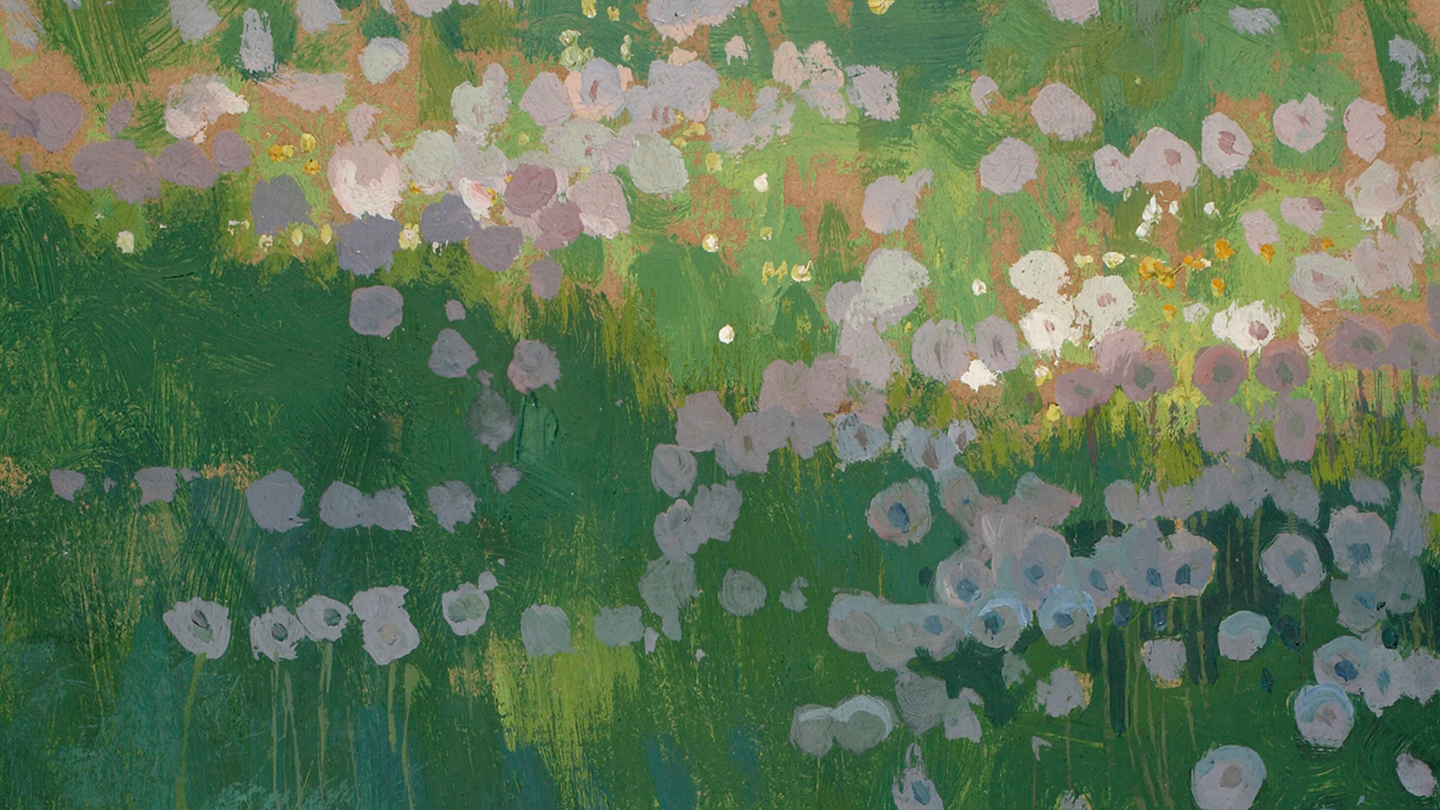
Jan Stanisławski, Meadow (Dandelions), oil on panel, c. 1900. [.smalltext]Wikimedia Commons (public domain).[.smalltext]
[.article__paragraph--cap][.small-caps]Hope is many things.[.small-caps] Hope is a vision for tomorrow that doesn’t allow the chaos of today to overshadow it. Hope asserts the goodness of the future, even when the future feels unimaginable. Hope is a leap in the dark, the deep belief that today’s troubles will not define the future, however much they may trouble us today. Hope is rising out of bed in the morning and taking that step to the block. Hope is defiance of sin, evil, and sorrow. Hope asserts that “it is good!” Hope is not the same thing as a positive outlook or optimism. Hope can be steely-faced and realistic about a potential negative outcome of any particular event, but it denies the finality of that event. Even in the death of a loved one, there is hope for the resurrection.[.article__paragraph--cap]
Hope believes that God is making all things new through the power of his resurrection. God is making all things new, redeeming all things, healing, which doesn’t mean that no harm will occur or no suffering from our mistakes. It means that suffering will be made perfect through Christ’s work. Somehow. “Somehow” is the language of hope. “Somehow” defies the finality of the world. Hope drags you through discouragement and despair. Hope is the embodiment of possibility. Hope refuses to allow despair to have the last word. Hope is an obligation that demands much of you, it requires the fortitude to endure when others invite you. To surrender.
But hope is also a form of surrendering, surrendering to the power of God to redeem this life, your life. Hope does not deny the reality of suffering, but only its final power. Hope is not dependent on information. It does not require certainty but calls us on to perseverance in the face of adversity and the unknown. Hope is a virtue because it must be cultivated and enacted. It requires practice and conscious decisions. Some people are temperamentally optimistic, but optimism is not the same thing as hope. Hope lives on even when optimism dies. The basis of optimism is a positive assumption about the outcomes of situations, which is not grounded in the nature of reality. The basis of hope is the life, death, and resurrection of Christ Jesus, which is the ground of reality.
Hope is like faith in that it involves a confidence in something unseen, but whereas faith involves a confidence in someone unseen, hope is in an unseen future fulfillment. It is a specific orientation toward the future. As Josef Pieper writes in Faith, Hope, Love: “Hope, like love, is one of the very simple, primordial dispositions of the living person. In hope, man reaches ‘with restless heart, with confidence and patient expectation, toward ... the arduous ‘not yet’ of fulfillment, whether natural or supernatural.” Pieper makes the distinction between natural and supernatural hope, but I would add that the ultimate form of hope is hope in Christ’s second coming and the resurrection of the dead.
All other forms of hope, supernatural and natural, are merely shadows of that one essential hope. A natural hope would be the hope to get a raise in your job, whereas a supernatural hope might be to see a loved one healed of a sickness. There is nothing wrong with natural hopes. We all have them, but Pieper notes that ultimately, “hope, as a virtue, is something wholly supernatural.” I take him to mean here that even natural hope has its final basis in the supernatural hope in a loving God.
A key to hope is this concept of “not yet,” the patient waiting for fulfillment of some rightly desired thing. There is something about this waiting that is actually ennobling: “Hope, as the lasting elevation of man’s being, cannot exist except from, through and in Christ.” Divine hope is not only the “not yet” waiting for fulfillment, it is the current fulfillment of what we were created for! We were created to hope in Christ, for “Christ is the actual foundation of hope.” In hope we enact our faith in the One who is worthy of hope and we practice fortitude, enduring the “not yet” with courage and driven by love.
We can see an example of hope modeled in Paul’s writing in Romans chapter 8 verses 22–25:
For we know that the whole creation has been groaning together in the pains of childbirth until now. And not only the creation, but we ourselves, who have the firstfruits of the Spirit, groan inwardly as we wait eagerly for adoption as sons, the redemption of our bodies. For in this hope we were saved. Now hope that is seen is not hope. For who hopes for what he sees? But if we hope for what we do not see, we wait for it with patience.
For Paul, our hope is in the redemption of our bodies through Christ’s work on the cross, a hope even creation longs for. Note that there is an element of uncertainty in this hope. Hope is veiled in an unknown future. We don’t know when fulfillment will occur, so we must “wait for it with patience.”
That is what hope looks like. Waiting with patience. Even though we don’t know when this redemption will occur, we can be comforted that it will occur. Paul in Philippians 1:6 writes, “And I am sure of this, that he who began a good work in you will bring it to completion at the day of Jesus Christ.” Paul said these words in hope. He was “sure” that God would complete his good work in them, saving them to the day of Christ’s coming, and that surety rested on hope in God through the “not yet.”
Hope is not primarily a feeling, although it sometimes may be that. But the virtue of hope is an action, a practice that we cultivate over time and through the work of the Holy Spirit by making the decision to live in relation to the future with the confident belief that Christ is returning with justice, Christ is making all things new, and Christ will resurrect our bodies from the dead. We make decisions and take actions based on that hope, not despairing regardless of what the world or our feelings predict.
One practical way we practice hope is through prayer: “Prayer and hope are naturally ordered to each other. Prayer is the expression and proclamation of hope.” As we pray for our needs and the needs of others, we allow God to show his ability to meet our needs according to his perfect will and we learn to wait in hope for the fulfillment of our desires.
Hope is deeply related to the virtue of fortitude, because hope is what gives fortitude the strength to carry on. Hope says that tomorrow is worth fighting for, despite all contrary evidence. And there will be contrary evidence. Life inevitably involves a great deal of suffering, and hope says there is meaning in that suffering, even if that meaning cannot be understood this side of paradise.
[.smalltext]From To Live Well by Alan Noble. Copyright © 2026 by Alan Noble. Used by permission of InterVarsity Press.[.smalltext]