Essay
Cultivating a Rooted Mind
Wendell Berry invites us to give up the notion that the grass is always greener somewhere else.
November 30, 2026
Try 3 months of unlimited access. Start your FREE TRIAL today. Cancel anytime.
START FREE TRIAL NOWCultivating a Rooted Mind
Wendell Berry invites us to give up the notion that the grass is always greener somewhere else.
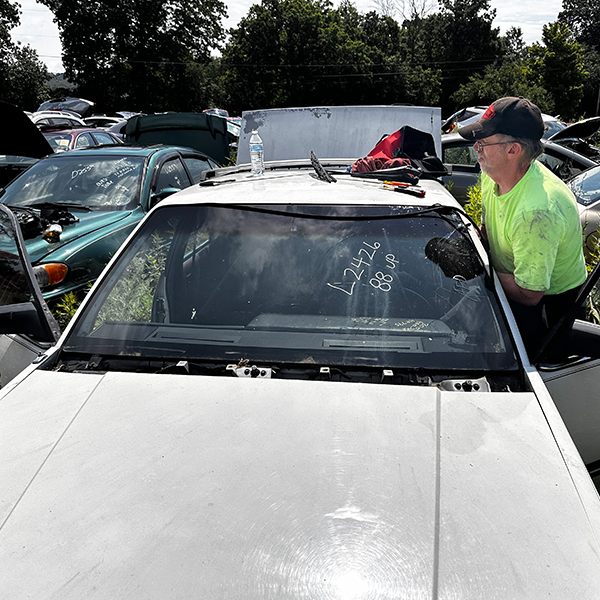
[.smalltext]Photograph by Valery Prokhozhy / Alamy Stock.[.smalltext]
[.article__paragraph--cap][.small-caps]We can describe Wendell Berry’s[.small-caps] decision to leave New York and return to Henry County, Kentucky, as a homecoming, a return to family and to the place of his birth. But to leave it at that is to miss the profound conversion of mind and heart that his decision required, a conversion that he says amounted to his being “born again.” If the goal was simply to go home, then those of us who don’t have agreeable families or birthplaces are off the hook.[.article__paragraph--cap]
But if the goal was to cultivate in himself the sort of person that nurtures the places and the lives that nurture him, what Wendell describes as a lifelong apprenticeship to creation’s life-building ways, then we are faced with a task that is both compelling and abiding for anyone. Exploited and degraded ecosystems, along with impoverished and abandoned neighborhoods, suggest that the cultivation of rooted minds may be more important than ever.
It is a mistake to assume that to become rooted one must become a farmer. Wendell was clear about this, knowing that it takes a unique, capacious intelligence, and a diverse set of practical skills, to farm well. Few people have it. He was also clear about the fact that one does not need to return and forever stay in the place of one’s birth. The call to become rooted is a call to live wherever one is in ways that promote the mutual flourishing of the creatures that live there. It is a call that applies as much to people living in cities as it does to people living in the country. The question, always, is whether we – as individuals and as communities – are eating, building, educating, shopping, and entertaining ourselves in ways that nurture the places and the fellow creatures that sustain us.
Wendell described his conversion in his 1969 essay “A Native Hill,” when he contrasted living in a place by coincidence or accident and living in a place by choice. His whole manner of being changed when he made the commitment to stay put in Henry County and try to become a healing and reconciling presence. It wasn’t an altogether happy commitment because he knew he was inheriting an arrogant history of violence in which his ancestors did much to abuse the land, its creatures, and the people who lived there, a history that was the source of considerable personal pain. Admitting this inheritance also meant asking about the inheritance he will be leaving his descendants.
The decision to stay and accept responsibility for the future of this place meant that he would now try to “see the place with a new clarity and new understanding and a new seriousness.” Upon first returning, Wendell thought he already knew where he was. After all, he was born and had been raised there. He had even been taught to know his place in intricate detail, able to recall “a hundred different kinds of daylight.” But he was wrong. By learning to walk, look, listen, smell, and touch with greater attention and patience, he became more alive to his place, and thus began to discern its real abundance and possibilities. He found he didn’t know the names of things. He couldn’t articulate to himself all that he was encountering through observation and memory.
What he now realized is that he needed a rooted mind. His description of this mind is arresting. The more detailed and precise his speaking became, the more it seemed like his mind was being sent into the place “like a live root system.” He says, “my mind became the root of my life rather than its sublimation. I came to see myself as growing out of the earth like the other native animals and plants. I saw my body and my daily motions as brief coherences and articulations of the energy of the place, which would fall back into it like leaves in the autumn.” The effort to root his mind entailed “a good deal of pain” because it went so contrary to the dominant models of how to be in a place, models that reflected either a contentious habitus that leaves destruction in its wake or a tourist mentality that extracts from places the best that they can offer.
Wendell understood that a rootless mind inevitably leads to the unmaking of this created and creative world. “Window Poem 19,” published in 1968, made the point succinctly:
Within things
there is peace, and at the end
of things. It is the mind
turned away from the world
that turns against it.
Few people know this peace. The craving for a Silicon Valley–promised “friction-free world,” and the desire to inhabit a virtual world rather than the creaturely world of earthworms, mosquitos, sunflowers, chickens, and often disagreeable people, suggest a pervasive discontent with finitude, fallibility, and with our necessary participation in processes of germination and decay, life and death. I now wonder if Wendell anticipated that the rootlessness in evidence then would eventually lead to the current (idiotic) drive to establish colonies for human (un)settlement on Mars. If we cannot find our contentment in this beautiful, fragrant, delicious, and sonorous world, a world entirely suited to our flourishing, what makes us think we can live well anywhere else? A change in location solves nothing if our minds and hearts have not been transformed to become courteous and compassionate to each other.
Wendell’s decision to root himself in Henry County provoked considerable derision from New York’s literary establishment. The derision may have tamed a bit since then, but there is still a lot of doubt about the value of seeking a rooted life. What if I don’t have a family farm to return to? What if I am one of the tens of millions of workers who are now classified as either adjunct, temporary, or “disposable,” and so must be prepared to move to another job or place at a moment’s notice? Moreover, and remembering that Jesus had no place to lay his head (Matt. 8:20), shouldn’t conscientious, cosmopolitan people affirm mobility as a legitimate, even praiseworthy, way to work out their vocations and identities?
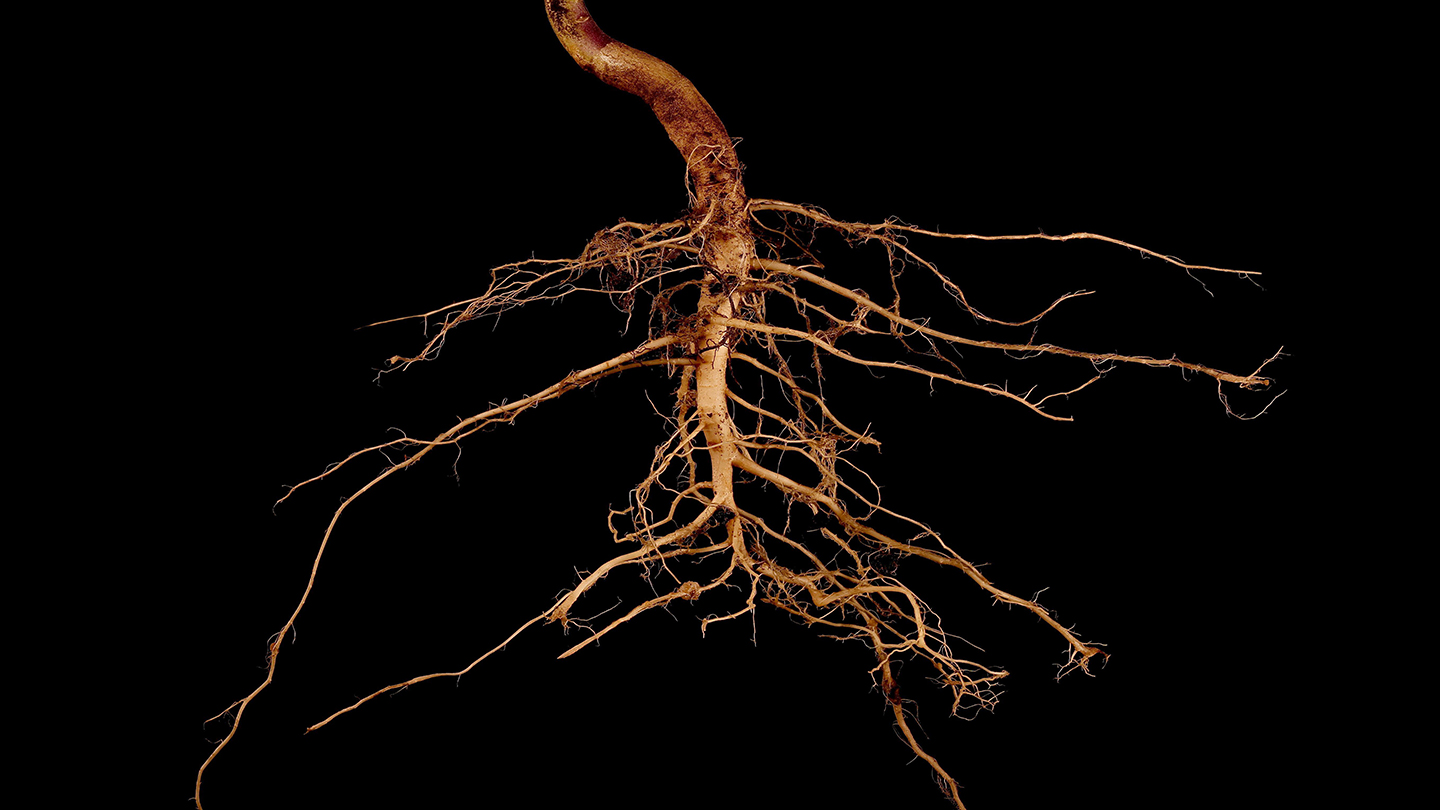
A great deal depends on how we think about plants in general and roots in particular. The first thing to say is that without plants, the food chains that support most all terrestrial life would vanish. Plants make up 80 percent of the mass of all life on Earth. As described by Merlin Sheldrake in his eye-opening, mind-expanding book Entangled Life: How Fungi Make Our Worlds, Change Our Minds & Shape Our Futures, plants don’t simply extract nutrients from the ground through their roots. Photosynthesis enables plants to harvest carbon from the atmosphere, transform it into sugars and lipids, and then send these energy-rich carbon compounds into the ground through roots that are in a bewildering array of relationships with mycorrhizal fungi that live on and within roots, root hairs, and root tips. Roots are like feeding stations in the soil that simultaneously nurture the plant above and the soil microbiome beneath.
It has taken scientists a long time to appreciate how vast, diverse, and intimate the relationships are between plants and fungi. Without these relationships, the soil, along with the billions of bacteria, protists, insects, and arthropods that live within a mere shovelful of it would not be fed or be fertile. Put another way, apart from the mutuality between plants, fungi, and soil, terrestrial life simply would not exist. We’d all die.
Roots are never alone or in isolation. Instead, they are members of complex communities of life below the soil surface that make all the life above ground possible. Roots are at the heart of the processes nurturing the world that nurtures us, and the mycelial networks that live in, through, and around them constitute the communal bases of our shared life. In her book Finding the Mother Tree: Discovering the Wisdom of the Forest, Suzanne Simard described root communities as making what she called a forest intelligence: “Plants are attuned to one another’s strengths and weaknesses, elegantly giving and taking to attain exquisite balance.” In their chemical communication with each other, the trees in a forest realize a distributed, communal intelligence.
This brief characterization of the lives of roots enables us to see that the invitation to cultivate a rooted mind is not an invitation to immobility or stasis, as if “staying put” would solve our problems. Nor is it to suggest that human life is reducible to plant life. It is, instead, an invitation to learn the skills and habits of mutual, communal nurture. It is to give up the notion that the grass is always greener somewhere else and recognize that verdant fields are the consequence of a gardening God who cares for our every need. Insofar as people nourish the communities and the places that nourish them, they are participating in what Hildegard of Bingen called the divine viriditas, the greening and animating power, that circulates through every living thing.
It is not a simple or an easy thing to be a participating member in the world’s liveliness. In part, this is because our minds often function by imposition, as when people a priori decide what they expect from their community or place before having come wholeheartedly into the presence of where they are and who they are with. This is what Wendell meant when he spoke of a mind that sublimates reality: what I see and know is what I want to see and know. It takes a lot of time and patience to listen to a place and community, and thereby better appreciate the limits and the potential of where we are and who we are with. It takes commitment and a good deal of mercy to become a positive contributing member in a community.
Wendell discovered that to change his mind he also needed to change his position. He couldn’t stay in his house and garden, even his farm fields, because these places, as pleasing as they might be, bore witness to histories of contention, conquest, and destructiveness. He needed to go to the woods and there come to the realization of his smallness in the sacred membership of life. He needed to free his mind of the urge to make something of it, as if the forest wasn’t already doing the great work of making itself. He needed to learn the humility that listens to fellow creatures and is grateful for what it receives. He called this the work of becoming native-born:
As its sounds come into his hearing, and its odors come into his nostrils, then he may come into its presence as he never has before, and he will arrive in his place and will want to remain. His life will grow out of the ground like the other lives of the place, and take its place among them. He will be with them – neither ignorant of them, nor indifferent to them, nor against them – and so at last will grow to be native-born.
Of course, there is no guarantee that simply by going into a forest, a conversion of mind will follow. Histories of forest mining and mismanagement are the proof of that. The conversion of mind that we need can also occur by entering a derelict neighborhood, and there learning to come to terms with histories of greed and maldevelopment, or by entering falling-apart school buildings, and there learning to come to terms with municipal priorities and policies that misvalue and mistreat our community’s children. The “forest” that humbles and reorients the mind, in other words, can take multiple urban and suburban forms, provided that people speak honestly with each other about the history of this community’s coming to be and its current state. When that happens, people will be in a better position to nurture the social and ecological communities of life that nurture them.
I suspect that one of the reasons people often resist being reminded of their rooted condition is that it is difficult to come to terms with their need. The needs are clearly physiological and ecological, and are revealed every time we eat, drink, and breathe. But they are also social, as when we rely on communities to raise us, teach and befriend us. None of us live out of ourselves or can thrive alone. What will it take for us to begin the detailed accounting of the many proximate human and more-than-human lives that inspire and feed our being? What will we do about it?
In his poem “The Mad Farmer, Flying the Flag of Rough Branch, Secedes from the Union,” published in 1994, Berry envisions rootedness as an improvisational, communal dance that enfolds people, flocks, herds, gardens, fields, and forests. In this dance, people learn the arts of giving and taking, noticing and responding, building and repairing. He asks us to:
Come into the life of the body, the one body
Granted to you in all the history of time.
Come into the body’s economy, its daily work,
And its replenishment at mealtimes at night.
Come into the body’s thanksgiving, when it knows
And acknowledges itself a living soul.
Come into the dance of the community, joined
In a circle, hand in hand, the dance of the eternal
Love of women and men for one another
And of neighbors and friends for one another.
We can understand Wendell’s invitation to cultivate a rooted mind as an invitation to (literally) return to our senses, and in doing so come to a more honest appreciation of the material conditions of our life together. Social needs, beginning with intimate touch and extending to our capacities for language and education and friendship, confirm that every human life is always a communal life.
There is no such thing as a rootless or disentangled life. To live is to participate in what Wendell called the membership of people, fellow creatures, and the whole creation. To live well is to practice the arts of attention, patience, gentleness, compassion, skilled making and repair. These are each practical and peaceable arts that reveal themselves in just economies, beautiful homes and neighborhoods, well-supported schools, and holistic health care.