Essay
Why Write Letters to Friends
Letter writing is the only device combining solitude with good company.
August 29, 2026
Try 3 months of unlimited access. Start your FREE TRIAL today. Cancel anytime.
START FREE TRIAL NOWWhy Write Letters to Friends
Letter writing is the only device combining solitude with good company.
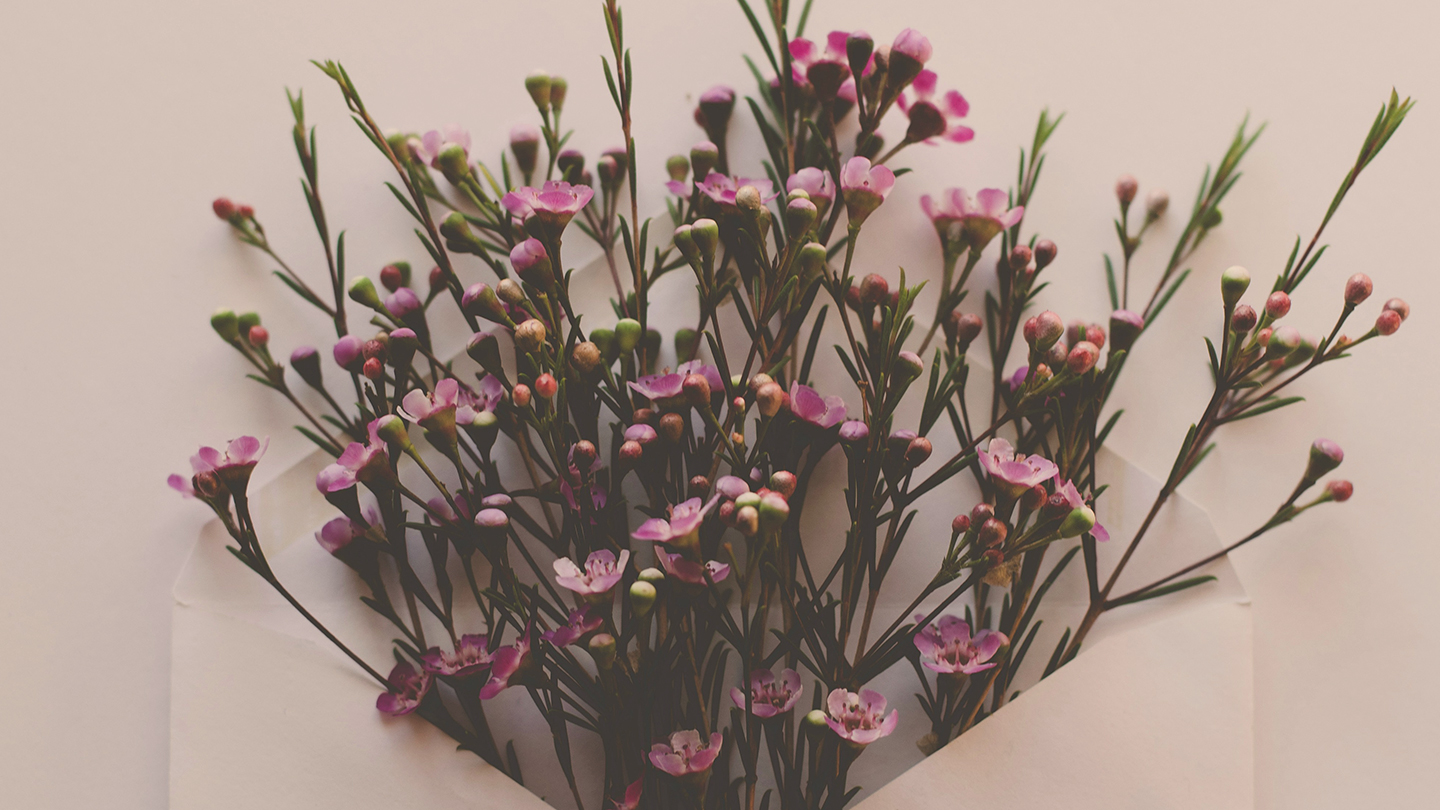
[.smalltext]Photograph by sixteen miles out / Unsplash.[.smalltext]
[.article__paragraph--cap][.small-caps]When I was in[.small-caps] high school, an aunt introduced me to a young friend of hers (in that merry friend-matchmaking way aunts have), and after meeting once, the girl and I began a correspondence. I wrote from the high desert suburbs in Spokane to her at her family’s small-town farm in the Midwest. She was bookish like me, and also very sharp and discerning; I wanted to be worthy of her friendship. What a relief when, after my first letter, she noted in her response that I could write interesting letters. I was glad I’d passed the test, and happy to oblige. After all, when writing a long letter, it is best to have something interesting to say, or at least to say a bit of nothing in an entertaining way.[.article__paragraph--cap]
The following year was one of gratifying correspondence, a conversation with the best company. Several times since I’ve pursued and deepened friendships through long-form correspondence. With two particular friends I started a letter notebook (we got the idea from one of their mothers, who did the same with some of her friends); each of us would take turns writing letter entries in the notebook, then would send it to the next friend in line. Delightfully, when the notebook arrived we could check not only the new entries, but also the marginalia on our own writing. Sometimes we’d include a recipe, a book list, or a program or brochure from some event we’d attended.
Letters had always been a consistent part of my life from the time I had got beyond the phase of, “How are you? I am in grade three now. Do you still have a hamster?” This was perhaps partly because of attentive aunts and grandparents who wrote regular letters to me, but also my own melancholic nature and my family’s periodic moves. I enjoyed rich email exchanges and chats on Facebook in high school, but I kept up letter writing when I reached college. “Letter writing is the only device combining solitude with good company,” Lord Byron is supposed to have said.
Humans need conversation. You can only go so far with a dog or horse, as noble as those animals are. We can only truly love persons. There’s been many an evening when I’ve soothed the ache of missing a friend’s presence by writing a letter to her. In writing, I can attend to friendship within that solitude, and in turn the letter will require unstinting attention: In the hurly-burly of life, sometimes it’s hard to find a quiet place to talk with a friend, away from other people, away from the duties of work and childrearing and more that press in upon two kindred souls. But when I send a letter, I know I can be heard.
To be human is to be in a physical form and bound by time. So, too, the letter must voyage through time and space to reach its port. Thus the joys of letter writing include the tangible pleasures of being in particular places and times: very often the marks of the place and time of writing show in the letter itself. The handwriting will change if I begin a letter in a coffee shop, continue writing on a train or in a car, and finish hurriedly at the breakfast table before the mail comes. A typed text lacks the texture of the wear and tear of time, of heat and moisture, of tea and tears.
One of my aunts, whom I think of as my magical aunt, has an especially beautiful hand, and she has always written out verses and small notes to her nieces and nephews and children. To receive a note from her is always a precious gift (my hand has improved, but I still wish it were as lovely as hers). She would send her own friends letters written on programs, brochures, bulletins. I thought this charming – and a good way to save on paper! – so I wrote to a friend on a used-but-good-condition envelope. She sent a package back with stationery and a note: “You must be out!”
I type messages and emails too, and I can do so more quickly and cleanly than if I were writing by hand. But I treasure the attentive space created by writing a letter. It may be more untidy; I cannot edit as I go without restarting or crossing out words, and there may be misspellings. But I can also add decorations, flourishes, and marginalia.
The letter writer risks vulnerability, too: we may write fewer words than if we were typing, but weigh them more, since we can’t simply dash off our thoughts and publish them in a click. And our hands reveal more of ourselves than a typed text can: Perhaps part of a letter is written in agitation or in ecstasy. Perhaps one is nursing a baby while one writes, or walking the aisles of a classroom with a clipboard, overseeing a math test (both occasions in which I have written letters). Coffee or food stains tell more of the story. My friends of the letter notebook and I loved Billy Collins’s poem in praise of “Marginalia,” which ended with the narrator finding in a library copy of Catcher in the Rye:
a few greasy looking smears
and next to them, written in soft pencil—
by a beautiful girl, I could tell,
whom I would never meet—
“Pardon the egg salad stains, but I’m in love.”
I’ve written and received letters dashed off with a Bic pen on lined wide-ruled paper, but also silky cursive letters written with a fountain pen. I’ve made my own envelopes, embroidered my own cards, copied down poems, pressed flowers and petals. I’ve received letters with saint cards, and postcards from Oxford and Walsingham and the Grand Canyon and little towns all over the country. I’ve imitated the capital Js and Ts that I found so beautiful in the script of another friend’s hand.
When we got married, I wrote out all our wedding invitations (something over one hundred) by hand on blank notecards that I then stamped with a tree design. It seemed right to mark with my own hand, these invitations to the celebration of uniting hand and heart.
It’s almost a cliché now to see “handcrafted with love” on items hawked at farmers’ markets and other places. Unfortunately, sometimes the unintentional imputation is that the handmade thing is the boutique choice, rather than a personal gift, grown in the soil of human culture. To write with our own hands is like speaking with our own voices, cracked or worn as they may be, or singing a song with our own voices rather than hiring someone to make music for us. A handwritten note is, by the very choice of pen and ink and effort, a way to give of ourselves, to deepen communion with those we love.
Though I’ve received many emails and texts from my parents, nothing strikes me more than their own hand. My mother’s elegant, curved consonants and my dad’s concentrated, thicker pen markings show a deeper side of their personalities. I can see them with the eye of the heart when I see their handwriting, in a way that no typed text from them allows. I hope my children can continue to read their parents’ and grandparents’ and ancestors’ letters, to discern hands of many styles. If we cannot write by hand and read handwriting of many kinds – from historical documents to the writing of our grandparents and children – the world is so much the poorer.
[.article__paragraph--cap][.small-caps]One of the first[.small-caps] things I noticed about my future husband was that he wrote letters. He would write to his family regularly from his booth at our college’s student cafe.[.article__paragraph--cap]
A few months after we started dating, he went to study abroad in Oxford. We did make video calls during that semester of separation, but as grateful as we were to see each other, it was all the more infuriating: we felt the distance between us more during a video call, wanting to smash through the screen and suddenly be at a Lower East Side coffee shop or an Oxford tavern together.
One morning in early December, when I returned to my apartment in New Jersey, a flat on the twenty-second floor that I shared with four other girls, my roommates met me in a flock at the door. Somehow, partly because of the variance of the international post but perhaps more because of the euphoric yearning for the beloved that comes from being separated by an ocean and not merely the PATH rail line, I had received five letters, all from one pen, one scribe.
Looking back, that period of parting was a boon: not only were we each able to attend to other friendships and our studies in the absence of coffee shop conversations and swing dance dates, but through our handwritten letters, a depth to each of us of the other was revealed.
[.article__paragraph--cap][.small-caps]Letter writing[.small-caps] has become more challenging in the midst of raising children. Sometimes a laptop makes reading easier when rocking an infant, and between chores, typing is more manageable than the coffee shop ideal of setting out pen, journal, and cappuccino. To find a moment of one’s own simply to journal by hand happens all too rarely.[.article__paragraph--cap]
But then there are the nights I stay up and compose a letter when all are in bed, and sometimes I do manage to get coffee and bring along cards and letter-writing notebooks. Doctor’s waiting rooms are opportunities to dash off postcards. I look forward to that time of writing as a meeting place that I’ve set aside to attend to the letter, and hence, to my friend. Such a practice has become for me a sister to contemplation, to prayer. It’s a practice that I cherish especially during lonelier parts of life – after a new move or during a housebound period of motherhood.
Now my ten-year-old daughter is learning the art of letter writing. Twelve months ago, we moved from a place where she had several dear friends, so she’s begun writing letters in earnest. She’s been receiving them more from grandparents and aunts too, learning to read many kinds of hands. I recall at her age when the frolics with my cousin during the occasional family reunion began growing into a deeper friendship as we began to write letters between Christmas and summer vacation.
“What do I say?” my daughter asks, after she’s addressed the envelopes and picked out a card. What does one entrust to a slip of paper that will reach a dear friend days, perhaps a week, later? What does one say that does not require or expect an immediate response in body language – a smile, eye contact, a turn of the head? And how to make it interesting?
Sometimes, she’ll add a pressed flower to a card or slip stickers into the envelope.
Recently, my husband re-commenced writing me letters. This time, he isn’t traveling. We live in the same house. But he is gone on long workdays, and he writes me at the office. We still message each other from our laptops or call on the phone for updates on when he’ll be home. But on paper, with a fountain pen, deeper rooms of the soul can be opened; things can be shared from the heart that we would not have said over iMessage. A different sort of distance than space and time is traversed. The hand reveals the heart.
[.article__paragraph--cap][.small-caps]My daughter has[.small-caps] moved from print to cursive in her letter writing. As she has grown more confident in her script, she’s delighted in the mellifluous feel of cursive, as compared to the fits and starts of printing. She is proud of the beauty of the lines she can write and give to others. And I see her entering into deeper reaches of her soul.[.article__paragraph--cap]