Podcast
Who Were Harold Cruse and Howard Thurman?
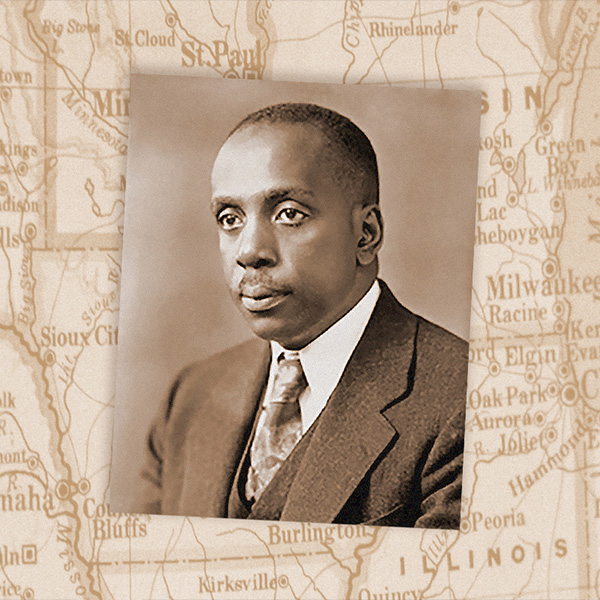
Vincent W. Lloyd is on the podcast to discuss two towering figures of twentieth-century black intellectual life.
September 22, 2026
Try 3 months of unlimited access. Start your FREE TRIAL today. Cancel anytime.
START FREE TRIAL NOWWho Were Harold Cruse and Howard Thurman?
Vincent W. Lloyd is on the podcast to discuss two towering figures of twentieth-century black intellectual life.
[You can listen to this episode of Another Life on Apple, Spotify, Amazon Music, or wherever you get your podcasts.]
Joy Marie Clarkson: Welcome to Another Life, a podcast of Plough Quarterly. This episode is a part of our series on Friendship. Friendship is not something you will often see making the headlines, but we believe that it’s the hidden ingredient that makes the burdens of life more bearable, community strong, and gives our life depth and meaning that cannot be found alone. On today’s episode, I speak with Vincent Lloyd about intellectual friendship, black intellectual life, and the mysterious, difficult, and exemplary figure that is Harold Cruse.
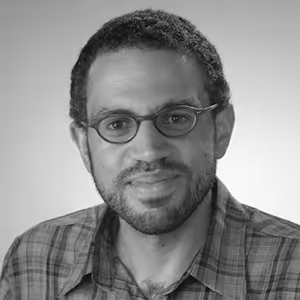
Vincent Lloyd is Professor of Theology and Religious Studies at Villanova University, where he is the director of the Center for Political Theology. Vincent has written several books, including his upcoming biography of Harold Cruse, which we discuss today. Harold Cruse is a towering figure of black intellectual life, whose controversial writings have now had an impact on several generations of thinkers and activists. In Vincent’s book, he writes: “just as the militant requires courage to confront the police in a street protest, so the militant also requires the intellectual courage to interrogate the presuppositions of his comrades and of himself.” Cruse was a figure who exemplified just this intellectual courage, pursuing truth, beauty, and goodness in his writing and work and relationships, and in doing so cultivating an impressive array of intellectual friendships, even though he was, by many accounts, a difficult person. We also speak about Howard Thurman, intellectual friendship as parallel play, and exploring ideas through human lives. This conversation gave me so much to think about. I hope you enjoy it as much as I did.
Joy Marie Clarkson: Well, welcome to Another Life, Vincent. It is wonderful to have you.
Vincent Lloyd: Thanks so much for having me.
Joy Marie Clarkson: So I always begin these conversations by asking people where they physically are in the world, usually because they are somewhere other than where I am. But today we are both in an air-conditioned office in London because you are here at King’s College London as a Leverhulme visiting professor – I think that’s the title. So I can’t ask you that question, but maybe I’ll ask you, where are you usually physically in the world and what do you do?
Vincent Lloyd: Yes. It’s been a delight to be here in London for a couple of months and looking forward to another month of being a colleague here at King’s College. I’m usually in Philadelphia, where I teach at Villanova University in the Philadelphia suburbs and live in the city proper in the Powelton neighborhood of West Philadelphia. I teach theology and religious studies at Villanova.
Joy Clarkson: So today we’re going to talk about your biography of Harold Cruse, which is coming out I think around the time this podcast releases. But you’ve written many other books as well. I’m just pulling up a list of them. Most recently, I think, was Black Dignity. Is that right? With Yale?
Vincent Lloyd: Yes, yeah. There was a collaborative book on political theology – what is political theology – as well recently.
Joy Marie Clarkson: Hmm, oh yes. People should also look that one up. You’ve written many different books on different topics related to religion and theology and black studies. And this is kind of a different approach for you: it’s a biography. You’ve never written a biography before, right?
Vincent Lloyd: That’s right. Although I’ve been quite interested in the idea of approaching ideas through the story of a life over time.
Joy Marie Clarkson: Which, as you probably know, is also something that King’s College has had a lot of. I think Clare Carlisle had a whole thing on life writing. So let’s begin with just an overview. Who was Harold Cruse and what is he known for?
Vincent Lloyd: So for one generation, Harold Cruse was a towering figure in black intellectual life and American intellectual life. He was often mentioned in the same breath as James Baldwin, Malcolm X, Frantz Fanon, figures like that, and as a thinker, sort of voice representing the black intellectual tradition, representing reflection on black culture and politics in the 1960s and 1970s. But for a more recent generation, the name Harold Cruse often brings blank stares, right? The name doesn’t circulate very much anymore, and that was one of the things that intrigued me about Cruse: someone who could be at the very top of intellectual life, in a way, in the United States and beyond, and then almost entirely disappear.
Joy Marie Clarkson: So you said you’re drawn to ideas through a life. What drew you to write a biography? And tell me a little more about that idea.
Vincent Lloyd: Sure. Back when I was a student, I was drawn to Gillian Rose, Jewish religious thinker and philosopher who moved toward Christianity and was grappling with religious ideas and philosophical ideas at the same time. And yeah, I was intrigued by how she used her own experiences in life to fuel her philosophical inquiry and used her philosophical inquiry to fuel her reflection on her life in a lovely autobiography called Love’s Work. So that had always been in the back of my mind. And then as I started moving toward questions of race and as I started teaching in a black studies program and trying to figure out how to teach black studies as a field that is sort of a field, sort of not a field, sort of a discipline, sort of not a discipline, I was trying to think: What are some of the voices that can help guide us as we’re trying to present that to friends, to students, to the broader world – the ideas that make up study of black life. And Cruse struck me as someone intriguing in that respect, someone who lived through much of the twentieth century, fought in World War II, dropped out of high school, never went to college, and then went to the public library every day, wrote a book that gained him fame, and then became a professor and was thrust into this world of higher education, this role of powering public intellectual, when just a couple of years earlier he’d been delivering clothes at Macy’s and working seasonal shifts at the post office.
Joy Marie Clarkson: Yeah, it’s such an engaging biography even if you’re just interested in the experience of living through someone’s story – even if your desire to read this is not so much out of maybe philosophy, the ideas. His life is just absolutely fascinating. And you wrote it really engagingly. And I was thinking while I was reading it about the kind of idea of many lives – both in the sense of thinking about the many lives that there are and what we can learn from them, but also the ways that one person can live many lives within one life. And he really did seem to be someone who lived many lives, you know, whether it was his itinerant childhood, to his time in the military to – you know, it’s just this remarkable, many-faceted life. And something that I also thought was interesting and that you kind of drew out, especially in the introduction, was that those many lives were also reflected in many contradictory stories that were told about him. So in the beginning, you give all these different reports people talk about him. And I’m just gonna read a few of them:
Descriptions of Cruse:
Horse five Harlem.
Old Testament prophet.
A loner scholar.
Everybody loved him.
A curmudgeon.
This is just a few. But there’s this sense that you almost, if you were just to take the words that people spoke about him – and you spoke to a lot people who knew him in life – you almost couldn’t conjure an image in your mind because some of them are so contradictory. And what do you think it was about him as a person that made that possible? What does that say about him?
Vincent Lloyd: Yes. There is certainly something elusive about him, which, you know, made it fun to sit with his life – something about him that I think he cultivated that was hard to pin down and that, probably, at least in part, comes out of growing up in poverty, growing up without his parents, moving between family members and family friends over his first years and spending time in the segregated South when he was young, seeing himself as aspiring to join a black intellectual class but also seeing that black intellectual class as fundamentally middle class, as coming out of a position of relative privilege that he didn’t have and having to figure out how to be himself in that space when that was not a space that was natural for him to inhabit. So, yeah, I think all of that. And then, you know, moving from very different ways of life, right? From hanging out with theater people at the YMCA in Harlem, to being in the military and having a position of relative responsibility, to being out of the military and having no structure in life again, joining the Communist Party, leaving the Communist Party, being a sort of freelance intellectual, and then being a celebrity intellectual and then being a professor – all of these different things sort of cast him in different roles, all of which he was uncomfortable with in different ways. Yeah, which I think leads to that opacity that seems deep in his character.
Joy Marie Clarkson: And one of the other things you talked about throughout the book is his discomfort basically with everywhere that he is, on some level, often coupled with almost apocalyptic events like being in a train crash where other people die and he doesn’t, being in a car crash where other people die, and you know. And that’s kind of this ongoing trying on of different roles and discomfort with them.
So one of the reasons that you say you write the book is that “the spirit of his thought is exemplary.” So I was curious: What about his thought do you find exemplary? And what do you want to carry on?
Vincent Lloyd: Yes, yeah. And, again, I think some of this comes from trying to figure out what black studies is and how to cultivate a conversation about Africa and the African diaspora and black life today that is challenging and rigorous and critical and driven by the pursuit of truth and goodness and beauty. These all seem really important and not always present in conversations around race and particularly in spaces that are known as black studies. There are lots of exciting ideas percolating there, but that desire to read carefully, to listen carefully, to ask critical questions, to push back, to not take anything for granted, to continually go deeper, driven by the sense that that there is a deeper that we need to continue pursuing, and not just images that that we can wallow in or be satisfied with. I think that attitude or orientation was one that I certainly found in Cruse and seems laudable and exemplary.
Joy Marie Clarkson: And it seems like from your biography there was kind of a resistance for him to accept one particular way of seeing things. That maybe was a part of enabling that perspective. I loved when you talked about – this is a quote from the introduction as well:
Just as the militant requires courage to confront the police in a street protest, so the militant also requires the intellectual courage to interrogate the presuppositions of his comrades and himself.
And it seems like that is something that is in Cruse’s character and attitude: this intellectual courage, which is maybe something of what you were drawing on. What was the legacy of his famous book? He has this one book that that sets him off into fame. Can you tell us a little bit about that?
Vincent Lloyd: Sure. The Crisis of the Negro Intellectual, published in 1967, becomes this very almost ubiquitous volume on college campuses, in homes, in political spaces – a book that tells the story of black American culture and politics and Cruse’s own life all woven together. And it becomes the sort of book that can’t be avoided, even for those who disagree with it. Arguing with this book fuels deeper inquiry, allows Cruse’s contemporaries to define their own positions, find their help, find their own voice. It’s picked up as almost a religious text by a younger generation of black militants coming of age in the ’60s who have the spirit of militancy, are wearing their leather jackets, and are ready to protest in the streets, but are looking for an intellectual orientation, a sense of how to pursue justice. So even if they have the aesthetics down, how do they direct their energy? And Cruse is providing something like that. It also fuels a later generation of scholars – end up in the Academy, end up very prominent in the Academy.
The talk of black Marxism today, which is very much in the air in protest movements, grows out of this book by Cedric Robinson, which Robinson says is a response to Harold Cruse, his book. They were both in the same spaces at the same time. So there’s a continuing legacy. You know, even people like Sylvia Wynter, a Caribbean black thinker whose thought is, again, circulating widely in the twenty-first century, in the 2020s, is presenting her work as a deep engagement with Cruse’s thought. So there’s an immediate legacy of this younger generation who looks up to Cruse – a set of Cruse’s contemporaries who are suspicious, but argue with Cruse, and then today a set of people who have this sort of powerful, but often just below the surface or largely unacknowledged, debt to Cruse.
Joy Marie Clarkson: So it sounds like the book itself, much like Cruse, has had many lives. And you said that now it’s more sublimated – its influence is more sublimated. What do you think is the reason for that? Is it just the kind of natural forgetfulness of history, or are there things about Cruse that are distasteful or difficult in the current moment?
Vincent Lloyd: Probably both. Cruse was very committed to what other people described as a kind of cultural nationalism, a kind of affirmation of black, distinctively black, culture interwoven with economic and political self-determination as a sort of demand that black communities ought to make. And in the era of multiculturalism that that followed the era of ’60s and ’70s protest, that sort of demand for – militant demand for –self-determination didn’t fit neatly with the sort of cultural moment. I think there’s also a sense in which, as black studies moved from an amateur field to a professional field, from something that happened primarily outside of the academy to something that was a part of the institution of higher education of the university, it was easier for black studies to present itself as either simply describing black culture and black history or as affirming a certain, rather circumscribed, set of political positions. And Cruse wanted to do neither. He wanted everything to be sort of open, open for interrogation, for that kind of rigorous thinking that he affirmed and that was informed by history and culture but wasn’t limited to describing history and culture – had this political and normative, justice-seeking, truth-seeking, element always woven in.
Joy Marie Clarkson: Hmm. So something that’s really important to Cruse is the idea of history, right? History and culture. What is that doing in his thought?
Vincent Lloyd: Yes. Cruse thought that too often each generation of militant protesters – and he was thinking particularly about those in the 1960s, but you could see parallels earlier in history and more recently in history – each generation of protesters is correctly caught up in the pursuit of justice and naming wrongs in the society around them, indignant about wrongs that they see, but also forgetful, or just not informed, about the way in which these wrongs or indignities grow out of generations of quite specific social and political and cultural formations and tradition, traditions. And those traditions cut both ways: both traditions that further marginalization and discrimination, but also traditions that can fuel transformative forms of imagining and practice. So Cruse was always encouraging younger people and those who were sort of swept up in the in the political moment to keep that energy, keep that motivation to change the world, but also to learn about what’s come before and those who a decade ago, five decades ago, five centuries ago, have been similarly swept up in a determination to change the world.
Joy Marie Clarkson: So the way that you write this, every once in a while you dip into it, it’s not just a zoomed out picture of Harold Cruse’s life: Like in the first chapter you talk about sitting, bringing flowers to his family and hearing the different stories and memories and sometimes the almost humorous contradictions about things they might like, that you think maybe Cruse wouldn’t like. What was it like for you? How to research this book and what kind of role did it play in your own autobiographical story, if that makes sense?
Vincent Lloyd: Thanks, yeah. I think when I was a student inspired by and thinking with Jillian Rose, you know, she had died (not that long before she died, less than a decade before, I was working on her thought), and I met with her mother and looked through her papers, which were just becoming accessible at the time. And I ended up not writing biographically. I ended up just focusing on her ideas and trying to make connections between the philosophical and the religious there. But I kept thinking about sitting with her mother and the way in which she came to life through the sort of intimate connections she had with those around her. I actually just last week saw her grave for the first time here in London, which her mother actually hadn’t shown me although it was very close to where we met.
And, I mean, I think with Cruse as well. As someone who was curious about the ideas circulating around black studies, and in this institutional world of higher-ed where we have to offer courses, modules on introducing students to questions of race and figuring out how to do that well, and also getting older, now in my forties – when I’m at a distance from a younger generation of activists – trying to figure out what are the ways, what are those earlier generations, that can continue to inspire us, that can orient us, and how can we do justice to them, to those stories. And that seems now to me to mean more than just tracing the history of ideas, but it means feeling out the character of a life, right? – and the relationships that go into constituting that life, as well as the ideas.
Joy Marie Clarkson: Yeah, to engage with these ideas not as lifeless thoughts, but thoughts that have a life of their own, that came out of a life. This podcast will actually be a part of our series on Friendship, and I think there’s something about that desire that I find quite natural when you find a thinker that you love, to want to come in contact with their life, with the shape of their life, and with the loves and challenges and things that animated what they wrote about and cared about and thought about. And I think that comes across in the Cruse biography. So are you ever going to write a biography on Jillian Rose?
Vincent Lloyd: No. Others, I’m sure others will do that well. Her sister, Jacqueline Rose, has a book that is thinking about Jillian Rose and another historical figure together, but fictionally. So the sister of Jillian Rose wrote a novel about Jillian Rose that’s about to come out.
Joy Marie Clarkson: Hmm, fascinating. That’ll be interesting. I can’t – I would tremble a little bit to think about my own siblings writing a novel about me, but maybe that’s just me. This is just a fun question. It feels like there are so many kind of pockets of Cruse’s life that were fascinating or interesting. Was there anything that you learned about him that you found particularly surprising or exciting or amusing?
Vincent Lloyd: Yes, yeah. I was having these conversations and calls and meetings with people who knew Cruse, and I think often when you talk to a bunch of people who knew someone, you start hearing the same stories over and over and you feel like you’ve sort of been there, done that – like you don’t need to do more. But with Cruse it was just the opposite. Each person had new things that I’d never heard before and I was continually being surprised by different pockets of his life, different circles of friends, and ways that he formed community. There was some circle of people in Chicago that I found out about very late that I’d never heard about – but he was going every year, driving with these people to Chicago for their get-together, and, you know, that’s just one of many examples of his ability to maintain intellectual friendships despite being someone who was broadly described as “difficult.”
Joy Marie Clarkson: Yes, that was one of the things I had in my notes: “difficult person.” Like it sounds he was just a bit of a difficult person. I wanna ask you, because this is a series on friendship, what is intellectual friendship? You can ask it through his life, if that’s an easier way to do it.
Vincent Lloyd: Yes, yeah. I mean, I think there is something rather different about collaboration and friendship. And I think it’s easier to think about collaboration because it’s more transactional, right? You have a product that you’re trying to get done, you both have expertise, you’re bringing together your expertise to get to the endpoint. Whereas I think friendship strikes me as having both – maybe something a little bit more like parallel play they talk about with children, where you have two children who are not yet able to play together, but are doing their own thing right near each other and somehow, mysteriously, are bringing joy to themselves and the other by playing in proximity to each other: I think that playing with ideas that is in proximity to another but is not solely for the purpose of a product, or simply refining the other’s idea, or going back and forth about how to figure out what the real concept of, you know, what the real meaning of this word is or whatever. Yeah, something like that.
Joy Marie Clarkson: I like that idea of parallel play. I shall take that forward. I feel like we’ve gotten to do a bit of intellectual parallel play with you being in London this summer, so that’s been really lovely.
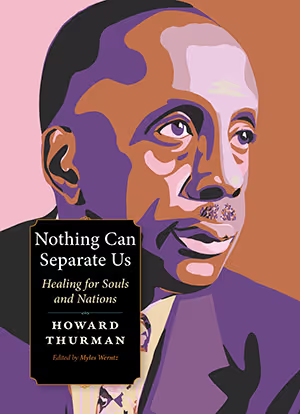
So as we get close to the end of this conversation, I want to bring up another towering figure. You wrote the introduction or the preface, I can’t remember what the language was for it, for Plough’s collection on Howard Thurman. We have these small collections of writings of particular figures. And you told me before we got on this podcast that it was difficult to know how to write the introduction. I thought you wrote it really beautifully – also with a kind of autobiographical element: these different moments in your own intellectual and spiritual journey when you wished you had encountered Thurman. I guess a first thing would be, who is Howard Thurman? I’ll let you give the answer to that. And then, why did you find it difficult to write the introduction?
Vincent Lloyd: Yes, yeah. So in some ways Howard Thurman, like Harold Cruse, is someone who’s hugely important and also kind of in the background. We think of Martin Luther King or Stokely Carmichael, Jesse Jackson – these sort of political leaders who are in the front of protests, of the civil rights movements, of racial justice discourse, and Howard Thurman is, again, a key figure in black life and thought in the twentieth century, but just someone behind the scenes helping those political figures reflect on how they can be better oriented to justice, how they can incorporate their spiritual life into their political work. And not just advising individual leaders, but rather offering a generation of black and black thinkers and all races concerned with pursuing civil rights and justice on a number of fronts, including environmental, in the United States with vision of how pursuit of justice only works when the spiritual life is woven into that pursuit.
Joy Marie Clarkson: And tell us a bit about your introduction and the way that you came to write that.
Vincent Lloyd: Yes, yeah. So I came to reading Howard Thurman quite late in my life, and I wondered what I was missing out on – what it would have done for me as I was trying to do political things, as I was trying to figure out how to live as a young person, as I was trying to figure out what pursuing spiritual life meant integrated with the pursuit of justice – how would I have been better guided, or been guided, had I been in dialogue with Thurman’s writing and thought. So that was its starting point.
Joy Marie Clarkson: It’s a lovely introduction, which I think is worth reading even without the book, although the book also has a nice collection. And it goes back, I think, to that question of both encountering ideas in one’s own life that one is living, but also the desire to meet or touch the life of another thinker.
Well, thank you so much for this conversation. I really hope people will go and pick up the Cruse biography, and I’ll put a link in that for the show notes. It’s been really enjoyable. It’s taken me through a few hours of this endless heat wave that we’re having in London, and given me a lot to think about. And I hope that perhaps it will play its part in bringing Cruse’s thought back into the present day.
I want to end with a question that I ask all of my guests, which is: what is one thing, it could be anything – a practice, a person, a painting … something that doesn’t begin with “p”– that reminds you that another life is possible?
Vincent Lloyd: I think the easy answer would be my three-year-old who’s always imagining different lives, different worlds – especially those involving dinosaurs and dragons. But, you know, I think spending this time in the King’s College community here in London and seeing how different parts of the world – different communities, different institutions – organize themselves in different ways, are grappling with problems that are in some ways different, in some ways the same, as those that my home institutions and communities are grappling with. That, I think, is always a reminder both that other lives are possible and that the grass may be greener, but also has weeds.
Joy Marie Clarkson: Yes, yeah. Another life being possible doesn’t always have to mean that better lives are possible, just different ones. So thank you so much for joining us, Vincent. This has been a wonderful conversation.
Vincent Lloyd: Thank you.