Essay
The Reformation of John Perkins
A civil rights legend’s school of conversion.
July 1, 2026
Try 3 months of unlimited access. Start your FREE TRIAL today. Cancel anytime.
START FREE TRIAL NOWThe Reformation of John Perkins
A civil rights legend’s school of conversion.
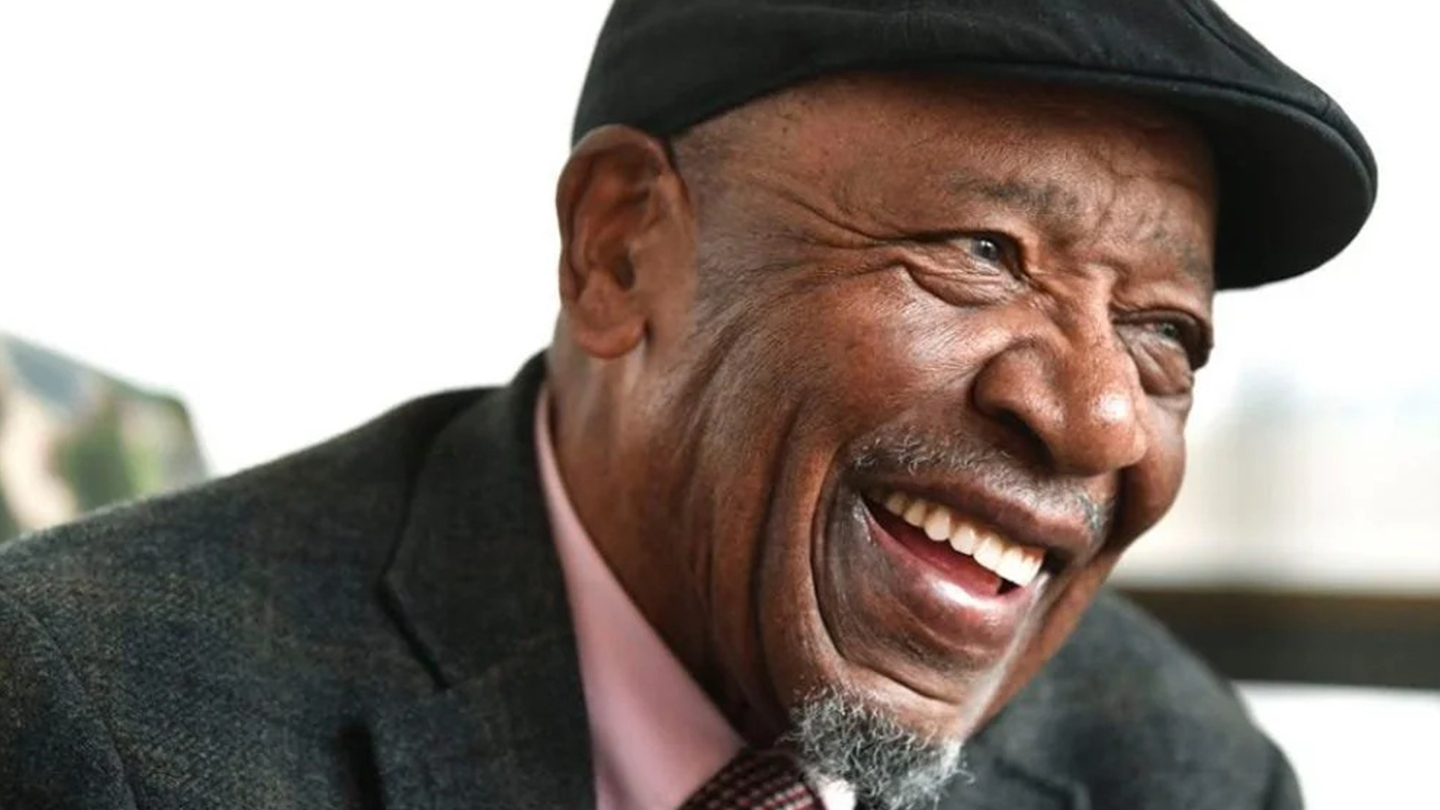
Photograph courtesy of The John & Vera Mae Perkins Foundation.
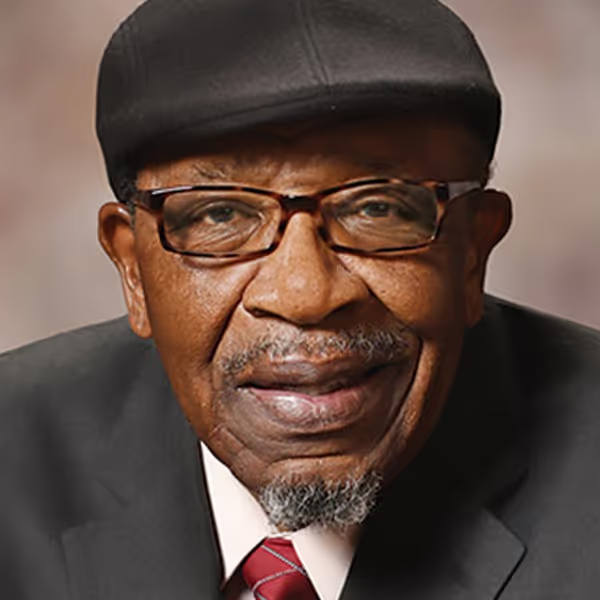
[.article__paragraph--cap][.small-caps]When John Perkins died[.small-caps] in March at ninety-five, many remembered him as a civil rights icon – which he was. But as I prepared to go to his Mississippi funeral, one person’s words revealed a far deeper understanding of Perkins’s contribution to the American church.[.article__paragraph--cap]
Doug Huemmer was helping Perkins with his ministry in Mississippi in 1970 when they were both arrested and brutally beaten by white police officers in a jail in the town of Brandon. This event is crucial to understanding what Perkins saw as the way of Jesus in the face of great wrong in this world. Huemmer, who also bears the scars of Brandon jail, told Mississippi Today that Perkins’s work went far deeper than civil rights, and struck at the roots of the church’s captivity. Perkins, he said, belongs in the tradition of the Great Protestant Reformation ministers, such as John Calvin, Martin Luther, and George Fox. “John and I shared the belief that we have a great country, but we have succumbed to a spiritual decadence that is destroying the American character.” The reformation Perkins sought, Huemmer said, was to eliminate racism, corruption, and sin in the American church.
[.article__paragraph--cap][.small-caps]Like Huemmer,[.small-caps] I am a white American, and recognize in my own story this uncomfortable collision between Perkins’s life and message and a corrupt Christianity of individualism and success.[.article__paragraph--cap]
My first encounter with Perkins was at age nineteen in 1980, walking as a sophomore into a conference room at Middlebury College. It was a frigid Vermont winter, and I had no idea who the speaker was for that night’s InterVarsity Christian Fellowship meeting. I was mesmerized as John Perkins told his story in that room. A year later I was in Jackson volunteering with the ministry he started. I meant to go for six months, but stayed for seventeen years. That encounter changed the direction of my life and my whole understanding of the Jesus I followed.
Before, I thought law and government were the way to change the world, and I had directed my career toward power, recognition, and success. But Perkins revealed a way of reformation: being Christian is a shedding of the ego, the privilege, and the American individualism that blind us to our neighbors, to building bridges across divides, and to seeing who Jesus truly is.
[.article__paragraph--cap][.small-caps]In response to[.small-caps] the unfinished business of the civil rights movement, John Perkins created living alternatives of hope. Rooted in life with Jesus, he gave birth to a Black-led reformation with people at the margins that invited white people to join them.[.article__paragraph--cap]
But it is easy to sentimentalize John Perkins, and what this reformation of Christianity cost him.
John and his wife, Vera Mae, started their Mississippi work in Mendenhall, a rural community near Jackson. Together they founded Voice of Calvary Bible Institute in 1964, starting with Bible clubs and evangelism.
But living among the people, Perkins saw that evangelism was not enough for his family and his neighbors to flourish under the boot of an authoritarian system of racism and economic deprivation, protected by the violence of the state.
He began to lead the Black community to confront wrongs and change the system through voter registration, boycotts, economic cooperatives, marches, and demands for equal access and opportunity. It was not evangelism that made him a threat to the system, but that larger vision of Christianity. He was beaten and humiliated by police in that jail because he decided the gospel’s good news required taking feet off necks, at risk to his own life.
It was Doug Huemmer who brought this home during the five-hour funeral service in Jackson. I’d never met Huemmer, who had shared such a formative experience with Perkins but largely disappeared from public life later. But with a hush in the sanctuary, there he was, walking out of anonymity and standing in front of hundreds of us in his white beard and black suit with a cane in his hand, speaking of “that mess in Brandon.”
At one point Huemmer recognized Constance Slaughter Harvey, the lawyer who defended them in court. “If she didn’t get some of those false charges reduced, me and John might have ended up in Parchman prison,” he said, “and you know what happened there back then.” Parchman was notorious for brutal treatment of Black inmates in particular.
The violence of Brandon not only injured Perkins physically and mentally, but produced what his son Spencer called “a crisis in his faith.” As Perkins slowly recovered from the beating, he agonized: “What next? How do I respond to this?”
One option was to flee Mississippi and move the family to safety, a valid course many of us would choose. Another, facing such brutal opposition, was for Perkins to retreat into public silence and a “salvation only” gospel. A third option was to fight the brutal white supremacist system with the same weapons it used – aggression, contempt, any means necessary.
After the beating it was a full year before John Perkins spoke publicly. In his book More Than Equals, Spencer writes about going to hear his father speak to an all-Black audience in California, eager to hear what he had decided. He had seen his father the morning after the beating – his shirt covered with blood, the humiliation on his face. He hoped his father “would conclude that the gospel and Christianity were for white folks” and have nothing more to do with them.
“Before my Brandon jail experience,” John Perkins said from the podium, “I thought Blacks were the only victims of racism. But when I saw the faces of those men in the jail, twisted by the hate of racism, I knew that they were victims too – I just couldn’t hate back.”
Speaking of his father’s decision, Spencer wrote, “I can’t possibly explain to you how much I hated to hear those words. After all we had suffered at the hands of white people, now we were supposed to forgive them? But I suppose it is what I knew I would hear. And deep down inside, I knew it was the truth.”
[.article__paragraph--cap][.small-caps]Rooted in John’s sacrifice[.small-caps] and vision of Jesus, and following his pattern of both building a new community across divides and working for a just society, our life together in Mississippi was built on the foundation of the hospitality of Black people.[.article__paragraph--cap]
This came home to me in reunions with former members of this community gathered at the funeral. The warm embraces, the laughter and sharing of memories, we gospel choir alumni being called up to the platform to sing together side by side – it all unearthed stories and truths deeply embedded in me.
So many times, we had heard Perkins – John, or “JP” as he insisted we call him – preach of the “individualism, selfishness, and greed” which held us and our American Christianity captive. In the Voice of Calvary community, sharing life with neighbors at the margins of the city of Jackson, he created a response – a new and vigorous local culture with power to resist the darkness of the time.
In the capital of Mississippi, with its history of enslavement and segregation, a few miles from his beating, Perkins gave birth to a new life of Black and white people living in the same neighborhood, worshiping in the same church, and working alongside each other to love our neighbors through local initiatives of health care, youth and education, home ownership, business development, and evangelism and discipleship. Some people served for one year, while others stayed for forty.
Inside this new order, living these spiritual disciplines, we were born again – again. None of us, Black or white, could have stayed if we weren’t willing to be changed. We had one experience of Jesus before we entered it, and a different one after.
Eventually, following the costly path of his father’s new understanding of Jesus, Spencer was deeply changed himself and became one of those beacons of hospitality, opening the door into the community of truth and conversion his father grew in Mendenhall and Jackson.
As a young volunteer, the first question I heard Spencer ask deeply disturbed me: “What are all you white people doing here?” Later our church went through a racial crisis that almost tore us apart, and tempted me to leave. It took time for me to learn that Spencer’s challenge didn’t mean “you should leave,” but instead “stay and be changed.” Together, Spencer’s truthfulness and his hospitality, rooted in his father’s way of Jesus, changed my life. Spencer and I ended up serving together in ministry for many years. I shudder to think how much smaller, and how much safer, my Christian faith would be without his family’s disruptive witness.
The reformation of John Perkins sought a church of worship rooted with people at the margins and across social divides, a community where we are changed by each other, and work together for change.
The new culture John Perkins created was a microcosm of the conversion he sought to see in society. He demonstrated the need for schools of conversion within the church itself, locations of deep shared journeying where – across divides – Christians unlearn the habits of personal success and are re-formed through public mission. Such a reformation requires sacrifice, brings immense joy, and draws us closer to Jesus.
[.article__paragraph--cap][.small-caps]Another speaker[.small-caps] at the funeral, a Black leader mentored by the Perkins and now a medical doctor in an underserved community, brought us to laughter about the times “JP” got angry and fired the entire staff. “We just went back to work the next day,” she said. “And he acted like nothing happened.”[.article__paragraph--cap]
Those close to Perkins knew he could be difficult and demanding, and sometimes it took a toll on others. At times it felt like you could strike out twice then hit a double, and all he’d talk about was striking out.
Perkins lived a life of incorruptible integrity and faithfulness to his wife. But he was fully human. He was aware of his fragility and failings, and I believe he became more aware the longer he lived. It drew him into deeper intimacy with Jesus.
That first time I met Perkins as a college student in Vermont, I drove him to the airport. It was freezing, and my car had a rusty hole in the floor. John wasn’t fazed; he opened up his Bible and led a spontaneous study from the book of Timothy all the way to his flight.
The pathway to reformation made no sense to Perkins apart from being rooted in a profound daily, personal encounter with Jesus, a community of worship, and the story of the Bible – which he immersed himself in every day, beginning early in the morning in prayer.
[.article__paragraph--cap][.small-caps]After Spencer’s sudden death[.small-caps] in 1998 following our many years of ministry together, I became closer to John. Two years ago, aware that he might be at the end of life, I traveled to Jackson to see him. I was told he was weak and might not be able to meet. But we spent five unforgettable hours together. Deep conversation about sacred memories, his biblical imagination still sharp, much laughter, many tears. None of his achievements came up. It was a tender time talking about tender things.[.article__paragraph--cap]
The word most on his mind was “love.” He was deeply aware of his humanity, his limits, his longing to end life well. I felt I was with someone who wasn’t trying for more obedience, but to get more of the love of God into his bones. To feel more forgiven, and to extend more forgiveness.
[.article__paragraph--cap][.small-caps]As I stood before[.small-caps] John’s open casket in Jackson, looking at him one last time, I saw a body that was a living map of what Christian obedience looks like in today’s world.[.article__paragraph--cap]
There were the scars of his beating. His mouth, refusing to be silent, speaking for the harmed and forgotten ones and against the captivity of the church. His fearless feet, leading those marches and boycotts. His heart of agape love, moving not away from white people but toward them, seeking to build a beloved community. His deep laughter, because the journey is not worth it without joy. His knees, familiar with the floor of prayer. His ever-moving hands, as if molding a new reality as he spoke. His bright eyes lit with faith, seeing a beyond, a destination worth sacrificing everything for, for the sake of the gospel: participation with the Lord who is “reconciling all things.” Which really means all things.
In a time where Christianity seems either severe and harsh, or soft and innocuous, John Perkins bore witness that being a follower of Jesus demands something of you. Across the nation, with a rare spirit of truth and love, John Perkins spent seven decades seeking to create a culture of sacrifice and joy that held together what the church tears apart: justice and mercy, truth telling and forgiveness, confronting abuse and building bridges, liberation and agape love, worship of Jesus and public work for change.
The reformation of John Perkins rejected the options that still tempt us today – a Christianity of safety, of silence and salvation only, of separation from our opponents, of belligerent struggle that seeks justice without Jesus, of surrendering Christian faith itself.
Many speakers at the funeral mentioned his famous “3 R’s”: relocation, reconciliation, and redistribution. He often joked that three spiritual disciplines were enough. With apologies to John, I believe the heart of his message to the church was a prior, foundational fourth “R”: repentance.
The challenge he leaves behind is not whether we have been saved, but whether Christians will be born again – again.
John Perkins was too big for us. Amidst the silos and divides of our time, he doesn’t fit into our boxes, can’t be put into a box. But that’s Pentecost – it’s wild; it explodes the box. The boxes of this troubled time in our nation and world need to be exploded. John Perkins exploded the box. His reformation corrected and enlarged our vision of what is possible.