Review
The Perils of Mixing Freud with Faith
In his book Resisting Therapy Culture, Matthew Loftus differentiates the roles of therapists and pastors.
October 23, 2026
Try 3 months of unlimited access. Start your FREE TRIAL today. Cancel anytime.
START FREE TRIAL NOWThe Perils of Mixing Freud with Faith
In his book Resisting Therapy Culture, Matthew Loftus differentiates the roles of therapists and pastors.
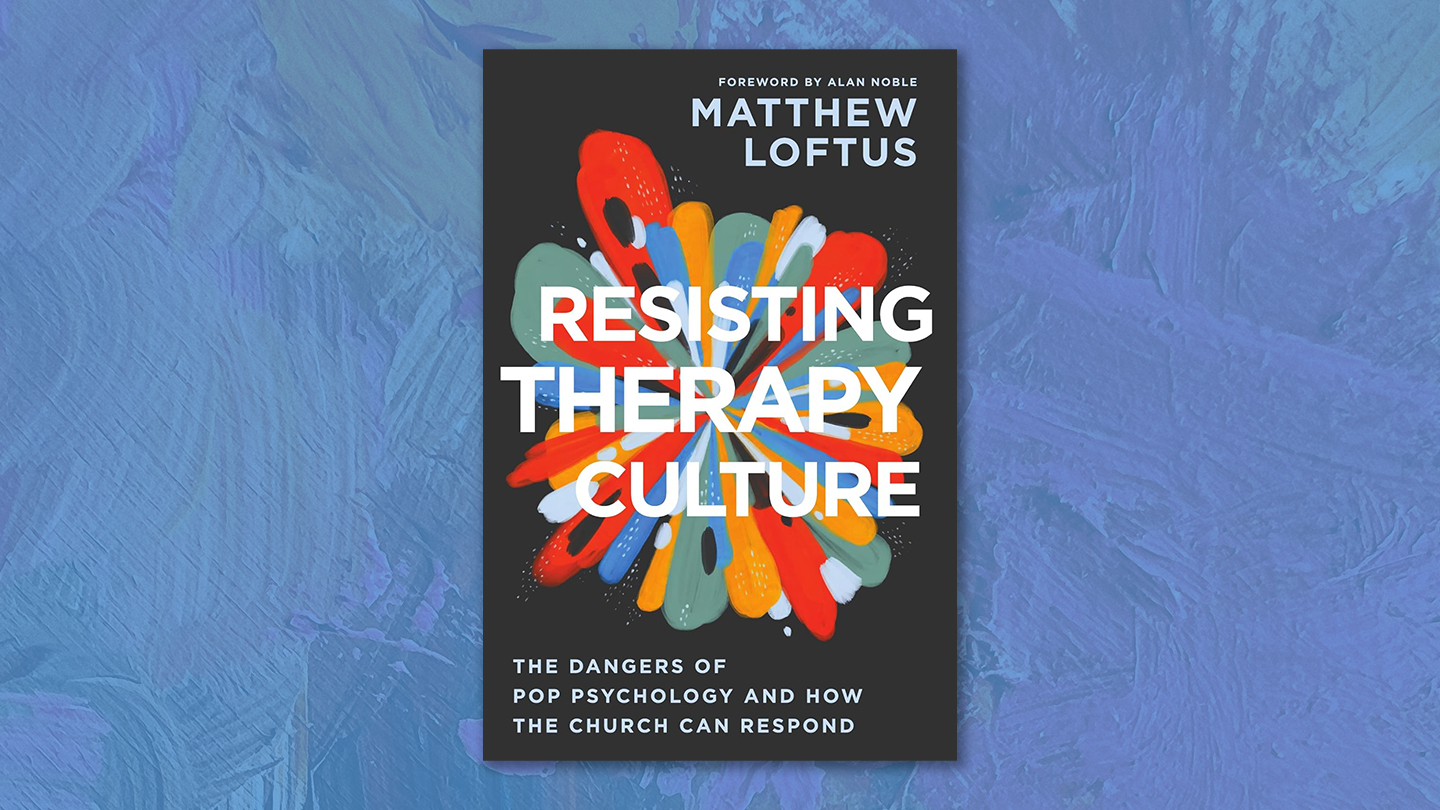
[.article__paragraph--cap][.small-caps]The insidious tentacles[.small-caps] of pop psychology are strangling all of us and reach even into the church. Such is the premise of Resisting Therapy Culture: The Dangers of Pop Psychology and How the Church Can Respond, in which Matthew Loftus, family physician and missionary currently working in East Africa, sets out to warn us of the perils of mixing Freud with faith.[.article__paragraph--cap]
Loftus is not the only voice decrying the dangers of psychology run amok: Abigail Schrier’s best-selling (if exaggerated) invective against the very real misadventures of child psychiatry, as well as Jonathan Alpert’s more thoughtful perspectives in Therapy Nation, also suggest that something is amiss. So, what, exactly, is the problem?
The “therapy culture” being attacked here can be characterized by a tendency to medicalize all of life – a viewing of all emotions and experiences through the lens of psychology and psychotherapy, thereby fostering victimization and learned helplessness at the expense of agency. It encourages us to blame all of our troubles on other people – on our environment and on circumstances beyond our control – rather than to take responsibility for our current condition. And it inappropriately weaponizes otherwise valid terms and concepts (boundaries! trauma!) to defend dysfunction, and to reinforce the status quo.
If such a therapy culture exists – and Loftus makes a strong case that it does – it would seem that its chief danger lies in its denying us the possibility of growth and change: that instead, because of bitter experience, faulty genes, or fragile character, we must wallow endlessly in misery and dysfunction. Such therapy is, of course, anti-therapeutic: the whole idea of therapy is to help a person move forward, from (or through) hardship to a new and better and happier existence.
A practicing physician himself, Loftus understands the very real and effective help being rendered in the trenches – by those clinicians who valiantly attend to clients deluded by the false promises of social media, and who work in a system that prioritizes fifteen-minute “wellness checks” over careful, probing analysis.
But he is also not afraid to call out our contemporary obsession with “self-care,” noting that the Christian life has very little to do with self-indulgence – and at his boldest, he even suggests that people truly mired in sin might need salvation as much as (or more than) they need therapy.
He is at his best when he talks about moral choices – about the gulf between the endless (and suffocating) neutrality of judgment-free therapy and the Christian concepts of right and wrong, and of guilt, sin, and shame. And he points readers to perhaps the very best question a therapist can ask a patient – “Do you want to get well?” – as Jesus asked a paralyzed man in John 5:6.
Still, he falls short of telling readers what a life lived for Christ might actually look like: that is, a life of self-discipline, service, and sacrifice. And he might have said more about the failures of the modern church to clearly point people to purpose and meaning, in a world of ever-increasing existential frustration – a failure so constant and so glaring that we shouldn’t be surprised when therapists and therapy, no matter how bad, step into the void.
Loftus concludes that therapists and pastors would do better to stay in their own lanes: that therapists should keep helping people work through the difficult problems of living, and that churches should unabashedly preach the gospel and call souls to freedom and repentance – without worrying about “triggering” their congregations, and without buying into the lie that adverse childhood experiences and trauma cannot be fully overcome.
Unfortunately, drawing such bright lines is easier said than done. Both therapists and pastors are, after all, in the business of helping broken people, and many of them already work together quite well: note, for example, the long-established tradition of Christian counseling, exemplified by reputable groups like CCEF (the Christian Counseling and Education Foundation) in suburban Philadelphia.
Perhaps the very best answer to “therapy culture,” then, is to recognize what psychiatry does well, and what it does not. Writing in 1999, Paul McHugh – one of America’s greatest living psychiatrists – took his own profession to task, suggesting that the problem lies, quite simply, with psychiatry’s seeing itself as the solution to all of life’s problems:
Psychiatry has lost its way not only intellectually but spiritually and morally. Even when it is not actually doing damage to the people it is supposed to help . . . it is encouraging among doctors and patients alike the fraudulent and dangerous fantasy that life’s every passing “symptom” can be clinically diagnosed and, once diagnosed, alleviated if not eliminated, by pharmacological intervention. This idea is as false to reality, and ultimately to human hopes, as it is destructive of everything the subtle and beneficial art of psychiatry has meant to accomplish.
McHugh was talking about pharmacologic intervention – this was the age of Prozac, after all – but his words are prescient and can be applied with equal vigor to the problems outlined in Loftus’s book. Psychiatry, it turns out, is not the answer to all of the problems of living, and more than anyone else, people of faith ought to be able to recognize and affirm this simple truth. Loftus’s book can serve as an important corrective in this regard.