Essay
The Hazards of Public Life
Here are three limits online influencers can set for themselves so they don’t grow their platform at the expense of their soul.
July 11, 2026
Try 3 months of unlimited access. Start your FREE TRIAL today. Cancel anytime.
START FREE TRIAL NOWThe Hazards of Public Life
Here are three limits online influencers can set for themselves so they don’t grow their platform at the expense of their soul.
Photograph by Fluidni / Alamy Stock.
[.article__paragraph--cap][.small-caps]When Tsh Oxenreider[.small-caps] started writing a blog in 2007 she imagined it as a fun hobby. But in short order she gained a large audience, a popular podcast, a book deal, and an income that supported her family. Her public platform was a boon in many ways, but it also came with an increasing pressure to feed the content machine: “All the ‘thought leaders’ recommended being online everywhere at all times – or at least giving the appearance of doing so. I shrugged my shoulders at the dystopian sound of this and took on the work of hyperconnectivity.” As her family and its needs grew, however, Oxenreider felt caught between her longing to be more present with them and her sense that she could not afford to take a break from posting. “I was gut-punched at the thought of my young children one day remembering their mom mostly behind a screen,” she writes, “snapping at them to give her a moment’s peace so she could finish a sentence about why families should embrace a simpler way of life.”[.article__paragraph--cap]
Oxenreider articulates a reality that is often neglected by the glib guides that explain how to build a “platform” and increase your online profile. (You might think of what follows as a non-glib guide to shrinking your platform and, instead, growing your soul.) The tensions she describes can afflict people in a wide range of public roles, from those with a garden-variety digital presence, to the mommy Instagrammers posting streams of baby photos, to the athlete influencers sharing every workout and meal, to the political junkies weighing in on every tidbit that comes out of Washington, DC. Even those who occupy more traditional careers in the media or in other public-facing roles experience the trade-offs between the public defense of certain goods and the actual experience of them.
To state the problem simply, the act of making a public case for some particular good – such as families embracing a simpler way of life – can hinder one’s own personal enjoyment of this good. This does not mean there is never a place for public advocacy, but in an age that celebrates public figures, activists, and media personalities, we should remember the serious costs that these roles bring. Influencers who weigh these costs and find they are worth paying should still place deliberate limits on their public pronouncements. On the other hand, consumers of media should distrust those voices who fail to adopt healthy limits.
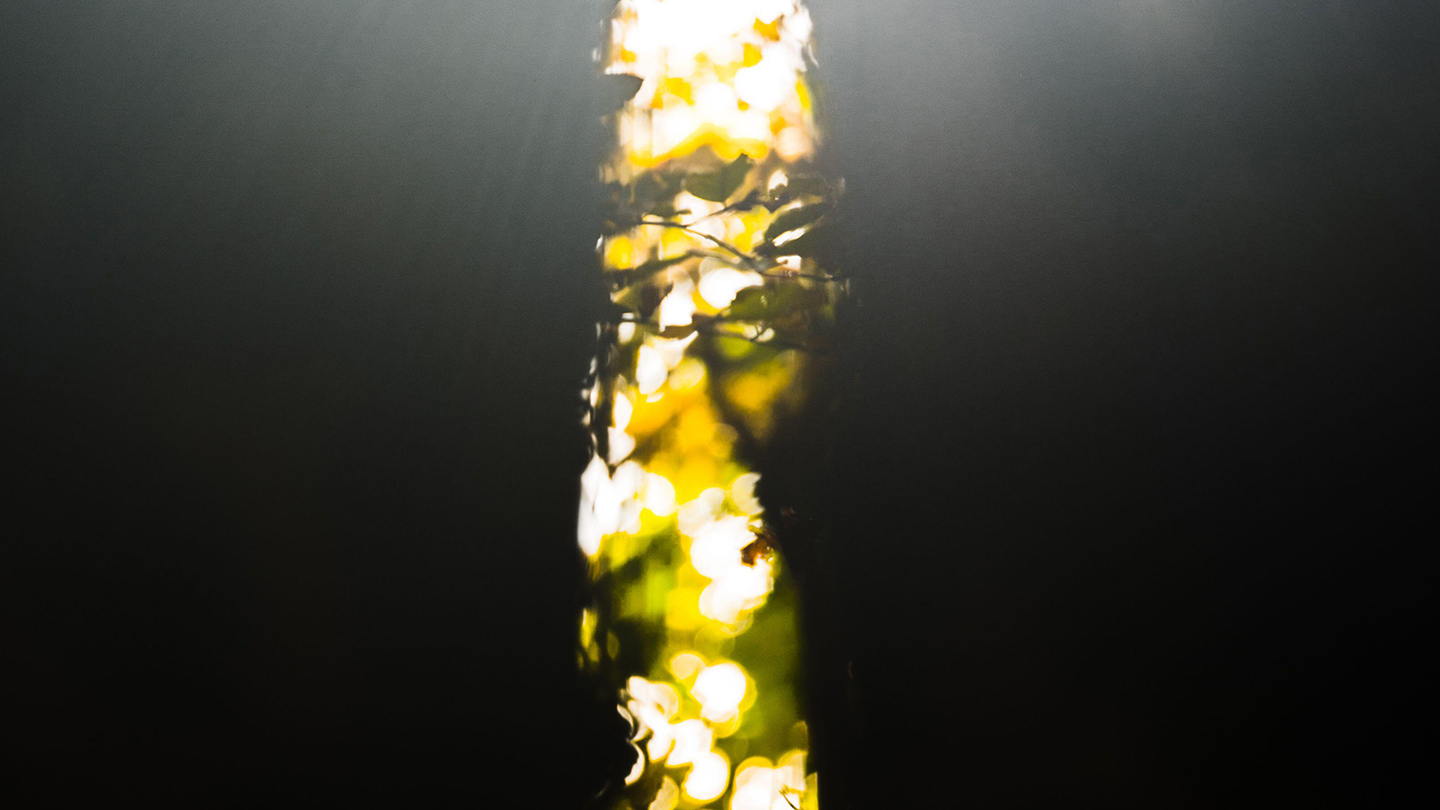
C. S. Lewis offers one analogy by which we might understand the difference between defending some good and personally enjoying it. In his essay, “Meditation in a Toolshed,” he describes the experience of standing in a darkened shed and looking at a small beam of sunlight entering through a crack by the door. He can see the beam clearly and watch the dust motes dance in and out of it. Then he takes a step forward and looks along the beam, seeing the trees outside and the sun shining far away. Thus “looking at” and “looking along” – analyzing an experience and having an experience – constitute two very different ways of relating to one and the same phenomenon.
Lewis goes on to explore the stakes of this contrast in a variety of contexts: describing another’s romantic feelings versus being in love yourself, or observing religious ceremonies versus participating in one as a faithful believer. He argues that modernity privileges the analytical, “looking at” perspective, and many assume that “the external account of a thing somehow refutes or ‘debunks’ the account given from inside.” But both perspectives are necessary parts of our human experience.
To some extent, of course, looking at and looking along can be mutually beneficial experiences. Articulating the value of prayer to others may help you practice prayer more regularly and thoughtfully. Explaining why a liberal arts education is valuable may enable you to value formative learning more in your own life. But when you get public praise or even financial remuneration for talking about prayer or pontificating about the importance of reading good books, then it’s inevitable that you’ll be drawn to devote more of your time and energy to those “looking at” activities, and the practice of prayer or the practice of deep reading and thinking can slowly atrophy.
The challenge today is that our culture offers more incentives to those who look at various goods in public than it does to those who enjoy these goods in their own lives. Thus it is harder for us to remember that there is indeed a stark difference between the public defense of goods such as marriage, children, faith, community, exercise, and education and the personal experience and enjoyment of these. But a public defense inevitably looks at an object rather than along it. And while we may not initially think there is any conflict between defending a good and enjoying it, Lewis’s analogy makes it clear that it is impossible to look at the beam and along it at the same time.
So, I am not making a public argument that there is never a place for the public defense of goods. That would be self-contradicting. Further, more people will have the opportunity to enjoy the goods of family and faith and community if some people make the sacrifices necessary to defend these in the public sphere and to cogently articulate the policies and attitudes that will best sustain them. For instance, more teachers and students will have the opportunity to engage in deep learning if some people sacrifice their own enjoyment of these goods to do the difficult work of administrating educational institutions and securing the resources and public support needed to sustain them.
My point is simply that we need to account for these costs honestly and recognize that, at least in some cases, they can be quite steep. J. R. R. Tolkien, for instance, dramatizes what seems to be a limit case in The Lord of the Rings. Near the end of The Return of the King, Frodo tells Sam that he is going to sail away with the elves and leave the Shire forever. Sam is dismayed: “But … I thought you were going to enjoy the Shire, too, for years and years, after all you have done.”
“So I thought too, once,” Frodo responds. “But I have been too deeply hurt, Sam. I tried to save the Shire, and it has been saved, but not for me. It must often be so, Sam, when things are in danger: some one has to give them up, lose them, so that others may keep them.”
Frodo’s is obviously an extreme example. Most public figures don’t experience the trauma he did and don’t utterly lose access to the goods they defend. But the point is that a public defense of some goods may involve forgoing their enjoyment, at least in part.
Those with a vocation for public argument, then, should at least set some limits in order to prevent their habitual “looking at” from atrophying their ability to also “look along” such goods. I don’t think there are universal prescriptions in this matter, but I’ll suggest three possibilities to at least give a sense of the kind of limits I have in mind.
First, do not opine on all things. Decisions about whether to publicly weigh in at any given juncture should consider both your own expertise and position and your potential audience’s receptivity. No one is an expert about everything, and no one should feel compelled to issue pronouncements on all the political or cultural events that trend on social media. Celebrity culture distorts our understanding of expertise, as people who earn a reputation in one domain then get asked what they think about other topics and issues. People in public roles, though – such as media figures, pastors, or other leaders – need to resist this pressure to opine widely about matters regarding which they have little of substance to contribute. Just because people will listen to what you say doesn’t mean you should in fact say something.
And this question of audience receptivity is in fact quite complicated and requires real discernment. The writer of Proverbs encapsulates the challenge in a set of two, seemingly opposed statements: “Answer not a fool according to his folly, lest you be like him yourself. Answer a fool according to his folly, lest he be wise in his own eyes” (Prov. 26:4–5). Those who respond to every foolish provocation will themselves sink to the level of fools. In an internet awash in hot takes and outrageous opinions, there’s never a shortage of folly that one could correct, but the costs to one’s own soul for engaging in these endless disputes are high. At the same time, a public defense of the truth might correct a fool, preventing him from being wise in his own eyes. Once again, we see that there are real trade-offs involved in wading into the controversies of the day, and while some people should speak out sometimes, all of us should set careful limits on our engagement or we will simply become like the fools we set out to correct.
Second, do not opine at all times. Even Jesus needed to go away to a “desolate place” for seasons of prayer and rest. Andy Crouch discusses the need for a regular rhythm of rest in his book The Tech-Wise Family. For the Crouch family, this means that “one hour a day, one day a week, and one week a year, we turn off our devices and worship, feast, play, and rest together.”
When Tsh Oxenreider realized that she was in danger of neglecting her own children in the service of giving advice to other parents, she made the hard choice to take a month off the internet. She was pleasantly surprised to discover that, in fact, the world didn’t need her weighing in all the time. And her online followers didn’t seem to mind; readers and listeners were waiting for her when she resumed. So not only did her business not suffer, her mental and psychological health benefited, and her family appreciated her season of more sustained attention to them. Now she takes a month off every summer and several weeks off around Christmas time. There’s not a magic formula that works for everyone in every role, but I’ve learned to distrust the wisdom and judgment of those who are always online and seem to take no breaks.
Finally, do opine on things you love. It’s often easier these days to get worked up about the outrages we’re against, the horrible ideas that the people we despise purportedly support. But negative polarization distorts our ability to think clearly and cuts us off from the very goods we once wanted to defend. If we make it a practice to look along those goods we also regularly look at, our public arguments will be tempered by real love.
In one of Wendell Berry’s Sabbath poems, he describes the various motives that prod him to write, but he concludes that the public stands he’s articulated ultimately serve a higher good:
The way of love leads all ways
to life beyond words, silent
and secret. To serve that triumph
I have done all the rest.
Words serve vital goods, but the way of love always exceeds our public defenses of it. Sarah Reardon distills Berry’s point in this poem when she writes, “Berry shows that his priority is the life beyond words – beyond scribbling and publishing, far beyond ‘platform’ and audience, networking and namedropping. Berry’s poem is in itself an example of how words may serve the wordless: with words artfully gathered, Berry points to the given beauties of this life, giving name to and forming an image about that which is impossible to capture in explanatory sentences.” Or to put this point in terms of Lewis’s analogy, Berry’s poem testifies that looking along the beam is the more excellent way, the activity that all his looking at aims to serve.
The digital maw is insatiable and respects no limits, so public figures need to learn to set healthy boundaries themselves. They can be deliberate about what and when they speak, and they can make sure they themselves prioritize the enjoyment of the goods they defend in public. Such limits don’t eliminate the real trade-offs between looking along and looking at, but they might at least mitigate the kinds of contradictions that Tsh Oxenreider found herself experiencing. And those seeking to discern which voices merit trust should attend particularly to those people who place prudent limits on their public engagement.