Podcast
The Fountain of Youth, The Godfather, and Lana Del Rey
Two Plough editors discuss a roadtrip to America’s forgotten first settlement, who is America’s Homer, and much more.
July 14, 2026
Try 3 months of unlimited access. Start your FREE TRIAL today. Cancel anytime.
START FREE TRIAL NOWThe Fountain of Youth, The Godfather, and Lana Del Rey
Two Plough editors discuss a roadtrip to America’s forgotten first settlement, who is America’s Homer, and much more.
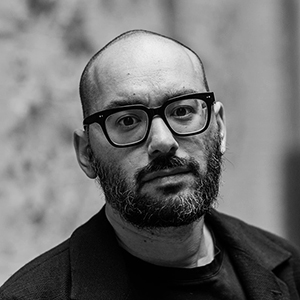
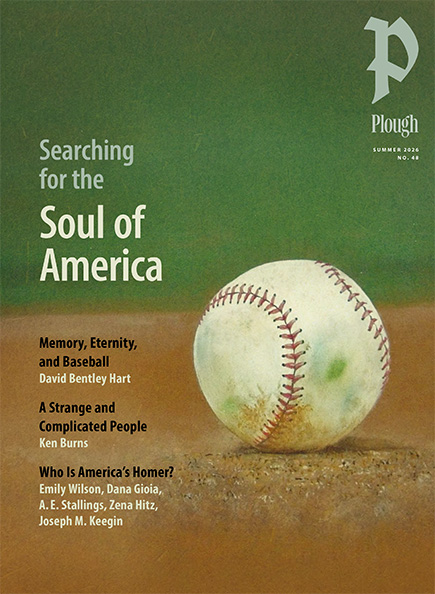
Joy Marie Clarkson: Welcome to Another Life, a podcast of Plough magazine. I’m your host, Joy Clarkson, and this is an episode in our series Searching for the Soul of America. In this series, we embark on a hopeful search for what is good, admirable, and even providential in the American Project. On today’s episode, I speak with Santiago Ramos. Santiago is an associate editor of Plough. In this episode, we delve into the history of America’s forgotten first colony and what it teaches us about America’s Hispanic roots, following Santiago’s journalistic journey to St. Augustine, Florida. Then we discuss one of Plough’s most popular and controversial topics yet. Who is America’s Homer? We discuss many options from Melville to Cormac McCarthy to my personal favorite, Lana Del Rey. It was a pleasure to speak with my fellow editor. I hope you’ll enjoy this episode of Another Life.
As we dive into this podcast, I’m sitting not in America, but in London, which has been having a heat wave this week, and Americans across the states, where I’m, of course, from have been mocking the Brits mercilessly for their inability to cope with the heat, which largely boils down to our lack of air conditioner. But as we get closer to the peak of summer, I am thinking fondly of American memories that I have. And it’s exciting to get to dive into these questions of what is the soul of America and what are the different corners of what make this great country what it is in both its glorious and its less glorious moments. And to join me today I have the great pleasure of speaking with Santiago Ramos who is one of our editors here at Plough. Welcome to the show. So I always like to begin these conversations by asking people where they physically are in the world. So where are you casting pod to us from, Santiago?
Santiago Ramos: I am in the island of Manhattan in New York City, at the northern extreme of the island.
Joy Marie Clarkson: Very nice. I don’t suppose one location is more American than another, but in some way that feels very American to me. I have some idea since we’re on an editorial call together at least once a week, but tell us about what you do and how you spend your days.
Santiago Ramos: My main job is as the online editor at Plough. I spend my days looking at the calendar of planned publications and hunting down editors and writers. I also do a fair bit of commissioning, thinking up new pieces, brainstorming, so everything that goes into a normal editorial job, which is pretty fun. It’s a social job even though I work from home a large part of the time. So yeah, I spend my days looking at a calendar and dreaming of new articles.
Joy Marie Clarkson: And chasing down people like me to see if I have finished my edits or gotten in contact with my authors, even when it’s been months in the making. So, we have all been hard at work on this Soul of America issue. And we’ve all worked on various pieces in it, but I want to talk to you today, particularly about two pieces. One that you oversaw and one that you wrote, but let’s start with the one that you wrote. The piece that you have in the issue is called “Searching for the Fountain of Youth,” written in one of my favorite forms of writing, travel writing, about a less known than it should be early colony that then became a part of North America, which also involves the search for the Fountain of Youth. So, can you tell us a little bit about this article and the trip that you went on to learn more about St. Augustine, Florida?
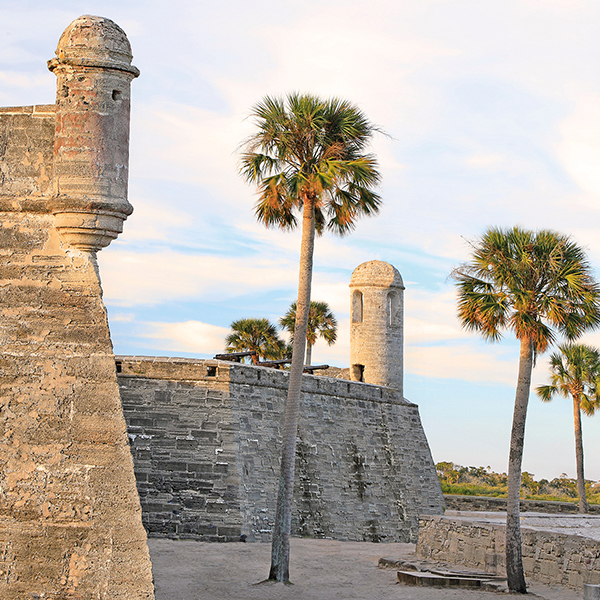
Santiago Ramos: St. Augustine is a fairly a small city in Florida, on the eastern coast of Florida. It’s about an hour and a half from Jacksonville, I believe, and it has the merit, I guess, of being the first European settlement in North America. There might have been a small village when Leif Erickson explored the far north of North America, but that didn’t really stick. Historians basically agree that it’s 1565, the foundation of St. Augustine by the Spanish.
Ever since I learned about this town, I’ve been intrigued precisely because the oldest settlement in North America is actually a Spanish settlement. It wasn’t Jamestown and it wasn’t Plymouth. It was a town where they speak Spanish. And I think the story of St. Augustine came to the fore once again, a few years ago, during the debates around the 1619 Project, which is a New York Times project to bring together historians, reporters, writers of different kinds to further explore the history of slavery and the inheritance of slavery in American history and institutions. One thing that they took a lot of criticism on was the idea that the first slave ship came in 1619. I think that that’s the reason why they chose that year. There was a slave ship that came in Virginia at that year, but the Spanish had brought over slaves, including black slaves, to St. Augustine before 1619. So a few local historians wrote a few articles and that’s a debate that I picked up on. I started learning more about St. Augustine, and I’ve wanted to travel there ever since.
Joy Marie Clarkson: One of the things you touch on numerous times in the article is the way in which St. Augustine a little bit occluded from the historical memory of the United States, even though it is this, as you said, its earliest European settlement in North America. Why is it that it is not taught as a part of American history in the same way that something like Jamestown would be, if it does have kind of that importance, as a settlement?
Santiago Ramos: Well, there’s a good reason in that the United States was founded by former British colonists. Who decided to write off their British citizenship in the Declaration of Independence. And that happened two hundred and fifty years ago, that’s what we’re celebrating this summer. So there is a good reason to understand American history as having started in Jamestown, and with the pilgrims in Plymouth. But there is also this newer reality that the United States is not just the inheritance of the thirteen colonies, but it’s also a big empire that has stretched over into Latin America: in more than one place in the Southwest, after the Mexican American War, and in Puerto Rico, after the Spanish-American War.
And so, in order to complicate the picture of what America sees itself to be, I think it would be interesting to tell the story of St. Augustine and to say that, in a very real way, it’s on par with those other foundings. And also it’s like a parallel idea to the 1619 project that I think had a kernel of truth to what they were trying to do, which was to add another founding to the United States in order to explain its current reality in a more accurate way. It’s the same thing with talking about St. Augustine, part of the inspiration for the story was also the immigration crackdown, and especially the information about Hispanic immigrants in the United States. I think step one for understanding how to make a situation more just is to understand reality. And one of the realities of the United States is that it’s partially Hispanic already. I don’t know if that answers your question, but those are the trains of thought that led me to St. Augustine.
Joy Marie Clarkson: Absolutely. Yes. You had a phrase that struck me, something about the homesickness you’re experiencing in middle age, from growing up in North America but having been born in Latin America and there’s something about experiencing this place that was appealing or helpful or something along those lines. It sounds like a little bit of what you’re getting to in telling a story of America where Hispanic people are a part of its history, which is the case. But it’s maybe not how Americans always tell the story, and St. Augustine’s gives us a way to speak about that maybe.
Santiago Ramos: Yeah. No, that’s the personal motivation too. So separate from the political angle to the story is just my own story. Any immigrant who goes to a new country very young will tell you that they feel divided between two countries, and there are worse things that can happen to a person. It’s not an exceptional source of suffering, but it is an interesting state for your soul to be in – an interesting division of your identity. And I’ve always been intrigued by the fact that there are places in the United States that share my divided identity. I’m self-interested here in exploring St. Augustine and also Puerto Rico and also the Southwest, especially the fact that United States itself has for a long time already cultivated a split identity and at least parts of its vast empire. I think maybe also I’m starting to learn more about this because my wife is from New England in New Hampshire, in which there’s also a French-Anglo split identity.
Joy Marie Clarkson: Totally. It was interesting. In the first episode in the series, I talked with Ken Burns about the American Revolution and his documentary on that. We think of it as the clean beginning of a nation with a unity around what it wanted to be. But one of the things that he depicted really well in the conversation was thinking about how much of America is this ongoing negotiation about what America is, who belongs, and what its character is. One of the ways he talked about that was with how Native Americans negotiated that in the Revolutionary War, what benefited them and what didn’t benefit them, and the ways that fit into the sense of what America was. And I feel like that goes along with what you’re saying about America being full of these split identities. Some of those are more fraught, as you said, because we are currently experiencing an intense crackdown on immigration, especially targeting those from Latin America. This is an ongoing part of America’s history – these negotiations about who belongs who doesn’t belong, and what it is to be American. And the closer you look at these things, the more divisions you find, and it’s interesting how regional places bring out different aspects of that.
Santiago Ramos: Yeah. There’s a certain idea of America that says we’re a creedal nation, that the only thing that is significant for American identity is embracing Enlightenment ideals or the ideals of the Constitution or whatever – some would even say Christian ideals. There’s a certain dissatisfaction with that idea of identity because it feels too disconnected from history and from a concrete people. There are other nation states with a people that have a very concrete sense of who they are. There’s the Irish people, there’s the Paraguayan people. Ask any Paraguayan if he’s from Argentina – he’ll explain to you why he’s not. So I understand the American desire to cultivate a historical sense of its own peoplehood separate from political projects. But at the same time, just the reality of America is that there’s multiple peoples here. And that’s why I refer to the United States as more of an empire than a country. I don’t mean it necessarily as a derogatory word, but it’s just a reality that there are multiple peoples here, and mutual recognition is the beginning of peace, maybe.
Joy Marie Clarkson: One of the stories that you drew out was the relationship between settlers and Christianity, and the myth of the Fountain of Youth. The story is – you can say more about this – that one of the conquerors was interested in the Fountain of Youth, and you contrast that with what was meant to be his faith, the Christian faith, and his hope in the resurrection. Can you tell us a little bit about the Fountain of Youth?
Santiago Ramos: Yes. So there’s a whole other angle to this story, which is that the first European to set foot on Florida was Juan Ponce de León, who was a Spanish conquistador, who at a certain point was very high up in the government of the Spanish colonies in Puerto Rico and present-day Dominican Republic. He was given a charter to explore Florida, but he was not very successful in doing so; he discovered a lot, but he was poorly prepared for the expedition, and he was never able to make a establish a settlement. It took another forty years for his successors to found St. Augustine. But he also had a lot of enemies, Ponce de León, in the Spanish Crown and I think Christopher Columbus’s son, who was a rival for power in the colonies. And the chroniclers that later wrote down the story of Ponce de León tried to paint him as a sort of vain, you know, ambitious gold seeker who only went to Florida because he had heard stories of the Fountain of Youth. That story spread and it was designed to make him look stupid in the eyes of the ruling nobility in Spain, but it just became an interesting story that, to this day, is present in in St. Augustine. In fact, there is a spring of water there which was identified by Spanish historians as a place where they could confirm that Ponce de León actually set foot, and they call that the Fountain of Youth – it’s obviously not the Fountain of Youth. The only thing that’s special about that place is that Ponce de León was physically there at a certain point.
What you’re referring to also is an interesting point. The earliest chronicler, the Spanish chronicler that talks about Ponce de León, says that the Native Americans that he encountered pretended like they had heard of a Spanish Fountain of Youth and egged him on and sent him on wild goose chases. And that was an interesting way to manipulate him. The other comment that the chronicler makes is that Ponce de León was a vain man who, if he was truly a Christian, would have had faith in the resurrection and wouldn’t have needed the Fountain of Youth. In fact, he says that many of the Timucua indigenous people there embraced Christianity instead of the Fountain of Youth. I thought it was an interesting irony that the European Christian is the one that’s searching for the Fountain of Youth and it’s the indigenous people that can see through that vanity. It’s one of the many different interesting contradictions and ironies of the place. Because St. Augustine is so rich with all these stories and symbols, it’s a great place to write an essay about.
Joy Marie Clarkson: Hmm. Well, as I said before we got on this podcast, it’s a very interesting piece. I learned a lot from it, and it’s also very moving because I think it does touch on a lot of these to-the-bone questions about America and its sense of itself. I want to ask you now about another piece which you oversaw, which was a symposium of asking different American writers, thinkers, and scholars who they thought America’s Homer was. What did you mean by American Homer? Because one could have defined that in different ways.
Santiago Ramos: I’m glad you asked because it turned out to be an interesting question – people took it in different directions. I pulled up the actual email I sent to people just to read it aloud. I said, “we would like to run a symposium tentatively titled ‘Who is our Homer?’”
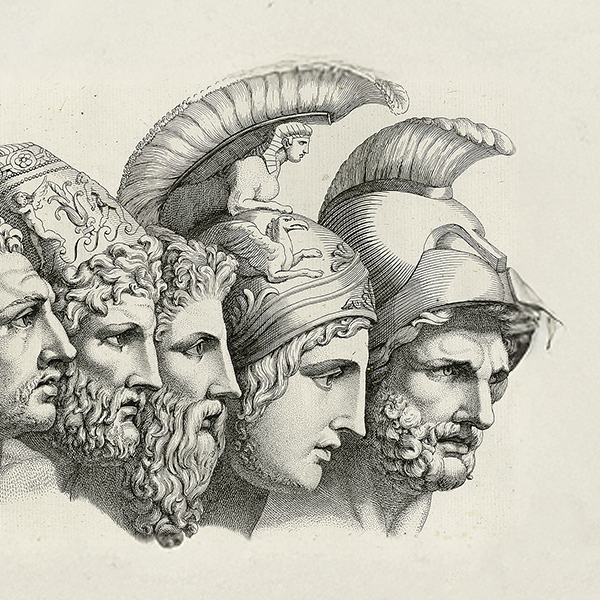
And then I said, “If England has Shakespeare, Spain has Cervantes, Italy has Dante, Russia has Pushkin, then who do we have?” A few contributors, the ones that were more classics-minded or poetry-minded, took the Homer side of that question more seriously. For example, Emily Wilson said, “Well, Homer is somebody who writes at epic scale, who combines music with poetry,” so she launched off from that observation. Jane Charles, a poet who actually works for Plough, considered whether America has produced an epic poem. A. E. Stallings finds Homeric qualities in the Little House books, which is really interesting – one of my favorite entries. Other people took it more broadly and considered, “is there a writer, even a prose writer, that captures something essential about what it means to be American?” They wrote about novelists like Melville – we have Zena Hitz writing about Melville. It was interesting because the prompt inspired different types of responses.
Joy Marie Clarkson: Yeah, I did think that was really interesting. And I enjoyed getting to read the different entries. I thought one of the things that was interesting about that question was it brings up the question of what a national poet is for. I shouldn’t speak too confidently about classics because this is very much not my area, but there’s a sense that Homer is almost like contra the philosophers. Not that his writing isn’t philosophical, but there’s a sense that he’s the poet: he uses music and he’s perceived as this dangerous figure by people like Plato because he stirs up nationalistic tendencies and emotions. It was interesting to think about who does that for America? Or do we have a sense of feeling like it’s important for a national someone to be doing that. I was also thinking about people like Whitman – we got a few Whitman responses. I was also thinking about the author of Blood Meridian, Cormac McCarthy. To me, Cormac McCarthy is somewhat Homeric. Obviously, he’s a prose writer, but there’s a sense of the journeying and the trying to get to some essentialness of America.
Santiago Ramos: And the open spaces. He writes about open spaces, and a large part of America is open space. It sets us apart from Europe at least. It’s an interesting idea. The thing about Homer is that he’s not, I think, to the modern Greek state that exists today, their national writer. It’s the guy that wrote Zorba the Greek, Nicholas Kazansakis? If you go to Greece, which I did with my wife last summer, that’s the novel that you find in the tourist shops. It’s like “This is the guy you have to read to understand our spirit.” Homer is more representative of a whole civilization. I think Zena Hitz was like, “Well, I understand your prompt, but Homer’s not the guy that you should be using,” so I understand that. But the American Homer would be someone that can collect as many voices into his work and also unite them in some way.
The old philosophical problem of the one and the many, that’s what this poet in his poetic way is trying to resolve, right? Whitman is the easy answer. Joseph Keegin, professor of American Studies, I think, philosophy, but in an American studies department, wrote a nice little thing on Whitman. Whitman is the easiest answer because he literally tries to do this. He self-consciously tries to incorporate the voices of all the different types of Americans and say something about democracy, but I think there are other ways to answer the question. There are other ways to approach the question because America’s so big.
Joy Marie Clarkson: Yeah. If you had to pick your American Homer, who would you pick?
Santiago Ramos: I’m glad I didn’t assign this to myself, because I don’t know who I would have written about. I guess there’s a couple people. The easiest answer, and it’s cliche, would be Bob Dylan. It’s so modern and kind of a baby boomer fetish, but he does capture modern America and he experimented with different genres, a few of which were born in the United States. He was also part of the civil rights movement, so he has a democratic sense. He has the Christianity within him, but he himself is not Christian, at least not anymore.
Joy Marie Clarkson: The kind of fraught relationship with Christianity.
Santiago Ramos: He’s everything in a way, so he might be a good answer, but definitely not the only answer.
Joy Marie Clarkson: Well, that’s why there’s a whole symposium on it. Dylan would have been my impulse as well, so there must be a Plough editor’s vibe that goes in that direction.
Santiago Ramos: Yeah. What I was hoping is that somebody would do a filmmaker. That might’ve been interesting as well.
Joy Marie Clarkson: Hmm. Who would be your filmmaker, do you have one in mind?
Santiago Ramos: The ones that I have in mind are way too tied to a particular ethnic experience, like Martin Scorsese, right? But maybe that’s what you need. Maybe you express the identity of the whole through one particular experience. There’s a reason why everyone in the United States and not just New York Italians identify with Scorsese’s films. Or Coppola, like The Godfather. The Godfather’s supposed to be a story of America, and even though it’s about one experience of America, it still speaks to a lot of people. But I don’t know enough about the golden era of filmmaking in the United States. There’s probably somebody in ‘40s and ‘50s American cinema that is a better representative.
Joy Marie Clarkson: Yes. I also somehow made it my whole life without watching The Godfather until last year. Ironically I was in Sicily, and I thought, “OK, well I need to watch The Godfather.” And it’s really worth the hype. It’s very good, and there is some illam of American-ness that it captures even through its pessimism.
Santiago Ramos: Yeah. The first line is “I believed in America.” It’s true that it’s about a particular ethnic experience, but the military is evoked, you know, because the son is coming home from serving in the military. There’s also the Irish angle because the conciliar is an Irishman. The state is involved in different ways. It’s a vision of the whole, even though it’s from a particular vantage point.
Joy Marie Clarkson: Yes, and in a dark way, there’s a sense of the American dream that one can come to America, stay there, succeed, gain power and wealth, and support one’s family. That’s maybe a very simplistic reading of The Godfather, but that is an element of it too. Dealing with the ways that could also be inflected with violence is an interesting thing to think about.
Santiago Ramos: Yeah. The other thing people could have done is taken one of those grand epics like Ben-Hur or The Ten Commandments, which are very American takes on biblical stories. I haven’t watched those in a long time, but you might be able to make the case that there’s something of an American twist in those movies. It’s also something that the United States genuinely did create, which is the grand studio epic film: it combines music and they had script writers that were top notch. It’s a total work of art. These are all ideas that I should have incorporated. You should’ve told me this months ago, Joy.
Joy Marie Clarkson: Sorry, but I didn’t need to because it’s an excellent and fascinating symposium, which everyone should go read. I’ll add one final contender to the list, Bruce Springsteen, who feels like a Homer of America. Maybe with a little bit more irony. But then again, I think that sense of irony is also an important part of the American experience and American identity – the ironies that are bound up within what it is to be American.
Santiago Ramos: New Jersey is the heart of America.
Joy Marie Clarkson: Yeah, exactly. Well it’s interesting – maybe this is just “to a hammer everything looks like a nail,” but I think that both your piece and the symposium on America’s Homer bring up these questions. They bring up the ways in which much of what the soul of America is about its relationship between, as you said, the one and the many: how does the singular experience of the Italian family in The Godfather reveal something unique about what it is to be American in the broader sense? Just in the same way that St. Augustine captures a microcosm of something important about what it is to be American.
Santiago Ramos: And there was an obvious answer to the question of who’s America’s poet, which you’d neglected to mention. Lana Del Rey.
Joy Marie Clarkson: Yeah, well this won’t be on the podcast, but Santiago is looking at my T-shirt. I’m currently wearing a Lana Del Rey T-shirt in the style of American baseball. I feel like I’m evoking a lot of America’s ethos all at once.
Santiago Ramos: Well it’s interesting she cultivates this Americana thing intensely.
Joy Marie Clarkson: Totally. She does cultivate the Americana image in many ways throughout her career, perhaps most notably in “Ride,” if you’ve seen that music video.
Santiago Ramos: Is that from an early album?
Joy Marie Clarkson: It’s from Born to Die.
Santiago Ramos: OK. I started listening to her after Ultraviolence.
Joy Marie Clarkson: When you say she cultivates the American ethos, tell me what you mean and I can tell you my thoughts as well.
Santiago Ramos: Well, she evokes this 1950s LA glamour. You know, the golden era of Hollywood. Even writing a song with the words Coca Cola in it, however salacious the context, there’s something … I don’t know. On some subconscious level it hits as being a uniquely American form of glamour. I really like Chemtrails Over the Country Club. That was a beautiful, beautiful album. I think Ultraviolence is very dark and maybe less American in some ways, more European existentialist, but still.
Joy Marie Clarkson: I think both of those things run through Lana Del Rey. I was going to say, to me the American one is “Ride,” which is on Born to Die. It has this famous music video that’s like ten minutes long and involves this very long, very serious but also funny poem or spoken word where she says, “I always wanted to be a poet.” It’s about her and this group of bikers, and she says things like, “my mother always said I was an unusual girl. I didn’t know right from wrong.” You have to watch it with a hearty amount of … the absurdism in it. There’s an article – I don’t know if it’s still up – but someone wrote about the existentialism of Lana Del Rey, that there’s this value for absolute freedom, that she’s a character that is a slave to her own freedom. She chooses whatever she wants to the extent that she’ll have this in the music video, this unstable life with the bikers, because that’s what it truly is to be free. But it’s also what it truly is to be American, right? To be an American is to be free. And so what is freedom about? Another thing I think is interesting about Lana is that she’s from New York. She’s from the East Coast. She went and she studied philosophy at Fordham.
Santiago Ramos: That’s right. And you want to know something crazy? A friend of mine was in a course on metaphysics and Lizzie Grant, who today is known as Lana Del Rey, was in the class. She would sit in the back and not pay attention.
Joy Marie Clarkson: I feel like she was on some level paying attention because I think there’s some metaphysics in Lana Del Rey’s music. It’s interesting that she’s from East Coast, but she cultivates the West Coast. She clearly cultivates the West Coast glamour. I remember my first experience with Lana Del Rey was my college roommate being like, “you have to listen to this album. It’s just everything that it means to be a Californian.”
Santiago Ramos: Mm. She was not from California.
Joy Marie Clarkson: No, she’s not from California, which is what makes it really funny. The reason I have this T-shirt is that I saw her in London last year. She hadn’t toured for a while, and she’s now incorporated a new aspect of American identity, which is the land of her new husband. The whole stage was set up as this swampy bayou cabin, this life that she’s setting up with her husband, which, halfway through the show, she then lights on fire and burns down. I think Lana Del Rey could certainly be the American Homer, in her love of absolute freedom, which I do think is philosophical if you look at it deeply.
Santiago Ramos: And freedom involving reinvention too. Like Bob Dylan, she changes her name, she changes the place where she lives, and she experiments with different styles.
Joy Marie Clarkson: Yeah. Absolutely. I also like that in the last few years we have gotten like a slightly more intimate look into Lizzie Grant’s life. I really like her last album, it starts with a song called The Grants, in which she’s returning to her familial name. It’s also about her family, and her sister having a daughter. So yes. I think if I had to put my name in, I probably would have said Lana del Rey.
Santiago Ramos: Well, in fifty years when we do the three hundredth anniversary, you can write the Lana Del Rey one.
Joy Marie Clarkson: I will. I’ll do it as an ode to my youth by that point. As we draw to a close, there’s many more things we could talk about. but something that I like to ask every guest, and I’m assuming you’ve thought about this so much because we’re editors and so we must think about the motto of Plough is the question of what is one thing that reminds you that another life is possible. So it could be anything, it could be a movie, a practice, a person, a corner shop.
But I would love to know if you’ve thought about this since I asked you at the beginning, what is one thing that reminds you that another life is possible?
Santiago Ramos: The quickest way that I try to remind myself of this is probably to listen to music. and music that’s so different that you wouldn’t encounter in, you know, your daily life around major city, so maybe Mozart, and just dwell on the beauty and think, wow, human beings sat down to write this down and create this.
Joy Marie Clarkson: I love that. It is it is kind of like a shortcut to experiencing a different reality. Well, thank you so much for joining us. It’s been lovely to chat with you.
Santiago Ramos: Likewise, likewise.