Essay
The Early Years of Plough
An overview of the history of this magazine and publishing house from 1920 to 1938.
November 28, 2026
Try 3 months of unlimited access. Start your FREE TRIAL today. Cancel anytime.
START FREE TRIAL NOWThe Early Years of Plough
An overview of the history of this magazine and publishing house from 1920 to 1938.
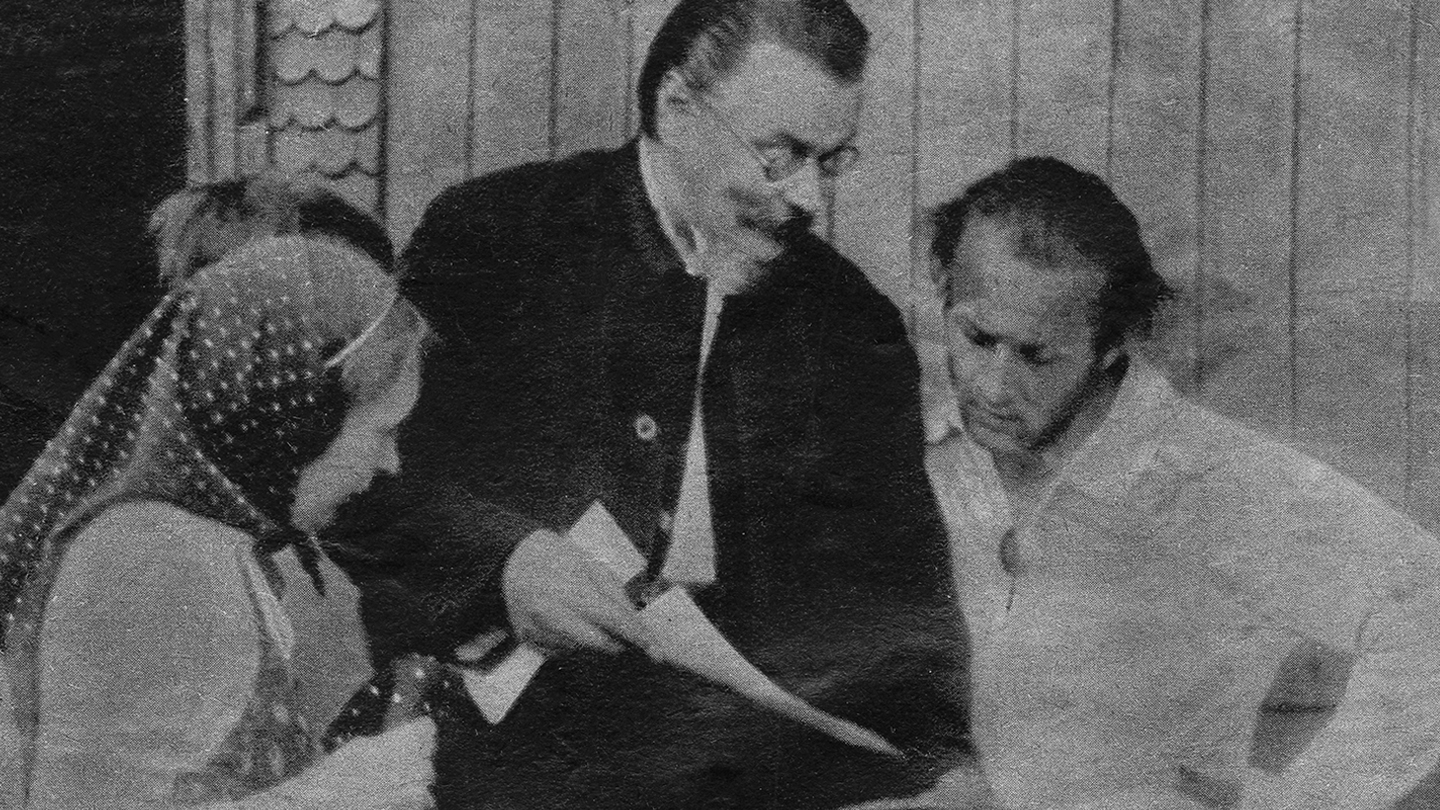
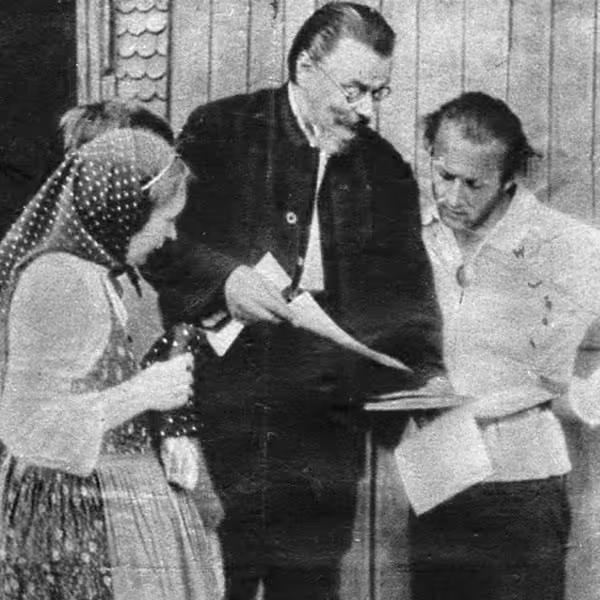
Eberhard Arnold and co-workers, c. 1928–1933.
[.article__paragraph--cap][.small-caps]The story of Plough[.small-caps] is the story of the Bruderhof movement. From the beginning, the community group sought allies in church and society whose writings might inspire reflection, action, and faith on topics such as life in community, justice, peace, culture, and the spiritual life.[.article__paragraph--cap]
The independent publishing house and its magazine have been active under the name Plough since 1938, when its first English-language editions were published at the Cotswold Bruderhof in England. Its roots can be traced back further though, to Eberhard Arnold, his wife Emmy, and her sister Else von Hollander, and their publishing ventures as they established a community where they sought to live in accordance with the Sermon on the Mount.
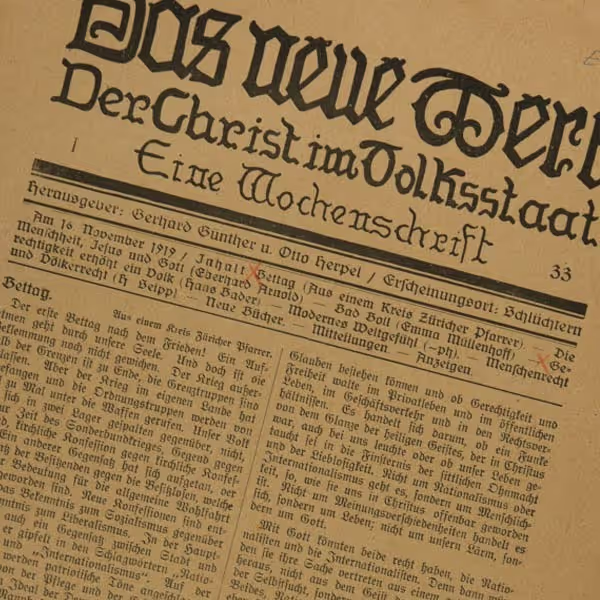
Das neue Werk, the journal that Arnold edited from 1919 to 1922, can be considered Plough’s predecessor. Like today’s magazine, it offered thought-provoking articles from a wide range of authors while remaining solidly rooted in Christianity. The Neuwerk publishing house also brought out books, both on Christian thought and on the social issues of the day. In a promotional letter, Arnold describes its twofold mission: to witness to Christian faith and to represent the coming kingdom in political and economic life. Ideally, those involved in the publishing house would share the same vision and demonstrate kingdom values in community life. In this letter, Arnold penned a line that remains in Plough’s mission statement today: “With breadth of vision, with energetic daring, our publishing house must steer its course right into the torrent of present-day thought.”
The name “Plough,” however, can be traced back further. Prior to Das neue Werk, Arnold worked as editor of the magazine Die Furche (the furrow), the periodical of the Deutsche Christliche Studentenvereinigung (German Student Christian Movement, or SCM). “Hinter dem Pfluge” (behind the plow) was already a regular column in Die Furche when he joined the staff in 1915. Plowing, of course, creates furrows, a connection Arnold emphasized in 1917: “The Furche publishing house takes its name from the ‘furrow.’ This symbol from nature is a powerful reminder for us to pursue deepening and inner development. But the ‘furrow’ is also an image of the inner openness that is required in every instance of sowing new vitality and a new joy for life. And this kind of sowing only brings fruit where God’s plow has taken hold of the inner being. The deepest and most enduring inner development can only be obtained through the new plowing of repentance.”
Coincidentally, just before Eberhard and Emmy Arnold and Else von Hollander became part of the Neuwerk movement, the Neuwerk publishing house had released a 1920 calendar titled Der Pflug (the plow).
Eberhard Arnold was born in 1883 to an upper-middle-class family in Königsberg, Prussia. From a young age, he began to question the class inequality he witnessed and the privileges afforded to him and his family by their wealth and status. At sixteen, he had a conversion experience in the home of his mother’s cousin, Ernst Ferdinand Klein, whose Christianity included confronting abuse in the congregation he attended and standing up for the rights of the poor. Arnold later served in a Salvation Army chapter while still in high school, becoming increasingly critical of the bourgeois culture of his parents and the views and practices of the established churches. After graduating high school, he wanted to study medicine, but his father, who taught church history at Breslau University, insisted he study theology, and Arnold reluctantly obliged, beginning his studies at Breslau University in 1905.
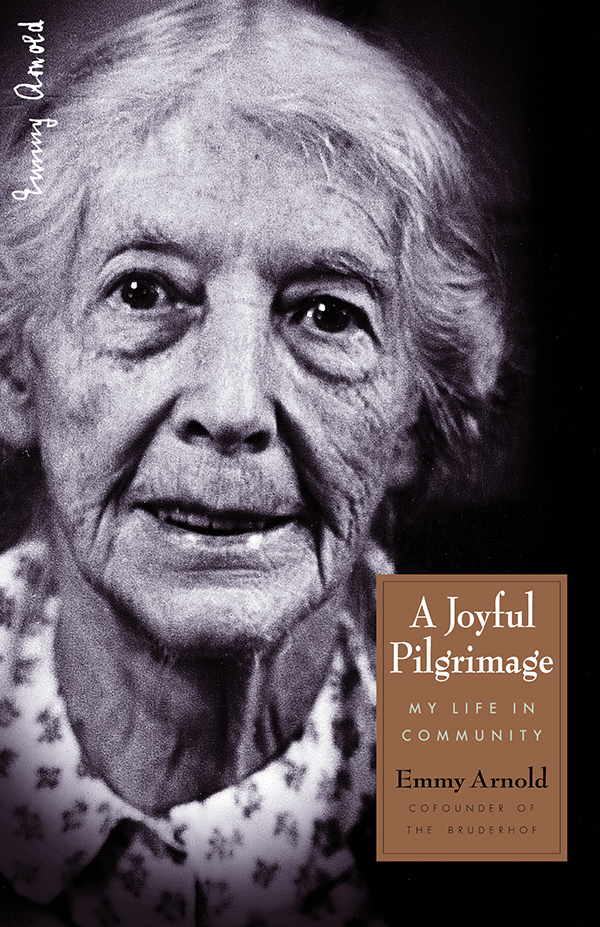
It was during this time that he met Emmy von Hollander at a revival meeting. She too saw the gap between the practice of the churches and the words of Jesus, and she grappled with how to live out the latter in the world of her time. Eberhard and Emmy were soon engaged to be married. Over the next two years, they both came to the conclusion that believers should be baptized as adults (and that therefore their infant baptisms in the Lutheran Church were invalid), bringing them into conflict with their families and ultimately disqualifying Arnold from sitting his exams for a doctorate in theology. In 1909, he transferred to philosophy at Erlangen University. He received the highest possible mark for his dissertation on Christianity and Friedrich Nietzsche, published as a book the following year. After his exams, Eberhard and Emmy married.
Arnold’s book on Nietzsche marked the beginning of a literary career that would eventually broaden into editing and publishing. In 1913, his booklet Vital Signs of Living Churches was published, and the following year saw eighteen of his articles printed in various periodicals. When Germany went to war in August 1914, though, Arnold was called up to fight. He was sent back after a few weeks because he had tuberculosis. He took the opportunity to rework his articles into a book, War: A Call to Inwardness. The next year, he was offered his first position in publishing.
During his years as a theology student, Arnold had been part of the Student Christian Movement, leading Bible study groups. In October 1915, he began work as associate editor for Die Furche,[.footnote-link]1[.footnote-link] a monthly journal “for the deepening of Christian life and the stimulation of Christian work in the academic world.” The first issues were published by Martin Warneck Verlag in Berlin, but in October 1914 the Furche Verlag was founded with its own printing press and connected bookstore.[.footnote-link]2[.footnote-link] Arnold was invited to serve as literary advisor and oversee both the magazine and book publishing.[.footnote-link]3[.footnote-link] The magazine was intended as a “pool in which our distinct tendencies can flow together and work as a pollinating witness, to a somewhat greater extent through the printed word.”[.footnote-link]4[.footnote-link] This approach is evident in the periodical’s content: poetry, prayers, narratives, sermons, book reviews, and essays on literature, art, and culture from a broadly Protestant perspective. As Arnold put it in 1917, Die Furche should “carry out literary and artistic work for which the testimony of the gospel remains the highest priority, while at the same time being mindful of all that is true, noble, and pure.”
Arnold managed a heavy workload at this time, as detailed by his biographer Markus Baum: his tasks for the first three months were to assemble a portfolio of Ludwig Richter’s artwork; to familiarize himself with, and write a foreword to, Der Heliand (The Savior), an epic Saxon poem on Christ from the early Middle Ages; to edit thirty to forty manuscripts; and to compile collections of quotations and aphorisms from Luther and from Bismarck. Then there were the archives of Die Furche to be set in order (no one had filed anything for years), letters to write to about fifty contributing authors, letters to reviewers and university rectors, plans to be made for the next issues of Die Furche, and various book reviews to write.[.footnote-link]5[.footnote-link]
Arnold’s sister-in-law Else, who had already been assisting him in his research and writing, soon took up work as his editorial secretary. She developed technical skills in book design and became proficient in shorthand and typing.[.footnote-link]6[.footnote-link]
In 1914, the SCM embraced the nationalistic spirit that pervaded Germany at the outbreak of the war. This found immediate expression in Die Furche, which extolled Germany’s religious, intellectual, and cultural heritage and denigrated other nations, especially the English. The central office of the SCM prepared literature to send to “brothers on active duty” on the front. Arnold had already begun down this path himself with his 1914 book; the following year, he proceeded further with articles like “The German Spirit” and “The New Germanism and Our Movement,” and reflected on German weapon manufacturing as an occasion for deepening the inner life. But as more radical nationalist elements emerged and the German populace grew war-weary, these commitments began to wane.
This period was also marked by various conflicts between Arnold and other SCM staff. Already in 1907, as a theology student, he resigned from the executive committee after theological differences over biblical inspiration emerged.[.footnote-link]7[.footnote-link] In 1915, when Arnold began work at Die Furche, editor-in-chief Gerhard Niedermeyer expected him to “refrain from writing articles in Die Furche, as well as other publications, as much as possible,” which was “the greatest disappointment” for Arnold. The two disagreed over the wartime priorities of the periodical. As Emmy Arnold recalls, when Eberhard Arnold continued to emphasize the importance of spiritual disciplines, Niedermeyer responded, “Dr. Arnold, there is no time for inwardness now. We are at war, Herr Doktor, at war!”[.footnote-link]8[.footnote-link]
Deeper theological differences began to emerge within the SCM as the war drew to a close and people were confronted with the shifting social and political landscape. Some wanted to return to “the beaten track of conventional church life and revivalist pietism.”[.footnote-link]9[.footnote-link] Arnold himself underwent something of a spiritual crisis. Serving as a chaplain to wounded soldiers, he came face to face with the ravages of war and its effect on the psyches of returning soldiers. The end of hostilities left Germany defeated, its people hungry, bitter, and hopeless. In Berlin there were riots. Arnold concluded that a Christian cannot participate in war – a stance that was basically unknown in the circles he was part of. Emmy Arnold later recalled:
In Berlin we were in serious conflict with the leadership of the Student Christian Movement. More than that – they were upset with us. The former Christian fellowship forms and mode of speech seemed false and ungenuine to us. Die Furche was too comfortable and self-satisfied. It was nationalistic, mourned Germany’s past, and hoped for a better future, for the return of Germany’s former calm. People were looking backward, comforting themselves in their Christianity. We, on the other hand, saw God’s judgment more and more not as a misfortune for Germany but in hope that life would be born of death. Eberhard often said, quoting Ulrich von Hutten: “Life is a joy – spirits are awaking!” The conflict with the Student Christian Movement became increasingly unbearable. People thought we had abandoned our faith because we were shedding religious forms bit by bit. But the opposite was the case. The hypocrisy of what had been going on under cover was more and more repulsive to us. We wanted no difference between the “outer” life and the “inner” life, and we rejected all outward piety, while we searched for a new expression, a new culture, born in community with others.[.footnote-link]10[.footnote-link]
In March 1919, the first issue of a weekly paper Der christliche Demokrat (The Christian Democrat) appeared, founded by pastor Otto Herpel and schoolteacher Georg Flemmig and published by the Neuwerk Verlag in Schlüchtern. It was aligned with the new German Democratic Party, which had set out a left-liberal platform championing parliamentary democracy, individual freedoms, and social responsibility.[.footnote-link]11[.footnote-link] The publication espoused these values alongside explicitly religious goals: to apply the Sermon on the Mount to world politics and to develop a “closer association of Christianity and the Protestant Church with the political left.”[.footnote-link]12[.footnote-link] Its first article, written by Georg Flemmig, took its title from Jeremiah 4:3: “Plow your unplowed fields. Don’t sow your seeds in the hedges!”
Herpel wrote to Arnold in June, and Arnold responded enthusiastically, asking for past issues of the paper and inviting Herpel to visit him in Berlin.
I see Christianity more and more as anticipation of the character of the kingdom of God and the conditions of the kingdom of God. Even if the whole world around us is full of murderous attitudes and mammonistic injustice, we oppose militaristic and capitalist evils with the spirit of absolute love and justice. We oppose unbelief with faith, which consists in making the impossible possible, as Jesus did.[.footnote-link]13[.footnote-link]
An announcement in the September 14 issue read: “Starting October 1, the Christian Democrat will have the title Das neue Werk: der Christ im Volksstaat (The New Work: The Christian in Democracy). Under Arnold’s leadership, the periodical was given a new look: a small booklet format and a modern typeface. It would come out twice a month instead of every week.
In January 1920 Arnold resigned from Furche and his responsibilities with the SCM, as there seemed no way to resolve tensions. He now gave his full energy to Neuwerk. Else became Neuwerk’s secretary. The Arnold family and some of their closest friends were now considering restructuring their lifestyle to align more closely with Jesus’ commands.
In June, the Arnold family moved to a large house in the village of Sannerz, about five miles from Schlüchtern. Over the course of the summer they were joined by a number of single young people, and by mid-August, the publishing house relocated to Sannerz, where it became the focal point of the budding community.
Neuwerk was a movement – an association of likeminded young men and women across Germany and beyond – and Das neue Werk became its mouthpiece. Its main themes were: a) the relationship between capitalism and socialism and restructuring life according to early Christian principles in settlements or communes; b) the international peace movement (the International Fellowship of Reconciliation was founded in 1914); c) the Youth Movement then sweeping through Germany as young people threw off the constraints of bourgeois society, seeking freedom in nature and genuine relationships.
Besides the magazine, the Neuwerk Publishing House produced a number of books. These were planned in three lines as Arnold described in a letter of August 14, 1920:
New, and yet oldest of all, is people’s longing for a life filled by God, life in and with Christ. Through our spiritual series (Innenschau) we want to provide opportunity for people to speak to us who, from their inward depth, have looked with the eyes of the spirit on what God does. The first book to be published will be a selection from Zinzendorf, which gives expression to the power of this inward vision to lead to action.
This concern for the Spirit’s working in outward life is emphasized by the second series of books we are planning: the Neuwerk series, which expresses how Jesus shows us what we have to do. In this series, I include my book “Jesus and the Future State” about the relationship between the coming kingdom of God and the existing economic and social order. [Arnold never published this book, but he did draft an article with this title.]
From another approach the spiritual series is supplemented by a series of "Homeland Books" which is to begin with Georg Flemmig’s “Village Musings.” Here we are led into God-given nature, to rejoice in looking outward, a necessary consequence and complement of looking inward.[.footnote-link]14[.footnote-link]
The core staff of the publishing house was the handful of people living communally in the villa. They received throngs of curious visitors as well as tramps looking for food or children in need of care. Conditions were primitive.
Although the Neuwerk movement has remained largely unknown in the traditional Protestant historiography of the last century, such well-known theologians, scientists, and social politicians as Karl Barth, Paul Tillich, Eugen Rosenstock-Huessy, Eduard Heimann, Carl Mennicke, Günther Dehn, Helmut Gollwitzer, Harald Poelchau, Jörg Zink, Alfons Paquet, and Emil Blum appeared in its immediate or wider circles and in its periodical.[.footnote-link]15[.footnote-link] Das neue Werk was the first German magazine to publish articles by Karl Barth, unknown at the time and introduced with the footnote: “This essay is written by a Swiss religious socialist. He illustrates the fundamental relationship between the religious-social movement that originated in Switzerland and German Protestant socialists.”
But Arnold’s involvement with the Neuwerk Publishing House was short-lived. Suspicions and accusations grew within the community group in Sannerz.[.footnote-link]16[.footnote-link] Some people felt that his vision was unrealistic. Some resented the generous hospitality. One man said that so many “worthless” people came through the open door that the “worthy” stayed away. A woman who came from a well-ordered parsonage couldn’t see damask table napkins being used as diapers for a baby given to the care of the community or the valuable Meissen porcelain ware and its cabinet being sold.[.footnote-link]17[.footnote-link]
In July 1922, Eberhard and Emmy took a vacation with their family. While they were away, a loan from the bank was cancelled. Panic broke out among those who had stayed behind, and by the time the Arnolds returned the publishing house had been liquidated.
The separation was bitter. The Neuwerk movement took its publishing house to the neighboring settlement, Habertshof. Haberthof continued as a cooperative, running an alternative school, until it was swallowed up by National Socialism.
But Sannerz and Neuwerk had never been merely an experiment for Arnold. Living together and witnessing to love and peace in daily life was part of his commitment as a disciple of Christ. Following the split, the community grew slowly on a firmer footing. Under a new label, Gemeinschaftsverlag-Eberhard Arnold, Arnold published several books, mostly on topics dealing with social justice. A revised edition of Innenland from which nationalistic statements had been purged had come out under Furche in 1918 and was reprinted in 1923. A collection of songs, compiled by Emmy, came out in 1924.
In 1924, a Baptist pastor joined the community with his family. He brought with him the magazine Die Wegwarte (Wayside Flower), and from June 1925 on it was issued by the Eberhard Arnold publishing house. Although it never had the same circulation as Das neue Werk nor carried the same range of articles, for a few years it was a place Arnold could disseminate his thoughts. Here he published “Why We Live in Community” and a modernized edition of Hutterite leader Andreas Ehrenpreis’s article of 1652.
On September 25, 1924, Eberhard Arnold signed a contract with Mr. Neumann of the Hochweg Verlag (publishing house) for a series of books on Christian witnesses that they would co-publish. The books would be small (160 pages, although from the beginning several double volumes were included), with selected writings and an introduction. The Hochweg Verlag was a branch of the Vaterländische Verlags- und Kunstanstalt, a company of the Berlin City Mission. It was to finance the project, providing Arnold (as editor of the series) with a monthly stipend and paying the compiler of each volume.
Arnold immediately wrote to a number of professors of Christian history and theology, asking for their support and offering to publish their work. The project got off to a good start. Alfred Wiesenhütter offered a print-ready manuscript of Jakob Böhme’s writings. Hermann Ulrich had translated Kierkegaard’s writings and diaries from Danish; Kierkegaard would be produced in two small volumes: the first a selection of excerpts and aphorisms, and the second his diaries.
In a later letter Arnold mentioned several volumes for which he already had editors, including one on “the peaceful-revolutionary Anabaptists: Hans Denck, Balthasar Hubmaier, Hans Hut, and Peter Riedemann prepared by myself.”[.footnote-link]18[.footnote-link]
Arnold hoped to publish the first five Quellen volumes in August and the next five between September and December 1925, in time for Christmas sales. Appealing to professors to support the project, working through the manuscripts he received, and visiting and corresponding with authors (some of whom had strong opinions regarding their publications or wanted changes made after the text had been typeset) demanded all of his and Else von Hollander’s energy. At the same time, Arnold himself was working on the Early Christians volume.
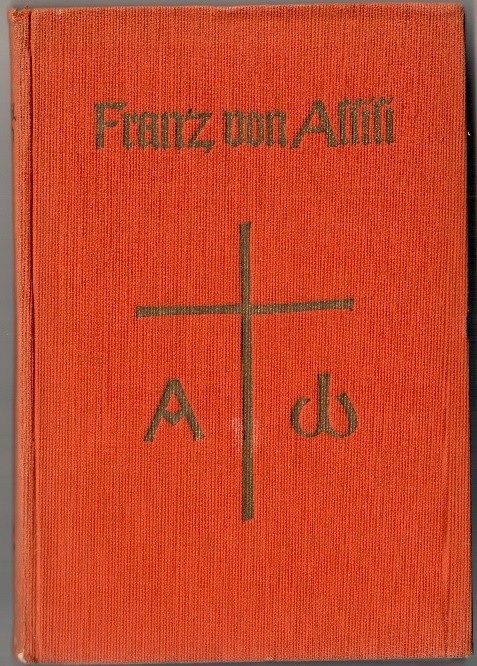
In summer 1925 he visited Rudolf Koch, a well-known artist who shared his vision of an alternative life. Koch designed the covers of the Quellen volumes: They were to be bound in the colors of the rainbow. As Arnold wrote:
Each human being makes up a tiny sliver in the endlessly evolving spectrum of color that is God’s light refracted into humanity. In Christ, this light appeared in its clearest brightness and purity. Each shade in the human spectrum is found in him. The light that produces this spectrum comes from God, just as the sun produces the white light that, when refracted, forms the colors in a rainbow. [.footnote-link]19[.footnote-link]
The covers were embossed with the name of the author and a cross, with an alpha and omega. Two volumes of prophecies (Expectation of a Redeemer in the Bible and Expectation of a Redeemer Outside of the Bible) had gray covers. Most of the books had as a frontispiece a woodcut portrait made by Karl Mahr or Daniel Greiner.
The volumes were to be prepared in sets of ten: Every ten volumes would be arranged chronologically and cycle through the colors of the rainbow. Thus the first ten were planned as:
1. Early Christians, red
2. Franz von Assisi (1181–1226), orange
3. German mystics, yellow (never published)
3/4 (double volume). Johann von Staupitz (1460–1524), green
5/6 (double volume). Jakob Böhme (1575–1624), dark green
7. Zinzendorf (1700–1760), blue
8. Novalis (1772–1801), dark blue
9/10 (double volume), Kierkegaard (1813–1855), purple.
The second ten included:
11. Tertullian (160–240), red
12/13 (double volume), Augustine (354–430), orange
14. Mystik deutscher Frauen (The Mysticism of German Women), green
20. Dostoyevsky (1821–1881), purple.
The third set, numbers 21 to 30, was to include John Calvin and end with William and Catherine Booth.
1925 saw the publication of Jacob Böhme, Zinzendorf, and Kierkegaard. Die ersten Christen, Franz von Assisi, Johann von Staupitz, and Novalis were published in 1926. Die Ausserbiblische Erlösererwartung, and Dostojewski came out in 1927.
Unfortunately, the books did not sell as well as had been hoped, and by 1928 the entire project had to be cancelled for lack of money. Augustinus and Mystik deutscher Frauen were still published in 1929, Tertullian in 1930, and Biblische Erlösererwartung in 1931.
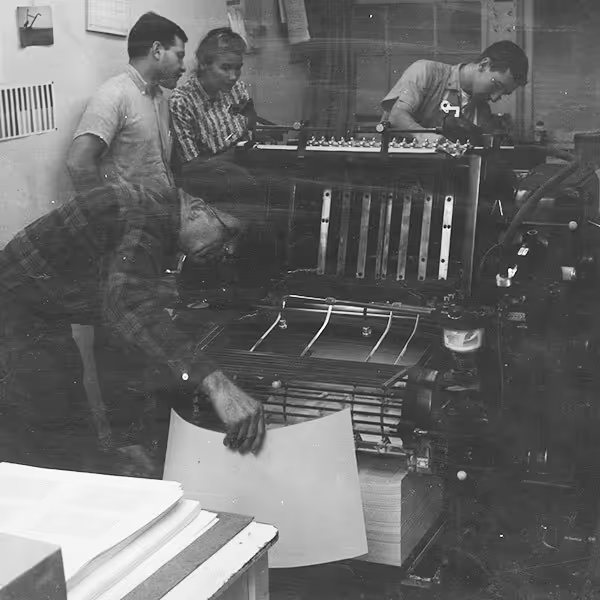
Arnold never stopped writing and printing, although he was no longer able to publish to the same extent as earlier. Anything printed on the Bruderhof was to be an example of craftsmanship, and to that end he procured a hand printing press as well as a “high speed” mechanical press.
No sooner had he completed his work on The Early Christians than Arnold began planning a volume of Anabaptist writings, regrettably never completed. He wrote to the Quellen staff in September 1926:
I myself will take on Quellen volumes 15/16 as a double volume of about 320 pages under the title The Peace-Loving Anabaptists of the Middle Ages. Having gained an insight into the material by working with scholars in Zurich and Vienna, I know that I will not be able to condense it into a smaller volume. I will do all I can to put this double volume into your hands by the end of January.[.footnote-link]20[.footnote-link]
By summer 1933 this was not completed, but he had not given up:
It is really important that this Anabaptist book is published. If we cannot come to an agreement with the Hochweg Verlag, the final Quellen volume will be missing, and the task I have set myself will not be fulfilled. I wanted to publish the first and the last book, setting the early Anabaptist movement side by side with the early Christian movement.[.footnote-link]21[.footnote-link]
Meanwhile, single adults and families were joining the community, which also took in foster children. The villa in Sannerz became too small, and at the end of 1926 a farm was purchased that would become the Rhön Bruderhof. The household relocated over the summer, the publishing house in fall 1927. Leading the community took more and more of Arnold’s time and energy.
Arnold had never wished to found a new sect when he left the Lutheran Church in 1909 by accepting believer’s baptism. In the Hutterian Church, particularly at the time of its beginning, he found confirmation of his own beliefs. In questions of doctrine, he agreed with them on important points (baptism, pacifism, understanding of the Lord’s Supper). The Hutterites had been living in community for four hundred years. In addition, the fact that many of their early members had suffered martyrdom for their faith made a profound impression on him. He had seen enough communal attempts fail, and he wished to join the nascent Bruderhof to their mature movement.
In summer 1929 Arnold visited Professor Johann Loserth in Graz, Austria, and Robert Friedmann in Vienna. Both men had published books or articles on the Hutterites. Elias Walter, a Hutterite minister and self-made scholar in Canada, had sent Loserth a typescript of the Kleingeschichtbuch (Hutterite history book known today as Volume II of the Chronicle). Loserth had prepared it for print, writing numerous footnotes. Now in his eighties, he was ready to hand it over to Arnold to publish.
On May 30, 1930, Arnold set out for America, traveling by ship, hoping to be back in two or three months. He was gone for almost a year. He returned to the Rhön Bruderhof ordained as a Hutterite minister, authorized with a missionary task in Germany. He had used the time to catalog and copy the old Hutterian manuscripts which he planned to publish.
The first printing job to be completed on his return was a fourteen-page letter sent out to all the Hutterites.
Else von Hollander, who had worked with him as his secretary for twenty years, suffered from tuberculosis. Although she spent months in a sanatorium in Switzerland, there was no cure, and she died in January 1932. This was a tremendous loss to Arnold’s productivity; although others tried, nobody was able to take her place.
The story of the Bruderhof’s response to Hitler’s takeover of Germany in January 1933 and the eventual dissolution of the Rhön Bruderhof in April 1937 is told elsewhere. Briefly: much of 1933 was taken up with responding to the rapidly changing political landscape. Arnold did not wish to flee Germany; he believed he was called to give witness as a Christian presence. In 1932 he began reworking his book Innenland as a prophetic warning to his country. He wrote in May 1933:
Because the party ruling Germany emphasizes questions that touch the soul of the people, I will submit my “confession of faith,” entitled Innerland. This confession gives proof that true community can only arise out of the Holy Spirit and only through him can be preserved. Such community, as the church of Jesus Christ, can be only love and peace – never hate or warfare, never private property. I want to give this book personally to the authorities, including the President of the German Reich, General Field Marshal von Hindenburg, and the Reich Chancellor Adolf Hitler. I am definitely hoping to get an appointment with both of them.[.footnote-link]22[.footnote-link]
Arnold did, in fact, send the chapter “Light and Fire” to Adolf Hitler in November 1933.
In January 1934 the Bruderhof took their school-aged children out of Germany to avoid their coming under the influence of a Nazi teacher. Two months later, the Alm Bruderhof was begun in the principality of Liechtenstein as an asylum for the children and, later, for young men of military draft age. The printing presses were brought to the Alm Bruderhof, where book production was to continue.
For Christmas 1934 Arnold prepared a “Christmas Letter,” a pamphlet of thirty-two pages that was sent to friends. Work on the Hutterite History Book continued at the Alm Bruderhof, where the first eighty copies were printed.
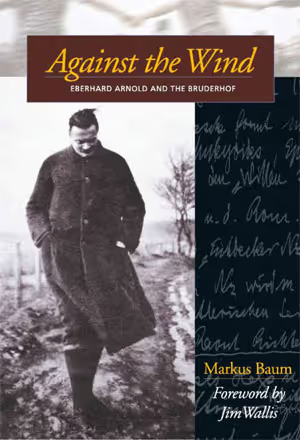
But Arnold’s publishing endeavors proved to be a casualty of the times in which he lived. He died unexpectedly at the age of fifty-two at the end of 1935. Innerland was completed by his son-in-law and printed for the first anniversary of his death in 1936.
The Bruderhof migrated to England. Here there was an active peace movement and interest in communes – and greater freedom of expression than on the European continent. A new chapter in Bruderhof publishing began with the launching of The Plough magazine, edited by Eberhard’s oldest son Hardy.