Farewell to a Peacemaker
Johann Christoph Arnold, 1940–2017
November 14, 2021
Try 3 months of unlimited access. Start your FREE TRIAL today. Cancel anytime.
START FREE TRIAL NOW
[.smalltext] This article was originally published on April 19, 2017. [.smalltext]
[.article__paragraph--cap][.small-caps] Here at Plough, [.small-caps] we’re still getting used to the world without Johann Christoph Arnold – pastor and peacemaker, author and editor, mentor and friend – who died Saturday, April 15, 2017.[.article__paragraph--cap]
Christoph led Plough’s publishing efforts in the 1960s, and we became his publisher in the 1990s when he turned to writing books to share wisdom and stories gleaned from decades of peacemaking around the globe and of pastoral service at Woodcrest, the Bruderhof community he called home for over half a century. His books have helped over two million readers navigate the turbulence of marriage and parenting, aging and grieving, forgiving and overcoming fear and despair.
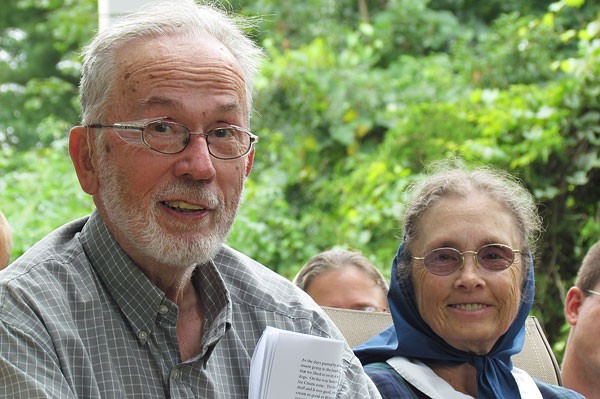
[.imgcaption] Johann Christoph and Verena Arnold [.imgcaption]
Those of us privileged to work alongside Christoph will never forget how he challenged us to have more faith: to believe in redemption for the most depraved, hope for the most intractable conflicts, an end to every injustice. He taught us to speak plainly to the widest possible audience, using the power of stories to open hearts and minds – true stories of amazing people he knew and had befriended.
[.pull-quote] Has Johann Christoph Arnold’s life or any of his books touched you personally? If you have a story or thoughts, please leave a comment and we will share it with his family. [.pull-quote]
Christoph used his stature as a public figure to inject a note of reason into the national conversation. He reached out to people of every political persuasion and faith to find common ground and, where possible, to make common cause. When there was tragedy on the news, local or global, we could expect a call within hours; he would have already drafted a thoughtful response, comforting the victims’ families while tackling the roots of the problem. On TV, radio, editorial pages, and countless online outlets he called for peace and understanding when the drums of war rolled, for forgiveness when the public wanted blood, for courage in the face of fear-mongering, solidarity in the face of hate, faithfulness in a world of infidelity, and sanity in a culture warped by technology and consumerism.
Johann Christoph Arnold’s gift will go on giving in his many books, which Plough will continue to make available, and in the example he left us to be peacemakers, believers in the spark of God in every human heart just waiting to be fanned into flame.
From Seeking Peace:
Peace demands struggle. It is found by taking up the fundamental battles of life: life versus death, good versus evil, truth versus falsehood. Yes, it is a gift, but it is also the result of the most intense striving. In fact, several verses in the Psalms imply that it is in the process of striving for peace that peace is found. Such peace is a consequence of confronting and overcoming conflict, not avoiding it. And rooted as it is in righteousness, genuine peace – the peace of God – disrupts false relationships, disturbs wrongful systems, and debunks the lies that promise a false peace. It uproots the seeds of unpeace.
From Escape Routes:
Just as loneliness arises out of our alienation from self, from people we meet, and from the world around us, so also the process of healing must touch all these areas of our life. Paradoxically, the deed we dread most, unveiling our hidden self with its loneliness and failings to another person we trust, is usually the one that brings people right to the door of freedom. The positive results of sharing are often instantaneous: walls crumble as we realize that we are not alone in our feelings of isolation or guilt. Simply realizing that another person cares about our burdens can release us to see beyond them.
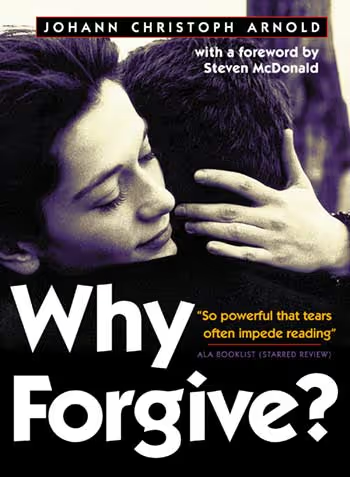
From Why Forgive?:
Most of us will probably never be faced with forgiving a murderer or rapist. But all of us are faced daily with the need to forgive a partner, child, friend or colleague – perhaps dozens of times in a single day. Perhaps the hardest thing about practicing forgiveness in daily life is that it requires us to confront the reality of our feelings toward those we know best. It is difficult enough to forgive a stranger we might never see again, but it is much harder to forgive a person we love and trust. Our family, our friends, the people we feel closest to at work – they not only know our strengths, but also our weaknesses, our frailties, and our quirks.
From Rich in Years:
Even as we come to grips with the knowledge that our earthly life could end at any moment, we can live with the certainty that there is a life after death. As Scripture hints, eternity is not about unending life as we know it; what we know here will soon be over. Eternity is a new life, free of death’s destructive powers, a fullness of life where love reigns supreme. The promise of everlasting life has less to do with duration of time and more to do with a certain kind of life – one of peace, fellowship, and abundance – and such a life can begin now.
From Be Not Afraid:
The best way – the only way – to truly overcome the fear of death is to live life in such a way that its meaning cannot be taken away by death. This sounds grandiose, but it is really very simple. It means fighting the impulse to live for ourselves, instead of for others. It means choosing generosity over greed. It also means living humbly, rather than seeking influence and power. Finally, it means being ready to die again and again – to ourselves, and to every self-serving opinion or agenda. … Unless we live for love, we will not be able to meet death confidently when it comes. I say this because I am certain that when our last breath is drawn and our soul meets God, we will not be asked how much we have accomplished. We will be asked whether we have loved enough. To quote John of the Cross, “In the evening of life you shall be judged on love.”