Book Excerpt
A Way to Share the Land
Plough’s latest book, On Reconciliation, offers a new language for imagining the future of Israelis and Palestinians.
October 3, 2026
Try 3 months of unlimited access. Start your FREE TRIAL today. Cancel anytime.
START FREE TRIAL NOWA Way to Share the Land
Plough’s latest book, On Reconciliation, offers a new language for imagining the future of Israelis and Palestinians.
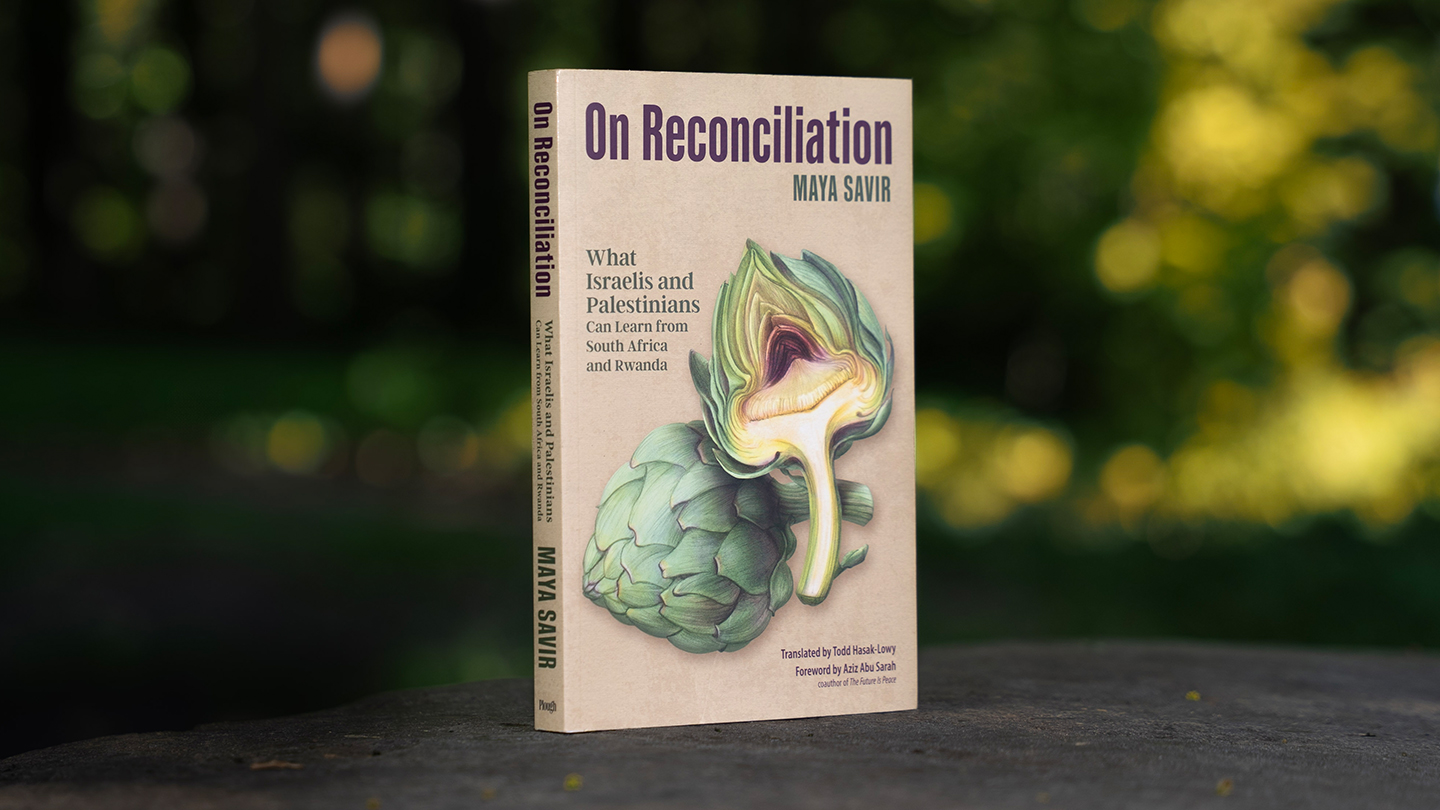
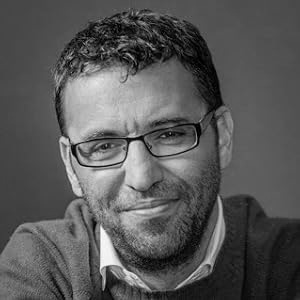
[.smalltext]Photograph by David Zumpe. Used by permission.[.smalltext]
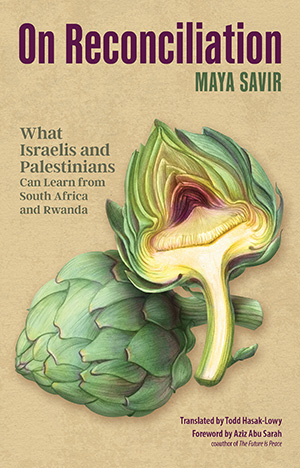
[.smalltext]This is the foreword to the book On Reconciliation: What Israelis and Palestinians Can Learn from South Africa and Rwanda (Plough, October 2026). Find dates and locations for author Maya Savir's book tour here.[.smalltext]
[.article__paragraph--cap][.small-caps]As a Palestinian in East Jerusalem,[.small-caps] I grew up believing that peace was impossible. My brother Tayseer died after being tortured by Israeli soldiers in 1991. He was nineteen years old, and I was ten. I grew up angry, believing that vengeance was justice. I couldn’t imagine peace or reconciliation in our region. As Maya Savir explains in this book, we cannot use the logic of war and conflict when envisioning peace. It was eight years before I began to unlearn the logic of revenge, aggression, and hate. I had to go through a transformative journey to understand the logic of peacemaking. That journey started on the day that, for the first time in my life, as a young adult, I met an Israeli Jew who spoke to me as an equal and listened to my story. In the years since, I’ve learned that forgiveness is not easy; it is not even simply an emotional decision. It is something I had to train both my heart and my mind to embrace. It’s a decision I still have to hold on to every day.[.article__paragraph--cap]
I have now worked with bereaved families on both sides of this conflict for almost three decades. I was first introduced to Maya by Maoz Inon, an Israeli Jew whose parents were killed by Hamas on October 7. Maoz has become a brother to me; together we wrote the book The Future Is Peace, and Maya is one of the people we interviewed while writing the book. In Israel, Maoz always carries Hebrew copies of Maya’s book in his backpack, to give anyone who will read it. I know some are inclined to dismiss this book because it was written by an Israeli Jew, but this Israeli Jew is my sister in peace, and I hope you are able to hear her out.
In a time when the dominant language is shaped by bombs and wars, On Reconciliation offers a new language for imagining the future of Israelis and Palestinians, one grounded in political imagination, recognition, and equality. Israelis and Palestinians, like many people living in conflict zones around the world, are often convinced that their conflict is uniquely unsolvable, that their enemies are evil in ways never experienced in history, and that the other side could never accept a solution. Yet while every conflict has its own unique elements, many of the underlying dynamics, and the principles needed for resolution, remain similar.
Like Maya, I also spent time in Rwanda and South Africa, and I was moved to tears many times while there. I left both countries with a renewed belief that Israelis and Palestinians have much to learn from other conflicts. Rwanda experienced one of the most horrific genocides in history: one million people were killed in just three months. The level of dehumanization and oppression in South Africa is beyond what most people in the world can imagine. And yet, both societies found ways to pursue reconciliation, break the cycle of violence, and shape a new reality. It is by no means a perfect reality in either country, but it has saved lives and created a path toward a better future.
I do not expect Palestinians or Israelis to be enthusiastic about the painful sacrifices that peacemaking requires. Many Palestinians will ask: How can we move toward reconciliation without punishing the enforcers and architects of the occupation? Doesn’t justice mean holding accountable those who committed crimes?
While working in Northern Ireland, I met Alan McBride, whose wife was killed in an IRA terrorist attack. When I asked him why he campaigned for the “Yes” vote that ultimately led to the release of his wife’s killer from prison, he told me that the future of his daughter was more important to him than revenge. He told me how he cried the first time he saw the killer in a supermarket in his neighborhood. I know from my own life that his grief and pain will never disappear. Maya doesn’t argue that peace will erase the trauma and pain we have experienced for decades. Rather, with stories from Rwanda and South Africa, she shows us that the pain of making peace is worth bearing because the alternative is endless death and destruction.
On Reconciliation makes the argument that since we are destined to live together, we must find a way to share the land. We must reject the logic of war and destruction, and begin imagining a different future, one in which our children no longer fear the sound of sirens or exploding missiles, the roar of airplanes dropping bombs, the pounding of soldiers at the door in the middle of the night, or the phone call informing us of yet another victim in our family.
The logic of peace and reconciliation is rooted in this hope for a better future. It is rooted in our love for our children and in our refusal to allow our failures to create more graveyards for the victims of war and violence. As Maya puts it, we have no alternative. The only question is how many lives will be lost and how much more destruction we will endure before we understand that reconciliation is the only path out of the current situation. Yes, we’ve had peace negotiations fail, but the failure of previous negotiations should not lead us to surrender hope. We have witnessed countless failed wars and endless escalations that have brought neither security nor freedom. Why do we give war unlimited chances, yet fear taking a leap of faith toward a peace agreement that could transform our discourse and our future? No peace agreement will ever be perfect. Maya is not imagining a utopia, because no such place exists.
Reconciliation is an ongoing process, one that we will continue working toward throughout our lives. Over time, we will grow into it and become better at it. I remember walking through the streets of Kigali late at night to get ice cream, feeling completely safe, and meeting young people in Rwanda pursuing their dreams without fear, and thinking how much has changed! I remember speaking with black artists in South Africa and hearing about their aspirations. These experiences helped me imagine a world in which our future can look like theirs. That is why this book is so important: it brings these experiences to our peoples so that we, too, can imagine, dream, and build a different future.
I have worked in more than sixty countries around the world, and I have come to the same conclusion that Maya has highlighted in On Reconciliation. It is essential for us to draw upon local traditions, local knowledge, and indigenous peacebuilding practices. Maya shows how Rwanda’s gacaca community reconciliation model succeeded far better than any imported Western peacebuilding framework could have. Palestinians and Israelis must also bring our own cultural knowledge and traditions of peacemaking into this process. Reconciliation is not a foreign concept to either Palestinians or Israelis, but it must be adapted to our own cultures to succeed.
Finally, On Reconciliation is a hopeful book – a book that will expand your imagination of what is possible and challenge you to reevaluate your assumptions about conflict and peace. It is personal, informative, truthful, inspiring, and, most importantly, deeply challenging. It presents a vision that all of us can become part of, if we allow our minds and hearts to imagine, to dream, and to act upon that dream.