Book Excerpt
A Passion for Garbage Collection
If you don’t love this job, you’ll get crushed by it.
July 3, 2026
Try 3 months of unlimited access. Start your FREE TRIAL today. Cancel anytime.
START FREE TRIAL NOWA Passion for Garbage Collection
If you don’t love this job, you’ll get crushed by it.
[.article__paragraph--cap][.small-caps]Not long ago[.small-caps] I watched a television show about garbagemen in Quebec, Les Éboueurs. It’s typical reality TV: we ride along with garbagemen working in all kinds of conditions. On the one hand, I was proud to see my fellow garbagemen on TV. But the show also left me ambivalent. It was the same feeling I had watching a news segment where a young journalist worked as a garbage collector for a week, and his team captured it on video. Both shows depict garbagemen in a sympathetic light. And both were critical of the pace of work and the pressure the system puts on us, and how that can translate into safety concerns. Both shows are well-intentioned; both present observations that are for the most part accurate – and yet …[.article__paragraph--cap]
When I ask my buddy Steve about the shows, he told me there was something that stuck in his craw about the overall sense it conveys of our daily lives. For the average person watching the show, the takeaway is something like this: working in garbage collection is a shitty job, poor unfortunate people who have to do it, they’re exploited by a cruel system, so let’s treat them with compassion. Now, Steve is proud as a peacock, and he just loves being a garbageman. So the idea of showing viewers that we’re deserving of their compassion came as a slap to the face.
I think Steve’s exaggerating a bit when he says the two shows reduce us to caricatures. Both paint a fairly balanced picture, in their own way. But what the journalists and production teams failed to capture is the ineffable reason Steve and I and so many other garbagemen love what we do. Even with the best of intentions, they can’t fathom why anyone in their right mind could possibly want to be a garbageman. Trust me, it’s perfectly possible to do this job because you want to. Many of us do.
If you told me I was going to die tomorrow, I’d go out for one final run on the back of a truck, without a second thought. I’d go right back where I belong. Running behind a garbage truck brings me profound satisfaction and great joy. It’s an activity that can satisfy my desire to push myself physically and be the best version of myself. I guess I’m a jock at heart. I need to be out moving, doing physical exercise, pushing myself to new extremes. A friend of mine who’s a serious sports fan and follows pro leagues once told me that I was the best nonprofessional athlete he knew. And he’s not wrong to draw this parallel.
The Éboueurs reality show even challenged André Roy, a former National Hockey League player, to try his hand at garbage collection for four hours, which is of course not even a full shift! On the ice, Roy had been a rough-and-tumble left-winger, the kind of guy known for grinding in the corners. An energy player. A sturdy dude, six foot four, over two hundred pounds. A big, tough guy, for sure – yet when they put him behind a truck, he couldn’t hack it for more than one hour. They burned him out, and he threw in the towel.
I’ve always thought that what makes a good helper is the ability to sublimate your impulses and transform them into productive gestures. For many people who have had challenging life experiences, their impulses are negative forces. Becoming a garbagemen demands exceptional mastery of physical strength and willpower. It’s not dissimilar to the discipline that top athletes develop over their bodies and minds. But when athletes do it, they have their eyes on a different prize: win medals, break records, entertain the masses with their exploits. And they have the support of a massive system: the media, political forces, and society at large are united in glorifying their performances. Athletes are applauded, admired, and earn small or large fortunes.
When I finish a shift, I’ve run fifteen miles. I’ve put my back under duress and taken considerable personal risks to keep your neighborhood clean and healthy. And pretty much no one cares.
It’s considered normal for an athlete to get injured. And when they do, they receive the best possible care. For a humble wage slave like us, it’s another story. We’re accused of negligence, denied paid leave. Public colleges in Quebec have physiotherapists on hand to treat swimmers in swim clubs, but we garbagemen are generally left to grin and bear it.
Whenever my mother talks about my job, she never fails to remind me of all the times I’ve gotten injured. The implication is clear: I should just ditch this dangerous job. If I were a professional hockey player getting showered with money and glory, with an elite medical team to look after me, I doubt she’d constantly harp on my injuries and the risks of my job. Yet it’s these very things – risk and physical intensity – that make the garbageman’s job so exceptional. In my opinion, a garbageman’s performance is on par with that of an Olympic marathon runner or a pro hockey defenseman. But no one would ever think of comparing the two activities. In our society, sports is a highly lucrative spectacle. We couldn’t say the same about garbage disposal. Above all, elite sports reflects the values ideals of the upper classes: be a winner, dominate others, and enjoy the means to lead a life of leisure.
Our work as garbagemen resembles elite sports for its combination of performance, toil, and pushing yourself to new feats. But our extreme sport is performed for members of the lower classes. In our world, that’s enough to belittle you. The garbageman puts his health at risk for society as a whole. He takes great pride in it. But workers’ strength is a commodity to be exploited until their dying day, with no regard for their well-being or will. And if we do care about workers’ safety, that care takes the form of drawing up regulations and tying them up in bureaucratic red tape, a surefire way to kill the joy in any job.
[.article__paragraph--cap][.small-caps]The joy of throwing trash[.small-caps] finds its expression in the beauty and simplicity of our art form. Experienced guys will recognize the signature of a helper glimpsed behind a truck in the distance: the way he picks up bags, heaves a trash can high, or runs from pile to pile; the distinct pitch of his intensity. That guy carrying three trash cans in one hand and a hot-water tank in the other could only be Gratton, making his way over to the truck and launching the contents of each can into the hopper with astonishing assurance. And there’s Steve, indefatigable as ever, stopping cars with no more than a hand signal and natural authority as he powers through his run. And there’s big Oli, the dude who never takes a break, gathering the cans and bags together while the truck goes off to empty at the dump. As for me, I’m the guy who’s still out at 10:00, running at the same pace I set at 7:00 a.m. As if I were just getting started.[.article__paragraph--cap]
We can’t forget the drivers, who have to exercise tight control over massive machines that don’t like being tamed. The helper has to adjust their pace to the truck, so we don’t slow down the operation; the driver has to temper his truck’s impatience, its tendency to speed up, by working in tacit agreement with his helper. The way this waltz plays out is that the machine and the workload impose a pace on the garbagemen, forcing them to push themselves to new heights of endurance, at risk of losing control of the situation. This performance yields an undefinable sense of vitality and accomplishment. It’s a dizzying, exhausting movement, an intoxicating pressure, a state of grace that frees you for a while from the burdens of existence. We fear it, and we seek it out – over and over, in an endless cycle.
I know how to do a lot of different things. I’ve been a frontline outreach worker, done some freelance journalism, and conducted research, but I always come back to the garbage – or, strictly speaking, I never left. It would not be an exaggeration to say that my passion for waste collection approaches a calling. People are constantly amazed. “Aren’t you tired of running? You know you could do something different.” (Read: better.) It’s not easy to understand the passion that garbagemen like me carry inside.
“Do you love it?” is one of the first things I ask new employees. Because if you don’t, this job is impossible. Instead of harnessing the machine and directing the waltz of waste, you’ll get crushed by it. It’ll take your health, if not your life. That’s the price you pay to be an elite athlete in the sport of garbage collection.
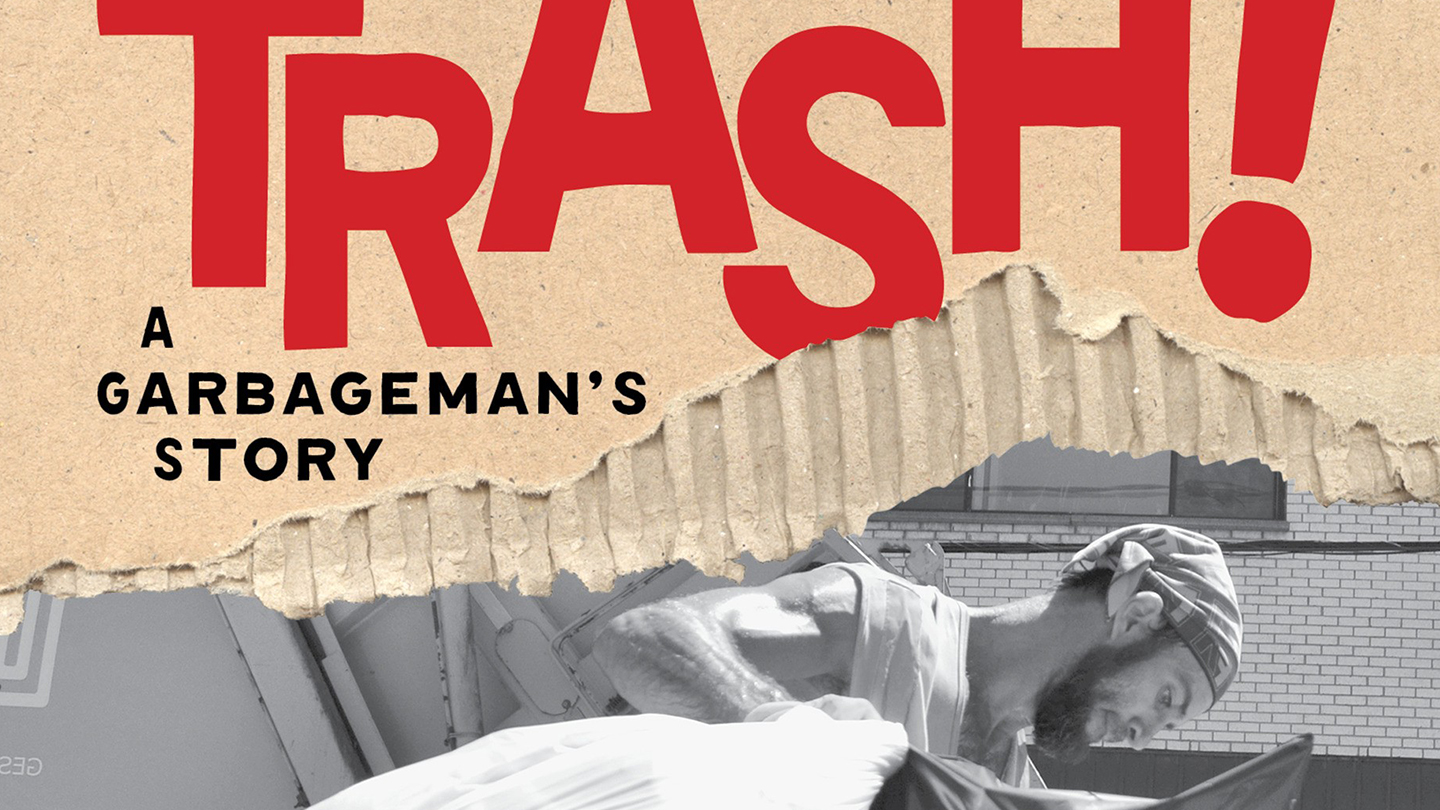
[.smalltext]From Trash!. Used with permission of the publisher, Melville House Publishing. Copyright © 2024 by Lux Éditeur, 2024; Translation copyright © 2025 by Pablo Strauss. Pablo Strauss has translated numerous books from Quebec French into English, and is a three-time finalist for the Governor General's Literary Award for translation. He lives in Quebec City.[.smalltext]