Essay
The Motherless World of Wuthering Heights
Most of the characters in Wuthering Heights could have used a mother.
September 1, 2026
Try 3 months of unlimited access. Start your FREE TRIAL today. Cancel anytime.
START FREE TRIAL NOWThe Motherless World of Wuthering Heights
Most of the characters in Wuthering Heights could have used a mother.
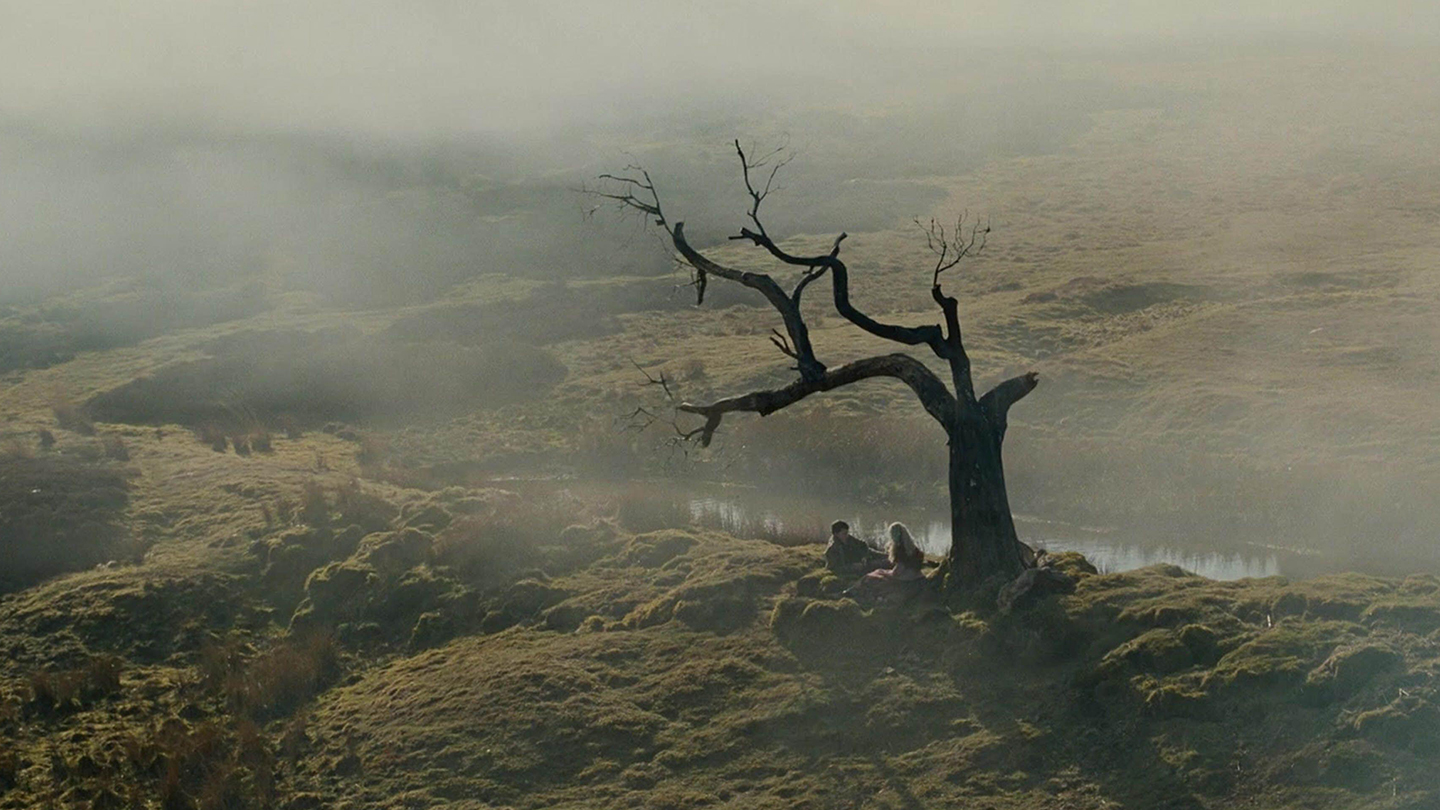
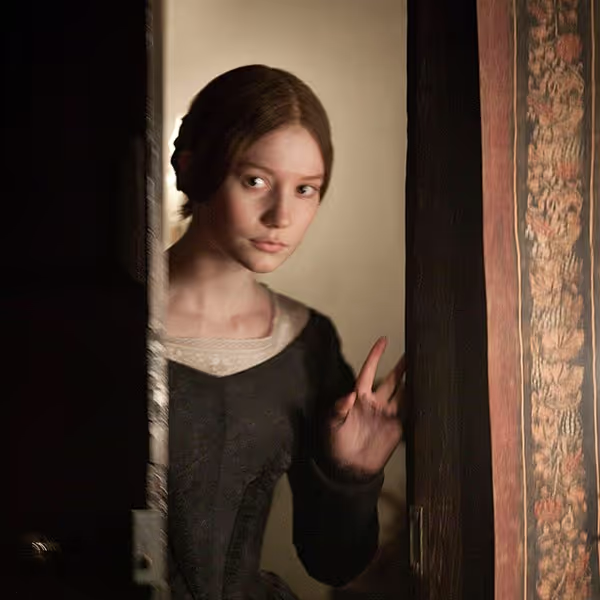
[.smalltext]Photograph from TCD/Prod.DB / Alamy Stock.[.smalltext]
O mother! I am not regretting
To leave this wretched world below,
If there be nothing but forgetting
In that dark land to which I go.
—“Oh Mother,” poem by Emily Brontë, 1837
[.article__paragraph--cap][.small-caps]A first-time reader[.small-caps] like myself will begin Emily Brontë’s Wuthering Heights with a sense of confusion and disorientation. What is happening? Who are these strange, despondent, and detestable people, and why do they all have the same names? We start to gain some clarity when our first narrator, Lockwood, asks the housekeeper at Thrushcross Grange, Nelly Dean, what is going on. She spills the tea, and we immediately love her, if only for helping us make meaning out of the dark tableau we’ve viewed through Lockwood’s eyes.[.article__paragraph--cap]
When Lockwood visits Wuthering Heights at the beginning of the story, he meets a strange family: his “morose” landlord Heathcliffe, who owns both Wuthering Heights and Thrushcross Grange; Joseph, his surly house servant, the equally surly young Hareton, who barely acknowledges Lockwood; and the angry young Catherine Linton, who refuses to serve him tea unless directed by Heathcliff. Completing the grim portrait are untamed dogs that almost attack Lockwood, a cushion he discovers holding a heap of dead rabbits, and a ghostly encounter.
With the exception of the dogs, missing from that strange family is a mother. In fact, mothers are decidedly absent from Wuthering Heights. This is not unusual for classical Victorian literature, written in a time and place where maternal mortality was extremely high. Wuthering Heights illuminates how much this matters: without mothering of (almost) any kind, it is a horror story.
There is one partial exception: the narrator Nelly Dean, who at times serves as a mother figure to some orphaned characters, including Catherine Earnshaw and her foster brother Heathcliff. But as she is a household servant, the power dynamics are such that her early actions toggle between the self-serving need to keep her employment and genuine care and affection. Especially in the first half of the novel, any motherly advice or direction she offers comes with little authority. She ranks socially beneath the children and young adults in her charge, and cannot discipline them or enforce any consequences for their actions.
This is most obvious when Catherine Earnshaw physically assaults her in a fit of temper. The neighbor, Edgar Linton, is visiting, and Catherine assaults him too. She never apologizes and she experiences no negative consequences. Instead, he proposes marriage to her.
Catherine, who is in love with Heathcliff, seeks out Nelly’s advice, which she doesn’t heed. Nelly categorically tells her to stay far away from him, which estranges the infatuated Catherine from her and any maternal influence she might otherwise have had. Catherine raises herself in the wilds of the moors with Heathcliff, who is universally disliked by all other characters, and thus set up to become the villain. Pity poor Heathcliff, whose life has been so loveless. Any affection he receives is disordered and motherless, and thus when he grows up, vengeance, not love, is what animates his behavior, even toward Catherine, who does consent to marry Edgar though her heart isn’t in it.
The Brontës themselves experienced the loss of a mother – twice. Their biological mother died of cancer in 1821 when Emily was only three years old. Their aunt Elizabeth, who moved in soon after and became their substitute mother, died in 1842. Childbirth, already a risky endeavor, was made worse by the involvement of the medical professionals who refused to believe that they were the cause of puerperal fever because they didn’t wash their hands in between patients. Women didn’t just die of childbirth, but suffered higher mortality rates than men in general, especially in the countryside where Wuthering Heights takes place. And indeed, Catherine dies in childbirth, joining the ranks of four other dead mothers in the story.
In Wuthering Heights, any opportunity for mothering that happens in the book happens out of sight. Catherine receives an education in social graces from the elder Mrs. Linton, but Brontë doesn’t depict it – only shows its classist (and possibly also racist, considering Heathcliff’s ambiguous ethnicity) outcome. As a child, Catherine overlooks Heathcliffe’s darker skin and unknown paternity. It is only after Catherine’s stay with the Lintons that she imagines marrying Heathcliff would “degrade” her. By the time Isabella makes the impulsive and fateful decision to marry the older, debonair Heathcliff, Mrs. Linton has long passed on. Isabella herself also mothers her young son with Heathcliff out of sight, and if any good came out of that nurturing, Heathcliff negates it with his plans to destroy both households and own both estates.
There’s no church as mother in the story, either. The characters “go to church,” but church as a community of believers that offers care and belonging to all members, the church as the body of Christ, doesn’t exist for these characters. They otherwise live in complete isolation, and the Christianity takes on an entirely angry and toxic character because it is mainly transmitted through the long-time servant Joseph, who is all judgment, fire, and brimstone. In Nelly Dean’s words, “it was his vocation to be where he had plenty of wickedness to reprove.” He is so opposite his biblical namesake that I wonder if Brontë had another Joseph in mind when she named this character. Brontë’s Joseph would have publicly thrashed Mary the Mother of God after finding out she was pregnant with Jesus.
Joseph leads the only “church service” in the novel, holding it for Catherine, Heathcliff, and another servant when it is too rainy for the family to go out. According to Catherine Earnshaw’s account in her journal:
While Hindley [her older brother] and his wife basked downstairs before a comfortable fire – doing anything but reading their Bibles, I’ll answer for it – Heathcliff, myself, and the unhappy ploughboy were commanded to take our prayer-books, and mount: we were ranged in a row, on a sack of corn, groaning and shivering, and hoping that Joseph would shiver too, so that he might give us a short homily for his own sake. A vain idea! The service lasted precisely three hours.
After that lengthy sermon, when Joseph later finds Catherine and Heathcliff playing, he boxes Catherine’s ears and tries to force them to read religious books: The Helmet of Salvation for Catherine, The Broad Way to Destruction for Heathcliff. The children, having witnessed the rest of the adults in the household exempting themselves from “church,” throw the religious books into the dog kennel, to Joseph’s anger and chagrin.
This motherless faith is abusive. Saint Cyprian of Carthage famously said, “No one can have God as a father without the church as mother,” but Joseph’s idea of the faith is lacking in this spirit, and no amount of preaching can replace it. Church in this book does not invite the characters in like the open arms of a mother but repels them with the cruel hands of a tyrant. You would never know, from this encounter with it, that the salvation of the world came through a mother.
Like this spiritual mother, Emily Brontë’s own mother was named Maria. In the shadows of her grief at losing her so young, she created a story that shows how deeply painful the absence of mothers and motherhood is to society. The motherless world of Wuthering Heights is harsh, dark, demanding, with very little light and even less virtue. What looks like love between Heathcliff and Catherine is actually all-consuming selfishness, total self-centeredness, and destructive vengeance.
Heathcliff and Catherine have no one to love them unconditionally while cultivating their virtue, even when it is difficult. Toxic religion drives them to pursue their disordered passions unchecked until they become toxic to everyone else as well. Heathcliff immediately runs away from home when he overhears Catherine discussing Edgar’s proposal with Nelly. When he returns many years later, Catherine allows Heathcliff into her married home with Edgar Linton, fanning the flames of their passion for each other and kindling his desire for vengeance. Interestingly, Edgar Linton is away at church when Heathcliff makes his final visit to Thrushcross Grange to see Catherine. She dies that evening.
The next generation born from these unhappy pairings benefits more from Nelly’s substitute mothering, with age and experience on her side, and less fear for her employment. No one else would want to be employed by these families.
When Hindley’s wife dies, Nelly not only nurses their young son Hareton, but protects him from his father’s alcoholic abuse until she has to leave him to continue to serve Catherine in her new home at Thrushcross Grange. When Catherine dies giving birth to her namesake, Nelly becomes young Catherine’s nurse and nanny as well. Nelly would like us to believe that Hareton and young Catherine are later able to find happiness thanks in some part to her care.
They find that happiness not just because of her care, but because of their acceptance of it. Hareton and young Catherine might still be motherless in the biological sense, but the relationship they have with Nelly also demonstrates a willingness to be mothered, even by someone with Nelly’s limitations. Through Nelly’s corrective urging, they both repent of their pride with some difficulty, and begin a relationship of “one loving and desiring to esteem, and the other loving and desiring to be esteemed.” Heathcliff and Catherine Earnshaw reject all of Nelly’s attempts at correction, but their children start a different story.
Part of that story involves the young couple uprooting some of Joseph’s prized bushes to plant their own garden. Joseph’s motherless, abusive faith is uprooted, and in its place, a new kind of garden emerges.
This is why it is disappointing that most movie adaptations of Wuthering Heights end at the first half of the book, with all the rage, disorder, and dysfunction, and none of the redemption. Wuthering Heights tells of a “wretched world” with no mothers, but one that can grow back into beauty with love – despite its shortcomings – and a willingness to be loved even when it is uncomfortable.
The salvation of the world came through a mother. The church teaches that her love embraces those who have no other mother and remains extended to those who might not be ready to receive it. And when we offer welcome and belonging to those as outcast as Heathcliff, we can embody that love for everyone. The world need not be as motherless as Wuthering Heights.