Reflection
The Meaning of Baptism
Death wants to own our souls; penance guides us to life.
August 16, 2026
Try 3 months of unlimited access. Start your FREE TRIAL today. Cancel anytime.
START FREE TRIAL NOWThe Meaning of Baptism
Death wants to own our souls; penance guides us to life.
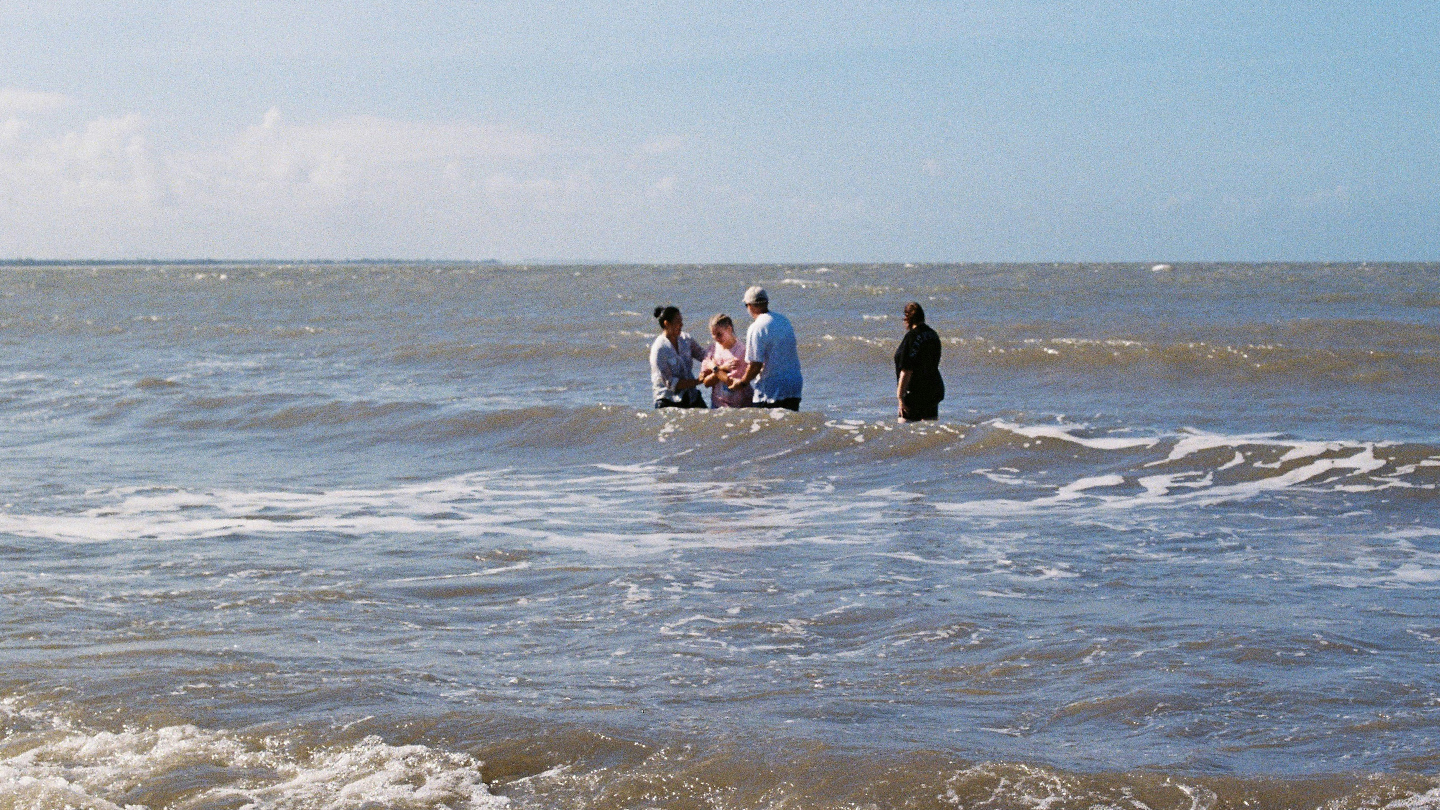
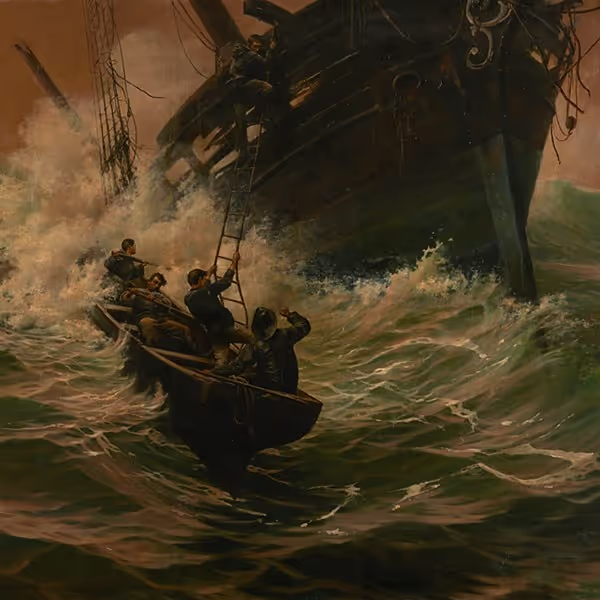
[.smalltext]Photograph Grace Anne Bobadilla / Unsplash.[.smalltext]
[.article__paragraph--leading]Petrus vero ad illos : Paeentientiam, inquit, agite – And Peter said to them: Do penance (Acts 2:38).[.article__paragraph--leading]
[.article__paragraph--cap][.small-caps]We have seen[.small-caps] Saint Peter’s hearers, touched with compunction, asking him what they were to do. Hitherto the chief of the apostles has spoken only of the truths to be believed; he has proclaimed the mystery of Pentecost, the resurrection of Christ, the future judgment. He passes now to the moral order. In answer to the question suggested by the inward working of the Holy Spirit, he points out what they must do in order to have part in the salvation brought by Jesus. Now, according to him, the first condition is to do penance. It is ever the same, whether set forth by the prophets, by John the Baptist, or by Jesus himself. “Return to the Lord” (Hosea 14:1). “Bring forth worthy fruits of penance” (Matt. 3:8). “Except you do penance, you shall all perish” (Luke 13:3).[.article__paragraph--cap]
What is it, then, this “doing penance”?
First of all, it is a change of soul, of thought, of opinion, μετανοέω. Formerly they considered things under one particular aspect, without taking any other into account; from this false and incomplete view followed actions contrary to virtue, to justice, and to their own interests. Blinded by the proud prejudices of their race, desirous of pleasing the Pharisees and the unworthy chiefs of the synagogue, they had closed their ears to the voice of the Divine Oracles.
The wonders of all kinds wrought by Jesus under their own eyes had been unable to triumph over their evil will; some through cowardice, others through contempt or hatred: all had bartered the blood of the Galilean. At last, however, light has broken in upon them, and they see their guilt. But the evil is done, beyond repair. Man may take life, but he cannot give it back; that is in the power of God alone, Dominus mortificat et vivificat. Is there, then, no hope?
Yes; in revenging on ourselves the treatment inflicted on the Son of God.
We must doom to death everything in ourselves which has been the cause of His death. Death, then, to those rash and unjust judgments, death to the risings of pride, death to those movements of passion, death to everything which might be for us an occasion of revolt against God. And what death, do you ask? The same death by which we slew the Lord Jesus. We crucified him, therefore that which nailed him to the cross must be crucified. We must crucify that miserable and accursed part of our nature, which Saint Paul calls the old man – Vetus homō noster simul crucifixus est. (Rom. 6:6), with its vices and concupiscences, with what the same apostle does not hesitate at the risk of covering us with just confusion, to call “our members which are upon the earth” – Mortificate ergo membra vestra, quo sunt super terram: fornicationem, immunditiam, libidinem, concupiscentiam malam, et avaritiam (Col. 3:5).
But this is only the negative side of penance. We have said that it consists in a change of soul; consequently, it not only kills the old man within us, but gives life to and develops the new. Since death was conquered by life, nothing, by the dispensation of God, has ever died, except to render distinct service to the interests of life. Christ was thenceforward the great model, the universal type. Now, Christ died only to rise again. Wheresoever the efficacy of the divine remedy which streamed forth on Calvary has extended, there has been the work of death and the work of life. The work of death to destroy and consume all the fruits of sin within us; the work of life to set free and expand to its utmost capacity everything in our being capable of receiving grace and glory. This work may be, as yet, hidden with Christ (Col. 3:1–4), but it is nonetheless real; it seems so, only because Christ, our life, has not yet appeared. But when he shall again manifest himself we shall be like him, sons of God, living to the full the life of God which has become our life. Let us never forget that this is the meaning of our baptism. It is not a mere oratorical comparison, an ingenious combination of thoughts or words. Once more, Saint Paul never considers Christianity otherwise than under this double aspect of death and life working in our souls – that is to say, under the aspect of penance. And this idea was so familiar to the first Christians, that with them, to receive baptism and to do penance were synonymous terms, as we see clearly from the documents of the primitive Church.
[.smalltext]Source: Germain Morin, trans. C. Gunning, The Ideal of the Monastic Life Found in the Apostolic Age, (New York: Benzinger Bros., 1914) 33–36.[.smalltext]