Podcast
The Lessons and Warnings of the Azusa Street Revival
Keri Day and Joy Marie Clarkson discuss a fascinating and truly Pentecost-like event – the Azusa Street Revival of the early twentieth century.
August 25, 2026
Try 3 months of unlimited access. Start your FREE TRIAL today. Cancel anytime.
START FREE TRIAL NOWThe Lessons and Warnings of the Azusa Street Revival
Keri Day and Joy Marie Clarkson discuss a fascinating and truly Pentecost-like event – the Azusa Street Revival of the early twentieth century.
[You can listen to this episode of Another Life on Apple, Spotify, Amazon Music, or wherever you get your podcasts.]
Joy Clarkson: Hello friends, and welcome back to Another Life, a podcast of Plough Quarterly. I’m your host, Joy Clarkson, and this is an episode in our series Searching for the Soul of America. In this series, we embark on a hopeful search for what is good, admirable, and even providential in the American Project. On today’s episode, I have the pleasure of speaking with Professor Keri Day of Princeton Theological Seminary about one of the most fascinating and controversial chapters in America’s religious history: the Azusa Street Revival. The Azusa Street Revival was a series of revival meetings that took place between 1906 and 1915, led by William J. Seymour. It is thought to be the primary catalyst for the spread of Pentecostalism throughout the twentieth century and into the present day, when Pentecostalism is thought to be the fastest growing branch of Christianity. The Azusa Street Revival was a fascinating and truly Pentecost-like event. In a time when large swaths of America were still legally and functionally segregated, people of many races gathered together to be moved by the Holy Spirit.
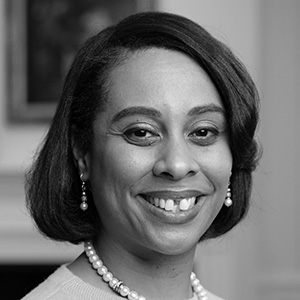
In a time when women’s voices were mostly silenced, women, and specifically black women, led the way in much of the revival. The revival has continued to have repercussions and to influence the global church today, and especially the black church in America. In today’s conversation, we get a clearer picture of this world-changing revival and what warnings and lessons it might offer us today. Keri Day is the Elmer G. Homrighausen Chair and Professor of Constructive Theology and African American Religion at Princeton Theological Seminary. In 2023, she was the first African American woman to be promoted to full professor at Princeton Theological Seminary. She has authored four academic books, including most recently, and the subject of our conversation today, Azusa Reimagined: A Radical Vision of Religious and Democratic Belonging. I hope you’ll enjoy this fascinating conversation on this episode of Another Life. Keri, it is so wonderful to be with you today. Welcome to the show.
Keri Day: Thank you. I am happy to be here.
Joy Clarkson: So, I always start these episodes with the question: Where are you physically? So, where are you physically, Keri?
Keri Day: Well, physically, I happen to be one of my favorite spots in the world, and that’s London. I am so happy to be back in London.
Joy Clarkson: Yes, so you’re joining us here at King’s College London to do an all-day kind of workshop, and I snagged you to have a conversation, which I’m so excited about. Where are you usually in your everyday life?
Keri Day: Absolutely. So, I live in Princeton, New Jersey. I teach, I’m a professor of theology at Princeton Theological Seminary. And most of the time I am there, whether it is having a great conversation with a master’s or PhD student; I’m reading my book on my porch with my five-year-old daughter in a rocker chair beside me, doing something and playing, and that’s in the summer and in the warm evenings and fall evenings during the school year. So, I’m just normally on the East Coast having fun.
Joy Clarkson: You know what? Porches are something I really miss about America. My parents have a big front porch and there was a while where, my husband and I, we were deciding between a job in the United States and the United Kingdom and when we were thinking about the United States, I just remember thinking, I could have a front porch again with rockers, ’cause there is just something so special and very American about it. I don’t think it’s a thing here.
Keri Day: That’s right.
Joy Clarkson: Yeah, but it’s such a comforting, lovely thing and the shade …
Keri Day: That’s lovely.
Joy Clarkson: So, I’m so excited to have you here today to talk primarily about your work on the Azusa Street Revival. And this is a podcast series called Searching for the Soul of America, and thinking about those inflection points and moments where there’s something good and hopeful and sometimes radical. And I feel like Azusa Street Revival is one of those moments, and you explored it in your book. But before we get to the technicalities of that, I’d love to hear your own kind of religious background because this is a part of your story, right?
Keri Day: That’s right. It is. So I was, I like to say, born and raised within the Church of God in Christ. The acronym is COGIC. It is the largest black Pentecostal denomination in the United States, and it is actually one of the first denominations that came out of the Azusa Street Revival. And so it draws its heritage directly back to the Azusa Revival. Yes, I grew up in that tradition, where I would say demographically, as I said, primarily African American, but primarily also working class, particularly at the beginning of the twentieth century. But I would say now, it’s still primarily working class in that denomination.
Joy Clarkson: And what was your experience in that? And how was that transferred into your present academic life?
Keri Day: Absolutely. So, you know, what’s interesting is when I arrived at a Divinity School, Yale Divinity School is where I attended in New Haven, Connecticut, in the States, one of the things that struck me is any conversation of black Pentecostalism was seen as a kind of peripheral conversation to both American Christianity as well as global Christianity. Those sources or movements that were important to the development of that; it was peripheral. And to me it was interesting on two levels. The first is in terms of the history of black religiosity within the United States. Pentecostalism was really, really important, if not denominationally, just the charismatic culture. And we’ll talk about that a bit more in terms of the practices and so forth. And so, it seemed to me that seemed a bit odd, that Pentecostalism was being viewed in that way. And then secondly, it was important because, for me personally, this was a community that reflected the best of black life, of black religious life, but of black life. And what I mean by that is in the sense of community togetherness; It wasn’t just in the worship service and the liturgy that we were a part of, but it was also the wonderful fellowship in the basement after church of eating, you know, like fried chicken and drinking punch and going on trips together, literally. That we were a family, a community. Within, in my case, Springfield, Illinois, but this was the case of many of black, you know, people within various churches within a culture that in many ways disenfranchised African Americans. So to me all of that was so important to like my own development and my own impulse to say, there’s something about black Pentecostalism that the world is already accounting for globally, because global religiosity, Pentecostalism is at the center of global Christianity, but also that the academic study of religion needs to account for.
Joy Clarkson: Absolutely. So, let’s begin with an overview of the 1906 Azusa Street Revival. What started it? Who were its main characters? What were some of the events and consequences that spun out of it?
Keri Day: So it’s often attributed, well, there’s actually a debate, but I won’t get into that debate here, on who’s the founder of the Azusa Street Revival. And it falls along the lines racially, of a white founder, is it Charles Parham, or is it William Seymour, who later in Los Angeles where the revival, his revival, originated, Azusa would become nationally known concerning this movement and it was spread globally from Azusa Street. I won’t get into that debate other than to say that in terms of my tracing of early Pentecostalism in America, to me the Azusa Street Revival and therefore William Seymour, a black itinerant, semi-literate preacher, is really, really important to have a conversation about because again, within the landscape of American religiosity, often times African Americans are erased from any conversation on founding, on invention, on producing. And William Seymour was a part of that.
But in Azusa Reimagined, I’m also clear that it’s not just William Seymour. William Seymour is a part of a collective, that founds. It’s a collective of black washer women, because that was for the most part what black women could do at the beginning of the twentieth century, particularly in the West, as well as in the South of the United States, black washer women and black service male workers, so janitors, you know, those that drove cars alongside William Seymour. It’s this collective, this community that founds. And that’s so, I think, historically important because you have working-class preachers that found various Christian movements. I think of the Great Awakenings, right? But there’s no movement that is a religious movement that’s founded by a collective of poor and working-class black people. And here you have the Azusa Street Revival. So that’s who founded it. And these are really important, as we’ll talk about; interesting characters. Because you have William Seymour in many ways that’s birthed in and through the ministries of black women, Lucy Farrow, right? The niece of the famed abolitionist Frederick Douglass. That’s his past in Houston, Texas, before he migrates. Then you have some of the other players, as I said, within the movement, men and women. I won’t get off into the various names, but many of them that are in many ways discontent with the Methodist and Baptist traditions, because either they’re not taking women seriously in ministry, so women in record numbers leave these traditions and they move into the Azusa Street Revival because Azusa is legitimating women preachers and pastors. So, that dynamic is going to see a really, I like to say, womanish, feisty women in ministry, eventually that would get into arguments with Seymour, and they would leave and establish their own missions out West. These are part of the characters, that sort of constitute, I say, the early days, the first half year to year of the Azusa Street Revival.
Joy Clarkson: So what constitutes, timeline wise, the Azusa Street Revival? What was happening in places, to bodies, what was going on?
Keri Day: Yeah. So again, it’s interesting. I love historians, like most scholars. There’s always debates around the timeline of Azusa. But I would say they can agree on certain things. First that within the first three years of the Azusa revival’s life, that would be 1906 to 1909, most of what I write about in my book is what’s transpiring. So Azusa as an interracial movement. A movement that is really trying to live into gender parity from a theological perspective. A movement that is drawing not only poor folks and working-class folks but also rich tycoons, you know, that’s interested in the healing practices, for example, of the movement. One can say, is that a bit voyeuristic or fetishizing? I don’t know, we can have a conversation about that.
But you have sort of all of this going on. This movement in many ways being a threat to the political order of the day, you have constant noise, not only noise disturbances that people are calling about but also you have police coming to the Azusa Street Revival each week for the first half year of its life because it is breaking, if not formal in the South, but of course because it was in the West, informal, segregative norms, values of the day. What does it mean when a black man can be lynched for looking at a white woman and he’s laying hands on white women for salvation? Or black women leading out white men; a rich tycoon, the Los Angeles Times talks about that; and it parodies it in one of its articles. What does that mean? And so, it’s breaking all kinds of rules around gender, so it’s called “a queer mixture,” [in] one report of the Los Angeles Times. It’s breaking gender lines, racial norms, and so forth.
Joy Clarkson: So, as you’re talking about that, this brings me to want to ask you about your fascinating work on the imagery that the World’s Fairs are using at this time. Because, of course, it’s a street revival, and we get out of that a lot of black Pentecostalism, and with Pentecostalism you have in it, Pentecost. This moment when the Holy Spirit descends and boundaries are drawn apart and people speak in tongues and there’s this sense of boundaries being blurred. So, the idea and the imagery of the Pentecost is potent and powerful. But one of the things you talk about in the book is the fact that it’s not only the Azusa Street Revival that’s drawing on that image, it’s also the World’s Fairs that are happening in Chicago and Philadelphia. But they’re doing it in a kind of weird, kind of twisted way. So tell us about that.
Keri Day: Absolutely. So this is at the end of the nineteenth century into the twentieth century. You have political leaders, business tycoons, or business leaders, that come together and they ask a question, as industrialization is growing, what are some things that we can do as a way of not only showcasing America as the leader of this industrial revolution that is moving around the world, right? But also in some way show that European civilization of which North America is a part of, drawing back to the British Puritans that come on to early American soil, indigenous soil, they’re asking, how can we showcase the diversity and the movement towards rationality in this millennial age of peace and prosperity that is through scientific advancement, through technological progress, as well as market progress, we can show that through Europe, this kind of European, North American movement, that in many ways it secures the economic and political salvation of the world. So, what does it mean for America to be a leader in the industrial revolution, and what does it mean for us to advance this idea that we are the economic and political saviors in some respects of the world?
Democracy needs to be exported. Free market fundamentalism now needs to be exported. And so, the World’s Fairs was the response to that, one response, among some other business ventures. And the World’s Fairs is when they had all these different exhibits from around the world that in many ways could showcase this narrative of now this inaugurating of a millennium of peace and prosperity through attention, through all nations joining together and embracing industrialism, free market tenets, scientific advancement, technological savvy. At the center of the World’s Fairs is what were called ethnological exhibitions, that is, putting together artifacts that shows a narrative from primitive societies all the way up to present-day societies. The United States, in some ways, punctuating and culminating this narrative of world civilization and world progress.
So just to give you an image, really quickly: one walks into the Chicago Columbian Exposition. That was in 1893, held in Chicago and as one of the world expeditions, for example, Dahomeyan communities that they have invited from far away, giving them the resources to come. And in many ways, in some ways treating this community like a zoo, right? I hate to say this, but also bringing forth artifacts that are sitting there because ethnology was really important. This science of comparing, it’s like comparative anthropology, where you’re comparing and contrasting different societies. But they wanted to narrate it in a particular kind of way. So you have the Dahomeyan people as well as their artifacts sitting in an exhibit and people are coming by and seeing that this exhibition is rather primitive, rather savage.
You have in the next exhibit, indigenous archive of artifacts that shows, wow, in some ways this is interesting, but you see the primitive nature. And as you move up the spectrum to Asian American, to European, finally, through these ethnological exhibits, one is able to see this notion of European progress, and why it’s so important. So I mean that’s like a snapshot, but there’s a theological component as well. Because after all, America has understood itself to be grounded in a Judeo-Christian tradition. At the Chicago Columbian Exposition, they would dub what they were doing the New Pentecost. And when I was researching and I came across this, I was floored. That the Pentecost narrative was being used at something like a World Fair because they imagined themselves through free market capitalist economy and through scientific and technological advancement gathering in the nations. I mean, for them, this was the idea of the new Pentecost, that through all of this it would gather in the nations. You saw this in the ceremonies that started off the World’s Fairs, where you have all the delegates walking in, even singing Christian songs, interestingly, at that time. And so you have all of this at the World’s Fairs that doesn’t just function as a kind of political narrative, but also a kind of theological narrative. But the idea of God is somewhat different, right? The God of this scientific, economic, and cultural revolution, at the center of it is money, is wealth, is capitalist economy. And then it’s kind of like, oh yeah, and then all the Judeo-Christian things that we’re thinking about, I kind of support that undertaking. And this is what part of the World’s Fairs were about.
Joy Clarkson: Hm, that’s so fascinating. Part of what’s fascinating to me is the way that its narrative is from diversity to sameness. There’s this sense of it’s all progressing towards this peak of civilization as they’re imagining it. And that’s so different from when you think about the biblical Pentecost, of this sense of the spirit sending on everywhere and on this diversity of languages. So it’s this interesting inversion rather than it being the Spirit sitting on one people to many, it’s this pulling together and making everything the same. And I think that impulse towards a kind of, what’s the word I want? It’s almost [an] eschatological or apocalyptic impulse we’re pushing to; I feel like there’s similar things, similar sentiments happening right now, as we have these huge advances in AI and also have this impulse towards sameness, towards a leveling of all voices, a[n] over prioritization of reason and all these things. So it’s interesting to see that.
Keri Day: You’re right on point there. Part of what I will be arguing in another article I’m writing right now, it’s in progress, is that what you see in biblical Pentecost is sort of a destabilization of imperial identity. And so what does it mean to talk about a particular notion, in this case of just Jewish identity at Pentecost where Jews from around the world are gathered, but they’re still underneath the hill of empire, that is Roman Empire. What does it mean to think about what is happening there as a destabilization, of how community is perceived through sameness? Through conformity? Through compliance? And most importantly, through deep destabilization of imperial identity; also this idea that it’s not the goods of empire that secure. A kind of flourishing, a kind of God-given, spirit-inflected flourishing. But that’s the exact opposite of the World’s Fairs, right? It consolidates imperial identity and it articulates a narrative of flourishing and through the goods of empires, such as forms of neo-slavery, of economic subordination, exploitation, and so forth.
Joy Clarkson: Absolutely. So, by contrast, Azusa Street Revival has this totally different embodied reality of an idea of Pentecost. Tell us about some of the liturgical and spiritual practices that undergird the Azusa Street Revival.
Keri Day: Yes. So I write about how scholars would reflect upon Azusa after it was over, for many, many decades, beginning in the 1950s onward, is to think of Azusa simply as another sort of example or instantiation of white evangelicalism with a focus on the spirit. So just the charismata, the tongues, the healings. And part of what I wanted to at least say is, well, this narrative is partially true, but there’s something else that’s been erased. And that is that the Azusa Street revival was grounded in enslaved religious practices, or what might be referred to as black folk religion. And what that is, is the way in which early enslaved people, when they come over to North American shores, particularly the United States, but then you can see this throughout the Americas actually, but I’m writing about the United States, that in some ways they are taking the fragments of their indigenous and native cosmologies, various African cosmologies. And as they’re in the “New World,” what’s grafted onto that are various forms of Christianity that they’re coming into contact with. Now I will say this, this newest project that I’m working on, what scholars are showing historiographically is that there are a number of Africans that are coming on beginning as early as 1619, the shores of North America at the time, that have some experience of Christianity, many of them that have some kind of Catholic background. That’s another kind of conversation, but I wanted to mention that, that all of this constituted then enslaved religious practices that were demonstrative. What I mean by demonstrative, that involved shouting, dancing, root work, conjuring, all of these different kinds of practices that would be seen as demonic, by early white Christianity, absolutely demonic. Two examples would be root work, the way in which roots were used to heal the body, as a way to heal the mind. But this idea that divine presence or divine life is lived out inside of the root.
This notion of the way in which God interpenetrates, even our more than human neighbors. So whether it’s a sweet potato, an okra, or a misshapen tree limb, for example, all of this in some way is speaking to divine life, that the divine life can work in and through this. And these are some of the things that were being used. Is this form of religiosity that is diversely material, it is given to the elements of the world as much as to God abiding within human bodies and human lives. I should say that things like root work or tarrying, being sort of this repetitious clapping your hands, stomping your feet, invoking God in the presence of the Spirit to come into a community is a descendant of the ring shout. Root work actually also is something that comes from West Africa, just like the ring shout rather is transposed into tarrying, another West African religious form. And so, these are African forms that come that, you know, white Christian plantation masters as well as white leaders into the twentieth century would say are categorically demonic. So part of the goal over decades has been to erase this history because so much of white Pentecostalism as well as what would be white charismatic evangelicalism would draw their roots back to Azusa. But the only issue is if this is part of what’s going on in Azusa, how do we explain the erasure of these very practices, that in many ways formed the groundswell of the black religiosity, that would be present. And in that way then serve as theological threat at that time in many respects to the white Christianity of the day.
Joy Clarkson: I don’t know if you think this is a helpful concept or not, but as you’re talking about it, to me it seems a little bit like some of these discourses on disenchantment. There’s the sense that this comes from this trust, and it’s a more cosmological view of things, but that destabilizes the rational enlightenment which is really absorbed by Christianity even though it may not be identical with it.
Keri Day: That’s a really great point. I mean, in some ways, Azusa is doing that. Because I would argue that their forms of religiosity is not just a question of ethics. It is a question of ethics in the sense of what does it mean to think about various iterations, various understandings of Christian expression, constituting Christian tradition. But I think also their black religiosity functions as epistemic intervention, as epistemic disturbance, what you’re getting at. And that is this idea that Christianity in some ways, it’s perfect and purest form, is sort of manifested through sort of rational engagement. Say with doctrines with beliefs. I mean, even liturgy, which reflects back in, in a rational way, a reflection of the centrality of certain tenets or doctrines or what have you.
And I want to be clear, [this] is not to say that Azusa did not think about doctrine. They did. Seymour ended up, with the community, writing an entire handbook. But they had a different account of doctrine, right? Not merely through the category of the rational, the enlightenment rational. Because I want to make a case for reason, personally. I really would, but it’s not enlightenment’s rationality in the strictest sense of the term, which is very wary with emotion, an affect, as a kind of important ground that is constitutive of reason. Which is constitutive of that. But nevertheless, this is precisely what Azusa is doing through its forms of religiosity.
Joy Clarkson: That’s really cool. And I also think, sorry, my other thing I’m reacting to, I’ve written a little bit about how these kind of movements for re-enchantment remind me a little bit of what you’re saying, of how it’s received in white Pentecostalism because we want to almost use these forms of religiosity but in a way that we can control. Anyway, I just think that’s really fascinating. OK. We could talk about so many more things but we’ve got limited time. So, black women in leadership is a really huge part of this movement. And I just want you to tell me about a few of the characters. Who are the people who are doing this and what were they like?
Keri Day: Absolutely. So you know what’s interesting is that in Azusa Reimagined, I did focus on the community and a couple of the black women in that community. But what is truly interesting about how black women made the Azusa community possible, is it functions by way of a kind of lament and celebration. That is, black women in many ways become the guardians of the religio-cultural practices of the enslaved. And when I say this, I’m not saying that black women did not experience forms of extreme violence, they did through rape and sexual abuse and things like that, but because American societies have always been patriarchal, patrilineal societies, one of the key things that they sought to break down to render impotent the black family (when I say family, I mean extended, not just like the nuclear, but like the black community, black family, black community) was to, in many ways, render impotent black men. And so you have this entire history of a particular kind of rendering impotent black men. And that’s very intentional among the early white plantation system.
And with that, quite naturally then, black women are overseeing these religio-cultural traditions and practices, although you do have black men that are still serving as preachers in their own communities. But these black women are, and I should say this, within enslaved early black religious communities, this was an important role because one often could not even get membership into a church if they didn’t first have certain conversion experiences. Whether it’s in what they call the praise house, the plantation where they went forth, they would say, in various liturgies and rituals. And so, one could not even get membership. So you had to come through black women in terms of religiosity, whether it’s institutional or non-institutional.
So, this is really important, a black woman’s role. But then secondly, in terms of black women’s role, it’s not just that these black women are bringing the Azusa community into voice, but it’s these practices. So in the chapter that I wrote about black women’s genius, what was so genius to me about these black women is the way in which they allow these religio-cultural practices, such as tarrying, such as root work, such as all the, you know, practices of healing and so forth. In some ways to bring this community into voice. So I want to go back to Lucy Farrow if I could, for example. She’s not directly a part of the eldership, like, she’s not leading the Azusa community.
But when Seymour begins at the Azusa, and this is really Bonnie Bray Street. It’s like ten of them at the time before they move to the building on Azusa Street. He’s having an issue with leading people into an experience that results in tongues. And so he’s having this issue of what, at the time, he sees as the cornerstone of this experience. This would shift for Seymour by the second year, where he would say, you can speak in tongues, but if you have prejudice in your heart, you are not Christian. So you even see this movement in Seymour where he’s starting to think differently about Pentecostalism. Like, what is the measure of Christian identity? What is the measure of the Pentecostal experience? And he wants to move in a much more practice-oriented way, what you do matters, right? Just not what you say rhetorically.
But at any rate Lucy Farrow is a big part of that, I guess is my point, because he calls on her. She comes from Houston to LA, you know, she helps that community. She gets that community started along with him and the others that would come on board. And so Lucy Farrow is so important to this story. Without William Seymour, there would be no Lucy Farrow. The other African American woman, Jennie [Evans], and I apologize right now, but her last name is completely escaping my mind. I feel so terrible. But I often like to say in these moments, I’m not a historian by training. I am a theological scholar, so that gives me some latitude there. But another African American woman, Jennie, that is really critically important to the community in terms of reminding Seymour as Azusa Street Revival was starting underway that gender parity is not just a social value that they hold, but it’s fundamentally a theological value. It is central to what God is calling them to be and do because Seymour, along the way, he forgets that, as he’s trying to reenact certain patriarchal desires upon these women whose husbands are calling in to Seymour, saying my wife is now getting out of order, is no longer seeing to the household, in the way that I want her to. And all kinds of issues are starting to bubble up in the life of the community because of that. And these daring women, of which some are white, I want to be clear about that. There’s black women, but there’s also white women that are at the helm as elders of the Azusa Street Revival that are saying, wait a minute, Seymour. And this leads to some who reconcile again, as I said earlier, others who leave.
Joy Clarkson: That’s fascinating. So as we’re drawing to a close, I want to ask you: What do you think the memory of the Azusa Street Revival has to teach us in the present day? What gifts does it have to give us, and what inspiration or even warnings might it give?
Keri Day: I think a few. The first one, and I talk about this in Azusa Reimagined, is I think that Azusa gives us the gift of being both theologically and politically moody. And I don’t want to say simply suspicious. I think the hermeneutic of suspicion is fine, but it’s been so overused. It’s like, what is that? But being moody about a certain kind of questioning that needs to continue about our inherited traditions, whether they be political narratives of democracy, all the way to questions of Christian orthodoxy. I think that’s the first thing that it teaches, a kind of moodiness, wanting again and again to say, OK, this is what we’re doing by way of belief, by way of practice, and is this harmful? Does this lead to a flourishing life? Does this lead to how we might understand what it means to be a Jesus follower?
I think that’s the first thing that it does, and we need more moodiness, I would argue, especially when I think about the world today, I can say within the context of my country, the United States, and all that’s going on. I think that’s the first thing. The second thing that Azusa teaches is that another world is possible. That’s really important. I feel like, again in my country in an era, and I get it, of skepticism and political pessimism, as well as a kind of theological distrust, say, of the church, that you don’t think another world is possible.
But here at the beginning of the twentieth century, you have people across racial, gender, class lines, that are still wanting to be in community and at least wanting to do, I mean, imperfectly, do the work that’s needed in order to be in community in the face of a society that is still highly segregated in every way at that time. And also, when you did embody this kind of community, were very punitive in their measures to punish people. We see this throughout Azusa’s life, where there is punishment oftentimes that’s directed towards the Azusa community because of their incarnational practice across race and gender and class and so forth. So I think that’s the second thing. An otherwise world is possible. And the final thing that I will say that Azusa Reimagined can teach us, and this actually has to do like eschatologically, and that is the idea of progress. That oftentimes not just within political society but within our own accounts of Christian theology, there is this very linear, very neat way of thinking about history itself and God’s presence within history coming to liberate all things, is something I’m working on right now in my work. And I think that it’s not to say, and I want to be clear I take seriously an understanding of liberation as central to the gospel message, but I do think that this sort of myth of progress, especially when it’s funded and fueled by a kind of capitalist, racial capitalism is what I call it, and a shallow democracy, that we can get into trouble here when we then begin to integrate that into our own Christian narratives of what God is doing. How God’s activity continues, the Spirit’s activity continues within the world today. And so I think Azusa can teach us that, you know, this idea of progress can be really, really dangerous. And it’s OK to be apocalyptic in that sense. To mark that, to mark an interruption within that linear progression. And to ask questions that are necessary to life. Those are so helpful.
Joy Clarkson: So I feel like you’ve already started to touch on this, but I want to ask you my final question that I ask all my guests, which is what is one thing that reminds you that another life is possible?
Keri Day: So I’m gonna go back to the image I started with, and that is what reminds me another life is possible. It’s my daughter, Ariella Rose, five years old. And the reason why I’m saying another life is possible, I had her at forty. I had already lived, I’ve so far lived a full life at forty. That’s about half of one’s life. And in having my daughter and being able to now encounter the world all over again through new eyes. Through eyes that are just seeing, you know, let’s say an apple tree for the first time, or encountering something new that I see all the time and take for granted. That again, it causes me to realize that another world is possible because there with each new generation, even our generation, but with each new generation, there’s an opportunity to think differently, to be different, to embrace the things that we need to embrace in order to live life in a more flourishing manner. And I’ve come to understand this more deeply. To cultivate that posture of openness to surprise and the unanticipated elements of life through my daughter Ariella Rose.
Joy Clarkson: That is a beautiful word to end on. Thank you so much for joining us.
Keri Day: Thank you too.