Essay
That Devilish Lettuce
Marijuana is a harm to be mitigated, not a blessing to be shared.
November 6, 2026
Try 3 months of unlimited access. Start your FREE TRIAL today. Cancel anytime.
START FREE TRIAL NOWThat Devilish Lettuce
Marijuana is a harm to be mitigated, not a blessing to be shared.
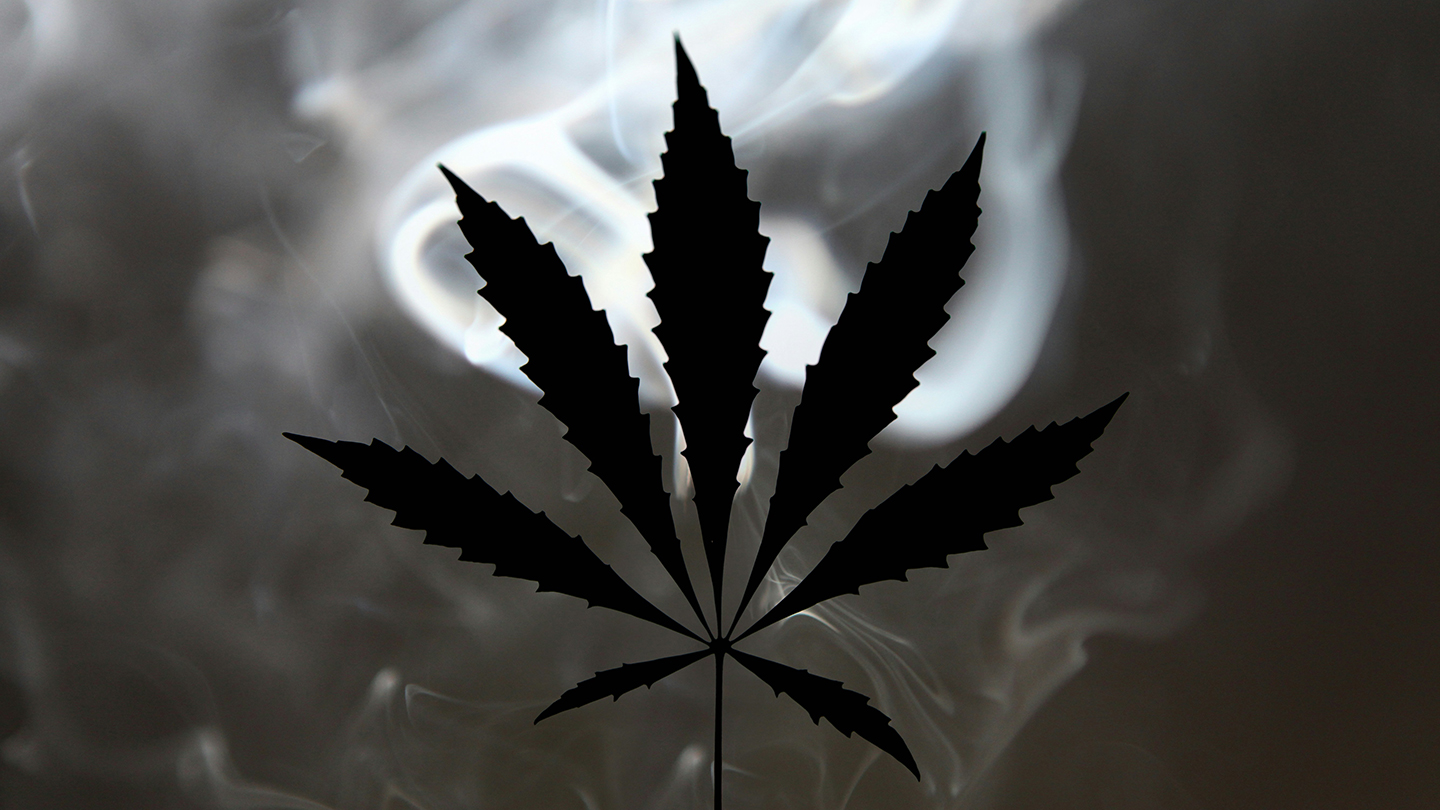
[.smalltext]Photograph by Ashes Sitoula / Unsplash.[.smalltext]
[.article__paragraph--cap][.small-caps]I used to think that marijuana[.small-caps] was mostly harmless. I was never in favor of completely legalizing it, but it irked me to think that so much time, money, and violence had been expended to prevent people from using a drug that wasn’t as bad as heroin or cocaine. When I was in my family medicine residency, laboring mothers at our hospital were often drug-tested and I always felt complicit in medical-carceral overreach when we had to call Child Protective Services on them when marijuana was found in their urine.[.article__paragraph--cap]
I’ve changed my mind on marijuana. It may be less harmful than other drugs, but it is still harmful. Unlike heroin or fentanyl, you won’t find a dead person overdosed on marijuana in the street. But you will find people stuck in a twilight haze, dulled by cannabinoids until it’s hard to say that they’re truly living. Unlike methamphetamine, you won’t find people breaking into houses trying to get what they need for their next hit. But you will find people whose vitality and mental acuity has been stolen, one joint at a time. Unlike cocaine, you won’t find people who had a heart attack after one hit. But you will find people who were on the knife’s edge of psychosis and got tipped permanently to one side after they took enough marijuana.
Legalizing or decriminalizing marijuana, as many US states have done, has not significantly improved anyone’s life but it has expanded the circle of harms to include more people. Diagnoses of cannabis use disorder are rising, as are cases of cannabis poisoning. At a time when there are more temptations than ever pulling young people away from community and service to others in favor of self-medicating addictions, there is no good reason to have one more pit of quicksand on the path to adulthood.
A few clarifications about terms and definitions are in order. Marijuana or cannabis is a natural plant that contains chemicals called cannabinoids, the most potent of which is delta-9-tetrahydrocannbinol (THC). Marijuana is most commonly smoked to experience its psychoactive effects. THC can also be extracted from the marijuana plant and then ingested orally in a variety of edible products or rubbed on the skin. Another commonly used cannabinoid called cannabidiol (CBD) that can be added to foods or lotions is not thought to have psychoactive effects. The concentration of THC in various marijuana products has been steadily increasing, meaning that users are being exposed to more potent chemicals when they consume marijuana.
Increasing potency has led to a variety of second-order harms. Emergency room visits associated with acute toxicity from THC-containing products are on the rise. The use of cannabis increases the risk of psychosis and developing schizophrenia in vulnerable populations, suggesting that it can have long-term effects on the brain like lowering IQ when used heavily over a period of time. There appears to be a similar (though not as strong) risk of depression and suicidal thoughts. Another recent study demonstrated an increased risk of most kinds of mental illnesses among teenagers who use marijuana. After examining this data, most people would want to keep their kids away from cannabis and minimize the use of it themselves.
Many legislatures were swayed to change laws about marijuana based on the hope that it might be an effective treatment for certain illnesses. CBD has been proven to reduce seizures in certain rare forms of epilepsy, while THC has long been recognized as a treatment for pain, nausea, and anorexia. Decades ago a synthetic form of THC called dronabinol was synthesized and approved by the FDA for these indications. The only medical disadvantage of dronabinol is that it does not act as quickly as smoked marijuana. It also has fewer psychoactive effects compared to smoking marijuana, meaning that it is not an appealing choice for people who are using marijuana to get high.
There is no other drug that any doctor would ever prescribe a smoked version of because the dangers of inhaling a burning substance directly into a patient’s lungs is not a risk doctors are willing to countenance. People who heavily use marijuana are four times as likely to develop lung cancer as those who do not, which is not surprising to anyone with a commonsense understanding of respiratory physiology. Vaping is slightly less harmful to users’ lungs, but it is still linked to a wide variety of acute and chronic respiratory diseases.
On the other hand, the evidence for medical marijuana’s efficacy for the relief of psychiatric symptoms is thin and many of the testimonials you will find for its benefits are misguided. Just as people who are misusing alcohol will tell you that they feel less depressed and anxious while they are drinking, so people who are getting high from marijuana will claim that doing so is “treating” their depression, anxiety, PTSD, or schizophrenia. Unfortunately, widespread legalization has given many people the opportunity to self-medicate rather than seek professional help, potentially worsening their mental health.
Another key factor driving changes in marijuana policy was concern for the unfair and unjust crusade against illegal drugs that hurt more people (especially people of color) than it helped. It’s important to have our facts straight on this so that we can honestly acknowledge these harms and weigh them against the harms of widespread marijuana use that have multiplied as restrictions have been relaxed.
Every government has to make a choice about how to use its limited resources to prevent its citizens from committing crimes. It is neither realistic nor prudent to expect that any government can stop people from choosing to hurt themselves if those people are dedicated to self-harm. Drug use is widespread and after decades of arresting and imprisoning people for possessing or selling drugs, there’s no evidence that drugs are any less available than they were when President Nixon first declared war on drugs. Felony convictions for drug possession can prevent someone who is trying to turn their life around from getting a job.
However, some popular notions that are simply untrue. American drug control policies were not a racist plot to imprison as many people of color as possible. Rather, they emerged in response to demands from the people to get drugs off the street (including many demands from Black Americans themselves). There was never a huge population of American prisoners locked away solely for drug possession; incarceration rates are higher in America than in other nations because violent crime is higher and many people who are imprisoned for drug offenses have also been convicted for violent offenses. While racial disparities in sentencing and arrests exist, these were never specific to marijuana in the way they were to crack cocaine. Thus, while marijuana was a common reason for drug arrests, decriminalizing or legalizing its possession was hardly a victory for racial justice.
On the other hand, imprisoning someone for drug use is not a very effective way of helping them beat their addiction. While it is certainly harder to obtain drugs in prison, it is not impossible, and many addicts return to using after they get out. One benefit of maintaining criminal penalties for drugs is that while imprisoning people for using drugs is usually not helpful, offering them a choice between drug treatment and prison forces more people into treatment than simply waiting for them to choose treatment of their own accord. Oregon’s recent experiment in decriminalization certainly demonstrated that people were more at risk once there were no criminal penalties for using drugs.
People often cite America’s Eighteenth Amendment prohibiting alcohol as an example of the folly of government control over intoxicating substances, but evidence shows that Prohibition was a public health success. Deaths and diseases from alcohol consumption decreased dramatically after America banned alcohol and helped to create healthier patterns of use that endured well after Prohibition was repealed. The War on Drugs has not been as successful, but it did drastically decrease the number of people using drugs and at times was also a major contributor to controlling violence in America.
Bans and law enforcement can never fully extirpate a harmful substance or practice from our communities, but they can make it harder for vulnerable people to be sucked in by the lies of the cannabis industry about their products’ dangers. Just as with porn and gambling, it should be difficult to access something this bad for you, even if we can never make it impossible. Marijuana use is a harm to be mitigated, not a blessing to be shared.
Each of us can (and should) encourage the people we love to not use drugs. This encouragement is all the more important for young people, who have the most to lose. One puff isn’t going to kill anyone, but regular use in any young person’s life could be enough to tip the scales toward psychosis, dropping out of school, or simply just wasting one’s life. When loneliness, isolation, and other addictions like gambling and pornography are on the rise, allowing one more temptation to the trials of adolescence to proliferate is malicious.
God has given each of us a body to work and worship with, and we are stewards of this gift. Likewise, we each have a limited amount of time on Earth to enjoy God’s love and love others in return. THC can be useful medically, but getting high just for the sake of escaping whatever bad feeling plagues you at the moment is ingratitude of the highest order. We should instead be befriending, mentoring, nurturing, and encouraging people who are tempted by the devil’s lettuce to be present and alive in every moment no matter how difficult that might be.