Essay
Solitude Is Solidarity
What Ignazio Silone’s novel Bread and Wine taught me about membership.
November 14, 2026
Try 3 months of unlimited access. Start your FREE TRIAL today. Cancel anytime.
START FREE TRIAL NOWSolitude Is Solidarity
What Ignazio Silone’s novel Bread and Wine taught me about membership.
[.article__paragraph--cap][.small-caps]One morning[.small-caps] about five years ago, sitting at my desk with black-eyed Susans blooming outside my window and sunlight streaming in from over the housetops, I read the sort of news that matters only to a few people (I was one of them), saw a quandary I now faced, and felt with a pang my need for good company in thinking it through. I knew I needed to read Ignazio Silone again.[.article__paragraph--cap]
Three decades before, as a college student, I had picked up Silone’s Bread and Wine, a 1936 novel admired by a number of writers I myself admired. I wasn’t sure what to make of Silone’s story about a fugitive revolutionary disguised as a priest. But I could sense that somewhere in this book hid wisdom worth heeding.
In those days, my mind was a hodgepodge of influences: the radical nonviolence of Leo Tolstoy and Mahatma Gandhi, the democratic pragmatism of American civil rights and labor leaders, the service-and-simplicity ethos of the “more with less” Mennonite milieu in which I had been raised, the worry – so widely shared in our time – that religion somehow disqualifies a person from full participation in the common world. I wasn’t sure whether I could reconcile these worldviews with one another, although Silone, having an odd kinship with each, hinted that a way might be found. Over time, as I tried being a community organizer (which didn’t stick) and a student of political theory (which did), I settled on something like a least common factor among the ways of thinking that had shaped me. If I were to phrase that minimal insight as a maxim, I would put it like this: membership matters. Membership, especially membership in groups where practical means anticipate worthy ends, points us beyond ourselves; it generates the collective capacity to preserve good things and overturn bad things; it teaches us the humility we need if we are to confront intransigent wrongs. When Eugene V. Debs, the evangelist of early-twentieth-century American democratic socialism, declared that “an unorganized socialist is a contradiction in terms,” he meant not only that he wanted his listeners to join his socialist party. He also meant, more broadly, that no political principle matters much until it takes shape as an organizational membership. If you believe something, Debs thought, you ought to join something. I think he was right.
And so I felt disoriented, that moment at my desk by the window, because the news I was reading told me that it was time for me to leave a political organization in which I had been a dues-paying and at times office-holding member for my whole adult life. The particulars – the organization’s name, my growing list of disagreements with its policies and strategies – are less important here than a shift I felt in the group’s character, a shift that will sound familiar, these days, to people in organizations across the political spectrum. Older habits, imperfect but bearing the accumulated wisdom of generations, had been rapidly eclipsed by a new mood: noisy, showy, disdainful of patience, ravenous for approbation, quick to equate intellectual agreement with friendship and intellectual disagreement with enmity. Because the organization seemed to have changed fundamentally (and perhaps because I’d changed a bit, too), I no longer had sound reasons to stay. Yet if I left, would I become, as Debs had warned, a contradiction in terms?
Realizing my predicament, I thought of Silone. Although by this time my memory of Bread and Wine had dimmed, I did recall one of its twists: when Silone’s cassock-cloaked revolutionary leaves the political party to which he has long been devoted, he seems not to lose but to gain integrity. Maybe Silone could help me see matters of membership differently.
[.article__paragraph--cap][.small-caps]Reading Bread and Wine while[.small-caps] thinking about membership, I noticed things I hadn’t before. As the novel begins, its central character, Pietro Spina, has snuck back into Italy from exile to foment a peasant rebellion against his country’s repressive government. All his human connections, formal and informal, have been disrupted: narrowly escaping arrest in Rome, he loses touch with his comrades, and when he arrives in his rural native region he moves furtively, a stranger among his own people. Yet when a former schoolmate with whom he has secret conversations, a doctor named Nunzio, asks Spina about his return, he invokes a connection of another kind: “I came back in order to be able to breathe. ... You see, even when I was abroad the reality in which I lived my mental life was here, but gradually that reality became a dream, an abstraction. I had a real need to feel the ground beneath my feet again.”[.article__paragraph--cap]
Although Spina has returned to Italy “to be able to breathe,” he finds it difficult to do so: he suffers from a lung infection that leaves him weak. When his old friend Cardile, a peasant, finds him an isolated barn in which to rest, it is as though Spina has been confined to a hermitage. Apart from his two friends’ brief visits to bring food and medicine, Spina is alone for days on end: “He was in no hurry. There was a big unframed window in the loft through which the hay was put after the threshing, and he could stay in the shade and see a large expanse of fields through the wide opening.” No, he tells Cardile, he is not bored, but in a “state of mind” that is “difficult to explain.” Spina seems surprised by his heightened capacity to pay attention: “struck by the naturalness of the things about him,” he finds himself able to sense “things in their proper place,” evidencing a world more substantial than “the fictitious countryside of the haunted imagination of an émigré.”
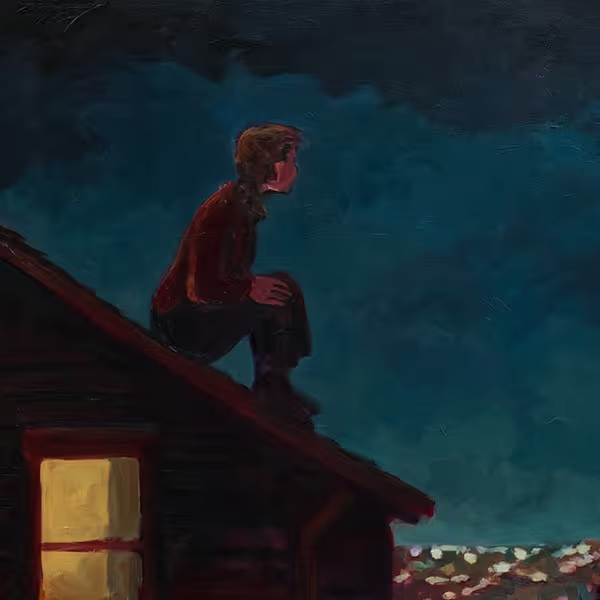
For a reader impatient for the overtly political parts of the story, like my younger self, it’s an easy point to miss: Spina can see the reality of “things in their proper places” because he is alone. Silone’s teaching about membership begins with an experience that we usually imagine to be the opposite of membership. To seek the kind of belonging that lets us feel the ground beneath our feet, he seems to say, we must first learn to rest in a state of mind that doesn’t fit easily into words: we must become patient with solitude.
Later, after donning his borrowed clerical garb (and assuming a new name, Paolo Spada: Paul Sword rather than Peter Thorn), Spina is smuggled deep into the mountains and ensconced in a village where no one will recognize him. There, he begins to heal from his illness, enjoying the “leisure to think about certain things that it is not easy to think about when leading an active life.” He converses occasionally with those nearby, but is alone almost as often as during his days in the barn. As his silence moves toward speech, he writes copiously in a private notebook and, like Saint Francis, is seen talking to the birds.
[.article__paragraph--cap][.small-caps]When I first[.small-caps] read Bread and Wine, I found the part about Spina’s first weeks in the mountain village to be dull. With my eyes on the patterns of membership and solitude in Silone’s story, however, I could see stirrings under the surface of Spina’s uneventful recovery: as he regains his physical breath, Spina catches his political breath, too. His season of solitude bears fruit. Slowly, not unlike the way in which he’d spent whole days gazing at one landscape from the window of his earlier hideout, Spina comes to know well the two or three people he sees most often; slowly, he concludes that his party has been “nursing illusions” by dreaming that its revolutionary strategies could (and should) move human beings around as if they were pieces in a game.[.article__paragraph--cap]
Maybe this is what Spina means when he says that he wants to feel the ground beneath his feet: he now makes a distinction between his party and the impulse toward justice which had led him to it. When he joined the party, he recalled, he wanted only to rebel against “a corrupt, petty, and cruel society.” Yet his party has come to disdain such motives. “Is it possible,” Spina writes in his notebook, “to take part in political life, to put oneself in the service of a party and remain sincere? Has not truth for me become party truth and justice party justice?”
Spina won’t seek now to replace one “party truth” with another. Instead, he’ll follow solitude’s promptings wherever they lead. When he sat in his unlooked-for hermitage, drinking in the vivid there-ness of the place around him, he recovered, too, his sense of an equally vivid moral reality. Rejecting membership in a party that has cut itself off from its moral premises, he takes up the quest for modes of life together attuned with what he learned by being alone. In the later chapters of Bread and Wine, then, readers see Spina becoming a member of a circle of friends who listen to and care for one another, who follow one another into danger and, as the novel’s title promises, share food and drink.
And here’s where things get tricky for readers of Bread and Wine. The literary critic Irving Howe (one of the writers whose admiration for the novel convinced me to read it in the first place) saw an impossible choice: Silone, Howe wrote, “accepts as a given the conflict between the need for action and the desire for contemplation.” Dorothy Day, who mentioned Bread and Wine often in her writings for the Catholic Worker, found at the novel’s heart not Howe’s dichotomy but a single coherent “Christian message” of “the victory of love over hatred and mistrust,” but even she saw in Silone’s writing a disinterest in collectivities, an “emphasis on the individual, who conveys the message, one man to another, of man’s dignity.”
Like Howe, and perhaps Day, we may be apt to assume a gulf between inward and outward, alone and together. The puzzle of Bread and Wine is that Silone wants it all. Right in the novel’s first sentence, as he introduces Spina’s beloved mentor, Silone announces his desire to bridge what we might suppose to be sundered: “Don Benedetto, sitting on the low garden wall in the shadow of a cypress, was reading his breviary.” Not for nothing does Don Benedetto share his name with the writer of the great manual of monastic life. Toward the novel’s end, we hear him sketch the rule by which his days are shaped: “I live here with my sister, between my garden and my books.” Like his namesake, Saint Benedict, Don Benedetto lives in a community that makes room for personal integrity and common things, attentive silence and organized cooperation. Although writing with affection about a character who has withdrawn from his society, Silone isn’t praising separateness for its own sake; his depiction of Don Benedetto casts a sharp light on unremarked possibilities out in the uncloistered world. Don Benedetto’s presence in Bread and Wine might prompt Silone’s readers to search our social and political lives for instances of membership that are at once personable and durable, patient and purposeful – memberships in which being alone grounds life together.
[.article__paragraph--cap][.small-caps]At no point[.small-caps] in Bread and Wine does Spina find a name for the reality he meets in solitude. But Silone knows things his character doesn’t know. Halfway through the novel, during a brief clandestine visit to Rome, Spina sits in the back of a near-empty church, shaken by having come to see that he must leave his party. A passing nun who sees the look of devastation on his face enjoins him to have courage. She asks him two questions: “Can’t you pray?” and “Do you believe in God?” Spina’s reply to each is the same curt “No.” The nun responds: “I shall pray to Him for you. He is the Father of all, even of those who don’t believe in Him.”[.article__paragraph--cap]
What difference might it make to be a reader of Bread and Wine who does believe? As readers will discover in Bread and Wine’s equally remarkable sequel, The Seed Beneath the Snow (an Easter story to follow Bread and Wine’s Passion narrative), Spina’s disbelief turns out to be unsustainable. My young adult wariness toward religion did too, and it seems to me that as I’m drawn deeper into Christian faith I become more curious about the faith of others. Troubled as much by the arrogance of churches as by the pretentions of political parties, Silone was an uneasy Christian. Yet a quietly steady faith shines through his writings, and I have come to trust that he has something to teach me about trusting God. What I meet in moments of solitude – when I sit still by the window, or walk quietly, or pray – is not merely an absence or an emptiness; there is, within solitude, a relationship I do not initiate and a transformation of me that I do not control. Knowing this (even if I don’t consistently live as though I knew it), I can read Bread and Wine as the story of how Spina is changed by a God who works undercover, a God who comes to him covertly. Everything I learn from Silone about human connection and disconnection stems from this hidden meeting. The secret at the heart of all our other memberships, Silone seems to be saying, is that we, all of us, belong to the company of those touched by God’s breath.
[.article__paragraph--cap][.small-caps]Membership matters,[.small-caps] yes; I did get that right. But reading Silone again has helped me think more generously about what counts as membership and more carefully about what makes membership count. For sure, Silone reminds us that formal memberships, the kind where your name goes on a list and your obligations and benefits get stipulated in writing, depend on their informal surroundings, so that our social and political lives are inflected by our ways of belonging within our families or among our friends. We need the reminder. Yet he teaches something stranger, too: if solitude involves a receptive attunement to what is present for and common to all, then solitude isn’t a break from membership, a vacation from being social or political. Solitude is solidarity. When we sit alone in the presence of what is fundamentally real, we aren’t alone after all. We’ve arrived at the root of what we have in common with others.[.article__paragraph--cap]
Lately, I’ve sought out more silence and fewer meetings. But a life lacking shared endeavors would be incomplete. Saint Benedict loved the paradoxical notion of a community of solitudes: if being a solitary person, a monachus, is a school for life together, he taught, it is equally true that the people best equipped for solitude will be coenobitae, those who know a life in common, a life rich in membership. The question is how to move between the being-alone ways of honoring what we share with others and the being-together ways.
A lot of my political education, both in community organizing and in the academy, has consisted of learning to ask certain questions about organizations: Are they weak or powerful? Shaky or stable? Oligarchic or democratic? Closed against the outside world or open to compromise and collaboration? Those still seem to me to be helpful questions. Yet Silone invites us to ask other questions of our memberships, even of our formal memberships: Do they make room for solitude? Do they respond to silence? Do they keep faith with what we come to know when we are alone? Silone leads me to think that there can be memberships, or at least moments within our experiences of membership, for which we could answer yes. What I look for now, when I consider my memberships, is not so much an agenda that matches my own but practices that might help me, like Spina, feel the ground beneath my feet.
Here and there in public life, I’ve glimpsed the cohabitation of stillness and action, silence and communion, for which Silone invites me to look: in the parallel work of neighbors tending adjoining plots in the community garden a few blocks from my home; in the way Evening Prayer and choir practice bump up against each other on Wednesday nights at my church; in the walk from chapel to refectory at Holy Cross, an Anglican Benedictine monastery beside the Hudson River which I visit as often as I can; in the wordless pause midway through conversations that happen within the labor union in my workplace, the pause between when you ask someone you know to take a specific action and when they answer, the pause in which their decision to support the welfare of those around them takes shape inwardly.
These are no more than glimpses. I’m still on the lookout for moments of solitude that intimate membership and moments of membership that recall solitude. But I suppose we should not expect to see such things easily or all at once. Don Benedetto asks Spina: “Have you ever considered the meaning of the flight into Egypt?” Perhaps the kinds of membership we most need, the kinds of being-alone-together connections that best befit human personhood, will slip into sight surreptitiously, surprising us when they arrive, as if returning from exile.