Book Excerpt
Refusing to Package Jazz
Ornette Coleman chose musical innovation over commercial success, even though the result was poverty.
July 6, 2026
Try 3 months of unlimited access. Start your FREE TRIAL today. Cancel anytime.
START FREE TRIAL NOWRefusing to Package Jazz
Ornette Coleman chose musical innovation over commercial success, even though the result was poverty.
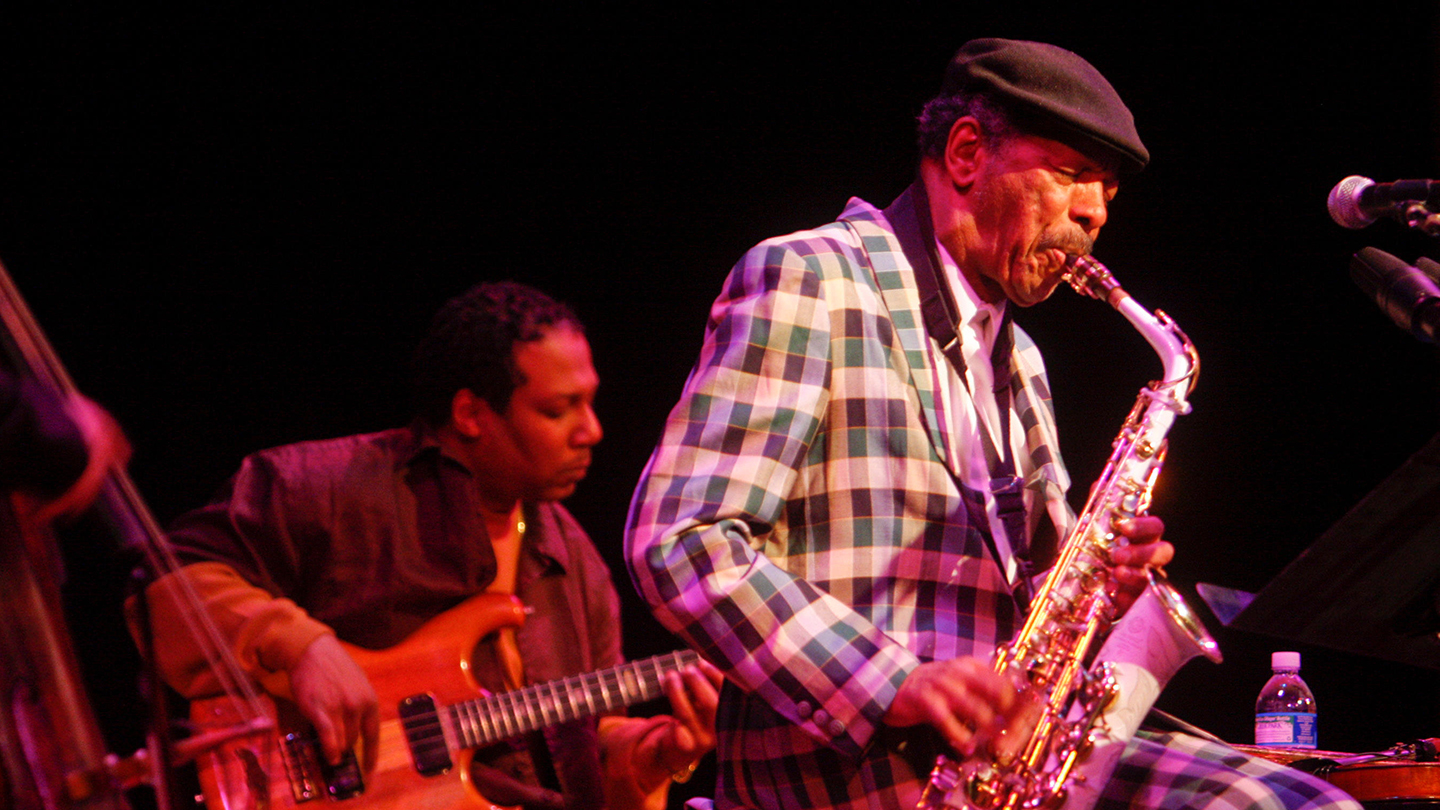
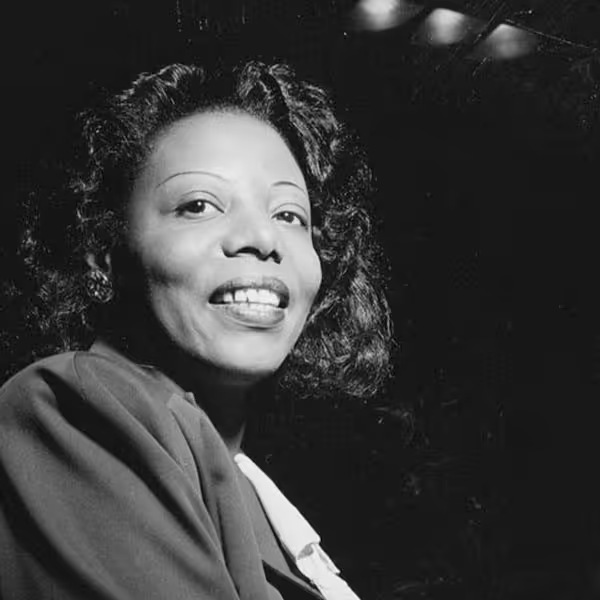
Photograph by ZUMA Press, Inc. / Alamy Stock.
[.article__paragraph--cap][.small-caps]In March 1974,[.small-caps] the American jazz legend Ornette Coleman was ready to take the stage at his benefit concert at a psychiatric hospital in Trieste, Italy. It was the first time that a jazz concert had ever been held at an Italian psychiatric facility.[.article__paragraph--cap]
Coleman and his quartet were set up outside on the site of the sports field, with no real barrier between the audience and performers – just a small platform in the middle of the crowd.
In a story recounted by the hospital’s archivist, Pantxo Ramas, Coleman and his band were about to begin the concert when a fifty-year-old patient named Rosetta Lojacono emerged from the shadows, walked onto the stage, and put her harmonica – one of her few possessions – to her lips. She started playing a melody.
The staff was unsure what to do. At that time, most psychiatric institutions would subdue patients who broke the order. They could be forcibly sedated, strapped into restraining chairs or jackets, or shut away in isolation rooms – sometimes, even put in cages. “Therapies” often meant punishments: being plunged into ice-cold baths, jolted with repeated shocks of electricity, or subjected to crude brain surgeries like lobotomies that left thousands permanently impaired. In these places, civil rights were not suspended but erased: patients could be stripped of their ability to marry, have children, or inherit property. If they did not leave within the first month, many knew they might never leave at all.
But the San Giovanni Psychiatric Hospital in Trieste, where Coleman was performing, was different. It was founded by a young psychiatrist named Franco Basaglia, who had knocked down the walls of an old asylum and turned the location into a testing ground for a new model of psychiatric care. The patient-doctor relationship would be based on freedom and understanding, and patients would be given back some dignity – some of them earned wages by taking on hospital-wide jobs; others ran a café.
As Coleman stood next to the stage watching Rosetta play her harmonica, he knew something special was happening. “I thought, this is music, let’s join her,” he later recalled. He walked up and began playing his alto saxophone along with his band. Their jam session – Coleman on the sax, Rosetta on the harmonica, the band in full swing – lasted more than an hour. When he was interviewed about the concert years later, Coleman said, “I felt totally at ease, very normal. I liked that feeling – we were all free. Music can do that … because sound is the science of feeling.”
Coleman had been known for changing jazz through a radical new approach: he let every musician in his band lead at the same time. The result wasn’t chaos but a new kind of order – spontaneous, unpredictable, and alive. He gave others the freedom to most fully express themselves, trusting that the result would be more beautiful than it would be if he tried to tightly control it.
Sound, for Coleman, was the most powerful medium for freely expressing emotion. That freedom stood in direct opposition to audience expectations, which he resisted. He refused to make his art into something that people wanted to consume, without the possibility of being changed by it.
Coleman wrestled with the idea of monetized content in the 1950s and ’60s, long before Instagram, TikTok, YouTube, and the like existed. “Most people use systems to expand their image and make some coinage doing it,” he said in an interview with John Kruth for Wax Poetics in 2006. “They find a thing that hits, and they package it.” Coleman wasn’t interested in packaging anything. He wanted to constantly evolve, discover new things, and live at the frontier.
He refused the easy currency of engagement, turning down clubs that wanted tight sets and familiar tunes. His refusal to comply eventually drove him into poverty. It would take many years before he became recognized for his extraordinary contribution to jazz.
Coleman saw the development of his craft as something tied to his personal growth. “I decided, if I’m going to be black and poor, the least thing I’m going to do is to try to find out who I am,” he said. He prioritized his own quest for the solid self, even at great financial cost, trusting that great music would flow from it. He knew the truth: innovation without conversion risks becoming mere iteration.
“They find a thing that hits, and they package it.” Coleman’s opposition to commoditizing art stemmed from his belief that, when you package your art, you end up packaging yourself. You crawl willingly into a prison of your own making.
Creators who do this eventually succumb to “audience capture,” which happens when a person gradually, without fully knowing it, becomes dependent on audience approval. They tailor their work to what their audience wants. They eventually become captured by it because they habituate themselves to conforming to the expectations of others.
To move from the creation of content to art, we have to resist optimization: refuse to package ourselves, to be shaped by demand alone, or to be measured by metrics. Of course, we have to eat – we have to support ourselves. But the lesson from Coleman is that those willing to let go of some short-term gain and embrace uncertainty can emerge from the gauntlet later: differentiated in their work, with a greater sense of integrity.
Ornette Coleman’s friend and fellow saxophonist Yusef Lateef called this the “commodification of emotions.” He was naming a process by which deep, personal, and authentic emotional expression is turned into a predictable, sellable product – something that can be packaged, marketed, and consumed rather than genuinely experienced or explored.
Commodification forces emotions into predictable, repeatable patterns. Coleman’s path was the opposite: he wanted to feel everything, and this made his music raw and perpetually new.
Ornette Coleman grew up in segregated Fort Worth, Texas, in the 1930s and ’40s, and started to play the alto saxophone around the age of fourteen. He had little formal musical training – most of what he knew came from his experience in the school band. He soon began playing in local nightclubs, where even a high school kid could take the stage if he could hold a crowd.
In 1948, at age eighteen, Coleman found work playing in an all-white club, where the audiences had strict expectations both about the music they would hear (songs that everyone knew, like from Bing Crosby) and how Black people were supposed to behave.
Race, racism, and sex have always been intertwined with jazz venues, but in Texas during the late 1940s, the stakes were lethal. One night after a show, a white woman undressed in front of Ornette in the club’s kitchen. He was astute enough to recognize the danger: if the wrong person had walked in, he could have been killed. He turned away and fled, but the fear never left him.
On another night, Coleman was playing at the same club with the popular saxophonist Red Connors. His band began playing a version of the 1927 classic jazz song “Stardust” while people danced. When it was Coleman’s turn for a solo, he felt moved to play all of the notes that the melody inspired in him – not just the ones the people were used to hearing. “Get on the melody, get on the melody!” someone yelled at him as he began playing. “I was already playing the melody – from the outside – and this guy didn’t know it,” Coleman told jazz journalist A. B. Spellman. People didn’t like his riffing – the owner fired him immediately after the set.
Over the next ten years, Coleman would find new homes in jazz clubs in Fort Worth, New Orleans, Los Angeles, and beyond. His audience didn’t know it – and Coleman himself probably didn’t fully understand either – but he was developing a new style, characterized by unorthodox harmonies, wandering keys. It would eventually become known as “free jazz.”
In the meantime, he was fired from multiple bands that couldn’t tolerate his sound, punched in the face on stage by one disoriented listener, and beat up by a mob that threw his saxophone in a ditch and left him for dead.
Coleman refused to let go of that initial inspiration he found during his “Stardust” solo. He turned down invitation after invitation for gigs that wanted him to play covers, or the “expected” songs. He became so broke that his mother had to send him food in the mail.
During his ten-year period of relative obscurity, he got married and fathered a son, Denardo, in 1956. He saw his new fatherhood as a gift to his music. “There’s nothing in the way of it getting better. Nothing!” he told John Corbett for DownBeat magazine when he asked Coleman how family life might change his music. “Just you, your heart, your brain, and the love that you wish to express because of what it means to you.”
Around the time that he had a son, he had another breakthough: a single song that would break jazz wide open.
[.smalltext]From The One and the Ninety-Nine: Forging Identity in the Age of Social Contagion by Luke Burgis. Copyright © 2026 by the author and reprinted by permission of St. Martin’s Publishing Group.[.smalltext]