Personal History
I Am Blind, But Now I See
After my father shot me in the head at sixteen, blinding me for life, I had a choice to make.
August 7, 2026
Try 3 months of unlimited access. Start your FREE TRIAL today. Cancel anytime.
START FREE TRIAL NOWI Am Blind, But Now I See
After my father shot me in the head at sixteen, blinding me for life, I had a choice to make.
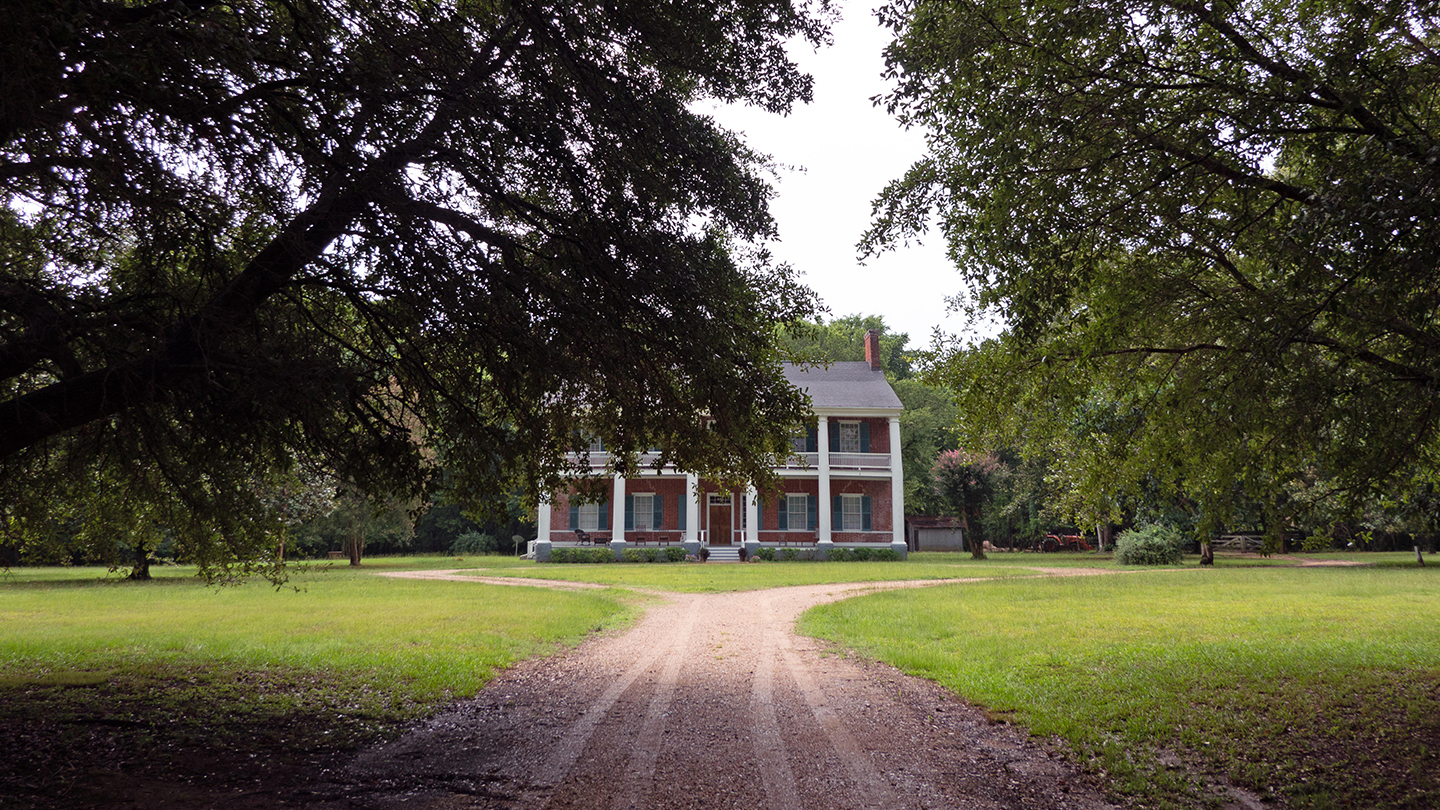
Springfield Plantation in Fayette, Mississippi. [.smalltext]Photograph by Roberto Fumagalli / Alamy Stock.[.smalltext]
[.article__paragraph--cap][.small-caps]I was almost seventeen[.small-caps] when I awoke in a hospital bed completely blind. My father had shot me in the head three days earlier and I had been in a coma since. I still can’t fully explain it, but lying there tethered to IVs and uncertain of the future, I felt serenity. I couldn’t see, and the doctor would soon tell me that this would be permanent, but the fear instilled by my abusive father over the past four and a half years was replaced by peace.[.article__paragraph--cap]
When I lost my sight, people naturally expected me to feel devastated. They expected anger, fear, bitterness, and despair. So why did I, for the first time in years, feel complete peace and contentment? Looking back now, I don’t believe those responses came from me whatsoever. Left to myself, I could not have carried such peace through such darkness. I’ve come to believe that God had already begun healing wounds within me long before I understood what he was doing.
Blindness changed my life permanently. Yet, strangely, it didn’t destroy it. In some ways, it has helped me to truly see. During my recovery in that hospital, I finally began to see through my father’s insidious deceptions. And I finally saw God’s hand guiding and protecting me even when I wasn’t aware of his presence.
[.article__paragraph--cap][.small-caps]During the long days[.small-caps] and months that followed, I would often look back on how Arthur LaSalle came into my life. My mother had divorced my biological father when I was five, and we had moved into a historic stone house called Brush Hill in Irwin, Pennsylvania. It had a big front yard that my older brother, Carl, and I would play in. I had an almost perfect American childhood: playing in the neighborhood, homemade meals, and a mother who loved me. But my brother and I still wanted a father.[.article__paragraph--cap]
Late in 1974, Arthur came to Pennsylvania looking for a historic home to own. He was from New Orleans but wanted a house in the North. He loved old houses. When he heard about Brush Hill, he asked for a tour and my mother obliged.
From the outset, Arthur mesmerized us with his charming personality, an enticing charisma he would put to devastating effect over the following years. He had a way of weaving words to make you believe him, to want what he wanted. We all fell in love with him right away. Soon after, he bought the house and married my mother. He seemed like the perfect father I had dreamed of.
After a few years, though, he wanted to move back to the South. He wanted to live in an antebellum house by the Mississippi River in Louisiana.
Instead, he eventually found Springfield Plantation in Fayette, in southwestern Mississippi. Springfield Plantation was built around 1791 and was known as the place where the future president Andrew Jackson married the already-married Rachel Robards. Unlike the neighboring plantations, the grand antebellum home with its slave quarters stood way out in the woods, with almost three thousand acres behind it. It had a broad colonnade, stately architecture, and grand interior but was in complete disrepair. When my father took up the lease, it had been vacant for thirteen years. Cows would eat from hay bales on the front porch. Bats, rats, and snakes infested the house. Springfield was in such need of extreme renovation that my father easily convinced its owners to lease it to him for a dollar a year for fifty years, provided he completely restore it and open it for historical tours.
Meticulously restoring Springfield became my father’s life work. When we moved there, he made it the almost constant work of my brother and me too. Plaster, carpentry, painting, landscaping, you name it, we had to do it. More than once, I was sent to re-mortar the bricks in the dark, cramped crawlspaces under the house – there’s no telling how many snakes may have been down there with me.
My little sister had been born by then, and the conditions were so poor that it wasn’t suitable for her and my mom. So, while they remained in Pennsylvania, we went ahead of them to Springfield and spent nine months getting it into a livable shape. There was no running water, no electricity, and the old house was barely insulated. A potbelly stove was the only source of heat, and we used it for cooking and warming water to bathe in a basin. It was more like nine months of camping than a home.
As soon as we got to Springfield, my father changed. He had been mean to us before, but now he was something else, something worse. He became much more domineering and controlling, working my brother and me constantly. There was almost nothing he wouldn’t have us do, even while we were just eight and nine years old. He expected us to put in a full day’s work while he slept in past noon. As his dark side came out, he became more malicious with his words. He’d rant about how evil my mother was, explode with rage at my brother and me for a small mistake or for no apparent reason at all, and break us down with constant jabs.
But in between, he could still be charming, knowing exactly what to say to make you believe him. Many times, he would praise us – especially me – and tell us what “perfect young men” we were. Constantly confused by his crafty and cunning speech, my brother and I never questioned him – we thought this was normal father behavior.
After about nine months, my mom and sister moved down from Pennsylvania. While I was happy to have my mother back, it was hard to see her abused as well. After about a year of this abusive lifestyle, one morning, while my father slept in, she loaded us into the car and took us back to Pennsylvania. She got us out of that terrible situation. We moved to where her parents were living in York, Pennsylvania, and for a little over a year we were safe.
[.article__paragraph--cap][.small-caps]Then my father[.small-caps] demanded to see his boys. So, not really comprehending how dangerous he was, in the summer of 1979, my thirteen-year-old brother and I – then twelve – flew from Pennsylvania to visit our father at the plantation. Family and friends had warned our mother against it. I’ve only recently learned that my father had threatened legal action to gain custody of us if my mother refused to send us. Perhaps there were other threats too, but with my mother now gone, I’ll never know for certain. What is clear is that distance did little to dilute his power to intimidate. Just because we lived miles away from him did not make her feel secure. Emotional, mental, and physical scars gave his threats weight regardless of geographic distance.[.article__paragraph--cap]
Our visit was supposed to last a month, and we thought it would be nice to see the friends we had made. During that time, our father was nothing but amiable. His powerful, charismatic presence and seemingly caring personality easily seduced me into doing exactly the right thing for him and exactly the wrong thing for me, without realizing it until it was far too late. His persuasion could entangle and ensnare you like a spider’s web.
A few days before our scheduled return from the month-long visit, he kept me up all night, continually uplifting and encouraging me, filling me with hope and confidence until I was utterly convinced that I wanted to stay at Springfield with him. Soon after, my brother decided to stay too, and we never boarded the flight home. Looking back, it was the worst decision of my life.
Almost immediately after we decided to stay, the other Arthur LaSalle resurfaced. We were kept away from afterschool activities and interactions with friends, and were put to work around the house. Although occasionally he would teach us how to do our numerous assigned jobs, usually we had to figure out on our own how to lead people on tours around our historic house, or repair a riding lawnmower, or refurbish antique locomotives for our father’s restoration business. My brother, at thirteen, was assigned the task of doing our father’s taxes by himself. My father always wanted us to act like adults, to be able to have an “adult conversation,” to pitch in and pull our weight. And, the strangest thing was, we wanted to. Even more than the fear of setting him off, we worked unquestioningly because we wanted to help him and please him, even while he avoided work at all costs.
There were times, though, when the charming mask came off. Late in the winter of the year that we moved back, my brother and I were laughing in the kitchen while washing dishes when the door slammed open. My father stormed in, his face twisted in rage. He had yelled before, but this was different, terribly different. Spittle flew from his mouth as he screamed, and then he hurled a large aluminum trashcan across the room, sending garbage everywhere. That demonic sneer, the hatred in his eyes, still sends a shudder through me.
Over the years, others who knew my father have recounted similar experiences – without my prompting them whatsoever. Each mentioned that when he raged like this, his eyes would become strange. My mother once described them as “downward spiraling pools of darkness.” I never saw spirals, but I do believe something inhuman contorted his face and personality during those rages – it went far beyond normal anger.
It was impossible to predict what might ignite his fury. Although the full-blown episodes of rage erupted only a few times a year, the impression they left on me lasted much longer. There were certainly many days when he was a calm, “normal” parent – and I certainly cherished any tranquility amid the storms of life with my father. But this actually made things worse, because I would let my guard down, only to be caught off balance when the next wave of abuse came. To outsiders, he was pleasant and generous, and many admired him. But at home, the mask dropped, and rarely did anyone other than my brother and I see the extent of his rage, his control, and his manipulation. This created confusion and doubt, and increasingly caused me to question myself and mistrust my instincts.
Even when my father wasn’t around, he could control us. For example, while he was asleep my brother and I were afraid to turn on the TV. He didn’t like us watching it, and when we did, it was only the few shows he approved of. So even when he wasn’t around, we avoided doing anything that might trigger him. Sometimes I think he watched to see when we were starting to have fun just so he could stop it. He isolated us from friends, giving us tasks or projects that would keep us busy enough to always stay around the house. There were countless times when I felt like a puppet, and he was the puppet master. However he pulled the strings, that was the way I moved.
He also isolated us from our mother. He convinced us that she was a witch. We thought that if we turned to her, she would deceive us. We believed that my father had done everything to protect us, to save us. He was our safe harbor. However bad it got, it couldn’t be worse than living with our mother. In the four and a half years that we were at Springfield, I only remember talking to her once or twice.
[.article__paragraph--cap][.small-caps]With his words,[.small-caps] my father created a distorted reality where good and evil were almost impossible to discern. Often it was hard to tell where one ended and the other began. It felt like living in a minefield.[.article__paragraph--cap]
My father would walk around his dream plantation swinging a leather riding crop, and more than once during his rages he beat my brother with it. For some reason he never raised his hand against me, even though I was not exempt from his verbal abuse. He creepily called me his “angel child” – whatever that is. I still remember how sick and heartbroken and helpless I felt watching my brother being beaten.
My father took things to extremes in other ways. Once Alex Haley, the author of Roots, was going to come tour the house and slave quarters. The night before, our father made us dust the dining room floor on our hands and knees. Each time we said we were done, he would take a flashlight and shine it parallel to the floor. If he saw any dust, he would berate us and tell us to do the whole floor over again.
But everything wasn’t bad. The empty hours between visitors gave me time to read countless books from my father’s substantial library. I devoured everything from Martin Luther King Jr., Winston Churchill, and Thomas Paine. My father was an intelligent, cultured man and his library reflected that.
Those books planted seeds in me that would eventually grow to help me see my father for who he really was, and to rise above what he did to me. In later years, as I reflected on my four and a half difficult years at Springfield, I became convinced that God was using those books, and several experiences during that season, to prepare me for the most difficult trial of my life, which was soon to come.
Although most people admired the beauty of the Springfield manor house, I preferred the landscape surrounding the house. Springfield was not a warm and inviting house to me, undoubtably because it was the epicenter of my abuse. Especially at night, the old two-story house felt quite eerie, nestled deep in the Mississippi woods where the nearest neighbor was five miles away. The spooky sensation became most intense on school nights around eleven. I’d stand nervously at the bottom of the staircase, hesitant, because about halfway up those stairs was a window opening onto the pitch-black of those vast, untamed woods surrounding the house. I would bolt past it as fast as I could, imagining fiery red demonic eyes watching me from outside. I hadn’t yet realized that the true monster was already inside the house.
[.article__paragraph--cap][.small-caps]In the midst of[.small-caps] the darkness of this time, two people shone like lights. The first was an “accidental missionary” God sent me one spring day when I was thirteen. I don’t remember his name, but I can still picture his face.[.article__paragraph--cap]
Springfield Plantation, with its rich history, often attracted tourists interested in the South, but also people just happening to drive by. One early afternoon, while my father slept and I was on tour duty, I noticed a delivery truck pulling up the driveway. The driver, a young man on his way to fill vending machines, decided to stop and take a tour of the antebellum house he’d passed by for years. We became friends immediately, and somehow, we began discussing Christianity. Thankfully, no other visitors showed up, so we sat on the front steps discussing spiritual issues for over an hour.
Every few months, whenever he was in the area, he would stop by. We would resume our exploration of Christianity on that same front step as though no time had passed. Those conversations were fascinating to me, where I could freely examine deep Christian matters that no one else would discuss with me. We would explore things that neither of us had thought about and challenge each other to think more deeply about things we thought we knew.
The second light was our friend Andy. During the final two years Carl and I lived with our father, when I was fifteen and sixteen, he rarely physically abused my brother, but he ramped up his verbal manipulation and his control over our time. During my final years with him, he thrived on imprinting his control over every moment of our days.
Then Andy came into our lives. He was our age and saw how difficult things were at Springfield, and instead of staying away, he decided to help. I can still see him driving up in his little blue pickup truck, two or three times a week. He always cheered us up, pitched in to help us finish any work my father gave us, and then whisked us away for overnight camping trips, swimming in the local creek, or just plain having fun. Andy helped my brother and me cope with the challenges of our lives by consistently showing up to ensure we had moments of joy. His friendship made the difficult times less overwhelming. He lifted our spirits by giving us a taste of the simple pleasures of living freely as teenage boys. Like almost everyone else, he didn’t know how abusive our father was; he was just a good friend.
[.article__paragraph--cap][.small-caps]Perhaps more than[.small-caps] anything, the natural beauty that surrounded me sustained me through this time. I remember one special moment while walking through the woods on an autumn afternoon in 1982, when I was fifteen. There were many times when the stresses of our household bothered me so much that I would seek out those woods. The natural world, so richly crafted by God’s hand, served as a balm to the soul, restoring calm and offering stability when emotional and spiritual storms raged. That particular autumn walk was more than a moment of peace; it was preparation – God’s way of mending a wounded spirit and equipping it for the trials ahead. Even though, a little over a year later, I would never see anything again, the impressions from that walk remain, engraved deep within my heart forever.[.article__paragraph--cap]
On that August afternoon, with an axe in hand, I stepped into those woods to gather firewood. Without realizing it at first, I began to experience things differently with every step I took. The beauty of the forest was no longer just pleasant – it was a gateway. Each branch, each breeze, each shaft of amber light pointed toward something far beyond the material. It was as if nature itself whispered divine truths, inviting my soul to awaken.
The weather couldn’t have been more perfect: gentle warmth, sunlight filtering through the trees, and the quiet hush of an autumn afternoon. As the path opened into a clearing, an old, overgrown road appeared, winding its way up a soft rise. Stepping onto it felt like entering a vast, holy cathedral, with towering trees lining either side like living columns carved by the divine. While walking that overgrown road up the hill, something I can only describe as sacred stirred within me. A profound sense of rightness surrounded me.
The path was still, but the tops of the trees swayed gently in the breeze. Aside from a few birdsong melodies and the hum of insects, silence prevailed. Then I noticed movement in the left tree line just ahead of me. Four white-tailed deer gracefully emerged from the woods. The regal beauty of two stately adult deer and two fawns held me transfixed. But only briefly, as the dogs with me gave chase. The deer bounded away, effortlessly disappearing into the forest as the dogs began their fruitless pursuit. Silence returned. The upward path continued.
At the hill’s summit, the trees gave way, and a breathtaking sight unfolded – an entire clearing filled with Christmas trees, each shoulder high, stretched across the hilltop. It was utterly unexpected, like stumbling into a secret world. Standing at the center of that miniature evergreen forest, turning slowly, my soul soaked in the beauty. Sunlight dimmed behind the trees. Clouds flecked the sky. The entire scene glowed with golden light. Birds danced and sang among the branches. Autumn’s scents wafted on the breeze. It felt like stepping into a painting – God’s painting.
I couldn’t help but wonder about the fact that there is so much profoundly prepared beauty in the earth around us every day. I began to think that there must be somebody who loves us. That this gift had to have been given to us by someone.
[.article__paragraph--cap][.small-caps]The loving truth[.small-caps] I found in beauty, friendship, and books started to chip away at the prison of the deceitful and destructive reality my father had constructed around me. I found it increasingly difficult to silence the many questions building within me. One late afternoon when I was fifteen, one of them finally rose to the surface.[.article__paragraph--cap]
Each sweltering Mississippi workday typically ended with a short ride to Cole’s Creek, about a mile away. We rode our small tractor, which moved at 15 to 20 mph, making the trip not too long. On the way to the creek one summer afternoon, a question that had been gnawing at my conscience finally broke the surface. “What’s the difference between right and wrong?” I asked my father. Looking back, the irony of asking that question to him is almost absurd – like asking a snake whether injecting venom when it bites is right or wrong. Part of me already knew the answer wouldn’t be trustworthy. But my views about right and wrong had become so overwhelmingly confused that instead of listening to my conscience, I turned to the one who had been warping it all along.
I had been pondering that question because my father was involved in questionable behavior at the time – not directly against my brother or me, but serious enough that I was considering contacting the police. Yet every time that thought arose, a wave of guilt followed, and my confusion paralyzed me. I kept thinking, “What kind of son reports his father to the authorities?”
His answer to my question did nothing to help my confusion. He said that everyone knows the difference between right and wrong. I don’t know if he was trying to deflect or if he genuinely believed that. Soon though, what was wrong would become so obvious that I couldn’t help but see it.
By autumn 1983, my brother had left for his first year of college, leaving just my father and me at Springfield. Outwardly, little changed, but a subtle shift had begun. My father became moodier, and in hindsight, there were signs that something darker was brewing, signs I failed to recognize at the time. Socially, at school, I was far from being a member of the in-crowd. Though classmates were often kind, I constantly felt like an outsider. That’s why it felt almost surreal when a girl invited me to a school dance on Friday, September 16, 1983. Even more astonishingly, my father allowed me to drive alone for the first time to pick her up. It was my first real date, a brief moment of joy that seemed to hint at a better future.
But the joy wouldn’t last. Returning home just forty-five minutes late that Friday night, I was met halfway up the driveway by my father walking the dog. Before the car window rolled down even halfway, he exploded in a familiar, terrifying rage. But this time, I yelled back. Then, compounding my mistake, I raised the window in his face mid-scream and drove off toward the house and went to bed. I wasn’t scared; it just felt right. It felt good. Something had been exhausted in me – enough was enough. Looking back, I regret provoking the volatile and irrational rage lurking within my father.
My father didn’t wake me later to resume the fight – a highly unusual silence from a man who never let anything go. That was a very stressful weekend, and I was filled with discord and despair. A couple came over to dinner at our house with their daughter and all I remember is the uncomfortable tension in the room. Gone was the brief joy my first date had brought me. Already the light at the end of the tunnel was fading fast. And yet some part of me kept fighting. God was working even then to keep me from total despair, from giving up.
Monday morning, September 19, 1983, began around five o’clock. I typically woke around six to catch the school bus, but my father had other plans – he wasn’t done with the argument. So, he woke me at five and called me into his room to conclude things. In those early hours, as the darkness outside lingered, I didn’t realize I was walking into a much deeper darkness.
The argument escalated and my father picked up a handgun and shot me in the head, the bullet tearing through my temple to lodge in the wall. Many of the details are lost to me. The state police found a list of demands with my shaky signature, covered in my blood. The contract made extreme demands such as never dating again. I often wonder if he was holding the gun to my head as I signed it. I was told that it had taken my father over an hour to get me to the hospital that was only ten minutes away. I think he was hoping that I would die, waiting for me to bleed out. When I arrived, blood loss concerned the doctors just as much as the hole in my head.
The extent of the physical damage the doctors encountered upon my arrival at the emergency room was severe. Miraculously, the .22 caliber bullet that struck me did not fragment as it passed through my head. Even more miraculously, it missed my brain by a mere two or three millimeters. However, it severed my optic nerve completely. When I woke up three days later, just shy of seventeen, I was told that I would be blind for the rest of my life.
Arthur was never brought to trial for the shooting, though the circumstantial evidence and my testimony would seem more than enough to do so. Perhaps his silver tongue and his connections got him out of it. I never pursued it, choosing instead not to spend any more of my time and energy confronting the darkness within him and around him.
[.article__paragraph--cap][.small-caps]One of the greatest[.small-caps] blessings of this time was my mother’s reentrance into my life. Even when I didn’t know it, she was caring for me.[.article__paragraph--cap]
When my mom flew in to see me at the hospital right after I had been shot, I had just undergone head surgery. Except for a three- to four-inch shaved section where I had a freshly stitched surgical scar, my hair was matted with sticky, dried blood. Overwhelmed, she nearly lost her composure at the sight of my swollen, bruised face and bulging, discolored eyes. Yet she gathered herself and asked a nurse for permission to wash my hair. When I asked her how she managed to push through her own pain to tend to me, she said, “You weren’t conscious, but I imagined you must be uncomfortable with all that matted blood in your hair, not to mention your head resting on a sticky pillow. I just wanted to help my son.”
From the nursing station, she gathered water, a bowl for rinsing, scissors, a comb, and a clean pillow. Then she began the hardest part. She said, “I lost count of how many times I tried to dissolve the caked blood, and each time I gently squeezed your hair, blood trickled through my hands. It felt like the blood was draining from me, but I had to keep going. I gently cut the tangles and washed the blood from your hair, combed it as best I could, and put a clean pillow down for you to rest on.” Though I was unconscious for the first three days after being shot and remember nothing, I am sure I felt a sense of peace and comfort when my mother stroked my head and rested it on a clean pillow.
That fateful day of the gunshot wound I was so very broken – physically, yes, but even more so spiritually – shattered by the chaos and trauma of my past. Yet almost immediately, during my time in the hospital, something began to change.
In the early days of my hospital stay, I found myself at a crossroads. The world I knew was shifting, and I had a choice: succumb to bitterness and anger or embrace a new path. I could dwell on how my life could have been, or I could dwell on what my life could be now. It was then that I felt an incredible transformation initiated by God.
This change wasn’t immediate. Every day I was confronted with what Arthur had done to me. Every day I would wake up to blackness and have to forgive again. Each time it entered my mind, I had to choose between forgiveness and bitterness. Learning how to be blind was also learning how to forgive. Eventually it became habitual.
The strange peace I felt after the shooting was solidified by a powerful moment. I was lying in bed, hitched to IVs, unable to do much of anything. One early morning, without warning or expectation, I received a gift – one that would quietly begin my inner transformation. As I lay still, I felt the gentle warmth of sunlight spill across my face. A bird began to sing outside my window, its melody simple yet enchanting. I don’t know how long I lay there, motionless and entranced, but that song flowed into me like living water on a soul parched from years of drought. To someone else, that moment might have seemed insignificant. But to me, it was everything. It reminded me so much of experiencing the holy embrace of God’s beauty in Springfield’s forest. Oh, how we benefit when our cup is empty and we allow God to fill it with his restorative and nourishing goodness! In this case, he did that for me when I simply listened to him through the symphony of his natural beauty in this world. Warmth of sun and birdsong were messages to my soul. It was then that I realized I wanted to live my life looking forward, embracing the beauty before me rather than looking back and dwelling on the darkness of my abusive past. I chose to walk in God's light instead of remaining in the shadow of evil.
Months later, I left Mississippi and traveled to Pennsylvania to live with my mother, brother, and little sister. Those next two years were, in many ways, even more challenging. My body was still healing, and I was just beginning to learn how to live blind in a world built for sighted people. My mother did everything she could to help me reclaim a full life, and my brother and sister also brought light into that season in ways I will always cherish.
[.article__paragraph--cap][.small-caps]Though disabilities[.small-caps] like mine are obvious, everyone faces challenges and limitations in life that we must confront and, hopefully, overcome. We all encounter sickness, financial hardship, family struggles, or difficulties involving the government.[.article__paragraph--cap]
Having become an active believer, following Christ daily, I can confidently say that it is far better to face life’s challenges as a believer. Notice that I did not say easier. But believers can face and overcome life’s difficulties with greater hope, peace, wisdom, strength, and perseverance because the Holy Spirit walks with them, uplifting, encouraging, strengthening, guiding, and imparting wisdom along the way.
Notice also that I did not simply say “believer,” but “active believer.” One cannot remain a superficial Christian. God calls his people to be transformed, not conformed to the world. From the words of Christ to the teachings of the apostles, scripture consistently shows that genuine faith endures, transforms, and produces evidence. It is not proven by a single moment of confession but by a life increasingly shaped by God.
This requires active participation. We must spend time each day reading and meditating on God's Word for wisdom and guidance. We should commune with God throughout the day, bringing him our concerns and asking for strength, direction, wisdom, and whatever else we need. As we do, our relationship with him deepens, and we become better equipped to face the many challenges life inevitably brings.