Interview
Gender Medicine and Truth
Psychiatrist Paul R. McHugh says good intentions aren’t enough.
September 28, 2026
Try 3 months of unlimited access. Start your FREE TRIAL today. Cancel anytime.
START FREE TRIAL NOWGender Medicine and Truth
Psychiatrist Paul R. McHugh says good intentions aren’t enough.

[.smalltext]Photograph by Stewart Maclean / Unsplash.[.smalltext]
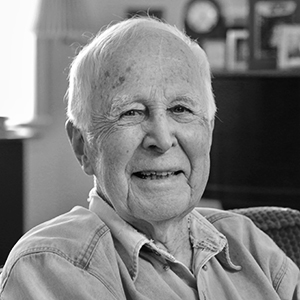
[.article__paragraph--leading]One of America’s leading psychiatrists, Paul R. McHugh has long spoken out on controversial issues in medicine and psychiatry. His career, now spanning seventy years, has taken him from Harvard to Cornell, the University of Oregon, and finally Johns Hopkins, where he is now the University Distinguished Service Professor of Psychiatry. Among many other accomplishments, he was appointed to the President’s Council on Bioethics by President George W. Bush in 2001. Plough’s Alan Koppschall sat down with Dr. McHugh earlier this year to discuss his opposition to gender reassignment surgery, his faith, and how he understands his role as a doctor.[.article__paragraph--leading]
Plough: You are known as both a doctor and a Christian. How do you see your faith and your practice of medicine working together?
Paul R. McHugh: For me, the practice of medicine is an expression of God’s wish for me to care for my fellow human beings and to learn in the process, and then in that process of learning, to communicate what I am learning to other people. I’ve tried to practice that way and teach that way all my life. And I think I’ve helped people of various faiths to see the great virtue of that approach. I’m not trying to convert anybody myself in their commitment to God and all, but I am trying to make it clear to them what we’re all after.
People do regularly ask how much my religion determines the way I think. And nobody knows the answer to that. I am what I am, and I’m sure that I really believe, because I am so happy in my orthodoxy, and I’m enriched by it. But I’m hopeful that my attitude toward people who disagree with me continues to be that of a supportive member of a profession. I’m in the profession of medicine, and I am committed to my fellow professionals in my responsibility to teach them what I know and to learn from them if I can.
That is my view of it. People consider it rather socially conservative, and I suppose that’s what it is. It is a conservative point of view: preserving what we have and doing things for the benefit of others and asking yourself whether you found the correct way. I’m willing to be proven wrong and I’ve said that many times in a lot of the battles I’ve had. I’ve had a battle with psychoanalysis, I had a battle with the recovered memory people, I had a battle with the PTSD people, and I’ve had a battle with the transgender lobby. With each one of them, if you look, you’ll see how I tried to garner information and put it forward in a logical way.
How do you discern the distinction between a sickness to be healed by therapy on the one hand, and sin to be healed by repentance and forgiveness on the other? And what is the role of a pastor in healthcare?
I think we have two different roles. My role as a leader in healthcare is to show and define what disability is, so that people can understand what is afflicting somebody. A pastor’s role, in my opinion, is to point out to people the road that leads to truth and ultimately to fulfillment and flourishing. The pastoral experience concerns itself not with illness and health but with flourishing – being the person God intended you to be, finding the fullness of life. What can you do and think that will lead you to be the person God created you to be? And that’s an interesting question. Whether doctors are the right people to answer it, I don’t know, but they are certainly in a situation where they at least ought to acknowledge it as an issue.
I’m very interested in religious people talking to me about how their vocational commitments and the goals in their lives work together; issues like the family, education, the job, and the commitment to our community are very, very important things, it turns out. Your community commitment turns out to enrich everything you do.
I’m not sure that’s an answer to your question. But look, I don’t want to put forward my life as a model for other people. This is my life. This is how I went about it. That includes issues of family, work, education, and community. What forms those could take for other people is not for me to say. But I would emphasize that a person ought to think about what commitments he has made and why he has made those commitments. Why is he committed to one woman and the children that have come from their union? Why that is so very important, so much so that nothing can take its place.
Right now, Americans are very interested in health, and some people look to therapy to try to get more pleasure out of life. It’s as though we only want to be pleased. There’s a very big difference between wanting to be saved and wanting to be pleased. If I recognize that I am a sinner, I can work toward doing better things and becoming a better person. I think that’s what healthcare should be telling people: try to be better at the things that you are, a better husband and a better father, the kind of person that can give love to someone else and pass that on to the next generation. And at the same time, work in a community that shares your goals and help those people in reaching their goals. I try to work with the idea that everybody at one level or another thinks in terms of doing good. Our job is to help them find out what “doing good” is and how it’s not the same thing as having fun.
When Plough interviewed you in 2016, yours was somewhat of a lone voice speaking out against transgender surgery. Now, it seems like the tide has turned. What has changed?
It was a very radical idea that you could change your sex. It was very unusual and I think the public went along with it for a while because they were told various ideas about it: “Which would you rather have; a live daughter or a dead son?” and other kinds of things like this. They trusted the experts, but there was always a certain suspicion in the public that this was very unusual, and they didn’t see a lot of evidence for it. Then it was tried, and a lot of people said, “Well, we are doing well.” But gradually the de-transitioners began to appear, saying that they weren’t given an opportunity to think it through and that they were very young at the time. Then, studies like the Cass Review began to appear that showed that the science wasn’t so good.
And soon most everybody thought, “Well, the children don’t know what their future is, so how can they make an informed choice about what they’re giving up?” And it lost authority with the public. And when that happens, the authority may soon move to the courts. I think the fear of heavy court judgments had an important role in the plastic surgeons telling everybody, “Don’t do this to children, because you’re going to have a lot of trouble.” And then other people joined in, trying to get out from under it. I think what’s happening is that now people are trying to get out from under it and saying, “Well, we were doing a little bit of that because we were told by experts it was the right thing to do. But now we ourselves have reflected, and we’re out. It’s not us. Don’t sue us.”
The philosopher Alasdair MacIntyre talks a lot about “the quest that you’re on.” That’s probably the best moral vision that you can have – that we are on a quest to do good. Nobody’s saying, “I’m evil and I’m going to do evil things.” In a quest, like in Pilgrim’s Progress, you have various events on the way that open your eyes to things that you hadn’t seen before as you work toward your goal. In my quest, I wanted to be a good doctor and to help people, to make them better because of what I did. I wanted to benefit people. I think most doctors have that as their aim. And as MacIntyre says, you come across things in which you discover that whatever your aim is, whatever your purpose is, the actions you’re doing are not helping you achieve them. And that’s what I think happened with the transgender surgeries. I don’t think anybody was evil in their motivation. They were on a quest to help, but they harmed. It just took them a long while to realize that, and they were very resistant to learning.
Now more and more evidence has come out that it’s not helping, that it’s hurting. In an effort to help people who have problems in this way we should be working with who they are, what could be behind it, rather than trying to make their bodies match the idea in their head. When the ideas and the facts diverge and you just go with the ideas, you may well be in trouble, because the truth will out. The truth will out. And that’s one of the great truths of a concept of moral ideas as a quest.
Anyway, that’s what I think. I want to give the benefit of the doubt to the doctors who performed these surgeries. I’m not eager to see them in the courts or anything. I just want the behavior to stop. I do believe that they thought they were doing the best they could. I’m not condemning them or accusing them of trying to do ill. I think they just were mistaken. And it took them a long time to realize it. I tried to help them with my writings and my statements, and by the way I took care of the patients who came to me.
Your critiques of transgender surgery have been met with outcry. How do you account for our culture’s intolerance of skepticism about transgenderism?
I think our culture needs to be skeptical of transgenderism. And our culture should get to the point that when something unusual is being proposed, we need good evidence, better evidence, stronger evidence, than just the claims of some elite. Just like in the witch-crazes, you can lose yourself to experts who claim that something exists when they only have very dubious evidence for it. I think people should look back at the witch-craze and ask how it ever got to the point where thousands of people were burned alive. That’s the kind of thing I warn against. Don’t invent another set of witches.
I believe that we should listen to everybody. Especially if we’re proposing something so very unusual, we should listen to those people who agree and those people who disagree and see whether their arguments make sense. Never in my whole career have I shot anybody down. I didn’t close off the psychoanalysts in my programs. I encouraged them to teach the residents. I said, “You’re going to teach them, and I’m going to teach them, and we’ll see who wins. We’re not going to say, you can’t talk.” I never was into the cancel culture. It’s an enemy of the truth, in my opinion. I want all voices to speak, and I also want people to notice what the results of an action are. But no canceling.
I’m not interested in punishing anybody. I just want them to stop. And it seems that the only way to get them to stop is to punish a few of them. I’m not eager for it. I’m not anxious for people to be hurt financially and the like. I’m not sure that money is the answer to the issue, but it may be the only weapon that will stop what I consider to be a huge misdirection of medicine: using the skills of the plastic surgeon to mutilate and destroy a promising life. I hope you emphasize the idea that I’m not interested in punishing anyone. I’m not interested in retribution.
In your view, how ought psychiatrists and mental health professionals respond to people with gender dysphoria?
First of all, they should point out that this is an illness. People with gender dysphoria are wrong in their assumption that they are not what their body says they are. This is a disorder of assumption very much like anorexia nervosa and therefore needs to be approached in a similar way. The approach should not be gender affirming and sex denying. Rather, it should be sex affirming with discussions of what goes into that affirmation, and particularly what good comes from correctly recognizing who you are.
Adherents to the old Gnostic heresy of AD 100 or 200 believed that the inner spirit was the truth and the body was just an accessory with which you could do whatever you wanted. That was wrong and in error. But it’s one of those perennials that keeps coming back: that “maybe the true spark is in here and I can do whatever I want with my body.” But I don’t think anybody with the Hippocratic tradition in medicine believes that. We believe that we are one body and soul.
My job is to persuade psychiatrists that we’ve learned now, both from adults and children who have had sex changes, that these surgeries are not benefiting them. They are not better. They may think for a while that they are, but if you follow up after about ten years, that is not the case. We need to find other ways to persuade people to accept the reality of their sex and appreciate what that brings to them. It’s similar to persuading a person with anorexia nervosa who thinks she’s fat and who is thin to the point of emaciation that she’s mistaken. Part of the solution is to get her over the idea as well as to renourish her.
We need to learn in the process. We still have a lot to learn about the transgender condition. That was the real problem, as I said a long time ago when I first wrote about it. We’re doing these surgeries, and they’re not making people any better, and we’re not understanding more about how they got into that problem. We should be studying that. Study the condition more. Don’t just treat it in a way that is fundamentally symptomatic and not intelligible. That’s what I think.
But I am here to benefit the patient. I don’t bring a menu. I’m not a waiter. I’m a doctor. And I tell patients that. “I’m here to benefit you, not to agree with you. I’m not here to give you what you want. I don’t bring a menu of things and tell you to choose from the menu. And I don’t take advantage of the position I have to abuse you in the process. You can’t have what you want from me. I’m your doctor.” It takes a little while sometimes for people to wake up to that. But most of the time they get the idea. I’m here to tell you as a doctor in what way this issue of yours can be resolved for your benefit. I’m there for the benefit of the patient, and I have to decide what the benefit is. I want to talk with my fellow doctors about what the benefits are. We won’t always agree, but we need to start with the same question: What benefits the patient?
What role should prayer have in the daily life of a practicing psychiatrist like yourself? Should it have a role?
It has a role in my daily life, and I believe it enriches my practice by reminding me each morning who I am, where I came from, and what I’m trying to do.
Now, whether every doctor should do the same … Once again, I’m not in the business of converting people. I’m in the business of encouraging people. I encourage them by example and by pointing out that religious people seem to have a happier time of it. That was the point that I made when I really committed myself early in life.
There weren’t many of us Catholics at Harvard Medical School, but there were a few, some very brilliant ones. I didn’t find it anti-Catholic. They weren’t supportive; mostly they thought it was foolish, a foolishness primarily of the Irish. But I never felt discriminated against or held back there. After all, they promoted me to Harvard Medical School and from the Harvard Medical School, they admitted me to the Brigham, one of the best hospitals of postdoctoral training. I was always treated well at Harvard. They just thought my faith was foolish and that it couldn’t be true.
That was really the road to Damascus for me. It wasn’t some thunderbolt from on high in which everything opened up in front of me. It was just the opposite. Here I was at Harvard, and everybody thought, “You should give this up.” And I thought they were miserable characters. I noticed how miserable they were. I was walking along Massachusetts Avenue, and I thought, “They want to change me, but I come from happy people. Maybe I should figure out why they were happy.” I discovered that the people I came from were committed to God, and it made them try to benefit their fellow man. And the more I looked into it, the happier I got.