Book Tour
Book Tour: Worlds Beyond
Reviewing Fantasy: A Short History by Adam Roberts, Earthsea by Ursula K. LeGuin, The Rouse by China Miéville, and The Uses of Idolatry by William Cavanaugh.
November 24, 2026
Try 3 months of unlimited access. Start your FREE TRIAL today. Cancel anytime.
START FREE TRIAL NOWBook Tour: Worlds Beyond
Reviewing Fantasy: A Short History by Adam Roberts, Earthsea by Ursula K. LeGuin, The Rouse by China Miéville, and The Uses of Idolatry by William Cavanaugh.
[.article__paragraph--cap][.small-caps]“Balderdash”:[.small-caps] this was Edmund Wilson’s response to the Lord of the Rings trilogy. So unconvinced was the noted literary critic by Tolkien’s “interminable adventures” that he resorted to psychoanalyzing those readers, such as Richard Hughes, Naomi Mitchison, C. S. Lewis, and W. H. Auden (“the most distinguished of Tolkien’s admirers”) who loved the books. “Certain people,” he wrote, “have a lifelong appetite for juvenile trash. They would not accept adult trash, but, confronted with the pre-teen-age article, they revert … they bubble, they squeal, they coo.”[.article__paragraph--cap]
One reads such nonsense and feels a surge of defensiveness on behalf of both Auden and Tolkien. Auden’s poetry evinces an emotional maturity and capacity for adult ambivalence and self-criticism rarely seen in Wilson’s or for that matter anybody’s work. Tolkien’s masterpiece is a continual triumph over its own sheer weirdness and its potential (sometimes realized) to descend into kitsch. Like a character in a novel who is drawn into some impossible supernatural plot, one repeatedly tells oneself, as one reads The Lord of the Rings, “This is crazy” and “I can’t believe I’m going along with this.” It simply shouldn’t work. But one does go along with it, all the way to Mount Doom and back.
Tolkien is an industry now, an entire shelf at the bookstore. Adam Roberts’s excellent Fantasy: A Short History does justice – as much as a short book can – to the other streams that feed into the genre, but he gives Tolkien his due as well. The result is exactly what you’d want in a short history of a vast genre: a feast of interesting readings, and a long list of other books you should read.
Of course, fantasy, in one sense of the word, is “the default mode of human storytelling,” as Roberts writes, a great ocean on which realism is a recent and local plastic island. No one could really write that history:
For most of human history stories have included gods and magic, heroes and monsters, talking animals and enchanted locations, fantastical extrapolations of imaginative expansion beyond the confines of the merely real. But to begin with the Epic of Gilgamesh and Homer and proceed through Beowulf and medieval romances, through A Midsummer Night’s Dream and Paradise Lost, Arabian Nights and Tolkien to Harry Potter and Spirited Away – and everything in between – would produce an unmanageably gigantic book.
Roberts’s book is thus a history “of Fantasy as it is recognized by fans today, as shelved under this rubric in bookshops.” And that bookstore category is traceable pretty directly to the somewhat unfortunately-named Ballantine Adult Fantasy series, launched in 1965, of which the first five volumes were all Tolkien. Other featured writers included E. R. Eddison, Mervyn Peake, Peter S. Beagle, George MacDonald, and James Branch Cabell. It took Carter a while to get around to a woman: Hope Mirlees, whose sublime Lud-in-the-Mist joined the list in 1970, soon to be followed by Evangeline Walton’s retellings of Welsh mythology and the first volumes in both Kathryn Kurtz’s Deryni series and Joy Chant’s Kendreth trilogy. If you’ve never heard of any of these books, be aware that they all have, somehow, both more sequels than an adult could read in a decade and fewer than a twelve-year-old could read in a summer.
Roberts identifies three nineteenth-century rediscoveries that prepared the ground for the Ballantine list and its offshoots. First, the Romantics rediscovered John Bunyan’s Pilgrim’s Progress, which is “both real and allegorical at the same time”:
Sometimes wealth allegorically represents purely spiritual riches, and sometimes, as with Demas’s silver mine, or the energetic moneymaking of Vanity Fair, it represents only itself. Metaphor and semiotic identity tangle with one another. This is not a flaw in the novel. On the contrary, it is at the heart of what gives Bunyan’s text its richness and multi-dimensionality.
This sort of world-texture, in which everything stands for itself but also, spookily, for other things, becomes typical of good fantasy. Second, the Romantics rediscovered, or simply discovered, childhood, which led not only to an efflorescence of often-fantastical books for kids (the works of Lewis Carroll, John Ruskin, and Charles Kingsley among others) but to a fascination with the porous and surreal world of children. Third, they rediscovered the Middle Ages and its folklore. As reconstructed by such writers and artists as Thomas Carlyle, Scott, and Wagner, the century’s “medieval” fad gave us, for example, the “romantic antiquarianism” of William Morris, whose influence is identifiable today in a novel like Susanna Clarke’s Jonathan Strange and Mr. Norrell (2004). (Well, there are no novels like Strange and Norrell. But you know what I mean.)
From these three rediscoveries comes a twentieth- and twenty-first century explosion, which Roberts just manages to contain. He traces the development of portal fantasy from H. G. Wells’s “The Door in the Wall” to “C. S. Lewis’s Narnian wardrobe, Cherryh’s gates of Ivrel, Mr Benn’s changing room, Gene Wolfe’s There Are Doors,” and many others. He examines the impact of World War I on such authors as Lord Dunsany, David Lindsay, E. R. Eddison, James Branch Cabell, Robert Graves, Tolkien, and Hope Mirlees (Lud-in-the-Mist is, “in one sense, a home-front war novel, transmuted into something magical, and its ending – the commercial triumph of Dorimare over Elfland, and its incipient trading empire – reflects the outcome of the war.”) He draws unexpected and delightful connections, for example treating Kafka as the inheritor of the medieval “beast-fable” or comparing Peake’s Gormenghast trilogy to Julien Gracq’s experimental novel The Opposing Shore. He sifts through the genre known as sword-and-sorcery for the handful of good things: the very earliest Conan stories, Leiber’s Fafhrd and Grey Mouser stories, and Samuel Delany’s astonishing Nevèrÿon tetralogy. (I would have thrown in the first half of Dave Sim’s aardvark-warrior comic Cerebus, before Sim became a full-time expositor of his own homebrewed anti-woman religion. Not a word of that description was metaphorical or un-literal.) Roberts is critical but fair to the more formulaic of Tolkien’s imitators, to the modern “grimdark” trend (in Roberts’s telling, N. K. Jemisin, not George R. R. Martin, emerges as that form’s truest genius). He is most insightful with those authors who deserve it most: John Crowley, Mirlees, Susanna Clarke, Terry Pratchett, Diana Wynne Jones, and others.
[.article__paragraph--cap][.small-caps]Roberts praises no writer[.small-caps] more highly than Ursula K. LeGuin, whose major fantasy work, the Earthsea double-trilogy, has just been reissued by the Library of America. I avoided these books in childhood, perversely, because they were pushed on me so insistently by adults. (I avoided Tolkien on the same principle.) It was Roberts’s book that caused me to finally take the Earthsea plunge. It did not disappoint.[.article__paragraph--cap]
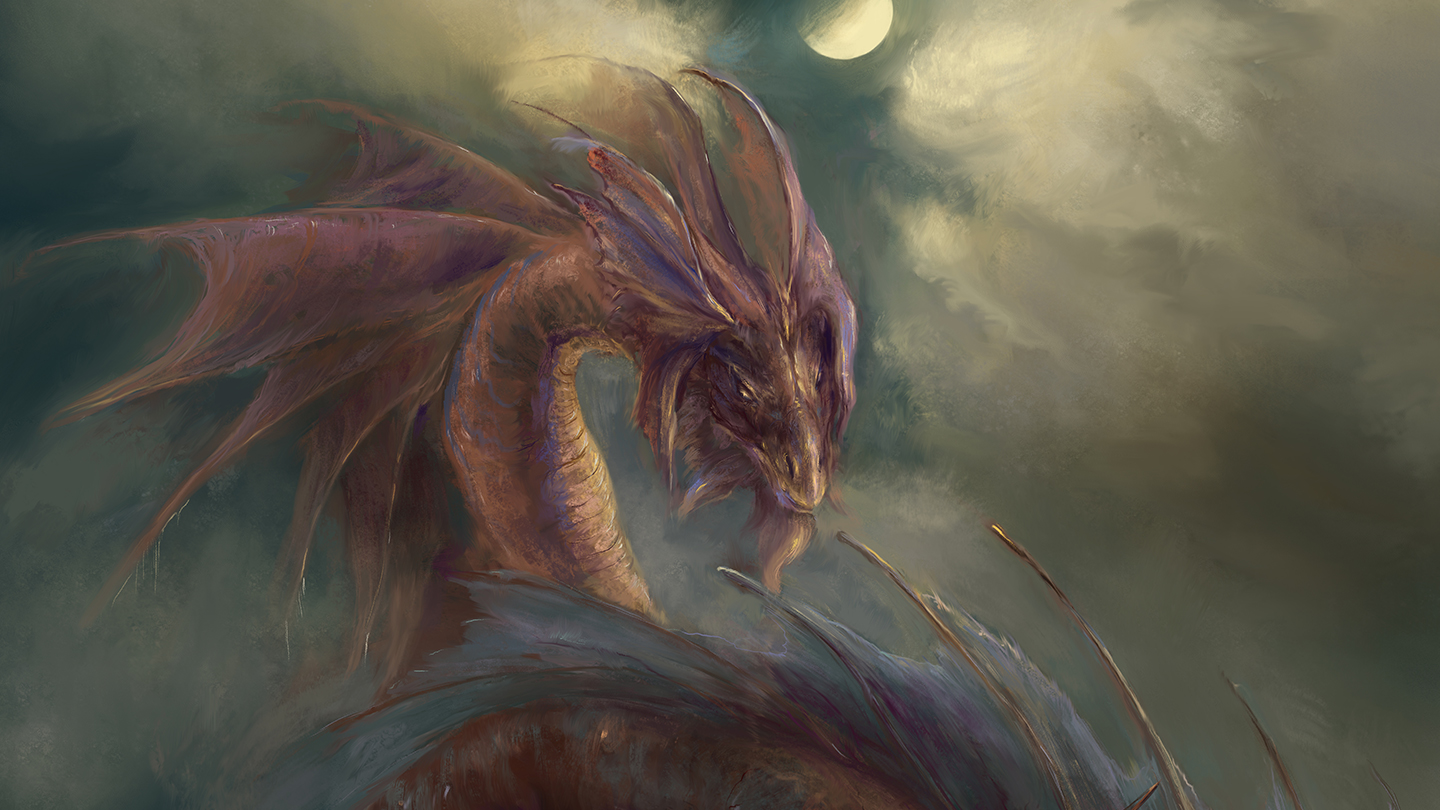
The story of Ged, who learns to operate a kind of word-magic while journeying through, and in one case saving, an archipelago-world known as Earthsea; of Tenar, introduced in the second book, whom Ged persuades away from servanthood to the grim gods of the Khargish empire, and who eventually becomes mother to an adopted daughter, Tehanu, who in turn creates a political peace between humans and dragons: That’s Earthsea, as best I can summarize it. LeGuin did not intend to write a single sequel to 1968’s The Wizard of Earthsea, which introduces us to Ged as a boy. Still less did she intend a trilogy, or two trilogies. The story’s scope changes. In the second trilogy, LeGuin retcons her own universe to keep pace with her own evolving worldview.
This means that you can’t do the sort of exhaustive continuity-scorekeeping with Earthsea that you can with, say, Tolkien’s world, and it means that many readers have a decided preference for the first three books over the last three. I was rather moved by Tehanu (1990) – published, characteristically, as “The Last Book of Earthsea,” though it was only the fourth. There is something ineffably moving about a fantasy series that gives us both the freshness of brilliant youth (in the story of Ged, and in the younger LeGuin, who told that story) and self-conscious middle-aged reflection (in the story of Tehanu, who becomes an adopted daughter to Ged and Tenar). Even I won’t try to defend Tales From Earthsea or The Other Wind, the Fifth and Sixth Books of Earthsea, which would have been more interesting as Tolkien-style footnotes and appendices.
So dramatic are LeGuin’s revisions to the backstory of Earthsea that she changes, in the later books, even the nature of her world’s afterlife. The Farthest Shore (1972) reveals an ashy, Hades-like posthumous existence for the people of Earthsea, a place called The Dry Land. In The Other Wind (2001), our heroes restore the Dry Land and make it livable. You’d think it’s impossible for something so fundamental as an afterworld to be revised, but Christianity implies that the universe can be changed on exactly that scale. Hell can be harrowed. A new earth comes with a new heaven. What that might mean, if translated from allegorical to real, I have no idea, and should probably not try to guess. In any case, LeGuin’s revisions to her own world remind us that we often discover, when examining our conceptions of the worlds beyond this one, the fingerprints of ego.
[.article__paragraph--cap][.small-caps]I thought about[.small-caps] LeGuin’s altered afterworld when I read China Miéville’s The Rouse. I thought about a lot of things when I read The Rouse. This intricate horror-fantasy novel starts out – and in a sense, it never stops being – a wrenching realist novella about a single mom in the 1970s and her son, their lives laid out in all their beautiful and convincing specifics. He leaves home, joins the military, dies. The novel seems to end; the thousands of pages to come are explicitly presented as a postscript to this opening story. Whatever follows it, life has an integrity we must respect.[.article__paragraph--cap]
Then we get an equally convincing military thriller about a nasty and damaged young man’s journey into the Special Forces during the long, slow, messy post–World War II afterlife of the British Empire. He eventually finds himself in a unit that deals with ghosts, although you’re not allowed to call them that. (One of his superiors keeps a swear jar on her desk, where you have to toss a coin every time you say “ghost.”) The novel sprawls. Over the multiple decades Miéville spent writing this novel, he clearly read a lot of Special Forces memoirs, plus the folklore of various nations, treatises from every flavor of parascience, and much else besides. Eventually the two plots – bereaved mother and paranormal soldier – intertwine, and go on intertwining, making one gorgeous or terrifying shape after another.
The question a vast novel like The Rouse poses is: Does the author use all that space, or are we just reading the essence of a short novel by someone who refused to make editorial choices? I for one don’t wish the novel any shorter. The book’s big themes and its endless minute particulars reinforce each other. As you get further and further from that intense opening story of parental bereavement, you come to share the grieving mother’s sense of having outlived herself, the old soldier’s sense of having prepared endlessly for what turns out to be the wrong war. Life transforms us in ways that seem senseless; we live out stories that feel incommensurate with each other, while being one person. The novel’s scale communicates this in a way that even a nine hundred-page version might not have done.
But The Rouse certainly makes demands of readers. It’s easy to lose track of important details. I want not to spoil too much, but I will suggest that potential readers of The Rouse remember one thing: in this novel, not even ghosts are what they seem. There are suggestions later in the novel that the afterlife the characters are seeing is a local and temporary phenomenon, not the true afterlife but a substitute generated by the overreaching arrogance of the British Empire. There’s a spiritual truth there, too, I think. The human heart is an idol factory, and when we try to imagine the specifics of the worlds beyond this world in too much detail – even if our intentions are pious – we can make an idol of that, too.
The thing that kept bothering me as I read Roberts’s Fantasy: A Short History was the word disenchantment. It serves as Roberts’s schema for organizing a vast tranche of material:
Modern Fantasy, in presenting its various pre-modern imagined worlds, is shaped by the forces that excavated the enchantment in the first place: Protestantism, the rise of the bourgeoisie, rationalism, mechanism and technology…. What disenchants the older enchantment? Protestantism does. Which is to say: science does, materialism does, capitalism does, but all do so as iterations of this earlier breach.
So central is this account of modern history to cultural criticism that I don’t fault Roberts for using it. A history of something as sprawling as an entire literary genre needs some kind of conceptual schema to give it shape, and that one works for Roberts’s book. I just don’t believe in it. I am disenchanted with disenchantment. I’m as Protestant as it gets, my self is buffered, I think material progress is just dandy as far as it goes, and no part of me longs for the Middle Ages. But the world I perceive myself living in is alive at every level.
[.article__paragraph--cap][.small-caps]William Cavanaugh also lives[.small-caps] in an enchanted universe. This Catholic political theologian’s most recent book, The Uses of Idolatry, came out in 2024, and hasn’t attracted nearly the level of general attention that it merits. His position on “disenchantment” is pretty straightforward: “What characterizes the modern West is not disenchantment but rather the condition of having learned to describe ourselves as disenchanted,” he writes. We have come to think about ourselves this way because we are incorrigibly religious, and we’re scared to admit it, in part because the gods that we adore are so unfit for the part:[.article__paragraph--cap]
What has diminished in the West is explicit worship of the Jewish and Christian God; what has not diminished is worship. The idea of a disenchanted, secular, and this-worldly West is complicated by – among many other things, some positive, some not – the prevalence of commodity fetishism, ritualized nationalism, and faith in the “invisible hand” of the market to lead us to the promised land. American shoppers run frenzied for discounted electronics at the stroke of midnight during the yearly ritual of Black Friday; to describe them as disenchanted is to miss something crucial. And that might be precisely why we in the West find such binaries so appealing: they license a more flattering self-image of the modern Westerner as scientific, sober, mundane, and focused on the real world. But self-flattery is rarely the way to wisdom.
Out of context, this quote may sound self-righteous – or even religiously imperialist, as though what “modernity” needed were merely the imposition of the right kind of monotheism by violent means. But one of this book’s most interesting qualities is Cavanaugh’s Pauline sympathy for idolators. “We are spontaneously worshiping creatures whose devotion alights on all sorts of things, in part because we are material creatures, and the material world is beautiful,” Cavanaugh writes. I would argue that every Christian is an idolator to the degree that we don’t yet fully understand Christ. A little – a very little – dollop of Calvin and Luther is useful here, especially when corrected by the universalism, the tearing-down of boundaries between Christians and others, found in Barth and Bonhoeffer. No matter how well we understand the Bible or the creeds, we can’t think a thought that isn’t a little warped by sin. What saves us is outside us, outside our “religious” thoughts and practices entirely: it’s simply that event on the cross.
I don’t know whether Cavanaugh would agree with all that. But he certainly sees Christians and non-Christians as people groping together in a shared darkness. “Christ is not an answer that Christians have but a person who puts our lives into question,” he writes. The book invites “those who think they know nothing of God to see God manifest in creation and in the longings of the human heart, and … those who think they know something of God to relinquish our attempts to grasp hold of God and engineer divinity in our own image.” This is best done by breaking bread with the needy and the broken and letting them – letting Christ – destabilize our lives.