Report
The Asbury Outpouring
Asbury University’s president talks about the ongoing effects of the student spiritual revival in 2023.
March 27, 2026
Try 3 months of unlimited access. Start your FREE TRIAL today. Cancel anytime.
START FREE TRIAL NOW
If you ask Kevin Brown, president of Kentucky’s Asbury University, about what, alongside the Holy Spirit, set the stage for the Asbury Outpouring – the February 2023 chapel service that turned into sixteen days of revival and renewal – he will probably say something about desperation. There were other things that helped, but desperation, more than anything, drove them to that point. At least, that is what he said when I spoke to him recently.
Asbury University has had a long history of revival; there have been nine separate occasions in the school’s history when chapel services or prayer groups spilled out into wider movements. For some reason, all of them have happened in February or March. The biggest and most far-reaching ones took place in 1950 and 1970, when as a result of the revivals, “witness teams” spread out across the country to other colleges and universities, and tens of thousands of people reportedly experienced conversion or renewal.

All photographs courtesy of Asbury University.
In Brown’s view, many in Gen Z are uniquely positioned for renewal because of their distress. He said he noticed a kind of “low wattage nihilism” in most of his Gen Z students. They are “fatigued by the scripts that have been handed to them,” and they are ready to act, to do, to get off the sidelines. During and after the Outpouring (a title chosen by Asbury folks to differentiate it from the earlier Asbury revivals), the prayer requests from Asbury undergraduates were desperate: they prayed about depression, anxiety, suicide, and addiction. They were crying out for something new, Brown said. He heard that cry audibly on the last day of the Outpouring. Look at the last few years, he told me. We’ve seen war, pandemic, unrest, political uncertainty. And by the phones students placed on the altar, he could tell that technology hasn’t helped make things better for them.
What do they want instead? For one thing, they “valorize authenticity.” For Gen Z students, Brown said, “the brochure needs to match reality.” They want something genuine, something real. It was that hunger that most prepared the campus and its students for the Outpouring. One conversation he had with a student helped him understand the wishes and hopes of many young people. The student told him that they don’t want something more – in the sense of more content, more filler, more extras. They want something less. But they want that less to be authentic.
I asked Brown what it was about the Outpouring that had made him realize that they had to just let it happen, that they couldn’t stand in the way. I wanted to know why some well-meaning administrator hadn’t just encouraged the students to get back to class and get on with their day. I myself attended two private Christian colleges during my undergraduate studies, both of which had mandatory chapel services, so I’m familiar with how, every now and then, a spurt of interest, a sudden hunger for God to work, can arise in students who are reminded of it every week, multiple times per week. What made this time different? It was mostly a matter of imagination and humility, Brown said. Imagination, because at that time, the staff and administration asked, “What if this might be God stirring our students?” What if God really was doing something? What if this time, they should not “be quick to put our thumb on this”?
It was an ordinary chapel service, on an ordinary day, one of three weekly services held on the Asbury campus. Brown was quick to tell me that most students don’t like chapel. But while he tries to avoid causal language, the night before the Outpouring, a gospel choir had been praying intensely “over every seat in the chapel.” There were little things that prepared the way, and all of them helped.
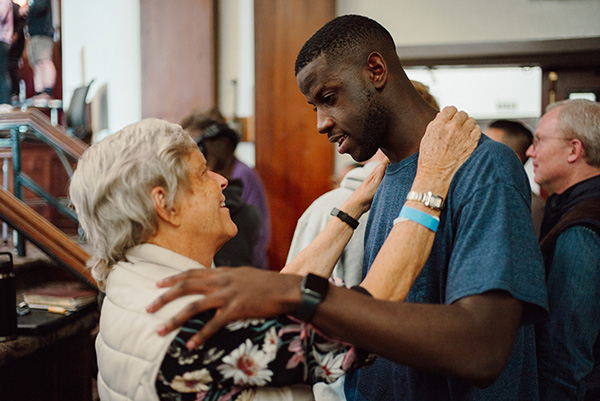
Humility was the other big part of it, according to Brown. “I was in such awe,” he said. In his view, “a spiritual space opens up when we are humble.” And all of that – the desperation, the quiet brokenness of the students, and the openness to see whether God really was doing something – cleared the way for the Outpouring to happen.
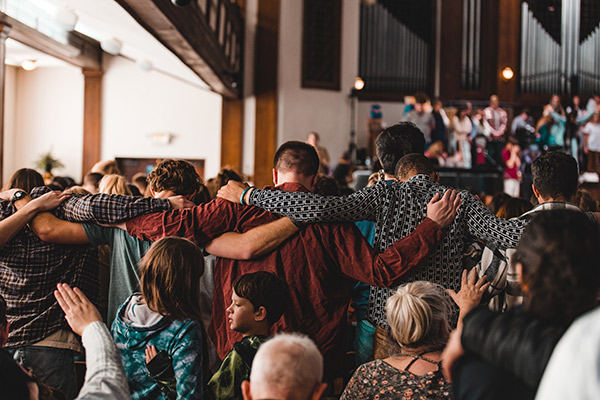
The way it happened still surprises him. Nineteen or twenty students stayed in the auditorium to pray after 11:00 a.m., when the chapel service ended. But then they didn’t leave. When Brown heard about it, he started clearing his schedule, canceling meetings. By evening, hundreds of students had joined those in the auditorium. The next few days, he said, were “lovely.” There was testimony; there was confession; there was healing of brokenness, and reports of physical healing too. It all felt entirely authentic, entirely “unedited.” It was only after several days that the world arrived, and through those first days, he could tell that everyone in the staff and administration shared his urge to step back, to see what would happen, to allow God to work.
Toward the end of our conversation, I asked Brown what convinced him that what was happening was genuine. He pointed to several things. First, the authenticity and vulnerability of the students; second, what he saw among the staff: self-sacrifice unlike anything he was used to from them, and “godly hospitality.” And then, during the course of the Outpouring and afterward, lives were changed, and real, significant commitments made.
I wanted to know if, after several years, the Asbury campus felt different. Did the Outpouring have any lasting effects? He smiled and told me that he wished he could say that most of the student body were wearing monks’ robes. They aren’t, but he still holds that “something important is stirring,” not just at Asbury but around the world. The question, then, is whether we will have the imagination and the humility to let it happen.