The Slow Work Beneath the Surface
Christian discipleship is often a matter of hidden faithfulness.
February 1, 2026
Try 3 months of unlimited access. Start your FREE TRIAL today. Cancel anytime.
START FREE TRIAL NOW
[.article__paragraph--cap] [.small-caps] In the early years [.small-caps] of one’s Christian walk, there is often a quiet longing for God to move through us. We pray for fruit, clarity, usefulness, and moments that feel significant. What we rarely ask for is the slow work God does in the places no one sees. Only later do we begin to understand that the deepest formation often happens long before anything becomes visible.[.article__paragraph--cap]
There are seasons when faithfulness feels unnoticed. We show up, we serve, we pray, yet nothing seems to move. The silence feels like a verdict, as if God is withholding direction or closeness. It takes time to see that these stretches of hiddenness are not signs of inactivity. Hiddenness is not a detour from formation; it is the ground where formation begins.
Identity Without Applause
When circumstances push us out of view, we discover who we are without the scaffolding of recognition. Hidden seasons loosen our grip on approval. They free us from the need to impress. They teach us to serve because we are already known by God. These quiet stretches become a kind of detox for the soul.
Intimacy Without Proof
Obscurity draws out questions that public life never demands. Is God enough when there is no measurable progress. When there are no stories to share. When nothing seems to be happening. In the hidden years, prayer becomes less about receiving answers and more about remaining present. Love becomes endurance.
Trust That Can Withstand Delay
Hidden years stretch trust in ways that hurry never can. Waiting strengthens what activity never touches. It shifts faith from something we perform to something we inhabit.
Integrity Formed in Secret
The hidden places expose what cannot be seen from the outside. They reveal the impulses and motives that public ministry often conceals. Integrity is formed here, not in moments of recognition but in long obedience without acclaim. In these unseen stretches, character gains the strength to carry calling.
[.article__paragraph--cap] [.small-caps] This kind of formation [.small-caps] cannot be forced. It grows slowly, which is why we often resist it. These seasons rarely feel holy. They feel like interruption or delay. They feel like nothing is happening. Yet scripture gives a different view.[.article__paragraph--cap]
Moses spent forty years in Midian, living in the quiet of the desert with sheep for company and silence for instruction. No miracles, no flashes of revelation, no evidence that God was preparing a deliverer. Yet those years were not wasted. They softened what needed softening and stripped away the self-importance that would have destroyed Moses later. Midian unmade Moses so God could build someone who would not collapse under the weight of leadership.
Jacob learned something similar in the night. He wrestled with an angel until dawn, and though he prevailed, he received the blessing only after he was wounded. There are seasons when God marks us the same way. The limp becomes part of the blessing. It prepares us for a future that requires humility rather than bravado.
Jesus himself walked an even longer road of hidden preparation. Before he ever preached a sermon or called a disciple, he lived nearly thirty quiet years in Nazareth. Nothing public, nothing recorded, nothing that looked like ministry. The Incarnate Son did not avoid obscurity; he lived in it.
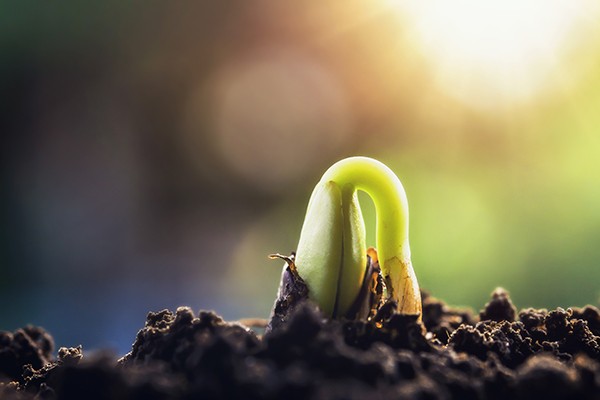
Jesus’ hidden years show that God doesn’t waste the seasons we consider insignificant. In fact, Jesus teaches this in Mark 4: 26–29. He says the kingdom grows in hidden ways. A seed is buried in the ground long before anyone sees a harvest. Night and day, while no one watches, it sprouts and matures. The farmer cannot explain how; he only trusts that something real is happening beneath the soil.
Jesus uses this image to show that God’s work is often quiet and slow, yet unstoppable. The unseen growth is the most important growth. A tree proves the same logic: it grows downward before it ever grows upward, drawing strength from soil no one sees. So it is with the soul. Without deep roots, there is no real strength, and any growth becomes fragile.
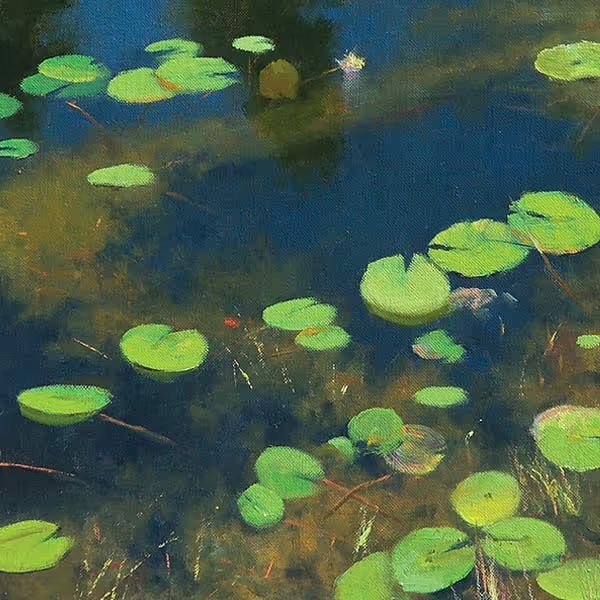
[.imgcaption] [.smalltext] Photograph by lovelyday12 / Adobe Stock. [.smalltext] [.imgcaption]
[.article__paragraph--cap] [.small-caps] The human body tells [.small-caps] a similar story. A doctor once explained to me that pain and heat under the skin often mean healing. The body knits itself back together in quiet ways. Spiritual formation often follows that pattern. Beneath the surface, God mends what we cannot fix on our own. Discomfort can be a sign that deeper work is happening.[.article__paragraph--cap]
There is another dimension to hiddenness that matters for the church. In a culture, and often a Christian culture, that measures value by reach, visibility, and numbers, the hidden life becomes a quiet testimony. It resists the idea that worth is found in being noticed. It challenges the belief that God is only at work when results are easy to measure. It reminds us that the kingdom often grows in ways that cannot be counted.
Hidden years carry their own dangers. They can be wasted if filled with resentment or comparison. What God intends to forge in these quiet stretches cannot be fast-tracked without losing its strength. When we try to move ahead of formation, our work becomes heavier than it should be, and our souls become thinner than they need to be.
Yet hidden years also carry a promise. Pierre Teilhard de Chardin writes, “Trust in the slow work of God.” That is the invitation at the heart of hiddenness. Trust that God is shaping something lasting beneath the surface. Trust that silence is a form of presence. Trust that slow work is deeper work.
If you find yourself in a quiet season, do not assume you have been set aside. What looks unimportant may be essential. What feels like waiting may be preparation. What appears empty may be full of God’s patient attention. Beneath the surface, it is already doing its work. God is forming what only he sees. And in time, hidden roots bear their fruit.