Subtotal: $
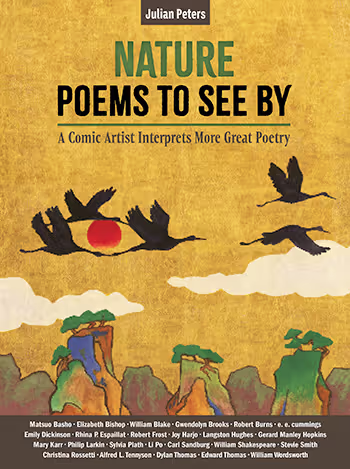
CheckoutA fresh twist on 24 famous nature poems, these visual interpretations by comic artist Julian Peters will delight poetry lovers of all ages.
This stunning anthology of favorite poems about our relationship with the natural world, visually interpreted by acclaimed comic artist Julian Peters, breathes new life into some of the greatest poems of all time.
These are poems that can change the way we see the environment, and encountering them in graphic form promises to change the way we read the poems. In an age of increasingly visual communication, this format helps unlock the world of poetry and literature for a new generation of reluctant readers and visual learners.
Following the seasons of the year and of life, Nature Poems to See By will also help young readers see themselves differently. A valuable teaching aid appropriate for middle school, high school, and college use, the collection includes favorites from the canon already taught in countless English classes.
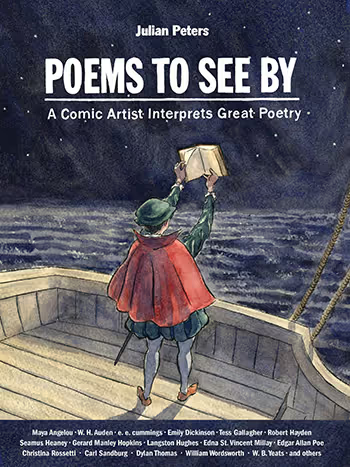
This sequel to the artist’s award-winning anthology Poems to See By includes adaptations of poems by Langston Hughes, William Shakespeare, Sylvia Plath, Emily Dickinson, Gerard Manley Hopkins, William Wordsworth, Mary Karr, Robert Frost, Edward Thomas, William Blake, Dylan Thomas, Robert Burns, Rhina P. Espaillat, Joy Harjo, Alfred L. Tennyson, Matsuo Basho, Gwendolyn Brooks, Stevie Smith, Li Po, Carl Sandburg, e. e. cummings, Elizabeth Bishop, and Philip Larkin.
Recently, I was given a complimentary copy of Nature Poems to See By: A Comic Artist Interprets More Great Poetry, illustrated by Julian Peters, and published by Plough Publishing House. As someone who has long loved poetry—and who also happens to be a visual learner—I was immediately intrigued. This book beautifully marries both worlds, pairing beloved classic poems with expressive comic-style artwork that brings each piece to life. The collection includes twenty-four classic poems thoughtfully arranged by the seasons of the year. Each selection is accompanied by carefully crafted illustrations that illuminate the heart of the poem without overpowering it. The comic art format offers a fresh and accessible way to experience poetry, allowing readers not only to read the words but to see them unfold. I believe this book will appeal to a wide range of readers. Adults will appreciate revisiting treasured classics in a new format, while younger readers—especially those who may feel intimidated by traditional literary works—may find the visual storytelling an inviting doorway into poetry. By presenting these works through art, the book gently encourages curiosity and may even spark a lifelong love for verse. Many of my personal favorites are included—poems I first encountered in high school and others I’ve discovered over the years. Reading Daybreak in Alabama by Langston Hughes (which was new to me and a wonderful surprise), alongside classics like Stopping by Woods on a Snowy Evening by Robert Frost, Fog by Carl Sandburg, and Sonnet 18 by William Shakespeare, transported me back to my ninth-grade English classroom, where a teacher with a deep love for poetry faithfully introduced us to it each day. Those early encounters shaped my appreciation for the written word, and this book rekindled that same sense of wonder. I am grateful to Plough for publishing such a thoughtful and creative work. I look forward to sharing this book with my grandchildren—some already in their teen years and others still young enough to sit close and turn the pages slowly. I can already imagine reading the poems aloud, watching their eyes move between the lines and the artwork, and witnessing that spark of discovery as they begin to fall in love with poetry and art in their own way. A special thank you to Plough Publishing House for providing this complimentary copy in exchange for my honest review.