Book Excerpt
The Either-Or Decision
It is impossible to serve God and mammon at the same time.
April 30, 2026
Try 3 months of unlimited access. Start your FREE TRIAL today. Cancel anytime.
START FREE TRIAL NOWThe Either-Or Decision
It is impossible to serve God and mammon at the same time.
[.article__paragraph--leading]This essay is based on a talk from a series of lectures that Eberhard Arnold gave between October 1923 and January 1924 under the general heading “The God Mammon.”[.article__paragraph--leading]
[.smalltext]From Salt and Light, this week’s featured book.[.smalltext]
[.article__paragraph--cap][.small-caps]One of the most dangerous[.small-caps] and widespread errors in Christian circles today is the belief that everything religious comes from God. Christ and the apostles of the early church discerned otherwise and revealed abysses that most people who call themselves Christians have no inkling of.[.article__paragraph--cap]
The apostles argued that there is a god of this world, and that this god is completely different from God the Father of Jesus Christ. They spoke of a god who does mischief in the hearts of unbelievers, blinding their senses and their eyes so that they cannot perceive the brightness of the gospel as the true message from God and his Son (2 Cor. 4:4). And they identified him as the spirit that rules this world and possesses it (John 12:31).
A contemporary drama, frighteningly bestial and true, portrays this earth spirit as the devil of sensuality, the mammon spirit of this earth. In essence, this strikes at the heart of the matter. Much of what we call Christian is in fact anti-Christian; much of what we call divine is anti-divine; much of what we deem religious is religious precisely in the sense of this other spirit that is opposed to the God and Father of our Lord Jesus Christ.
In Jesus’ teachings, he characterizes and unmasks the nature of this earth spirit – the prince of this world – with glorious lucidity and vividness. First, he calls him the father of lies from the beginning; second, he calls him the murderer from the beginning; third, he calls him mammon; and fourth, he describes him in his uncleanness as the spirit of impurity (John 8:44). In these four designations lies the ultimate antithesis, which the devil desperately tries to keep hidden: that he is not the father of Jesus, who is the truth; he is the father of deceit. And it is important for us to recognize that wherever deceit dominates, religious untruthfulness prevails, and that, far from having anything to do with Jesus and God, we are dealing here with the god of the world – with the spirit that controls the children of unbelief, who is Satan, the prince of the abyss.
Lying in any form comes from below, and most terrifying of all is the religious lie. It discloses the nature of hell. Closely allied with this lie is man’s disposition to murder. Think of the World War and how the newspapers covered the war, or think of the revolutionary struggles after it, and the way the press covered them, and you will see that everywhere the spirit of lying and a murderous disposition are indissolubly bound to one another. They are of the devil.
Every spirit that is intent on killing people also comes from below. And every spirit that untruthfully belittles the opponent, that is silent about the good in his nature and exaggerates the bad, comes from the same. So does the spirit of impurity, which, as wars and revolutions have shown us, is connected just as inseparably with these other evils. Let us be clear about this: that unchastity is also inseparably bound up with lying and the spirit of murder and crime.
I have been made constantly aware of this truth through the tragic experiences of people I have come to know over the years. For example, I know an army officer who is a devastated man, close to madness. His problem was this: he could not break ties with his mistress yet lived in constant fear of this woman because of shared guilt in what they had done – they had arranged for an abortion to prevent disclosure of their affair. And yet he was fully aware that she could betray him at any time, and ruin him. Because of the murder of unborn life that he had on his conscience, he felt forced to drag along with him the unbearable burden of his secrets. Fear of public prosecution forced him to continue in this lying life until he was a ruined man.
As I have noted before, these three hellish forces – lying, impurity, and murder – which generate such a sinister power in our age, are comprised in a greater fourth power, commonly overlooked: the spirit of mammon. Without the spirit of mammon there would be no war. In the grip of this spirit, love can be purchased and bodies corrupted and thrown into the gutter. Because of mammon, lying is found everywhere, carried to the greatest extremes – in the way people deceive each other in business matters, in interactions between the classes, and in dialogue and diplomacy between nations. Mammon is domination by money, dependence on material income and on financial circumstances. Mammon is the overriding relationship to money and property.
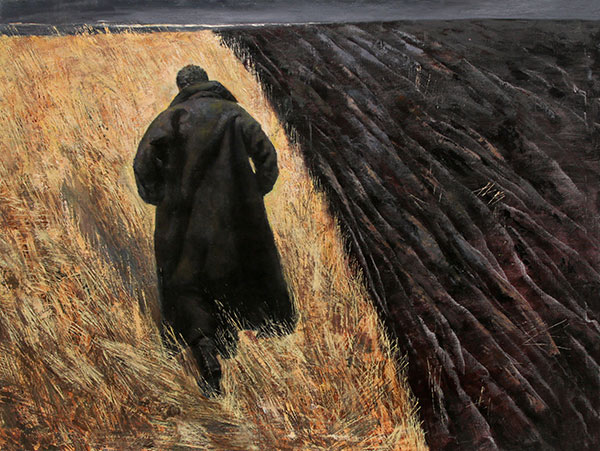
People live in mutual relationships all the time. They never live alone, but always in groups, families, tribes, and nations, ultimately as one single, great mass that extends around the globe. Between them there are the most varied relationships. There are relationships created by God between people, rich heart-to-heart bonds of love, leading to the organic building up of fellowship and community. However, wherever property and money are deemed more important, such connections are broken and destroyed in the most diabolical ways.
It is money that materializes human relationships. It has grown from a means of barter to a commodity, a possession in itself. It has gained importance because people must have contact with others but do not want to come close to one another, since they believe heart-to-heart relationships to be impossible.
As a power, money, which reduces everything to a materialistic level and leaves no space for genuine fellowship, is the polar opposite of love. Just as sexual defilement is the opposite of love, so is the spirit of murder its opposite, and lying too. Under its spell, the will to possess is stronger than the will to fellowship, and the struggle to survive stronger than the urge to love.
The spirit of mammon is the control of human beings by things instead of by love. It is dependence on circumstances and conditions instead of dependence on God. It hardens the heart in egoism; it comes from self-love instead of from the spirit that lives for others and gives itself for others.
This is why it is impossible to serve God and mammon at the same time. It is an either-or decision. Either we are dependent on God and love him and become people of love, with a heart turned toward others – one that has overcome the disposition to kill or to injure or to rob anyone of their livelihood, and one that is free of impurity and the filth that drags love into the dirt. Or we are people of mammon who, in every relationship, calculate how much we may earn, what advantages we might gain, how we can become successful, how to enlarge our property, how to make our living more secure, how we can overcome financial need by accumulating more money. This hardens our hearts and destroys any yearning for God and his love, and corrupts the deepest urges of love in our hearts, including the love of man for woman and woman for man.
This great either-or, then, is the ultimate choice in each person’s life. It is the decision between hell and heaven; between the Creator with his Holy Spirit of love and the degenerate creature in his defiled body and his ultimate corruption. It is a matter of deciding for God or the devil.
Once a wealthy young man came to Jesus (Matt.19:16–26; Mark 10:17–27). Jesus saw, in the heart of this young man, a deep longing for the good and pure, and surely loved him at first sight. He seems to have been a man of noble character and trustworthy morals, a man who had a religious upbringing and who wanted to learn from Jesus. And so he asked Jesus, “Teacher, what good things must I do so that I may win eternal life?” After the young man claimed that he had never killed anyone, committed adultery, stolen, or given false witness, that he had always honored father and mother and loved his neighbor as himself, Jesus said to him, “If you want to be perfect, go and sell what you possess, give it to the poor, and you will have treasure in heaven; and then come and follow me.”
The young man, when he heard this, went away sorrowfully, because he had many possessions. And Jesus said to his disciples, “Truly, I tell you, a rich man will find it hard to enter the kingdom of heaven. Indeed, it is easier for a camel to pass through the eye of a needle than for a rich man to enter God’s kingdom.” When his disciples heard this, we are told, they were astonished and said, “Then who can be saved?” Jesus looked at them and said, “With man this is impossible, but with God all things are possible.”
The rich young man clearly believed that he loved his neighbor as himself. But Jesus wanted to lead him deeper – to have him examine whether it was really true that he loved his neighbor as himself. He valued his property and the ease and comfort of his outward existence. Now the Lord said to him, “You say you love your neighbor as yourself; let me tell you how you can be perfect. If you really love your neighbor as yourself, you will wish for him the same as you wish for yourself – the same luxury and comfort given to you. If you wish to be perfect, go, sell what you have, give it to the poor, and then follow me.” This is why the young man went away sorrowful: Jesus had pointed out to him the untruth of his claim. He did not love his neighbor as himself.
Jesus loved this man and wanted to win him. He really wanted him as a disciple, and perhaps he would have become a personality of outstanding significance like John, James, or Paul. But he could not free himself from his servitude to material things. To this young man, mammon meant more than God. The spirit from the abyss – of dependence on outward circum-stances – was worth more to him than the Spirit from the heights – of dependence on God.
This story is of exceptional importance for our time. Of course, it does not mean that everyone should now be obliged by law to sell their investments, dispose of their goods, give up their business ventures, and then divide the money among the poor of the city. Yet Jesus shows by a thoroughly clear, irrefutable example that conversion to Jesus and to God must mean full and radical separation from mammon, from money.
The point here is not whether we give up our property. The point is that we do no less in any area of life than what is demanded here: that we surrender our money and our life so completely to God that we are ready, whether today or tomorrow, to sell our fields and our goods, to give up our livelihoods and investments and savings, to give our everything to the Lord and to the poor. The important thing is that we turn radically and completely away from money and its influence; that money no longer dictates the course of our lives; and that we devote ourselves fully, with all our income and assets and talents, to the service of God. The important thing is that mammon does not regulate our relationships with other people, but that we turn our backs on it completely, ordering our lives only by love – by the spirit of love that God creates in us.
There are historical examples we can benefit from. Francis of Assisi came from a wealthy family but fell under the influence of Jesus and realized that he was vacillating between love for God and love for money, between love for his neighbor and love for himself. Then one day he went into the woods and there, in a lonely chapel, he heard the story of the rich young man and was converted to God. He returned home, gave his fine clothes away, and sold his goods and his horses. Then, dressed like a simple peasant, he traveled on foot from village to village and town to town, preaching the good news of Jesus and performing loving deeds.
There are God-given examples in modern times, too, such as the story of Rachoff, a young man in Russia.[.footnote-link]1[.footnote-link] He too was from a wealthy family. From childhood on, God would not let him go, and neither would several deep encounters he had with Jesus. One day the story of the rich young man and his decision struck Rachoff very personally, and he sold everything he had and left his home, going on foot from village to village. Wherever he went, he lived in the love of God. He did not hold long sermons, but sought to serve people in practical ways, in the spirit of Christ. Where a poor woman was ill, he would help her. Where a yard was dirty, he would clean it up. He was beloved and revered in every district he passed through. But the cross came to him too. The Spirit urged him to protest the lies of the pious and the powerful, and so, despite working with wonderful effect, he was eventually silenced – thrown into prison, and tortured there until he collapsed. And yet the witness of this man still has an influence today: a simple call to actually walk the path of discipleship, serving others with devoted love and always turning from mammon to God.
On a more personal note, I know of a wealthy businessman who owned factories and had millions at his disposal, but was so unpretentious that he wore the same suits and overcoat for years, to the point that they were so threadbare they drew attention. This man kept his enterprises and did not give away his property all at once, but instead of using his wealth for himself, he conscientiously administered every penny of it in service to others, according to the spirit of Christ and his gospel.
God gives us examples like these so that we may see what the real difference between mammon and God is, and what it means to decide against mammon (Matt. 6:19–20, 33–34) and turn to God.
It would be a great mistake to think that only those who control large sums of money are in danger of serving mammon. Jesus shows us that there are in fact two forms of mammonism and that, despite differing circumstances, the orientation of the heart is similar in both. One person expresses a mammonistic spirit by accumulating wealth, while the next shows the same dependence on material things and servitude to them through worry and concern. As long as gray worry rules in our homes, the Spirit of Jesus does not yet prevail there. As long as gray worry spreads its shadows over us like a spell, we have not been freed from its gloom – the sun of Jesus Christ and the love of the Father have not dawned in our hearts and our lives. And as long as we are imprisoned in this way, we are on the side of mammon and not of God.
After a talk I gave, an unhappy young woman approached me. She had had a good position in Berlin. Then a seducer promised her a much better life in Hamburg and talked her into moving there. Once she had moved, he demanded money from her salary, but she was unable to find work, so he abandoned her. Now her heart was wracked with worry about survival, and soon she was defiling herself by selling her body every night.
It is worry that produces class hatred in us.[.footnote-link]2[.footnote-link] It is worry that causes us to grit our teeth and clench our fists whenever we see an expensive car passing by. It is worry that allows a feeling of triumph to secretly arise in our hearts when the blood of the wealthy is shed, that calls forth hatred and envy and generates murderous feelings in us. It is worry that entices us into lying in so much of what we do, whether we are rich or poor, whether we are greedy and money-hungry or full of worry, dependence, and fear.
If we are not at ease in God’s fatherly arms – if we have not come home to God – we remain the purchased slaves of the prince of this world, the spirit of the abyss, mammon, the father of lies, the murderer from the beginning and his impure spirit. There is only one way of deliverance from this power: to seek God’s kingdom and his righteousness first, and to believe, as we are promised, that all the rest shall be ours as well (Matt. 6:33). “Believe in God and believe in me,” Jesus says (John 14:1). Believe that God is greater than all money, all outward circumstances. Believe that God can look after you as he cares for the flowers in the field and the birds on the roofs. Believe that God can clothe you in splendor (Matt. 6:26–29), since he loves you and all people as the crown of his creation (Ps. 8:5). Believe that God wants to redeem you from outward troubles, and from inner ones too – from worry and fear.
I once experienced God’s wonderful help in a time of serious financial need. My wife and I have from time to time told the story with amusement: how a maid overheard me praying alone, “God, send us …” – and I named a certain sum of money. The maid told her family that the Arnolds were on the point of bankruptcy – that she had heard Dr. Arnold praying for money, and that there would probably be something about it in the papers before long. However, nothing appeared in the press; God sent us the money we needed. We have experienced this often; that is, God has repeatedly provided us with what we needed for ourselves and our work, without us having to turn to other people for help. In this way we learned that God does really care for us as he cares for the birds and the flowers. Every one of us can have this experience, can learn this secret. It only depends on daring to make the plunge into the freedom of the living God and the kingdom of God that Jesus revealed. His kingly rulership in our hearts – that is the freedom we need.
Mammon will never be overcome by diabolical means – by deceit and murder. We are glad that revolutionary movements protest against the capitalistic spirit; we are glad for every protest against demonic mammonism. But at the same time we feel a deep pain, because it cannot be denied that in so many revolutionary movements, there is a degree of enslavement to the same spirit of mammon, in the form of killing and lying and other expressions of violence and impurity.
There is only one way of finding deliverance from the spirit of mammon, from the devil of impurity and lying and murder, and that is through Jesus Christ. He overcame the abyss on his cross. He founded the kingdom of God. He drove out demons through the Spirit of God, and by doing so he proved that God’s kingdom has come to us (Matt. 12:28). Those who accept Jesus today, who receive the Spirit of Jesus in their hearts, will find that all evil spirits flee from them. Such acceptance depends, very simply, on this question: Is there a spirit stronger than the spirit of lying? Is there a spirit stronger than the spirit of impurity, the spirit of hate, the spirit of mammon? This is the question that decides our destiny – our hell or heaven – for time and eternity.
We are here to simply and plainly witness to a reality: There is a spirit that is in fact stronger than the spirit of lying, stronger than the spirit of impurity, stronger than the spirit of hate, stronger than the spirit of mammon – the Spirit of Jesus Christ. Those who receive him into their hearts and become one with him in their souls can conquer every force of darkness. They are assured victory over all demonic powers.
One day, Jesus will come again in might and power and establish his kingdom on this earth, driving out the spirit of mammon from every human heart – from the entire earth – with authority. This is our hope. And we may already today experience God’s kingdom as justice and peace and joy in the Holy Spirit. “The Lord is the Spirit, and where the Spirit of the Lord is, there is freedom.” (2 Cor. 3:17)